
Preventive Care in Nursing and Midwifery Journal

Volume 16, Issue 2 (4-2026)
Prev Care Nurs Midwifery J 2026, 16(2): 70-82 |
Back to browse issues page


Ethics code: 4030926


Download citation:
BibTeX | RIS | EndNote | Medlars | ProCite | Reference Manager | RefWorks
Send citation to:


BibTeX | RIS | EndNote | Medlars | ProCite | Reference Manager | RefWorks
Send citation to:
Jalali A, Heidarian P, Ghasemianrad M R, Taheri M, Pourmirza Kalhori R, Magholi M et al . Investigating the Effect of Yoga on Self-Efficacy: A Systematic Review and Meta-Analysis. Prev Care Nurs Midwifery J 2026; 16 (2) :70-82
URL: http://nmcjournal.zums.ac.ir/article-1-1035-en.html
URL: http://nmcjournal.zums.ac.ir/article-1-1035-en.html
Amir Jalali  , Pegah Heidarian , Mohammad Rasool Ghasemianrad , Mostafa Taheri , Reza Pourmirza Kalhori , Marzieh Magholi , Mohsen Kazeminia *
, Pegah Heidarian , Mohammad Rasool Ghasemianrad , Mostafa Taheri , Reza Pourmirza Kalhori , Marzieh Magholi , Mohsen Kazeminia *
Student Research Committee, Kermanshah University of Medical Sciences, Kermanshah, Iran , mkazeminia69@gmail.com
Full-Text [PDF 1009 kb]
(160 Downloads)
| Abstract (HTML) (574 Views)
.png)
Discussion
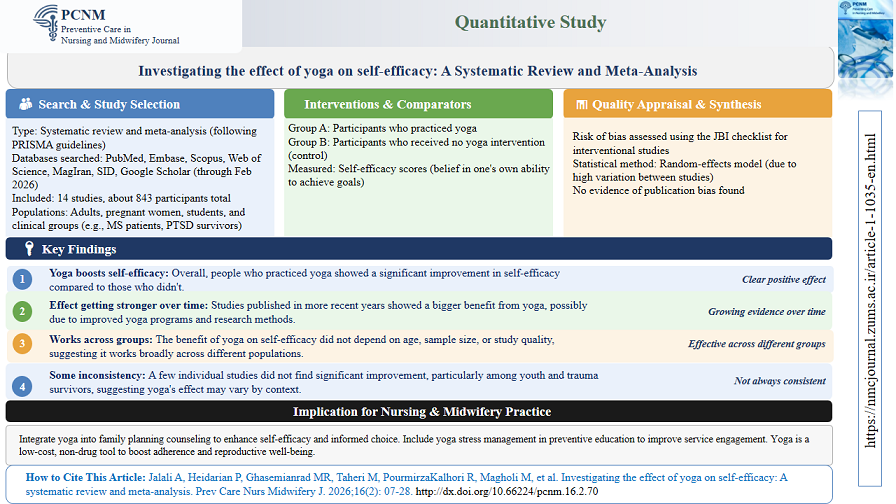
This systematic review and meta-analysis examined the effects of yoga on self-efficacy. The findings, based on a synthesis of 14 relevant studies, showed a significant increase in self-efficacy among participants in the intervention group compared with those in the control group, highlighting yoga's positive impact on self-efficacy. From a preventive care perspective, this improvement in self-efficacy is clinically important, as higher self-efficacy is associated with better adherence to health-promoting behaviors and reduced risk of various health conditions.
Yoga includes not only physical exercises but also breathing techniques, mental relaxation, and focus practices [32]. This combination can enhance both physical and mental health by fostering a strong connection between the mind and body [33, 34]. Numerous studies have shown that yoga can improve psychological conditions such as symptoms of depression, anxiety, and sleep disorders [33]. Beyond alleviating these symptoms, yoga also strengthens psychological factors such as mindfulness, resilience, and self-efficacy [35]. These psychological improvements are directly relevant to preventive care, as they can reduce the likelihood of developing stress-related and lifestyle-mediated diseases. Some research has specifically confirmed its positive effects on self-efficacy [16, 27].
The findings of the present meta-analysis are consistent with previous studies reporting yoga's positive effects on self-efficacy. For example, Stapp (2024) found that yoga sessions significantly improved self-efficacy among school students [27], while another study among adolescents aged 11–16 years reported improvements in academic, emotional, and social self-efficacy following yoga interventions [22]. Similarly, Martinez et al. observed increased emotional self-efficacy among Spanish adults after yoga practice [29]. While these studies examined specific populations and domains of self-efficacy, this meta-analysis synthesizes evidence across diverse groups. It shows an overall significant improvement in self-efficacy, supporting yoga as a broadly applicable, low-cost preventive strategy.
Other studies have focused on how yoga can enhance childbirth self-efficacy, showing positive outcomes for pregnant women [2, 16, 24]. Additionally, one study examined the effects of yoga during pregnancy and found it significantly improved breastfeeding self-efficacy among expectant mothers [30].
Thus, yoga exercises appear to benefit self-efficacy among adults, students, and especially pregnant women. In the context of preventive care, improving self-efficacy during pregnancy can contribute to better maternal and neonatal health outcomes, representing a valuable secondary prevention opportunity.
Although yoga has been practiced for centuries, its therapeutic applications have only recently gained recognition. Research shows that yoga can benefit not only healthy individuals but also those in clinical populations [36]. For example, one study examined the impact of yoga therapy on patients with multiple sclerosis (MS) and found that participants' self-efficacy scores significantly improved after attending yoga sessions, highlighting yoga's positive effects on self-efficacy [15]. Additionally, Hewett et al. studied yoga interventions with a group of sedentary, stressed adults. They reported a significant increase in self-efficacy scores among those who participated in yoga sessions compared to the control group [7]. These findings indicate that yoga can be integrated into preventive care programs for both general and high-risk populations. These findings reinforce and support the results of the current research.
However, yoga-based interventions have not consistently improved self-efficacy. For example, Kwasky and Serowoky found no significant improvement in overall self-efficacy scores among children aged 11 to 14 years following yoga sessions, and the changes were not statistically significant [17]. Similarly, Martin et al. reported that yoga-based interventions did not significantly improve self-efficacy in women with post-traumatic stress disorder (PTSD) symptoms [23]. These inconsistencies highlight the need for standardized protocols and further research to identify who benefits most and under what conditions yoga is most effective as a preventive intervention.
Self-efficacy is defined as an individual's belief in their ability to achieve desired goals [37], and personal factors such as past experiences or personality traits can influence self-efficacy. For instance, research has shown that factors including age, gender, educational level, and place of residence (urban vs. rural) are associated with self-care ability, which can be considered an indicator of self-efficacy [38, 39, 40]. On the other hand, external variables such as the degree of social interaction, cultural contexts, and complementary interventions like massage therapy may also affect self-efficacy [41]; for example, non-pharmacological methods such as foot reflexology massage, by reducing pain and fatigue in the early postoperative period, can enhance patients' sense of efficacy and control [42, 43, 44]. These factors can vary among participants across different studies, which may explain the differing effects of yoga interventions on self-efficacy. Variations in session frequency and duration, participant skills, experience, readiness to engage in interventions, and methods used to measure self-efficacy may also contribute to the lack of effect observed in some studies. Understanding these moderators is essential for designing effective preventive programs tailored to specific populations.
The results indicated no significant relationship between age and the effects of yoga therapy, suggesting these interventions could positively impact individuals across all age groups, aligning with findings from Jalali et al. [37]. This age-independence supports the feasibility of yoga as a universal preventive intervention across the lifespan. The meta-regression results also showed that as publication years increased, the effects of yoga therapy on self-efficacy significantly improved. This trend may reflect a growing body of knowledge about yoga, advances in scientific research, and the use of more sophisticated techniques over time, resulting in a greater impact of yoga in recent years. This temporal improvement suggests that contemporary yoga protocols are becoming increasingly optimized for use in preventive care settings.
A notable strength of this study was estimating the pooled standardized mean difference between the intervention and control groups following the Intervention. Despite conducting a thorough review of international databases, including PubMed, Embase, Scopus, and Web of Science (WoS), only 14 studies met the specified inclusion and exclusion criteria. This highlights the need for further research in various regions. Future studies should specifically evaluate the long-term preventive effects of yoga on health outcomes mediated by self-efficacy. Other limitations included the use of non-random sampling methods, varied implementation techniques, and limited access to full texts of some papers.
One of the main limitations of this study was substantial heterogeneity among the included studies; therefore, we used a random-effects model to obtain a more conservative pooled estimate. Meta-regression analysis explored potential sources of heterogeneity, which partially explained the variability; however, overall heterogeneity remained high. In addition, because of the limited number of eligible studies, we could not conduct subgroup analyses to investigate further potential moderating factors such as population characteristics, intervention duration, or study design. Consequently, interpret the results with caution, and further well-designed studies with more homogeneous methodologies are recommended to provide more robust evidence.
Conclusion
This meta-analysis shows that yoga significantly improves self-efficacy across diverse populations. Further well-designed studies with standardized interventions are needed to confirm the long-term effects. These findings support yoga as a low-cost, non‑pharmacological strategy for strengthening self-efficacy and promoting preventive health behaviors.
Ethical Consideration
The Ethics Committee of Deputy of Research and Technology, Kermanshah University of Medical Sciences, approved the study (IR.KUMS.REC.1403.575). We observed all ethical requirements of the Declaration of Helsinki from the search for articles through the publication of the results.
Acknowledgements
This study is the result of research project No. 4030926 approved by the Student Research Committee of Kermanshah University of Medical Sciences. We thank the esteemed officials of that center for covering the financial expenses of this study.
Conflict of Interest
The authors declare no conflict of interest.
Funding
Funding source: Deputy for Research and Technology, Kermanshah University of Medical Sciences (IR) (Grant number: 4030926).
Authors' Contributions
Conceptualization: A. Jalali, M. Kazeminia
Methodology: A. Jalali, M. Kazeminia
Investigation: M. Kazeminia, P. Heidarian, M.R. Ghasemianrad, M. Taheri, R. Pourmirza Kalhori, M. Magholi
Formal Analysis: M. Kazeminia, A. Jalali
Writing – Original Draft: M. Kazeminia, M.R. Ghasemianrad
Writing – Review & Editing: A. Jalali, M. Taheri, R. Pourmirza Kalhori
All authors read and approved the final manuscript.
Artificial Intelligence Utilization
Not used.
Data Availability Statement
Data available upon reasonable request from the corresponding author.
Knowledge Translation Statement
Audience: Nursing managers and preventive care planners
Meta-analytic evidence suggests yoga is associated with improved self-efficacy. Managers may consider integrating this low-cost, non-pharmacological practice into routine health promotion and preventive care programs.
Full-Text: (42 Views)
Introduction
Self-efficacy refers to individuals' beliefs in their ability to perform actions that lead to specific outcomes [1]. It is a personal, situational, and culturally dependent concept that significantly influences behavior, predicts activity performance, and determines performance levels [2]. From a preventive care standpoint, self-efficacy is recognized as a key modifiable determinant that can influence engagement in health-promoting and disease-preventing behaviors. Self-efficacy affects the time individuals dedicate to tasks, their adaptability in various situations, and their resilience when facing challenges [3].
Individuals with high self-efficacy are better at overcoming problems and resolving issues due to their strong problem-solving skills and positive experiences [4]. In difficult situations, they focus on their abilities to tackle challenges and actively seek solutions instead of viewing the situation negatively [5]. This proactive approach is particularly valuable in preventive care, where early action and adherence to health recommendations can significantly reduce the risk of future illness. Self-efficacy affects goal selection, decision-making, and mental health. It also creates a sense of ease when approaching challenging tasks and activities [6].
Therefore, interventions that enhance self-efficacy can serve as effective preventive strategies. Yoga is one recommended practice for enhancing self-efficacy [7]. It encompasses various forms, such as Asana (yoga postures that relax the pelvic region and promote calmness) and Pranayama (breathing techniques that calm the mind) [8]. Yoga also promotes calming thoughts that reduce stress, improve self-efficacy, and enhance emotional control [7]. It has proven effective in treating conditions like depression, sleep disorders [9], and anxiety [10], and can also play a role in preventing these conditions by strengthening psychological resilience. By reducing sympathetic activity and increasing parasympathetic activity, yoga alleviates stress, improving endocrine function and immune adaptation [11], all of which are relevant targets for primary and secondary prevention.
Yoga aims to regulate the mind and its impact on the central nervous system. Unlike other forms of exercise, yoga uniquely modulates the central nervous system, hormone secretion, physiological changes, neural signal regulation, and related processes [12]. As a result, yoga can effectively complement conventional medical treatments for various physical and mental disorders [13]. Moreover, as a low-cost, accessible practice, yoga aligns well with preventive care goals, which emphasize population-wide, cost-effective interventions. It is a cost-effective, universally accessible practice that requires minimal resources, making it suitable for people of all ages and supporting physical and mental health [14].
Several preliminary studies have examined the impact of yoga on self-efficacy across diverse populations worldwide [15-17]. However, the potential of yoga as a preventive tool targeting self-efficacy has not yet been systematically evaluated. Given the varied outcomes of these studies, a systematic review and meta-analysis is essential to provide clear and consistent findings. Such research could serve as a comprehensive guide for policymakers and researchers interested in integrating preventive interventions into routine care.
Objectives
This systematic review and meta-analysis aims to assess and synthesize findings on the effects of yoga on self-efficacy in preventive care.
Methods
This study used a systematic review and meta-analysis approach with no time limit, up to March 5, 2026. It followed the PRISMA 2020 protocol (http://www.prisma-statement.org/), encompassing the stages of identification, screening, eligibility, and inclusion [18].
Identification of Articles
To identify published articles relevant to the research objective, we searched Persian-language databases (SID: https://www.sid.ir and MagIran: https://www.magiran.com) and international databases, including PubMed, Embase, Scopus, and Web of Science (WoS). We conducted searches using keywords such as "Self-Efficacy" and "Yoga," validated through MeSH for PubMed and Emtree for Embase, and combined these terms using OR and AND operators.
No time restrictions were applied to ensure the retrieval of all potentially relevant studies. To broaden our search, we also used Google Scholar and manually reviewed the references of all related articles that met our inclusion criteria.
Search Strategy
For instance, the search strategy used for PubMed was structured as follows: ((Self Efficacy [MeSH Terms]) OR ("Self-Efficacy"[Title/Abstract])) AND ((Yoga [MeSH Terms]) OR (Yoga [Title/Abstract]) AND (English [Filter])).
Inclusion Criteria
Exclusion Criteria
Data Extraction
All retrieved articles from various databases were imported into EndNote X8 software, and duplicates were removed. Next, the titles and abstracts were carefully reviewed to exclude irrelevant studies. Reviewers then thoroughly evaluated the full texts of the remaining articles. Studies that did not meet the established inclusion and exclusion criteria were dismissed. During selection, reviewers were blinded to the authors, institutions, and journals of the articles. All selected articles were then qualitatively assessed for inclusion in the systematic review and meta-analysis.
Quality/ Risk of Bias Assessment Tools
The qualitative evaluation used the Joanna Briggs Institute (JBI) checklist, a well-established tool for assessing the quality of interventional studies [19]. This checklist consists of 13 items that address key aspects, including randomization, allocation, baseline similarity of treatment groups, participant blinding, blinding of those implementing the Intervention, and blinding of outcome assessors. It also evaluates whether treatments were similar across groups, except for the Intervention itself, along with follow-up, participant analysis, outcomes, the reliability of the outcome measurement method, appropriate statistical analysis, and suitable trial design. For scoring, "Yes" was given if an item was addressed, "No" if it was not, and "NA" if it was not applicable. The scores ranged from 0 to 13, based on the number of "Yes" responses. For quasi-experimental studies, the 9-item JBI Critical Appraisal Checklist for Quasi-Experimental Studies was used for methodological quality assessment.
Data Extraction
Data extraction from the final articles included in the systematic review and meta-analysis was conducted manually using a pre-prepared checklist. The checklist contained the following items: first author, year, study location, age, and sample size, mean ± SD of self-efficacy scores before and after the Intervention for both the intervention and control groups, study type, target population, and diagnostic tools. To reduce publication bias and errors, two researchers, A.J. and M.K., carried out all stages of identification, selection, quality assessment, and data extraction independently. In the event of a disagreement between the researchers, the issue was discussed and resolved by reaching a consensus in the presence of a supervisor.
Synthesis Methods
The main parameter evaluated in this study was the impact of yoga on self-efficacy.
To synthesize results from various studies, we calculated the mean (SD) of self-efficacy scores before and after the Intervention for both the intervention and control groups.
We assessed heterogeneity among studies using the I² index, where values below 50% indicated "low heterogeneity" and values above 50% indicated "high heterogeneity."
Because of the significant heterogeneity among the included studies (I² > 50%), we used a random-effects model.
This model accommodates variation across studies and yields more generalizable results under high heterogeneity than a fixed-effects model [20].
A sensitivity analysis was performed to identify the sources of heterogeneity.
To evaluate publication bias, we utilized Egger's regression intercept, which is particularly effective for detecting publication bias in meta-analyses containing 10 to 75 studies [21].
Additionally, Meta-regression analysis was conducted to explore the impact of study-level variables (sample size, year of publication, mean participant age, and JBI quality score) on the pooled standardized mean difference (SMD).
Statistical analysis was conducted using Comprehensive Meta-Analysis Software (Version 2), with a significance threshold set at p < 0.05.
Result
Summary of Article Inclusion in the Meta-Analysis
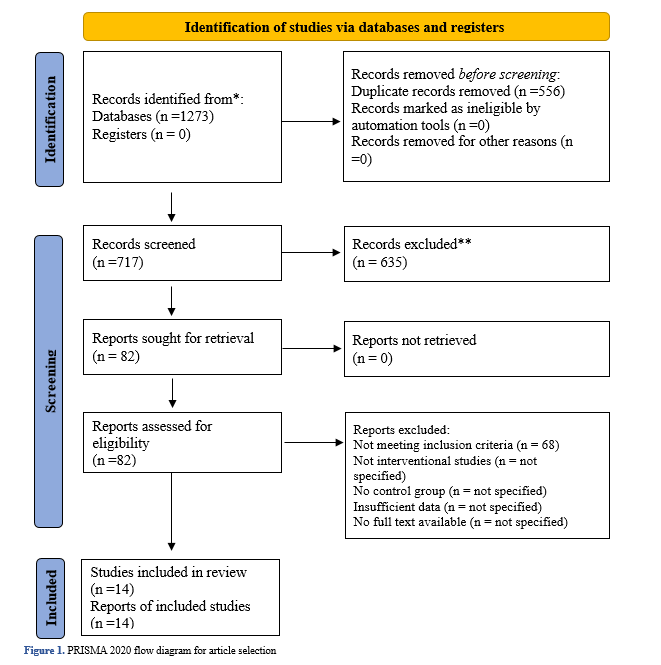
Database searches identified 1,273 studies.
After removing 556 duplicate and overlapping articles, 717 studies remained.
In addition, 635 articles were excluded after title and abstract screening because they were irrelevant to the research topic. Of the remaining 82 studies, 68 were excluded after full-text evaluation for not meeting the inclusion criteria.
Thus, 14 articles meeting the inclusion criteria were included in the meta-analysis.
The PRISMA 2020 flow diagram illustrates these steps [Figure 1].
General Specifications of The Studies
The total sample size across all studies included in the analysis comprised 423 participants in the intervention group and 420 participants in the control group. The oldest study dated back to 2006, while the most recent study was from 2024.
Most studies were conducted in the USA (5 articles). Most studies (11 articles) used the Self-Efficacy Questionnaire (SEQ) as the self-efficacy diagnostic tool.
The quality assessment scores of the studies were assessed using the JBI checklist (13 items, total score: 13). The specifications and data of the studies meeting the inclusion criteria are provided in Table 1.
Meta-Analysis of the Standardized Mean Difference Before and After the Intervention between the Intervention and Control Groups
The results of the present meta-analysis indicate a high level of heterogeneity among the studies (I² = 86.62).
Therefore, a random-effects model was employed to synthesize the studies and derive the final results.
The pooled analysis showed a statistically significant increase in self-efficacy scores in the intervention group (SMD = 1.175; 95% CI: 0.750-1.600) compared with the control group (p < 0.001). The forest plot [Figure 2] illustrates the combined estimate of all studies and the standardized mean difference for each study.
The 95% confidence intervals are represented by the horizontal lines of each square [Figure 2]. Based on Egger's regression intercept, there was no evidence of publication bias at the 0.1 level (p = 0.238) [Figure 3].
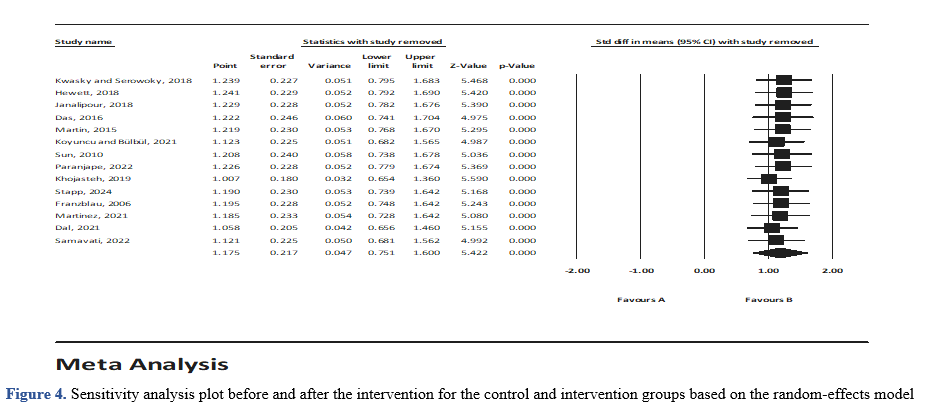
Sensitivity analysis showed that removing any study did not significantly change the outcome [Figure 4].
Meta-Regression
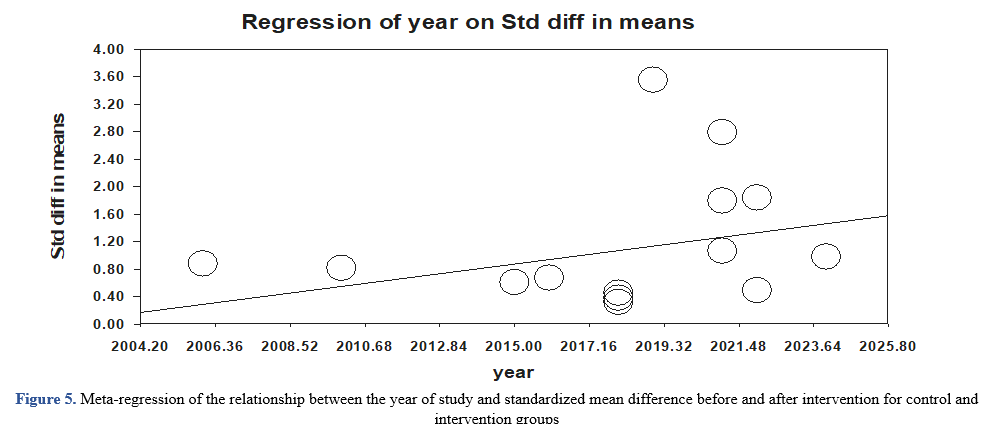
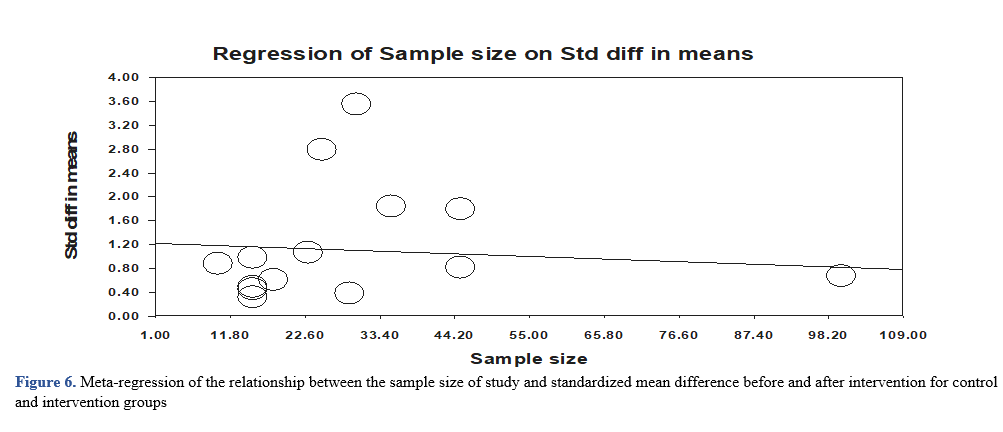
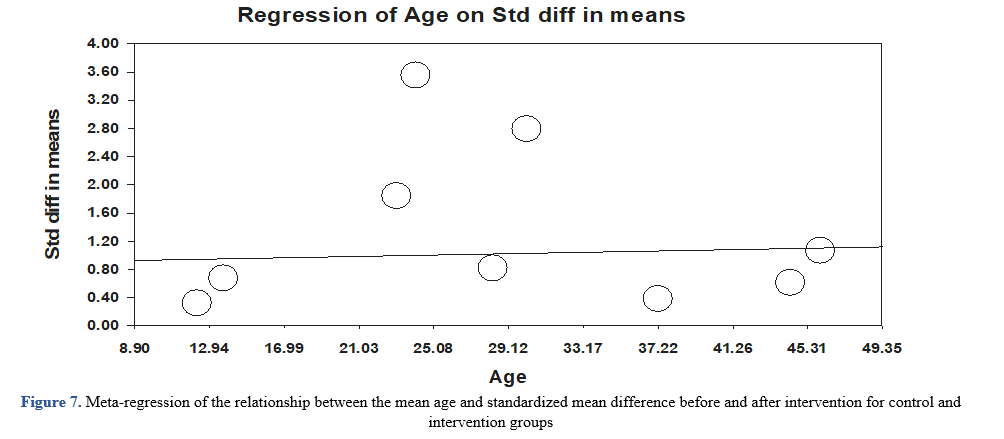
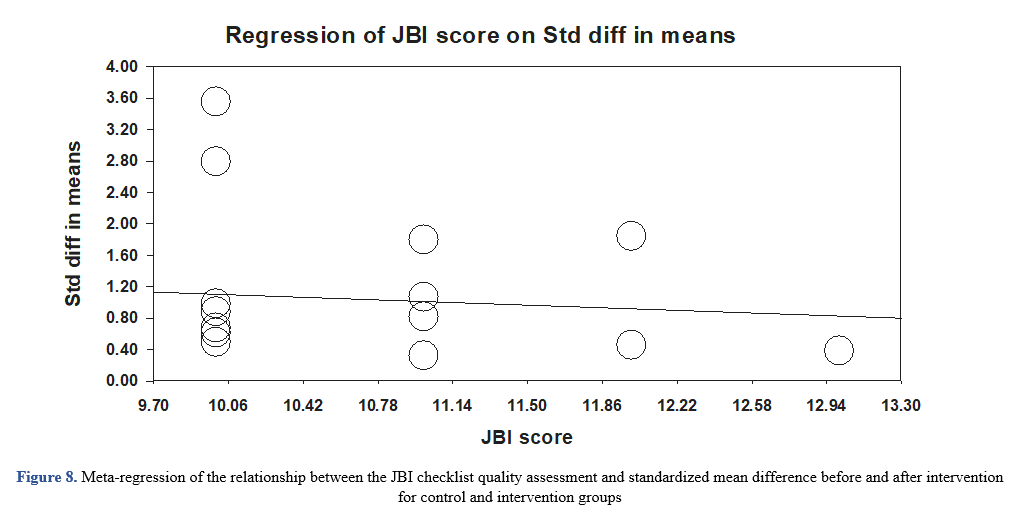
Meta-regression was conducted to assess the association between potential study-level factors (year of publication [Figure 5], sample size [Figure 6], mean age [Figure 7], and JBI quality assessment score [Figure 8] and the pooled standardized mean difference (SMD).
The results indicated that as the publication year increased, the intervention effect increased significantly (p ˂ 0.05) [Figure 5].
However, sample size, patient age, and the JBI checklist quality assessment score were not statistically associated with intervention effect (p ˃ 0.05) [Figures 6–8].
Table 1. Specifications of studies entered the meta-analysis
.png)
Self-efficacy refers to individuals' beliefs in their ability to perform actions that lead to specific outcomes [1]. It is a personal, situational, and culturally dependent concept that significantly influences behavior, predicts activity performance, and determines performance levels [2]. From a preventive care standpoint, self-efficacy is recognized as a key modifiable determinant that can influence engagement in health-promoting and disease-preventing behaviors. Self-efficacy affects the time individuals dedicate to tasks, their adaptability in various situations, and their resilience when facing challenges [3].
Individuals with high self-efficacy are better at overcoming problems and resolving issues due to their strong problem-solving skills and positive experiences [4]. In difficult situations, they focus on their abilities to tackle challenges and actively seek solutions instead of viewing the situation negatively [5]. This proactive approach is particularly valuable in preventive care, where early action and adherence to health recommendations can significantly reduce the risk of future illness. Self-efficacy affects goal selection, decision-making, and mental health. It also creates a sense of ease when approaching challenging tasks and activities [6].
Therefore, interventions that enhance self-efficacy can serve as effective preventive strategies. Yoga is one recommended practice for enhancing self-efficacy [7]. It encompasses various forms, such as Asana (yoga postures that relax the pelvic region and promote calmness) and Pranayama (breathing techniques that calm the mind) [8]. Yoga also promotes calming thoughts that reduce stress, improve self-efficacy, and enhance emotional control [7]. It has proven effective in treating conditions like depression, sleep disorders [9], and anxiety [10], and can also play a role in preventing these conditions by strengthening psychological resilience. By reducing sympathetic activity and increasing parasympathetic activity, yoga alleviates stress, improving endocrine function and immune adaptation [11], all of which are relevant targets for primary and secondary prevention.
Yoga aims to regulate the mind and its impact on the central nervous system. Unlike other forms of exercise, yoga uniquely modulates the central nervous system, hormone secretion, physiological changes, neural signal regulation, and related processes [12]. As a result, yoga can effectively complement conventional medical treatments for various physical and mental disorders [13]. Moreover, as a low-cost, accessible practice, yoga aligns well with preventive care goals, which emphasize population-wide, cost-effective interventions. It is a cost-effective, universally accessible practice that requires minimal resources, making it suitable for people of all ages and supporting physical and mental health [14].
Several preliminary studies have examined the impact of yoga on self-efficacy across diverse populations worldwide [15-17]. However, the potential of yoga as a preventive tool targeting self-efficacy has not yet been systematically evaluated. Given the varied outcomes of these studies, a systematic review and meta-analysis is essential to provide clear and consistent findings. Such research could serve as a comprehensive guide for policymakers and researchers interested in integrating preventive interventions into routine care.
Objectives
This systematic review and meta-analysis aims to assess and synthesize findings on the effects of yoga on self-efficacy in preventive care.
Methods
This study used a systematic review and meta-analysis approach with no time limit, up to March 5, 2026. It followed the PRISMA 2020 protocol (http://www.prisma-statement.org/), encompassing the stages of identification, screening, eligibility, and inclusion [18].
Identification of Articles
To identify published articles relevant to the research objective, we searched Persian-language databases (SID: https://www.sid.ir and MagIran: https://www.magiran.com) and international databases, including PubMed, Embase, Scopus, and Web of Science (WoS). We conducted searches using keywords such as "Self-Efficacy" and "Yoga," validated through MeSH for PubMed and Emtree for Embase, and combined these terms using OR and AND operators.
No time restrictions were applied to ensure the retrieval of all potentially relevant studies. To broaden our search, we also used Google Scholar and manually reviewed the references of all related articles that met our inclusion criteria.
Search Strategy
For instance, the search strategy used for PubMed was structured as follows: ((Self Efficacy [MeSH Terms]) OR ("Self-Efficacy"[Title/Abstract])) AND ((Yoga [MeSH Terms]) OR (Yoga [Title/Abstract]) AND (English [Filter])).
Inclusion Criteria
- Original scientific research articles.
- Interventional studies.
- Full text available.
- Studies examining the impact of yoga on self-efficacy.
- Sufficient data (reporting mean (SD) of self-efficacy scores before and after the Intervention in both the intervention and control groups).
Exclusion Criteria
- Studies unrelated to the research objective.
- Cross-sectional studies, case reports, case series, conference proceedings, letters to the editor, qualitative studies, theses, systematic reviews, meta-analyses, and animal studies.
- Duplicate studies across databases (only one instance retained).
- Studies without full-text access.
- Absence of a control group.
Data Extraction
All retrieved articles from various databases were imported into EndNote X8 software, and duplicates were removed. Next, the titles and abstracts were carefully reviewed to exclude irrelevant studies. Reviewers then thoroughly evaluated the full texts of the remaining articles. Studies that did not meet the established inclusion and exclusion criteria were dismissed. During selection, reviewers were blinded to the authors, institutions, and journals of the articles. All selected articles were then qualitatively assessed for inclusion in the systematic review and meta-analysis.
Quality/ Risk of Bias Assessment Tools
The qualitative evaluation used the Joanna Briggs Institute (JBI) checklist, a well-established tool for assessing the quality of interventional studies [19]. This checklist consists of 13 items that address key aspects, including randomization, allocation, baseline similarity of treatment groups, participant blinding, blinding of those implementing the Intervention, and blinding of outcome assessors. It also evaluates whether treatments were similar across groups, except for the Intervention itself, along with follow-up, participant analysis, outcomes, the reliability of the outcome measurement method, appropriate statistical analysis, and suitable trial design. For scoring, "Yes" was given if an item was addressed, "No" if it was not, and "NA" if it was not applicable. The scores ranged from 0 to 13, based on the number of "Yes" responses. For quasi-experimental studies, the 9-item JBI Critical Appraisal Checklist for Quasi-Experimental Studies was used for methodological quality assessment.
Data Extraction
Data extraction from the final articles included in the systematic review and meta-analysis was conducted manually using a pre-prepared checklist. The checklist contained the following items: first author, year, study location, age, and sample size, mean ± SD of self-efficacy scores before and after the Intervention for both the intervention and control groups, study type, target population, and diagnostic tools. To reduce publication bias and errors, two researchers, A.J. and M.K., carried out all stages of identification, selection, quality assessment, and data extraction independently. In the event of a disagreement between the researchers, the issue was discussed and resolved by reaching a consensus in the presence of a supervisor.
Synthesis Methods
The main parameter evaluated in this study was the impact of yoga on self-efficacy.
To synthesize results from various studies, we calculated the mean (SD) of self-efficacy scores before and after the Intervention for both the intervention and control groups.
We assessed heterogeneity among studies using the I² index, where values below 50% indicated "low heterogeneity" and values above 50% indicated "high heterogeneity."
Because of the significant heterogeneity among the included studies (I² > 50%), we used a random-effects model.
This model accommodates variation across studies and yields more generalizable results under high heterogeneity than a fixed-effects model [20].
A sensitivity analysis was performed to identify the sources of heterogeneity.
To evaluate publication bias, we utilized Egger's regression intercept, which is particularly effective for detecting publication bias in meta-analyses containing 10 to 75 studies [21].
Additionally, Meta-regression analysis was conducted to explore the impact of study-level variables (sample size, year of publication, mean participant age, and JBI quality score) on the pooled standardized mean difference (SMD).
Statistical analysis was conducted using Comprehensive Meta-Analysis Software (Version 2), with a significance threshold set at p < 0.05.
Result
Summary of Article Inclusion in the Meta-Analysis
Database searches identified 1,273 studies.
After removing 556 duplicate and overlapping articles, 717 studies remained.
In addition, 635 articles were excluded after title and abstract screening because they were irrelevant to the research topic. Of the remaining 82 studies, 68 were excluded after full-text evaluation for not meeting the inclusion criteria.
Thus, 14 articles meeting the inclusion criteria were included in the meta-analysis.
The PRISMA 2020 flow diagram illustrates these steps [Figure 1].
General Specifications of The Studies
The total sample size across all studies included in the analysis comprised 423 participants in the intervention group and 420 participants in the control group. The oldest study dated back to 2006, while the most recent study was from 2024.
Most studies were conducted in the USA (5 articles). Most studies (11 articles) used the Self-Efficacy Questionnaire (SEQ) as the self-efficacy diagnostic tool.
The quality assessment scores of the studies were assessed using the JBI checklist (13 items, total score: 13). The specifications and data of the studies meeting the inclusion criteria are provided in Table 1.
Meta-Analysis of the Standardized Mean Difference Before and After the Intervention between the Intervention and Control Groups
The results of the present meta-analysis indicate a high level of heterogeneity among the studies (I² = 86.62).
Therefore, a random-effects model was employed to synthesize the studies and derive the final results.
The pooled analysis showed a statistically significant increase in self-efficacy scores in the intervention group (SMD = 1.175; 95% CI: 0.750-1.600) compared with the control group (p < 0.001). The forest plot [Figure 2] illustrates the combined estimate of all studies and the standardized mean difference for each study.
The 95% confidence intervals are represented by the horizontal lines of each square [Figure 2]. Based on Egger's regression intercept, there was no evidence of publication bias at the 0.1 level (p = 0.238) [Figure 3].
Sensitivity analysis showed that removing any study did not significantly change the outcome [Figure 4].
Meta-Regression
Meta-regression was conducted to assess the association between potential study-level factors (year of publication [Figure 5], sample size [Figure 6], mean age [Figure 7], and JBI quality assessment score [Figure 8] and the pooled standardized mean difference (SMD).
The results indicated that as the publication year increased, the intervention effect increased significantly (p ˂ 0.05) [Figure 5].
However, sample size, patient age, and the JBI checklist quality assessment score were not statistically associated with intervention effect (p ˃ 0.05) [Figures 6–8].
Table 1. Specifications of studies entered the meta-analysis
| Study | Country | Population | Intervention | Design | Instrument | Quality Score | Sample Size (I/C) | Age (Mean ± SD) | Baseline Mean ± SD (I/C) | Post-intervention Mean ± SD (I/C) |
| Kwasky & Serowoky, 2018 [17] | USA | Adolescents (11–14 years) | Yoga, twice weekly for 8 weeks | Quasi-experimental | SEQ-C | 11 | 15/15 | 12.27 ± 1.47 | 30.30 ± 5.81 / 31.40 ± 4.55 | 29.10 ± 5.93 / 28.50 ± 4.28 |
| Hewett, 2018 [7] | Australia | Sedentary adults | Bikram yoga, 16 weeks | RCT | General Self-Efficacy | 13 | 34/29 | 37.2 ± 10.8 | 30.4 ± 4.6 / 32.3 ± 4.2 | 29.3 ± 4.6 / 29.5 ± 4.4 |
| Janalipour, 2018 [15] | Iran | Women with multiple sclerosis | Yoga, twice weekly for 8 weeks | RCT | MSSS | 12 | 15/15 | NR | 34.67 ± 6.98 / 49.53 ± 6.75 | 43.80 ± 12.01 / 47.20 ± 8.05 |
| Das, 2016 [22] | India | School children | Yoga for 10 days | Quasi-experimental | SEQ | 10 | 100/100 | 13.7 ± 0.8 | 30.46 ± 6.15 / 29.71 ± 5.11 | 30.10 ± 6.44 / 25.51 ± 7.12 |
| Martin, 2015 [23] | USA | Women with PTSD | Yoga, twice weekly for 8 weeks | RCT | BREQ-2 | 10 | 18/18 | 44.37 ± 12.37 | 25.60 ± 15.27 / 34.64 ± 27.15 | 25.44 ± 20.60 / 20.94 ± 24.98 |
| Koyuncu & Bülbül, 2021 [16] | Turkey | Third-trimester pregnant women | Yoga, 2 days/week for 4 weeks | Quasi-experimental | SEQ | 11 | 45/45 | NR | 161.22 ± 7.16 / 180.33 ± 12.37 | 169.99 ± 7.90 / 170.91 ± 8.33 |
| Sun, 2010 [24] | Taiwan | Pregnant women | Prenatal yoga, 12–14 weeks, 3×/week | Quasi-experimental | SEQ | 11 | 43/45 | 28.27 ± 3.1 | 38.28 ± 8.99 / 43.62 ± 9.25 | 37.60 ± 8.64 / 35.46 ± 8.53 |
| Paranjape, 2022 [25] | USA | Adults | Yoga, 2 days/week for 4 weeks | Quasi-experimental | SEQ | 10 | 15/15 | NR | 25.32 ± 3.22 / 28.10 ± 5.13 | 24.98 ± 2.91 / 25.63 ± 3.63 |
| Khojasteh, 2019 [26] | Iran | Primiparous women | 12–15 yoga sessions | Quasi-experimental | SEQ | 10 | 30/30 | 24.1 ± 2.8 | 92.75 ± 16.33 / 124.45 ± 13.26 | 99.62 ± 21.74 / 78.43 ± 24.70 |
| Stapp, 2024 [27] | USA | School children | Yoga, 2 days/week for 4 weeks | RCT | SEQ | 10 | 15/15 | NR | 3.5 ± 0.7 / 3.6 ± 0.5 | 2.2 ± 0.8 / 1.7 ± 0.7 |
| Franzblau, 2006 [28] | USA | Battered women | Two 45-min sessions on consecutive days | Quasi-experimental | SEQ | 10 | 10/10 | NR | 1.50 ± 0.70 / 1.20 ± 1.61 | 1.60 ± 0.51 / 2.04 ± 0.20 |
| Martinez, 2021 [29] | Spain | Adults | Yoga, 2 days/week for 4 weeks | RCT | SEQ | 11 | 23/23 | 45.98 ± 8.78 | 30.74 ± 3.66 / 17.87 ± 4.34 | 33.26 ± 3.65 / 16.09 ± 3.68 |
| Dal, 2021 [30] | Turkey | Pregnant women | NR | Semi-experimental | SEQ | 10 | 25/25 | 30.1 ± 6.87 | 60.86 ± 1.12 / 39.49 ± 1.74 | 51.58 ± 1.50 / 34.30 ± 1.10 |
| Samavati, 2022 [31] | Iran | Primiparous women | Three sessions/week for 2 weeks | RCT | SEQ | 12 | 35/35 | 23.06 ± 3.80 | 50.13 ± 6.04 / 57.66 ± 6.04 | 47.11 ± 5.31 / 43.05 ± 5.06 |
Discussion
This systematic review and meta-analysis examined the effects of yoga on self-efficacy. The findings, based on a synthesis of 14 relevant studies, showed a significant increase in self-efficacy among participants in the intervention group compared with those in the control group, highlighting yoga's positive impact on self-efficacy. From a preventive care perspective, this improvement in self-efficacy is clinically important, as higher self-efficacy is associated with better adherence to health-promoting behaviors and reduced risk of various health conditions.
Yoga includes not only physical exercises but also breathing techniques, mental relaxation, and focus practices [32]. This combination can enhance both physical and mental health by fostering a strong connection between the mind and body [33, 34]. Numerous studies have shown that yoga can improve psychological conditions such as symptoms of depression, anxiety, and sleep disorders [33]. Beyond alleviating these symptoms, yoga also strengthens psychological factors such as mindfulness, resilience, and self-efficacy [35]. These psychological improvements are directly relevant to preventive care, as they can reduce the likelihood of developing stress-related and lifestyle-mediated diseases. Some research has specifically confirmed its positive effects on self-efficacy [16, 27].
The findings of the present meta-analysis are consistent with previous studies reporting yoga's positive effects on self-efficacy. For example, Stapp (2024) found that yoga sessions significantly improved self-efficacy among school students [27], while another study among adolescents aged 11–16 years reported improvements in academic, emotional, and social self-efficacy following yoga interventions [22]. Similarly, Martinez et al. observed increased emotional self-efficacy among Spanish adults after yoga practice [29]. While these studies examined specific populations and domains of self-efficacy, this meta-analysis synthesizes evidence across diverse groups. It shows an overall significant improvement in self-efficacy, supporting yoga as a broadly applicable, low-cost preventive strategy.
Other studies have focused on how yoga can enhance childbirth self-efficacy, showing positive outcomes for pregnant women [2, 16, 24]. Additionally, one study examined the effects of yoga during pregnancy and found it significantly improved breastfeeding self-efficacy among expectant mothers [30].
Thus, yoga exercises appear to benefit self-efficacy among adults, students, and especially pregnant women. In the context of preventive care, improving self-efficacy during pregnancy can contribute to better maternal and neonatal health outcomes, representing a valuable secondary prevention opportunity.
Although yoga has been practiced for centuries, its therapeutic applications have only recently gained recognition. Research shows that yoga can benefit not only healthy individuals but also those in clinical populations [36]. For example, one study examined the impact of yoga therapy on patients with multiple sclerosis (MS) and found that participants' self-efficacy scores significantly improved after attending yoga sessions, highlighting yoga's positive effects on self-efficacy [15]. Additionally, Hewett et al. studied yoga interventions with a group of sedentary, stressed adults. They reported a significant increase in self-efficacy scores among those who participated in yoga sessions compared to the control group [7]. These findings indicate that yoga can be integrated into preventive care programs for both general and high-risk populations. These findings reinforce and support the results of the current research.
However, yoga-based interventions have not consistently improved self-efficacy. For example, Kwasky and Serowoky found no significant improvement in overall self-efficacy scores among children aged 11 to 14 years following yoga sessions, and the changes were not statistically significant [17]. Similarly, Martin et al. reported that yoga-based interventions did not significantly improve self-efficacy in women with post-traumatic stress disorder (PTSD) symptoms [23]. These inconsistencies highlight the need for standardized protocols and further research to identify who benefits most and under what conditions yoga is most effective as a preventive intervention.
Self-efficacy is defined as an individual's belief in their ability to achieve desired goals [37], and personal factors such as past experiences or personality traits can influence self-efficacy. For instance, research has shown that factors including age, gender, educational level, and place of residence (urban vs. rural) are associated with self-care ability, which can be considered an indicator of self-efficacy [38, 39, 40]. On the other hand, external variables such as the degree of social interaction, cultural contexts, and complementary interventions like massage therapy may also affect self-efficacy [41]; for example, non-pharmacological methods such as foot reflexology massage, by reducing pain and fatigue in the early postoperative period, can enhance patients' sense of efficacy and control [42, 43, 44]. These factors can vary among participants across different studies, which may explain the differing effects of yoga interventions on self-efficacy. Variations in session frequency and duration, participant skills, experience, readiness to engage in interventions, and methods used to measure self-efficacy may also contribute to the lack of effect observed in some studies. Understanding these moderators is essential for designing effective preventive programs tailored to specific populations.
The results indicated no significant relationship between age and the effects of yoga therapy, suggesting these interventions could positively impact individuals across all age groups, aligning with findings from Jalali et al. [37]. This age-independence supports the feasibility of yoga as a universal preventive intervention across the lifespan. The meta-regression results also showed that as publication years increased, the effects of yoga therapy on self-efficacy significantly improved. This trend may reflect a growing body of knowledge about yoga, advances in scientific research, and the use of more sophisticated techniques over time, resulting in a greater impact of yoga in recent years. This temporal improvement suggests that contemporary yoga protocols are becoming increasingly optimized for use in preventive care settings.
A notable strength of this study was estimating the pooled standardized mean difference between the intervention and control groups following the Intervention. Despite conducting a thorough review of international databases, including PubMed, Embase, Scopus, and Web of Science (WoS), only 14 studies met the specified inclusion and exclusion criteria. This highlights the need for further research in various regions. Future studies should specifically evaluate the long-term preventive effects of yoga on health outcomes mediated by self-efficacy. Other limitations included the use of non-random sampling methods, varied implementation techniques, and limited access to full texts of some papers.
One of the main limitations of this study was substantial heterogeneity among the included studies; therefore, we used a random-effects model to obtain a more conservative pooled estimate. Meta-regression analysis explored potential sources of heterogeneity, which partially explained the variability; however, overall heterogeneity remained high. In addition, because of the limited number of eligible studies, we could not conduct subgroup analyses to investigate further potential moderating factors such as population characteristics, intervention duration, or study design. Consequently, interpret the results with caution, and further well-designed studies with more homogeneous methodologies are recommended to provide more robust evidence.
Conclusion
This meta-analysis shows that yoga significantly improves self-efficacy across diverse populations. Further well-designed studies with standardized interventions are needed to confirm the long-term effects. These findings support yoga as a low-cost, non‑pharmacological strategy for strengthening self-efficacy and promoting preventive health behaviors.
Ethical Consideration
The Ethics Committee of Deputy of Research and Technology, Kermanshah University of Medical Sciences, approved the study (IR.KUMS.REC.1403.575). We observed all ethical requirements of the Declaration of Helsinki from the search for articles through the publication of the results.
Acknowledgements
This study is the result of research project No. 4030926 approved by the Student Research Committee of Kermanshah University of Medical Sciences. We thank the esteemed officials of that center for covering the financial expenses of this study.
Conflict of Interest
The authors declare no conflict of interest.
Funding
Funding source: Deputy for Research and Technology, Kermanshah University of Medical Sciences (IR) (Grant number: 4030926).
Authors' Contributions
Conceptualization: A. Jalali, M. Kazeminia
Methodology: A. Jalali, M. Kazeminia
Investigation: M. Kazeminia, P. Heidarian, M.R. Ghasemianrad, M. Taheri, R. Pourmirza Kalhori, M. Magholi
Formal Analysis: M. Kazeminia, A. Jalali
Writing – Original Draft: M. Kazeminia, M.R. Ghasemianrad
Writing – Review & Editing: A. Jalali, M. Taheri, R. Pourmirza Kalhori
All authors read and approved the final manuscript.
Artificial Intelligence Utilization
Not used.
Data Availability Statement
Data available upon reasonable request from the corresponding author.
Type of Study: Review Articels |
Subject:
other
References
1. Hamann KR, Wullenkord MC, Reese G, Van Zomeren M. Believing that we can change our world for the better: A Triple-A (Agent-Action-Aim) Framework of self-efficacy beliefs in the context of collective social and ecological aims. Personality and Social Psychology Review. 2024;28(1):11-53. [https://doi.org/10.1177/10888683231178056] [PMID]
2. Sunarti V, Rahman MA, Handrianto C, Syuraini S, Putri LD, Azizah Z, et al. Understanding women's empowerment through exercise: Insights from a study on physical activity and self-efficacy. Retos: Nuevas Tendencias en Educación Física, Deportey Recreación. 2024(58):227-37. [https://doi.org/10.47197/retos.v58.106803]
3. Clemente J, Kilag O, Ypon A, Groenewald E, Groenewald CA, Ubay R. Enhancing mathematics self-efficacy: Intervention strategies and effectiveness-A systematic review. International Multidisciplinary Journal of Research for Innovation, Sustainability, and Excellence (IMJRISE). 2024;1(2):274-80. [https://risejournals.org/index.php/imjrise/article/view/149]
4. Cheng Y-y. Academic self-efficacy and assessment. Taylor & Francis; 2020. p. 389-91. [https://doi.org/10.1080/01443410.2020.1755501]
5. Rafiola R, Setyosari P, Radjah C, Ramli M. The effect of learning motivation, self-efficacy, and blended learning on students' achievement in the industrial revolution 4.0. International Journal of Emerging Technologies in Learning (iJET). 2020;15(8):71-82. [https://doi.org/10.3991/ijet.v15i08.12525]
6. Peechapol C, Na-Songkhla J, Sujiva S, Luangsodsai A. An exploration of factors influencing self-efficacy in online learning: A systematic review. International Journal of Emerging Technologies in Learning (Online). 2018;13(9):64. [https://doi.org/10.3991/ijet.v13i09.8351]
7. Hewett ZL, Pumpa KL, Smith CA, Fahey PP, Cheema BS. Effect of a 16-week Bikram yoga program on perceived stress, self-efficacy and health-related quality of life in stressed and sedentary adults: A randomised controlled trial. Journal of Science and Medicine in Sport. 2018;21(4):352-7. [https://doi.org/10.1016/j.jsams.2017.08.006] [PMID]
8. Nagendra H, Kumar V, Mukherjee S. Cognitive behavior evaluation based on physiological parameters among young healthy subjects with yoga as intervention. Computational and Mathematical Methods in Medicine. 2015;2015(1):821061. [https://doi.org/10.1155/2015/821061] [PMID]
9. Prathikanti S, Rivera R, Cochran A, Tungol JG, Fayazmanesh N, Weinmann E. Treating major depression with yoga: A prospective, randomized, controlled pilot trial. Plos One. 2017;12(3):e0173869. [https://doi.org/10.1371/journal.pone.0173869] [PMID]
10. Kiecolt-Glaser JK, Christian LM, Andridge R, Hwang BS, Malarkey WB, Belury MA, et al. Adiponectin, leptin, and yoga practice. Physiology & Behavior. 2012;107(5):809-13. [https://doi.org/10.1016/j.physbeh.2012.01.016] [PMID]
11. Cramer H, Lauche R, Anheyer D, Pilkington K, de Manincor M, Dobos G, et al. Yoga for anxiety: A systematic review and meta‐analysis of randomized controlled trials. Depression and Anxiety. 2018;35(9):830-43. [https://doi.org/10.1002/da.22762] [PMID]
12. Ross A, Thomas S. The health benefits of yoga and exercise: a review of comparison studies. The Journal of Alternative and Complementary Medicine: Paradigm, Practice, and Policy Advancing Integrative Health. 2010;16(1):3-12. [https://doi.org/10.1089/acm.2009.0044] [PMID]
13. Kim S-D. Effects of yoga exercises for headaches: a systematic review of randomized controlled trials. Journal of Physical Therapy Science. 2015;27(7):2377-80. [https://doi.org/10.1589/jpts.27.2377] [PMID]
14. Nanthakumar C. The benefits of yoga in children. Journal of Integrative Medicine. 2018;16(1):14-9. [https://doi.org/10.1016/j.joim.2017.12.008] [PMID]
15. Janalipour K, Essazadegan A, Jahanbin E, Hatamian H. The effectiveness of yoga therapy in increasing the self-efficacy of women with MS. Caspian Journal of Neurological Sciences. 2018. [https://doi.org/10.29252/cjns.4.13.77]
16. Koyuncu SB, Bülbül M. The impact of yoga on fear of childbirth and childbirth self-efficacy among third trimester pregnants. Complementary Therapies in Clinical Practice. 2021;44:101438. [https://doi.org/10.1016/j.ctcp.2021.101438] [PMID]
17. Kwasky AN, Serowoky ML. Yoga to enhance self efficacy: An intervention for at-risk youth. Archives of Psychiatric Nursing. 2018;32(1):82-5. [https://doi.org/10.1016/j.apnu.2017.10.009] [PMID]
18. Page MJ, McKenzie JE, Bossuyt PM, Boutron I, Hoffmann TC, Mulrow CD, et al. The PRISMA 2020 statement: an updated guideline for reporting systematic reviews. British Medical Journal. 2021;372. [https://doi.org/10.1136/bmj.n71] [PMID]
19. Tufanaru C, Munn Z, Aromataris E, Campbell J, Hopp L. Systematic reviews of effectiveness. Joanna Briggs Institute Reviewer's Manual. 2017;3. [https://doi.org/10.46658/JBIRM-17-03]
20. Zhao B, Wu Y, Jin X, Yang L, Yang J, Ma X, et al. Objectively measured sleep characteristics and incidence of ischemic stroke: the sleep heart health study. Nature and Science of Sleep. 2021:1485-94. [https://doi.org/10.2147/NSS.S313891] [PMID]
21. Lin L, Chu H, Murad MH, Hong C, Qu Z, Cole SR, et al. Empirical comparison of publication bias tests in meta-analysis. Journal of General Internal Medicine. 2018;33(8):1260-7. [https://doi.org/10.1007/s11606-018-4425-7] [PMID]
22. Das M, Deepeshwar S, Subramanya P, Manjunath NK. Influence of Yoga-based personality development program on psychomotor performance and self-efficacy in school children. Frontiers in Pediatrics. 2016;4:62. [https://doi.org/10.3389/fped.2016.00062] [PMID]
23. Martin EC, Dick AM, Scioli-Salter ER, Mitchell KS. Impact of a yoga intervention on physical activity, self-efficacy, and motivation in women with PTSD symptoms. The Journal of Alternative and Complementary Medicine: Paradigm, Practice, and Policy Advancing Integrative Health. 2015;21(6):327-32. [https://doi.org/10.1089/acm.2014.0389] [PMID]
24. Sun Y-C, Hung Y-C, Chang Y, Kuo S-C. Effects of a prenatal yoga programme on the discomforts of pregnancy and maternal childbirth self-efficacy in Taiwan. Midwifery. 2010;26(6):e31-e6. [https://doi.org/10.1016/j.midw.2009.01.005] [PMID]
25. Paranjape MM, Deshmukh N, SPPU P. Benefits of Yoga for Self-Esteem and Self-Efficacy: A Quasi Experimental Investigation among Normal Adults. Indian Journal of Social Sciences and Literature Studies. 2022;8(1). [https://jcprpub.org/storage/media/dynamic_values/t3x_yBp1648647544GCYX]
26. Khojasteh F, Evin A, Ansari H. The effect of hatha yoga on anxiety and self-efficacy of primiparous women in labor. Complementary Medicine Journal. 2019. [http://cmja.arakmu.ac.ir/article-1-634-en.html]
27. Stapp A. The Impact of a Yoga Curriculum Intervention on Pre-Service Teachers' Perceived Self-Efficacy, Experience, and Value. Journal of Teacher Education and Educators. 2024;13(2):134-44. [https://dergipark.org.tr/en/pub/jtee/article/1373346?issue_id=86891]
28. Franzblau S, Smith M, Echevarria S, Van Cantfort T. Take a breath, break the silence: the effects of yogic breathing and testimony about battering on feelings of self-efficacy in battered women. International Journal of Yoga Therapy. 2006;16(1):49-57. [https://doi.org/10.17761/ijyt.16.1.d8qw1532m0121w35]
29. Martinez SR, Dueñas A, Ordoñes X. Effects of brief daily Kundalini yoga meditation on self-esteem, mood and emotional self-efficacy: A randomized comparison study. International Journal of Transpersonal Studies. 2021;40(2):8. [https://doi.org/10.24972/ijts.2021.40.2.88]
30. Dal NA, Gümüşsoy S, Sarıdoğan E, Özdemir Ç. The effect of pregnancy yoga on breastfeeding self-efficacy and prenatal attachment: A semi-experimental study. International Medicine. 2021;3(3):80. [https://doi.org/10.5455/im.54333]
31. Samavati S, Kazemi F, Aghababaei S, Soltani F. The effect of yoga on fear of childbirth and childbirth self-efficacy in primigravid women: a randomized controlled trial. The Iranian Journal of Obstetrics, Gynecology and Infertility.2022. [https://doi.org/10.22038/ijogi.2022.20428]
32. Padmavathi R, Kumar AP, Dhamodhini K, Venugopal V, Silambanan S, Maheshkumar K, et al. Role of yoga in stress management and implications in major depression disorder. Journal of Ayurveda and Integrative medicine. 2023;14(5):100767. [https://doi.org/10.1016/j.jaim.2023.100767] [PMID]
33. Csala B, Springinsfeld CM, Köteles F. The relationship between yoga and spirituality: a systematic review of empirical research. Frontiers in Psychology. 2021;12:695939. [https://doi.org/10.3389/fpsyg.2021.695939] [PMID]
34. Kinkel CL, Candray H, Fruhauf CA, Atler KE, Schmid AA. Merging Yoga and self-management Skills (MY-Skills) to influence self-efficacy among individuals with persistent pain: A pilot study. Complementary Therapies in Clinical Practice. 2022;49:101678. [https://doi.org/10.1016/j.ctcp.2022.101678] [PMID]
35. Kumar S, Rathi A. School-based yoga intervention for internet resilience and holistic well-being of adolescents. Brain Behavior and Immunity Integrative. 2025;9:100102. [https://doi.org/10.1016/j.bbii.2024.100102]
36. Baishya A, Metri K. Effects of yoga on hypothyroidism: A systematic review. Journal of Ayurveda and Integrative Medicine. 2024;15(2):100891. [https://doi.org/10.1016/j.jaim.2024.100891] [PMID]
37. Jalali A, Ziapour A, Ezzati E, Kazemi S, Kazeminia M. The impact of training based on the pender health promotion model on self-efficacy: a systematic review and meta-analysis. American Journal of Health Promotion. 2024;38(7):918-29. [https://doi.org/10.1177/08901171231224101] [PMID]
38. Tsai C-F, Chang C-P, Chen T-L, Hsu M-L. Exploring the influence of personality traits, self-efficacy, and creativity on employability for hospitality and tourism college students. Sustainability. 2024;16(4):1490. [https://doi.org/10.3390/su16041490]
39. Noohi S, Karamitanha F, Shoghli A. Self-care ability of the elderly and related factors. Preventive Care in Nursing & Midwifery Journal. 2022;12(4):19-25. [https://doi.org/10.52547/pcnm.12.4.19]
40. Abdelrahman H, Al Qadire M, Zehry H, Ballout S, Aljezawi H, Hayman LL. Predictors of Self‐Care Behaviours Among Patients With Chronic Disease: A Multicountry Survey. Nursing Research and Practice. 2026;2026(1):5262222. [https://doi.org/10.1155/nrp/5262222] [PMID]
41. Gebauer MM, McElvany N, Koeller O, Schöber C. Cross-cultural differences in academic self-efficacy and its sources across socialization contexts. Social Psychology of Education. 2021;24(6):1407-32. [https://doi.org/10.1007/s11218-021-09658-3]
42. Hosseini SE, Amirpour M, Javadi M. The Effect of Foot Reflexology Massage on Pain and Fatigue after Lumbar Spine Surgery: A Randomized Controlled Trial. Preventive Care in Nursing & Midwifery Journal. 2026;16(2):3-12. [http://nmcjournal.zums.ac.ir/article-1-1027-en.html]
43. Lee J, Han M, Chung Y, Kim J, Choi J. Effects of foot reflexology on fatigue, sleep and pain: a systematic review and meta-analysis. Journal of Korean Academy of Nursing. 2011;41(6):821-33. [https://doi.org/10.4040/jkan.2011.41.6.821] [PMID]
44. Klaus M, Kutschan S, Männle H, Hübner J, Dörfler J. Reflexology in oncological treatment-a systematic review. BMC complementary medicine and therapies. 2024;24(1):32. [https://doi.org/10.1186/s12906-023-04220-4] [PMID]
Send email to the article author
| Rights and permissions | |
 |
This work is licensed under a Creative Commons Attribution-NonCommercial 4.0 International License. |