
Preventive Care in Nursing and Midwifery

Volume 16, Issue 2 (4-2026)
Prev Care Nurs Midwifery 2026, 16(2): 118-134 |
Back to browse issues page


Ethics code: N/A


Download citation:
BibTeX | RIS | EndNote | Medlars | ProCite | Reference Manager | RefWorks
Send citation to:


BibTeX | RIS | EndNote | Medlars | ProCite | Reference Manager | RefWorks
Send citation to:
Kalantari S, mohammadi M, Alipour R, Aligholipour M, Khezerlou Z, Esmaeilbeigi D, et al . Effect of Telenursing Based Interventions on Health Outcomes After Cardiac Surgery: A Systematic Review. Prev Care Nurs Midwifery 2026; 16 (2) :118-134
URL: http://nmcjournal.zums.ac.ir/article-1-1056-en.html
URL: http://nmcjournal.zums.ac.ir/article-1-1056-en.html
Saba Kalantari  , Maryam Mohammadi * , Razie Alipour , Mahtab Aligholipour , Zahra Khezerlou , Darya Esmaeilbeigi , Kazem Hajimohammadi , Nima Sohrabi
, Maryam Mohammadi * , Razie Alipour , Mahtab Aligholipour , Zahra Khezerlou , Darya Esmaeilbeigi , Kazem Hajimohammadi , Nima Sohrabi
Pediatric Nursing Department, Nursing and Midwifery School, Zanjan University of Medical Sciences, Zanjan, Iran , Mmohammadi@zums.ac.ir
Full-Text [PDF 843 kb]
(138 Downloads)
| Abstract (HTML) (408 Views)
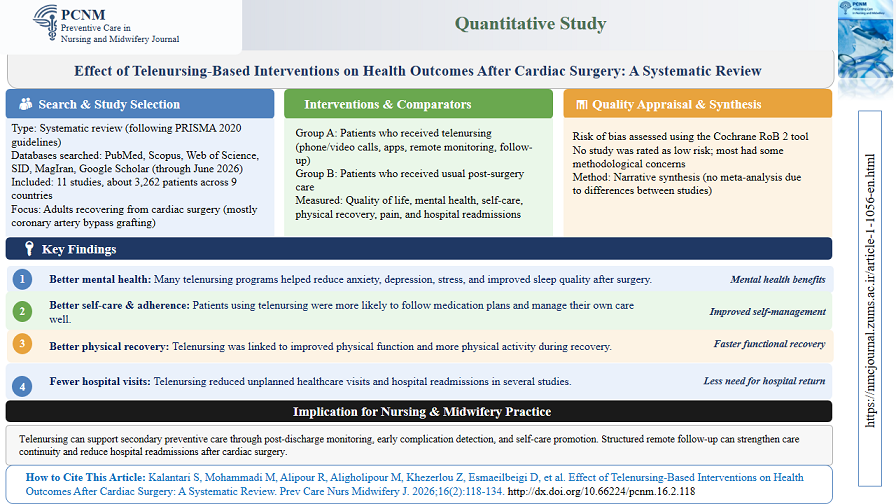
Graphical Abstract:
Reseach Highlights:
Knowledge Translation Statement
Audience: Nursing managers, cardiac surgery ward administrators, and post-discharge care coordinators
Telenursing interventions were associated with improved psychological outcomes, self-care, and functional status, and with reduced healthcare utilization after cardiac surgery. Managers may consider telenursing as a complementary approach in structured post-discharge care.
Full-Text: (125 Views)
Introduction
Cardiovascular diseases (CVDs) remain the leading cause of mortality worldwide, accounting for approximately 19.8 million deaths annually, representing nearly 32% of all global deaths [1]. Despite substantial advances in diagnostic and therapeutic approaches and improvements in patient survival, the number of individuals requiring advanced interventions, including cardiac surgery, continues to increase [2]. Cardiac surgical procedures, including coronary artery bypass grafting (CABG), percutaneous coronary intervention (PCI), and valvular heart surgeries, are among the most common therapeutic approaches for managing a wide range of cardiovascular conditions [3]. Despite advancements in surgical techniques and postoperative care, many patients continue to experience challenges after hospital discharge that may adversely affect their recovery process [4]. These challenges have been evaluated in various studies using indicators such as pain, wound complications and infections, respiratory problems, arrhythmias, hospital readmissions or rehospitalization, quality of life, physical functioning, treatment adherence, self-care behaviors, and patient satisfaction [4-7]. Beyond increasing healthcare costs, these complications may prolong recovery periods, increase healthcare utilization, and negatively affect patients' quality of life [8]. The first weeks and months following discharge represent one of the most vulnerable phases of recovery for cardiac patients due to postoperative physiological changes and the challenges associated with transitioning from hospital-based care to home management. Evidence suggests that inadequate education, limited follow-up, poor adherence to treatment regimens, and delayed recognition of warning signs may increase the risk of complications and hospital readmissions [9, 10]. In response to these existing gaps in post-discharge care, telehealth-based approaches have gained increasing attention as strategies to improve continuity of care, among which telenursing represents one of the most important approaches [11]. Telenursing refers to the use of communication technologies to deliver nursing care, education, consultation, patient monitoring, and treatment follow-up remotely. It is recognized as an important component of transitional care and post-discharge management [11, 12]. By fostering continuous communication with patients, providing personalized education, early identification of health problems, and preventing avoidable complications, telenursing may play a key role in enhancing preventive care and improving health outcomes [13]. Previous studies have demonstrated that telenursing-based interventions may improve quality of life, reduce pain and certain postoperative complications, enhance treatment adherence and physical functioning, and, in some cases, decrease hospital readmissions [4, 7]. However, the available evidence remains inconsistent, as the characteristics of interventions, technological platforms, follow-up durations, types of cardiac surgeries, and assessed outcomes have varied considerably across studies [14-17].
Furthermore, most previous reviews have focused broadly on telemedicine or digital health interventions and have not independently evaluated the specific contribution of nursing-based telenursing interventions [18].
Given the expanding application of digital health technologies and the increasing emphasis of healthcare systems on remote care delivery, synthesizing reliable evidence is essential to support evidence-based decision-making regarding telenursing implementation [19]. Despite the growing number of studies in this field, a comprehensive synthesis specifically examining the effectiveness of telenursing-based nursing interventions among patients undergoing cardiac surgery remains lacking. Moreover, the heterogeneity of existing evidence has made the interpretation and comparison of findings across studies challenging [4, 14, 18].
Objectives
This systematic review synthesized evidence on telenursing interventions to improve health outcomes in cardiac surgery patients, integrating clinical trial findings to provide a comprehensive overview of effectiveness.
Methods
Search Strategy
This systematic review followed PRISMA 2020 guidelines, with study selection per the PRISMA flow diagram [20]. The protocol for this systematic review was registered in PROSPERO (CRD420261435745) on June 28 2026. The registration was performed retrospectively at the journal's request to ensure adherence to publication requirements. All methodological procedures were predefined and conducted systematically in accordance with PRISMA 2020 guidelines. Persian (SID, MagIran) and international (PubMed, Scopus, WOS) databases were searched on June 28, 2026, The search strategy was developed using the keywords "Telenursing", "Cardiac Surgery", and "Clinical Outcomes", which were validated using Medical Subject Headings (MeSH) terms in PubMed and combined using Boolean operators (AND/OR) across the different databases. No time restrictions were applied to maximize the retrieval of all potentially relevant studies. Google Scholar was also searched to enhance the comprehensiveness of the search, and the reference lists of all eligible studies were manually screened to identify additional relevant publications. Appendix 1 provides complete search strategies for all databases.
Inclusion and Exclusion Criteria
Studies were eligible for inclusion if they met the following criteria based on the PICOS framework:
Population (P): Adult patients (≥18 years) undergoing any type of cardiac surgery, including but not limited to coronary artery bypass grafting (CABG), percutaneous coronary intervention (PCI), heart valve replacement or repair, and abdominal aortic aneurysm (AAA) repair.
Intervention (I): Telenursing-based interventions delivered during the post-discharge period. Telenursing was defined as the delivery of remote nursing care via information and communication technologies (ICTs), including telephone follow-up, mobile health applications, web-based platforms, text messaging, video consultations, or other ICT-based approaches. Interventions had to include at least one structured nurse-patient interaction.
Comparison (C): Usual care or standard post-discharge follow-up without telenursing components.
Outcomes (O): At least one postoperative health outcome, including but not limited to quality of life, psychological outcomes (anxiety, depression, stress), self-care behaviors, pain, functional status, hospital readmission, and healthcare utilization.
Study design (S): Randomized controlled trials (RCTs), pilot RCTs, and quasi-experimental studies with a comparison group.
Exclusion criteria: Observational studies, qualitative studies, case reports, case series, systematic reviews, meta-analyses, protocols, feasibility studies without a comparison group, letters, editorials, conference abstracts, and dissertations were excluded. Only original full-text research articles published in peer-reviewed journals were included.
Data Extraction
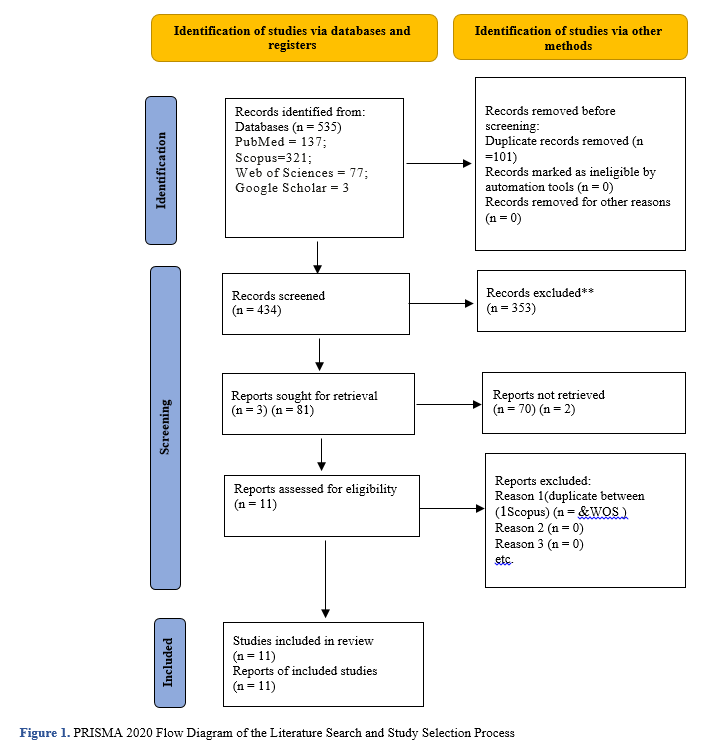
Records were imported into EndNote 21; duplicates were removed. Two reviewers independently screened titles/abstracts and full texts; disagreements were resolved by consensus or a third reviewer. Database searches yielded 535 records (PubMed: 137, Scopus: 321, WOS: 77). After removing 101 duplicates, 434 records were screened; 353 were excluded, and 81 were assessed. Eleven were selected for full-text; one was excluded for duplication, leaving 10 from electronic sources. Google Scholar and reference lists added three records, yielding one more eligible study. Finally, 11 studies were included. Selection process in PRISMA 2020 flow diagram [Figure 1].
Two reviewers independently extracted data using a standardized form based on the Cochrane Handbook, covering author, year, country, participant characteristics, surgery type, intervention/comparator, follow-up, outcomes, tools, and findings. Disagreements were resolved by consensus.
Quality and Risk of Bias Assessment
Two reviewers independently evaluated methodological quality and risk of bias using the Cochrane Risk of Bias 2 (RoB 2) tool. The tool assesses five domains: randomization process, deviations from intended interventions, missing outcome data, outcome measurement, and selection of the reported result. Overall judgments were categorized as low risk of bias, some concerns, or high risk of bias according to RoB 2 algorithms [21]. Disagreements were resolved through discussion, and a third reviewer was consulted when required.
Synthesis Methods
Clinical, methodological, and statistical heterogeneity were assessed before synthesis. Meta-analysis was considered inappropriate due to substantial heterogeneity in intervention characteristics, populations, outcomes, follow-up durations, and measurement instruments. Moreover, the number of sufficiently comparable studies was insufficient to estimate pooled effects. Therefore, statistical pooling was not performed, and heterogeneity statistics, including Cochran's Q and I², were not calculated.
Findings were synthesized narratively by exploring patterns of consistency and variation among included studies.
Result
Characteristics of Included Studies
Following the PRISMA 2020-based selection process, 11 studies were included. These comprised 10 RCTs and 1 pilot RCT conducted between 2009 and 2026 across 9 countries, with China contributing the most studies (n = 3). Most participants were adults undergoing cardiac surgery, particularly coronary artery bypass grafting (CABG); other procedures included valve replacement, PCI, and AAA repair.
Telenursing interventions were delivered through various technologies, including web-based programs, mobile applications, telephone or video consultations, text messaging, telehealth systems, and social networking platforms.
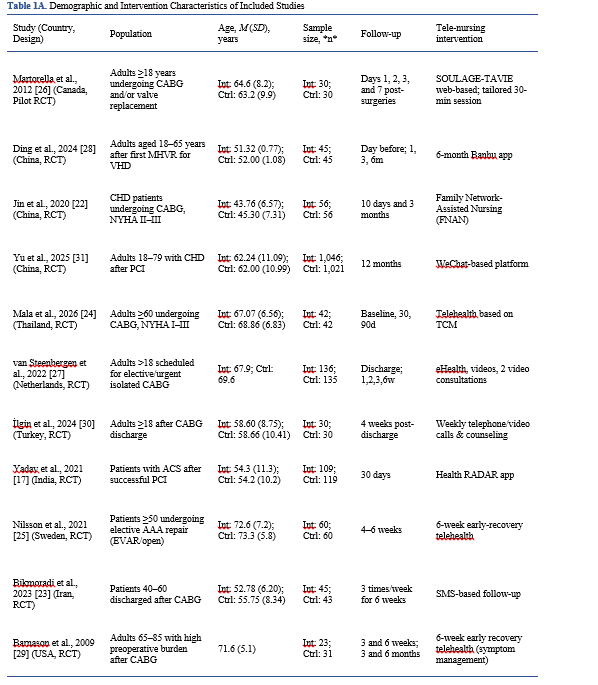
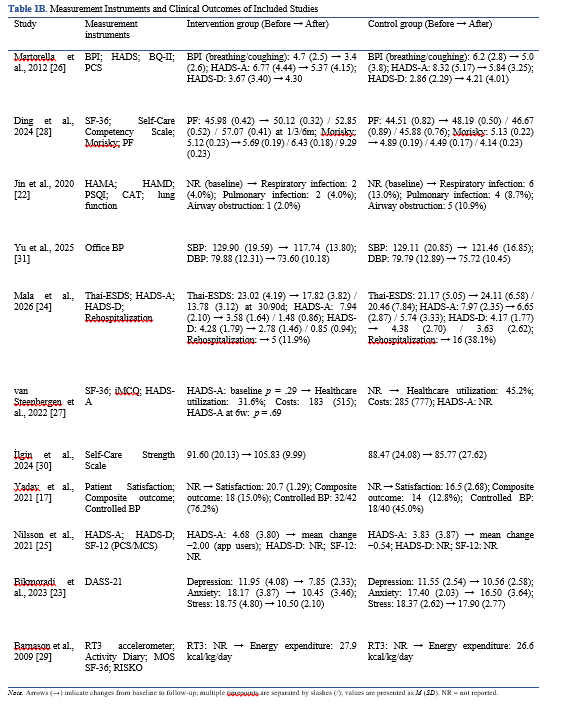
Follow-up periods ranged from 7 days to 12 months. Reported outcomes included pain, anxiety, depression, stress, sleep quality, quality of life, self-care behaviors, treatment adherence, patient satisfaction, functional status, blood pressure control, healthcare utilization, and postoperative clinical outcomes. Detailed demographic and intervention characteristics of each included study are presented in Table 1A, and measurement instruments with corresponding outcomes are presented in Table 1B.
Risk of Bias Assessment
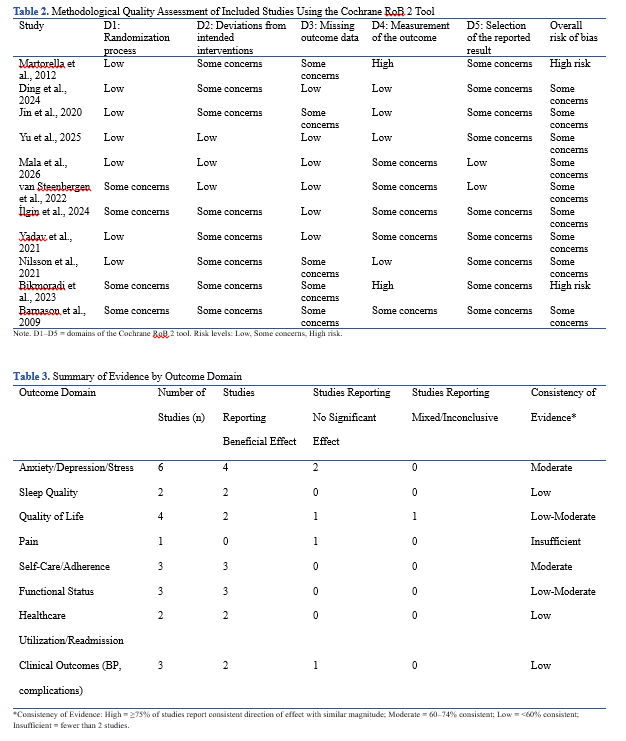
The RoB 2 assessment results are presented in Table 3. Among the 11 studies, two (18.2%) were judged to have a high risk of bias and nine (81.8%) to have some concerns. No study was classified as having low overall risk of bias. The greatest concerns were observed in Domain 2 (deviations from intended interventions) and Domain 5 (selection of the reported result), with eight studies (72.7%) rated as having some concerns in each domain. The randomization process was assessed as low risk in six studies (54.5%).
Synthesis of Findings
Due to substantial heterogeneity in intervention characteristics, populations, measurement instruments, outcomes, and follow-up durations [Table 1 A], meta-analysis was not considered appropriate.
Therefore, findings were synthesized narratively, categorized, and reported according to clinically comparable outcomes.
To provide an overview of the direction and consistency of the evidence, the results are summarized by outcome domain in Table 2.
Anxiety, Depression, Stress, and Sleep Quality
As presented in Table 1 B, six studies assessed psychological outcomes, including anxiety, depression, stress, or psychological distress.
The study by Jin et al. demonstrated reductions in HAMA, HAMD, and PSQI scores in both groups after three months. Although numerical mean and SD values were not reported, the authors reported greater improvements in the network-based family care group than in the control group (p < 0.05), indicating improvements in anxiety, depressive symptoms, and sleep disturbances [22]. In addition, patients in the intervention group showed greater improvements in pulmonary function, and better sleep quality was positively correlated with pulmonary indicators [22]. In the study by Bikmoradi et al., depression, anxiety, and stress were assessed using the Depression Anxiety Stress Scale-21 (DASS-21). After six weeks of telenursing intervention, the mean scores of depression, anxiety, and stress in the intervention group decreased from 11.95 to 7.85, from 18.17 to 10.45, and from 18.75 to 10.50, respectively. These reductions were statistically significant compared with the control group (p < 0.001) [23].
In the study by Mala et al., implementation of a telehealth-based transitional care model was associated with significant reductions in anxiety and depression scores. HADS-A scores decreased from a baseline of 7.94 (SD = 2.10) in the intervention group and 7.97 (SD = 2.35) in the control group to 3.58 (SD = 1.64) versus 6.65 (SD = 2.87) at 30 days, and to 1.48 (SD = 0.86) versus 5.74 (SD = 3.33) at 90 days (p < .001). HADS-D scores likewise decreased from a baseline of 4.28 (SD = 1.79) versus 4.17 (SD = 1.77) to 2.78 (SD = 1.46) versus 4.38 (SD = 2.70) at 30 days, and to 0.85 (SD = 0.94) versus 3.63 (SD = 2.62) at 90 days (p < 0.001). Functional status scores (Thai-ESDS) also improved, decreasing from a baseline of 23.02 (SD = 4.19) in the intervention group and 21.17 (SD = 5.05) in the control group to 17.82 (SD = 3.82) versus 24.11 (SD = 6.58) at 30 days, and to 13.78 (SD = 3.12) versus 20.46 (SD = 7.84) at 90 days (p < 0.001), with lower scores indicating greater functional independence [24]. In contrast, Nilsson et al. evaluated anxiety and depression using HADS-A and HADS-D. In the intention-to-treat analysis, the eHealth intervention did not significantly reduce anxiety scores compared with the control group (−1.21 vs. −0.54; p = .330).
Depression scores also did not differ significantly between the groups at follow-up. However, in the per-protocol analysis, participants who used the eHealth tool showed a greater reduction in anxiety scores than the control group (−2.00 vs. −0.54; p = 0.028) [25].
Also, in the study by Martorella et al., the effect of the web-based telenursing intervention SOULAGE-TAVIE on psychological outcomes was assessed using the Hospital Anxiety and Depression Scale (HADS).
Also, in the study by Martorella et al., the effect of the web-based telenursing intervention SOULAGE-TAVIE on psychological outcomes was assessed using the Hospital Anxiety and Depression Scale (HADS). Anxiety scores decreased from 6.77 (SD = 4.44) at baseline to 5.37 (SD = 4.15) on postoperative day 7 in the intervention group, compared with a decrease from 8.32 (SD = 5.17) to 5.84 (SD = 3.25) in the control group; however, no statistically significant between-group difference was reported. Depression scores increased from 3.67 (SD = 3.40) to 4.30 (SD = 3.32) in the intervention group and from 2.86 (SD = 2.29) to 4.21 (SD = 4.01) in the control group, with no statistically significant between-group difference reported [26].
Overall, these findings indicate that SOULAGE-TAVIE did not produce a significant short-term effect on postoperative anxiety or depression. Although anxiety decreased in both groups, the reduction cannot be attributed specifically to the telenursing intervention because a comparable decrease was also observed in the control group [26]. In the study by van Steenbergen et al., anxiety was assessed as a secondary outcome using HADS. No significant between-group difference in anxiety was observed at six weeks (p = 0.69) [27].
Overall, the available evidence suggests that some telenursing interventions, particularly multidimensional programs that incorporate education, regular follow-up, nursing counseling, and remote monitoring, may reduce anxiety, depression, stress, and sleep disturbances following cardiac surgery.
However, the magnitude of these effects varied across studies.
Cardiovascular diseases (CVDs) remain the leading cause of mortality worldwide, accounting for approximately 19.8 million deaths annually, representing nearly 32% of all global deaths [1]. Despite substantial advances in diagnostic and therapeutic approaches and improvements in patient survival, the number of individuals requiring advanced interventions, including cardiac surgery, continues to increase [2]. Cardiac surgical procedures, including coronary artery bypass grafting (CABG), percutaneous coronary intervention (PCI), and valvular heart surgeries, are among the most common therapeutic approaches for managing a wide range of cardiovascular conditions [3]. Despite advancements in surgical techniques and postoperative care, many patients continue to experience challenges after hospital discharge that may adversely affect their recovery process [4]. These challenges have been evaluated in various studies using indicators such as pain, wound complications and infections, respiratory problems, arrhythmias, hospital readmissions or rehospitalization, quality of life, physical functioning, treatment adherence, self-care behaviors, and patient satisfaction [4-7]. Beyond increasing healthcare costs, these complications may prolong recovery periods, increase healthcare utilization, and negatively affect patients' quality of life [8]. The first weeks and months following discharge represent one of the most vulnerable phases of recovery for cardiac patients due to postoperative physiological changes and the challenges associated with transitioning from hospital-based care to home management. Evidence suggests that inadequate education, limited follow-up, poor adherence to treatment regimens, and delayed recognition of warning signs may increase the risk of complications and hospital readmissions [9, 10]. In response to these existing gaps in post-discharge care, telehealth-based approaches have gained increasing attention as strategies to improve continuity of care, among which telenursing represents one of the most important approaches [11]. Telenursing refers to the use of communication technologies to deliver nursing care, education, consultation, patient monitoring, and treatment follow-up remotely. It is recognized as an important component of transitional care and post-discharge management [11, 12]. By fostering continuous communication with patients, providing personalized education, early identification of health problems, and preventing avoidable complications, telenursing may play a key role in enhancing preventive care and improving health outcomes [13]. Previous studies have demonstrated that telenursing-based interventions may improve quality of life, reduce pain and certain postoperative complications, enhance treatment adherence and physical functioning, and, in some cases, decrease hospital readmissions [4, 7]. However, the available evidence remains inconsistent, as the characteristics of interventions, technological platforms, follow-up durations, types of cardiac surgeries, and assessed outcomes have varied considerably across studies [14-17].
Furthermore, most previous reviews have focused broadly on telemedicine or digital health interventions and have not independently evaluated the specific contribution of nursing-based telenursing interventions [18].
Given the expanding application of digital health technologies and the increasing emphasis of healthcare systems on remote care delivery, synthesizing reliable evidence is essential to support evidence-based decision-making regarding telenursing implementation [19]. Despite the growing number of studies in this field, a comprehensive synthesis specifically examining the effectiveness of telenursing-based nursing interventions among patients undergoing cardiac surgery remains lacking. Moreover, the heterogeneity of existing evidence has made the interpretation and comparison of findings across studies challenging [4, 14, 18].
Objectives
This systematic review synthesized evidence on telenursing interventions to improve health outcomes in cardiac surgery patients, integrating clinical trial findings to provide a comprehensive overview of effectiveness.
Methods
Search Strategy
This systematic review followed PRISMA 2020 guidelines, with study selection per the PRISMA flow diagram [20]. The protocol for this systematic review was registered in PROSPERO (CRD420261435745) on June 28 2026. The registration was performed retrospectively at the journal's request to ensure adherence to publication requirements. All methodological procedures were predefined and conducted systematically in accordance with PRISMA 2020 guidelines. Persian (SID, MagIran) and international (PubMed, Scopus, WOS) databases were searched on June 28, 2026, The search strategy was developed using the keywords "Telenursing", "Cardiac Surgery", and "Clinical Outcomes", which were validated using Medical Subject Headings (MeSH) terms in PubMed and combined using Boolean operators (AND/OR) across the different databases. No time restrictions were applied to maximize the retrieval of all potentially relevant studies. Google Scholar was also searched to enhance the comprehensiveness of the search, and the reference lists of all eligible studies were manually screened to identify additional relevant publications. Appendix 1 provides complete search strategies for all databases.
Inclusion and Exclusion Criteria
Studies were eligible for inclusion if they met the following criteria based on the PICOS framework:
Population (P): Adult patients (≥18 years) undergoing any type of cardiac surgery, including but not limited to coronary artery bypass grafting (CABG), percutaneous coronary intervention (PCI), heart valve replacement or repair, and abdominal aortic aneurysm (AAA) repair.
Intervention (I): Telenursing-based interventions delivered during the post-discharge period. Telenursing was defined as the delivery of remote nursing care via information and communication technologies (ICTs), including telephone follow-up, mobile health applications, web-based platforms, text messaging, video consultations, or other ICT-based approaches. Interventions had to include at least one structured nurse-patient interaction.
Comparison (C): Usual care or standard post-discharge follow-up without telenursing components.
Outcomes (O): At least one postoperative health outcome, including but not limited to quality of life, psychological outcomes (anxiety, depression, stress), self-care behaviors, pain, functional status, hospital readmission, and healthcare utilization.
Study design (S): Randomized controlled trials (RCTs), pilot RCTs, and quasi-experimental studies with a comparison group.
Exclusion criteria: Observational studies, qualitative studies, case reports, case series, systematic reviews, meta-analyses, protocols, feasibility studies without a comparison group, letters, editorials, conference abstracts, and dissertations were excluded. Only original full-text research articles published in peer-reviewed journals were included.
Data Extraction
Records were imported into EndNote 21; duplicates were removed. Two reviewers independently screened titles/abstracts and full texts; disagreements were resolved by consensus or a third reviewer. Database searches yielded 535 records (PubMed: 137, Scopus: 321, WOS: 77). After removing 101 duplicates, 434 records were screened; 353 were excluded, and 81 were assessed. Eleven were selected for full-text; one was excluded for duplication, leaving 10 from electronic sources. Google Scholar and reference lists added three records, yielding one more eligible study. Finally, 11 studies were included. Selection process in PRISMA 2020 flow diagram [Figure 1].
Two reviewers independently extracted data using a standardized form based on the Cochrane Handbook, covering author, year, country, participant characteristics, surgery type, intervention/comparator, follow-up, outcomes, tools, and findings. Disagreements were resolved by consensus.
Quality and Risk of Bias Assessment
Two reviewers independently evaluated methodological quality and risk of bias using the Cochrane Risk of Bias 2 (RoB 2) tool. The tool assesses five domains: randomization process, deviations from intended interventions, missing outcome data, outcome measurement, and selection of the reported result. Overall judgments were categorized as low risk of bias, some concerns, or high risk of bias according to RoB 2 algorithms [21]. Disagreements were resolved through discussion, and a third reviewer was consulted when required.
Synthesis Methods
Clinical, methodological, and statistical heterogeneity were assessed before synthesis. Meta-analysis was considered inappropriate due to substantial heterogeneity in intervention characteristics, populations, outcomes, follow-up durations, and measurement instruments. Moreover, the number of sufficiently comparable studies was insufficient to estimate pooled effects. Therefore, statistical pooling was not performed, and heterogeneity statistics, including Cochran's Q and I², were not calculated.
Findings were synthesized narratively by exploring patterns of consistency and variation among included studies.
Result
Characteristics of Included Studies
Following the PRISMA 2020-based selection process, 11 studies were included. These comprised 10 RCTs and 1 pilot RCT conducted between 2009 and 2026 across 9 countries, with China contributing the most studies (n = 3). Most participants were adults undergoing cardiac surgery, particularly coronary artery bypass grafting (CABG); other procedures included valve replacement, PCI, and AAA repair.
Telenursing interventions were delivered through various technologies, including web-based programs, mobile applications, telephone or video consultations, text messaging, telehealth systems, and social networking platforms.
Follow-up periods ranged from 7 days to 12 months. Reported outcomes included pain, anxiety, depression, stress, sleep quality, quality of life, self-care behaviors, treatment adherence, patient satisfaction, functional status, blood pressure control, healthcare utilization, and postoperative clinical outcomes. Detailed demographic and intervention characteristics of each included study are presented in Table 1A, and measurement instruments with corresponding outcomes are presented in Table 1B.
Risk of Bias Assessment
The RoB 2 assessment results are presented in Table 3. Among the 11 studies, two (18.2%) were judged to have a high risk of bias and nine (81.8%) to have some concerns. No study was classified as having low overall risk of bias. The greatest concerns were observed in Domain 2 (deviations from intended interventions) and Domain 5 (selection of the reported result), with eight studies (72.7%) rated as having some concerns in each domain. The randomization process was assessed as low risk in six studies (54.5%).
Synthesis of Findings
Due to substantial heterogeneity in intervention characteristics, populations, measurement instruments, outcomes, and follow-up durations [Table 1 A], meta-analysis was not considered appropriate.
Therefore, findings were synthesized narratively, categorized, and reported according to clinically comparable outcomes.
To provide an overview of the direction and consistency of the evidence, the results are summarized by outcome domain in Table 2.
Anxiety, Depression, Stress, and Sleep Quality
As presented in Table 1 B, six studies assessed psychological outcomes, including anxiety, depression, stress, or psychological distress.
The study by Jin et al. demonstrated reductions in HAMA, HAMD, and PSQI scores in both groups after three months. Although numerical mean and SD values were not reported, the authors reported greater improvements in the network-based family care group than in the control group (p < 0.05), indicating improvements in anxiety, depressive symptoms, and sleep disturbances [22]. In addition, patients in the intervention group showed greater improvements in pulmonary function, and better sleep quality was positively correlated with pulmonary indicators [22]. In the study by Bikmoradi et al., depression, anxiety, and stress were assessed using the Depression Anxiety Stress Scale-21 (DASS-21). After six weeks of telenursing intervention, the mean scores of depression, anxiety, and stress in the intervention group decreased from 11.95 to 7.85, from 18.17 to 10.45, and from 18.75 to 10.50, respectively. These reductions were statistically significant compared with the control group (p < 0.001) [23].
In the study by Mala et al., implementation of a telehealth-based transitional care model was associated with significant reductions in anxiety and depression scores. HADS-A scores decreased from a baseline of 7.94 (SD = 2.10) in the intervention group and 7.97 (SD = 2.35) in the control group to 3.58 (SD = 1.64) versus 6.65 (SD = 2.87) at 30 days, and to 1.48 (SD = 0.86) versus 5.74 (SD = 3.33) at 90 days (p < .001). HADS-D scores likewise decreased from a baseline of 4.28 (SD = 1.79) versus 4.17 (SD = 1.77) to 2.78 (SD = 1.46) versus 4.38 (SD = 2.70) at 30 days, and to 0.85 (SD = 0.94) versus 3.63 (SD = 2.62) at 90 days (p < 0.001). Functional status scores (Thai-ESDS) also improved, decreasing from a baseline of 23.02 (SD = 4.19) in the intervention group and 21.17 (SD = 5.05) in the control group to 17.82 (SD = 3.82) versus 24.11 (SD = 6.58) at 30 days, and to 13.78 (SD = 3.12) versus 20.46 (SD = 7.84) at 90 days (p < 0.001), with lower scores indicating greater functional independence [24]. In contrast, Nilsson et al. evaluated anxiety and depression using HADS-A and HADS-D. In the intention-to-treat analysis, the eHealth intervention did not significantly reduce anxiety scores compared with the control group (−1.21 vs. −0.54; p = .330).
Depression scores also did not differ significantly between the groups at follow-up. However, in the per-protocol analysis, participants who used the eHealth tool showed a greater reduction in anxiety scores than the control group (−2.00 vs. −0.54; p = 0.028) [25].
Also, in the study by Martorella et al., the effect of the web-based telenursing intervention SOULAGE-TAVIE on psychological outcomes was assessed using the Hospital Anxiety and Depression Scale (HADS).
Also, in the study by Martorella et al., the effect of the web-based telenursing intervention SOULAGE-TAVIE on psychological outcomes was assessed using the Hospital Anxiety and Depression Scale (HADS). Anxiety scores decreased from 6.77 (SD = 4.44) at baseline to 5.37 (SD = 4.15) on postoperative day 7 in the intervention group, compared with a decrease from 8.32 (SD = 5.17) to 5.84 (SD = 3.25) in the control group; however, no statistically significant between-group difference was reported. Depression scores increased from 3.67 (SD = 3.40) to 4.30 (SD = 3.32) in the intervention group and from 2.86 (SD = 2.29) to 4.21 (SD = 4.01) in the control group, with no statistically significant between-group difference reported [26].
Overall, these findings indicate that SOULAGE-TAVIE did not produce a significant short-term effect on postoperative anxiety or depression. Although anxiety decreased in both groups, the reduction cannot be attributed specifically to the telenursing intervention because a comparable decrease was also observed in the control group [26]. In the study by van Steenbergen et al., anxiety was assessed as a secondary outcome using HADS. No significant between-group difference in anxiety was observed at six weeks (p = 0.69) [27].
Overall, the available evidence suggests that some telenursing interventions, particularly multidimensional programs that incorporate education, regular follow-up, nursing counseling, and remote monitoring, may reduce anxiety, depression, stress, and sleep disturbances following cardiac surgery.
However, the magnitude of these effects varied across studies.
Pain
In the study by Martorella et al., a web-based pain self-management education program (SOULAGE-TAVIE) was evaluated for its effect on postoperative pain-related outcomes. Pain interference with breathing and coughing decreased from 4.7 (SD = 2.5) on postoperative day 1 to 3.4 (SD = 2.6) on day 7 in the intervention group, compared with a decrease from 6.2 (SD = 2.8) to 5.0 (SD = 3.8) in the control group (F (1,31) = 4.09, p = 0.05).
Furthermore, patients' pain interference with daily activities, barriers to pain management, and pain catastrophizing were assessed using the Brief Pain Inventory (BPI), Barriers Questionnaire-II (BQ-II), and Pain Catastrophizing Scale (PCS), respectively. Overall, these findings suggest that SOULAGE-TAVIE may have reduced pain interference with breathing and coughing during the early postoperative period. However, evidence for broader effects on pain-related outcomes remains limited [26]. Given that only one study investigated this outcome, the current evidence remains insufficient to draw definitive conclusions regarding the effectiveness of telenursing interventions for postoperative pain management after cardiac surgery. Further high-quality studies are warranted to clarify the potential benefits of these interventions in pain control.
Quality of Life
Four studies evaluated quality of life or health-related quality of life (HRQoL) outcomes. In the study by Ding et al., patients' quality of life after their first mechanical heart valve replacement was assessed using the Short Form-36 Health Survey (SF-36). After 6 months of follow-up, patients in the mobile application-based continuity care program had significantly higher SF-36 scores across all subscales than the control group (p < 0.05). Furthermore, the intervention was associated with improved treatment adherence and self-care capacity. Specifically, the Physical Functioning (PF) score in the intervention group increased from 45.98 (SD = 0.42) at baseline to 50.12 (SD = 0.32), 52.85 (SD = 0.52), and 57.07 (SD = 0.41) at 1, 3, and 6 months after discharge, respectively [28]. In the study by Jin et al., quality of life was assessed using the Chronic Obstructive Pulmonary Disease Assessment Test (CAT) in patients with coronary artery disease undergoing CABG who were classified as NYHA functional class II–III. Although numerical CAT scores were not reported, the authors reported significantly lower CAT scores in the network-based family nursing group than in the control group after the intervention, indicating improved quality of life [22].
Barnason et al. evaluated physical and mental health-related quality of life using the Medical Outcomes Study 36-Item Short Form Health Survey (MOS SF-36). Although physical functioning and role limitations due to physical health improved in both groups during the follow-up period (p < 0.05), no significant differences were observed between the intervention and control groups in physical or mental health dimensions. These improvements were observed over time in both groups; however, no significant differences were found, indicating no clear additional benefit of the intervention on health-related quality of life [29]. In the study by van Steenbergen et al., baseline health-related quality of life was assessed using the SF-36. However, SF-36 was assessed only at baseline, and follow-up quality-of-life outcomes using this instrument were not reported; therefore, the longitudinal effect of the eHealth intervention on SF-36-based quality of life could not be assessed Overall, the included studies provide mixed evidence regarding the effects of telenursing interventions on quality of life. Although some studies reported improvements in quality-of-life outcomes, others found no significant between-group differences or did not report follow-up quality-of-life data. Heterogeneity in intervention characteristics, assessment instruments, and methodological quality further limits the ability to draw definitive conclusions about the effects of telenursing on quality of life.
Self-Care, Treatment Adherence, and Patient Satisfaction
Three studies evaluated outcomes related to self-care, treatment adherence, and patient satisfaction [17, 28, 30]. The study by İlgin et al. demonstrated that nursing education and counseling delivered via weekly telephone calls over 4 weeks after discharge improved self-care strength among patients following CABG. The mean self-care score in the intervention group increased from 91.60 (SD = 20.13) before the intervention to 105.83 (SD = 9.99) after the intervention.
In contrast, only limited changes were observed in the control group (88.47 (SD = 24.08) before the intervention and 85.77 (SD = 27.62) after the intervention) [30]. In the study by Ding et al., a mobile application-based continuity care program implemented for six months after mechanical heart valve replacement significantly improved warfarin medication adherence and self-care ability compared with the control group at 1, 3, and 6 months after discharge (p < 0.05). Medication adherence was assessed using the Morisky Medication Adherence Scale, while self-care ability was evaluated using the Self-Care Competency Rating Scale. Specifically, mean Morisky adherence scores were comparable between groups before discharge (intervention: 5.12 (SD = 0.23) vs control: 5.13 (SD = 0.22); p = 0.991), but diverged significantly thereafter, with the intervention group showing progressively higher scores at 1 month (5.69 (SD = 0.19) vs 4.89 (SD = 0.19); p = 0.004), 3 months (6.43 (SD = 0.18) vs 4.49 (SD = 0.17); p < 0.001), and 6 months (9.29 (SD = 0.23) vs 4.14 (SD = 0.23); p < 0.001) after discharge. In contrast, adherence scores in the control group declined steadily over the follow-up period, whereas those in the intervention group continued to rise [28].
Yadav et al. (2021) investigated the effects of the health RADAR application among patients with acute coronary syndrome following percutaneous coronary intervention (PCI).
The results showed that use of the application significantly increased patient satisfaction in the intervention group compared with usual care (20.7 (SD = 1.29) vs. 16.5 (SD = 2.68); p = 0.0001) [17]. Overall, the available evidence indicates potential benefits of telenursing interventions for improving self-care behaviors, treatment adherence, and patient satisfaction.
However, variations in measurement instruments and study populations limit direct comparisons among findings.
Functional Status and Physical Activity
Three studies evaluated functional status, physical activity, or related functional indicators among patients undergoing cardiac surgery [22, 24, 29]. In the study by Mala et al., the effect of a telehealth-based transitional care model was investigated among older adults undergoing CABG surgery. The results indicated that the intervention was associated with improvements in patients' functional status at 30- and 90-day follow-ups after discharge. In the intervention group, the mean functional status score decreased significantly, from 23.02 (SD = 4.19) at baseline to 13.78 (SD = 3.12) post-intervention. In contrast, the control group showed minimal change, moving from 21.17 (SD = 5.05) to 20.46 (SD = 7.84). Given the instrument's scoring direction, lower scores reflect greater functional independence [24].
In the study by Barnason et al., postoperative physical activity following CABG was assessed using an RT3 accelerometer and an Activity Diary. The intervention group had higher estimated energy expenditure than the control group (27.9 vs. 26.6 kcal/kg/day; p = 0.03). The intervention group also spent more time in moderate or higher levels of physical activity (190.6 vs. 148.2 min/day; p < 0.05) [29]. Furthermore, Jin et al. (2020) evaluated pulmonary function and physical health-related outcomes in patients following CABG. Pulmonary function was assessed using maximum voluntary ventilation (MVV), arterial oxygen pressure (PaO₂), arterial carbon dioxide pressure (PaCO₂), peripheral oxygen saturation (SpO₂), forced expiratory volume in one second (FEV1), and forced vital capacity (FVC). The results showed that network-based family care significantly increased MVV, PaO₂, SpO₂, FEV1, and FVC, and reduced PaCO₂ compared with usual care (p < 0.05) [22].
Overall, these studies' findings suggest that telenursing interventions may be associated with improvements in physical functioning, increased physical activity, and enhanced functional indicators following cardiac surgery.
However, differences in assessment instruments and outcome definitions limit direct comparisons across studies.
Healthcare Utilization, Readmissions, and Healthcare Visits
Two studies evaluated healthcare utilization outcomes after hospital discharge [24, 27]. In the study by van Steenbergen et al., the effects of an eHealth program consisting of educational videos and two video-based counseling sessions following CABG were evaluated. Healthcare utilization was assessed using the iMTA Medical Consumption Questionnaire (iMCQ). At 6 weeks, unplanned healthcare utilization occurred in 31.6% of patients in the intervention group compared with 45.2% in the control group (HR = 0.56, 95% CI [0.34, 0.92]; p = 0.02). Mean healthcare costs were also lower in the intervention group than in the control group (€183 (SD = 515) vs. €285 (SD = 777); p < 0.001). The intervention group also had fewer telephone consultations than the control group (21.3% vs. 34.8%; HR = 0.51, 95% CI [0.29, 0.87]; p = 0.01), whereas the difference in unplanned general practitioner visits was not statistically significant (p = 0.07) [27]. In the study by Mala et al., rehospitalization was assessed as a secondary outcome. The number of rehospitalizations was assessed using a questionnaire designed to record rehospitalization events. The results indicated that the telehealth-based transitional care model was associated with a lower rehospitalization rate following CABG. Specifically, 30-day rehospitalization occurred in 5 patients (11.9%) in the intervention group compared with 16 patients (38.1%) in the control group [24].
Overall, the available evidence suggests that telenursing interventions may help reduce potentially avoidable healthcare utilization, lower rehospitalization rates, and optimize post-discharge care.
However, differences in intervention characteristics and follow-up durations limit direct comparisons across studies.
Other Reported Clinical Outcomes
Three studies evaluated specific clinical outcomes, including postoperative complications and blood pressure control. In the study by Jin et al. (2020), the incidence of postoperative complications following CABG was lower among patients receiving network-based family care than among those receiving usual care. Respiratory tract infection occurred in 2 patients (4.0%) in the intervention group compared with 6 patients (13.0%) in the control group, pulmonary infection occurred in 2 (4.0%) versus 4 (8.7%), and airway obstruction occurred in 1 (2.0%) versus 5 (10.9%), respectively. The overall incidence of postoperative complications was also lower in the intervention group, which also had a higher overall treatment effectiveness rate [22]. In the study by Yu et al., the effects of a multicomponent WeChat-based platform incorporating health education, medication reminders, patient monitoring, and artificial intelligence (AI)-based counseling on blood pressure control were evaluated among patients with coronary artery disease following PCI. After 12 months, mean systolic blood pressure decreased from 129.90 (SD = 19.59) to 117.74 (SD = 13.80) mmHg, while mean diastolic blood pressure decreased from 79.88 (12.31) to 73.60 (10.18) mmHg in the intervention group [31].
Yadav et al. evaluated a composite clinical outcome comprising death, myocardial infarction, stroke, target-vessel revascularization, hospitalization for heart failure, and emergency department visits. No significant between-group difference was observed in the composite outcome (15.0% vs. 12.8%; p = .620). In contrast, blood pressure control among patients with hypertension was significantly better in the intervention group than in the control group (76.2% vs. 45.0%; p = .0062) [17]. Overall, although only a limited number of studies evaluated specific clinical outcomes, the findings suggest potential beneficial effects of telenursing interventions on selected clinical outcomes following cardiac surgery or other cardiac interventions.
However, given the methodological concerns identified among the included studies, these findings should be interpreted cautiously.
Discussion
The present systematic review evaluated the effectiveness of telenursing interventions on patient outcomes following cardiac surgery. Despite variations in technologies, intervention components, and follow-up durations, telenursing interventions were associated with improvements in psychological outcomes, quality of life, self-care, functional status, and healthcare utilization after discharge across most included studies. However, heterogeneity in patient characteristics, types of cardiac surgery, intervention components, measurement instruments, and methodological quality limited direct comparisons and precise determination of intervention effects. Moreover, the absence of studies with low risk of bias requires cautious interpretation of the findings. These results are consistent with evidence on telehealth and remote cardiac rehabilitation. Alqahtani et al. demonstrated that telehealth-based cardiac rehabilitation may improve functional capacity and quality of life, although evidence regarding mortality remains insufficient [32]. Similarly, Zhong et al. reported improvements in functional capacity following remote cardiac rehabilitation after PCI [33].
In contrast, Ariyanto et al. reported improved quality of life among patients with heart failure receiving telenursing [34]. Overall, telenursing may support post-discharge cardiac management through continuity of care, communication, and self-management support; however, its effectiveness depends on the intervention design, intensity, and delivery quality. In the present review, psychological outcomes represented the largest body of evidence.
Multidimensional programs incorporating education, remote monitoring, follow-up, nursing counseling, and psychological support generally reduced anxiety, depression, and stress, and improved sleep quality. However, outcomes varied depending on intervention objectives, duration, assessment tools, and the populations involved. This heterogeneity may be explained by differences in intervention objectives, follow-up duration, assessment tools, and study population characteristics. Ma et al. demonstrated that a WeChat-based rehabilitation program after CABG, including education, rehabilitation guidance, activity monitoring, and psychological support, reduced anxiety and depression [35]. These effects may be related to improved access, continuous communication, timely feedback, and social support. However, long-term psychological benefits remain uncertain, as Zhong et al. found improvements in quality of life and functional capacity but no significant long-term changes in anxiety or depression [36]. Therefore, psychological effects may depend on the intervention's content, intensity, timing, follow-up duration, and patient engagement, rather than solely on technology.
Telenursing may also improve quality of life, self-care, and treatment adherence after cardiac surgery by enhancing health literacy, self-management, behavioral changes, and follow-up support. Hou et al. showed that mHealth-based interventions improved quality of life and reduced anxiety and depression [37]. However, these improvements should be interpreted in light of natural postoperative recovery, as Creber et al. demonstrated that quality of life after CABG generally improves over time [38]. Programs involving education, continuous monitoring, nurse–patient communication, and individualized support appeared more effective, consistent with findings of Leutualy et al. regarding improved self-care abilities through telenursing-based education [39]. One notable pattern identified among the included studies was the importance of continuous nurse–patient interaction. Although technology enables remote care, clinical benefits appear to arise primarily from therapeutic communication, monitoring, and structured nursing support. Continuous interaction may facilitate early problem identification, behavioral modification, and individualized recommendations, consistent with Li et al., who emphasized that the effectiveness of telehealth cardiac rehabilitation depends on intervention components and implementation [40].
Functional status improvements were also observed, suggesting that telenursing may support rehabilitation by monitoring, educating, and encouraging participation. Similar findings were reported by Zhong et al. after PCI [33] and Kalpesh et al. among CABG patients [41]. Telenursing may reduce healthcare utilization after discharge by improving symptom management, communication, and self-care. Alshahrani et al. reported reductions in unplanned healthcare visits and rehospitalizations through remote monitoring and mHealth disease-management programs [42].
Similarly, Braver et al. reported that mHealth-based disease management programs may be associated with reductions in rehospitalizations and emergency department visits among patients with coronary artery disease [43].
The included interventions varied in technology, contact frequency, monitoring intensity, educational content, and nursing support, making it difficult to identify the most effective components. Clinical implementation should consider digital literacy, access to technology, communication skills, and patient engagement. This review has strengths including adherence to PRISMA 2020, systematic searching, independent screening and extraction, and RoB 2 assessment. Nevertheless, most studies were rated as "Some Concerns" and none as low risk of bias. Blinding is often not feasible in telenursing interventions; therefore, subjective outcomes, such as quality of life and self-care, may be more vulnerable to bias, whereas objective outcomes, such as rehospitalization, are less affected. Considerable heterogeneity prevented meta-analysis and required narrative synthesis. Most studies focused on CABG, limiting generalizability.
Overall, telenursing shows potential to improve outcomes after cardiac surgery; however, findings should be interpreted as evidence of potential effectiveness rather than definitive superiority over standard care.
Conclusion
Due to methodological limitations (lack of blinding, heterogeneity of interventions, and limited numbers of studies for certain outcomes), evidence certainty varied. Evidence was more consistent for psychological outcomes, quality of life, and self‑care, but limited for pain management and specific clinical outcomes. Available data suggest that telenursing may improve psychological outcomes, quality of life, and self-care, and reduce healthcare utilization post‑surgery. However, evidence on pain, complication prevention, and clinical endpoints remains insufficient owing to few studies and substantial heterogeneity. Thus, telenursing may serve as a complementary approach to usual care in structured post‑discharge and secondary prevention programs. Future research should prioritize well‑designed RCTs with adequate sample sizes, longer follow‑up, standardized reporting (e.g., TIDieR and telehealth frameworks), and direct comparisons of delivery models and emerging technologies (e.g., intelligent decision support) to strengthen the evidence base.
Ethical Consideration
Ethical Considerations – As a systematic review of published studies without primary human data, informed consent and ethical approval were not required. All review stages followed ethical principles for scientific research and international standards, including transparent reporting, academic integrity, and standardized methodologies to minimize bias in selection, extraction, and interpretation.
Acknowledgements
N/A.
Conflict of Interest
No conflict of interest.
Funding
No financial support received.
Authors' Contributions
Conceptualization: M. Mohammadi, S. Kalantari
Methodology: S. Kalantari, M. Mohammadi, R. Alipour, M. Aligholipour
Investigation: S. Kalantari, M. Mohammadi, R. Alipour, M. Aligholipour, Z. Khezerlou, D. Esmaeilbeigi, K. Hajimohammadi
Data Curation: M. Mohammadi, S. Kalantari
Formal Analysis: S. Kalantari, R. Alipour, D. Esmaeilbeigi
Validation: M. Mohammadi, S. Kalantari, R. Alipour
Writing – Original Draft: S. Kalantari, M. Mohammadi, R. Alipour, M. Aligholipour, Z. Khezerlou, D. Esmaeilbeigi, K. Hajimohammadi
Writing – Review & Editing: M. Mohammadi, S. Kalantari, D. Esmaeilbeigi
Supervision: M. Mohammadi
Project Administration: M. Mohammadi
All authors read and approved the final manuscript.
Artificial Intelligence Utilization
We used AI-assisted tools for editing and translation. Specifically, we used ChatGPT version GPT-4 to enhance the language and readability of the manuscript. All content was thoroughly reviewed and revised by the authors to ensure accuracy and scientific integrity.
Data Availability Statement
Data sharing is not required for this article because no new datasets were generated or analyzed during the current study.
In the study by Martorella et al., a web-based pain self-management education program (SOULAGE-TAVIE) was evaluated for its effect on postoperative pain-related outcomes. Pain interference with breathing and coughing decreased from 4.7 (SD = 2.5) on postoperative day 1 to 3.4 (SD = 2.6) on day 7 in the intervention group, compared with a decrease from 6.2 (SD = 2.8) to 5.0 (SD = 3.8) in the control group (F (1,31) = 4.09, p = 0.05).
Furthermore, patients' pain interference with daily activities, barriers to pain management, and pain catastrophizing were assessed using the Brief Pain Inventory (BPI), Barriers Questionnaire-II (BQ-II), and Pain Catastrophizing Scale (PCS), respectively. Overall, these findings suggest that SOULAGE-TAVIE may have reduced pain interference with breathing and coughing during the early postoperative period. However, evidence for broader effects on pain-related outcomes remains limited [26]. Given that only one study investigated this outcome, the current evidence remains insufficient to draw definitive conclusions regarding the effectiveness of telenursing interventions for postoperative pain management after cardiac surgery. Further high-quality studies are warranted to clarify the potential benefits of these interventions in pain control.
Quality of Life
Four studies evaluated quality of life or health-related quality of life (HRQoL) outcomes. In the study by Ding et al., patients' quality of life after their first mechanical heart valve replacement was assessed using the Short Form-36 Health Survey (SF-36). After 6 months of follow-up, patients in the mobile application-based continuity care program had significantly higher SF-36 scores across all subscales than the control group (p < 0.05). Furthermore, the intervention was associated with improved treatment adherence and self-care capacity. Specifically, the Physical Functioning (PF) score in the intervention group increased from 45.98 (SD = 0.42) at baseline to 50.12 (SD = 0.32), 52.85 (SD = 0.52), and 57.07 (SD = 0.41) at 1, 3, and 6 months after discharge, respectively [28]. In the study by Jin et al., quality of life was assessed using the Chronic Obstructive Pulmonary Disease Assessment Test (CAT) in patients with coronary artery disease undergoing CABG who were classified as NYHA functional class II–III. Although numerical CAT scores were not reported, the authors reported significantly lower CAT scores in the network-based family nursing group than in the control group after the intervention, indicating improved quality of life [22].
Barnason et al. evaluated physical and mental health-related quality of life using the Medical Outcomes Study 36-Item Short Form Health Survey (MOS SF-36). Although physical functioning and role limitations due to physical health improved in both groups during the follow-up period (p < 0.05), no significant differences were observed between the intervention and control groups in physical or mental health dimensions. These improvements were observed over time in both groups; however, no significant differences were found, indicating no clear additional benefit of the intervention on health-related quality of life [29]. In the study by van Steenbergen et al., baseline health-related quality of life was assessed using the SF-36. However, SF-36 was assessed only at baseline, and follow-up quality-of-life outcomes using this instrument were not reported; therefore, the longitudinal effect of the eHealth intervention on SF-36-based quality of life could not be assessed Overall, the included studies provide mixed evidence regarding the effects of telenursing interventions on quality of life. Although some studies reported improvements in quality-of-life outcomes, others found no significant between-group differences or did not report follow-up quality-of-life data. Heterogeneity in intervention characteristics, assessment instruments, and methodological quality further limits the ability to draw definitive conclusions about the effects of telenursing on quality of life.
Self-Care, Treatment Adherence, and Patient Satisfaction
Three studies evaluated outcomes related to self-care, treatment adherence, and patient satisfaction [17, 28, 30]. The study by İlgin et al. demonstrated that nursing education and counseling delivered via weekly telephone calls over 4 weeks after discharge improved self-care strength among patients following CABG. The mean self-care score in the intervention group increased from 91.60 (SD = 20.13) before the intervention to 105.83 (SD = 9.99) after the intervention.
In contrast, only limited changes were observed in the control group (88.47 (SD = 24.08) before the intervention and 85.77 (SD = 27.62) after the intervention) [30]. In the study by Ding et al., a mobile application-based continuity care program implemented for six months after mechanical heart valve replacement significantly improved warfarin medication adherence and self-care ability compared with the control group at 1, 3, and 6 months after discharge (p < 0.05). Medication adherence was assessed using the Morisky Medication Adherence Scale, while self-care ability was evaluated using the Self-Care Competency Rating Scale. Specifically, mean Morisky adherence scores were comparable between groups before discharge (intervention: 5.12 (SD = 0.23) vs control: 5.13 (SD = 0.22); p = 0.991), but diverged significantly thereafter, with the intervention group showing progressively higher scores at 1 month (5.69 (SD = 0.19) vs 4.89 (SD = 0.19); p = 0.004), 3 months (6.43 (SD = 0.18) vs 4.49 (SD = 0.17); p < 0.001), and 6 months (9.29 (SD = 0.23) vs 4.14 (SD = 0.23); p < 0.001) after discharge. In contrast, adherence scores in the control group declined steadily over the follow-up period, whereas those in the intervention group continued to rise [28].
Yadav et al. (2021) investigated the effects of the health RADAR application among patients with acute coronary syndrome following percutaneous coronary intervention (PCI).
The results showed that use of the application significantly increased patient satisfaction in the intervention group compared with usual care (20.7 (SD = 1.29) vs. 16.5 (SD = 2.68); p = 0.0001) [17]. Overall, the available evidence indicates potential benefits of telenursing interventions for improving self-care behaviors, treatment adherence, and patient satisfaction.
However, variations in measurement instruments and study populations limit direct comparisons among findings.
Functional Status and Physical Activity
Three studies evaluated functional status, physical activity, or related functional indicators among patients undergoing cardiac surgery [22, 24, 29]. In the study by Mala et al., the effect of a telehealth-based transitional care model was investigated among older adults undergoing CABG surgery. The results indicated that the intervention was associated with improvements in patients' functional status at 30- and 90-day follow-ups after discharge. In the intervention group, the mean functional status score decreased significantly, from 23.02 (SD = 4.19) at baseline to 13.78 (SD = 3.12) post-intervention. In contrast, the control group showed minimal change, moving from 21.17 (SD = 5.05) to 20.46 (SD = 7.84). Given the instrument's scoring direction, lower scores reflect greater functional independence [24].
In the study by Barnason et al., postoperative physical activity following CABG was assessed using an RT3 accelerometer and an Activity Diary. The intervention group had higher estimated energy expenditure than the control group (27.9 vs. 26.6 kcal/kg/day; p = 0.03). The intervention group also spent more time in moderate or higher levels of physical activity (190.6 vs. 148.2 min/day; p < 0.05) [29]. Furthermore, Jin et al. (2020) evaluated pulmonary function and physical health-related outcomes in patients following CABG. Pulmonary function was assessed using maximum voluntary ventilation (MVV), arterial oxygen pressure (PaO₂), arterial carbon dioxide pressure (PaCO₂), peripheral oxygen saturation (SpO₂), forced expiratory volume in one second (FEV1), and forced vital capacity (FVC). The results showed that network-based family care significantly increased MVV, PaO₂, SpO₂, FEV1, and FVC, and reduced PaCO₂ compared with usual care (p < 0.05) [22].
Overall, these studies' findings suggest that telenursing interventions may be associated with improvements in physical functioning, increased physical activity, and enhanced functional indicators following cardiac surgery.
However, differences in assessment instruments and outcome definitions limit direct comparisons across studies.
Healthcare Utilization, Readmissions, and Healthcare Visits
Two studies evaluated healthcare utilization outcomes after hospital discharge [24, 27]. In the study by van Steenbergen et al., the effects of an eHealth program consisting of educational videos and two video-based counseling sessions following CABG were evaluated. Healthcare utilization was assessed using the iMTA Medical Consumption Questionnaire (iMCQ). At 6 weeks, unplanned healthcare utilization occurred in 31.6% of patients in the intervention group compared with 45.2% in the control group (HR = 0.56, 95% CI [0.34, 0.92]; p = 0.02). Mean healthcare costs were also lower in the intervention group than in the control group (€183 (SD = 515) vs. €285 (SD = 777); p < 0.001). The intervention group also had fewer telephone consultations than the control group (21.3% vs. 34.8%; HR = 0.51, 95% CI [0.29, 0.87]; p = 0.01), whereas the difference in unplanned general practitioner visits was not statistically significant (p = 0.07) [27]. In the study by Mala et al., rehospitalization was assessed as a secondary outcome. The number of rehospitalizations was assessed using a questionnaire designed to record rehospitalization events. The results indicated that the telehealth-based transitional care model was associated with a lower rehospitalization rate following CABG. Specifically, 30-day rehospitalization occurred in 5 patients (11.9%) in the intervention group compared with 16 patients (38.1%) in the control group [24].
Overall, the available evidence suggests that telenursing interventions may help reduce potentially avoidable healthcare utilization, lower rehospitalization rates, and optimize post-discharge care.
However, differences in intervention characteristics and follow-up durations limit direct comparisons across studies.
Other Reported Clinical Outcomes
Three studies evaluated specific clinical outcomes, including postoperative complications and blood pressure control. In the study by Jin et al. (2020), the incidence of postoperative complications following CABG was lower among patients receiving network-based family care than among those receiving usual care. Respiratory tract infection occurred in 2 patients (4.0%) in the intervention group compared with 6 patients (13.0%) in the control group, pulmonary infection occurred in 2 (4.0%) versus 4 (8.7%), and airway obstruction occurred in 1 (2.0%) versus 5 (10.9%), respectively. The overall incidence of postoperative complications was also lower in the intervention group, which also had a higher overall treatment effectiveness rate [22]. In the study by Yu et al., the effects of a multicomponent WeChat-based platform incorporating health education, medication reminders, patient monitoring, and artificial intelligence (AI)-based counseling on blood pressure control were evaluated among patients with coronary artery disease following PCI. After 12 months, mean systolic blood pressure decreased from 129.90 (SD = 19.59) to 117.74 (SD = 13.80) mmHg, while mean diastolic blood pressure decreased from 79.88 (12.31) to 73.60 (10.18) mmHg in the intervention group [31].
Yadav et al. evaluated a composite clinical outcome comprising death, myocardial infarction, stroke, target-vessel revascularization, hospitalization for heart failure, and emergency department visits. No significant between-group difference was observed in the composite outcome (15.0% vs. 12.8%; p = .620). In contrast, blood pressure control among patients with hypertension was significantly better in the intervention group than in the control group (76.2% vs. 45.0%; p = .0062) [17]. Overall, although only a limited number of studies evaluated specific clinical outcomes, the findings suggest potential beneficial effects of telenursing interventions on selected clinical outcomes following cardiac surgery or other cardiac interventions.
However, given the methodological concerns identified among the included studies, these findings should be interpreted cautiously.
Discussion
The present systematic review evaluated the effectiveness of telenursing interventions on patient outcomes following cardiac surgery. Despite variations in technologies, intervention components, and follow-up durations, telenursing interventions were associated with improvements in psychological outcomes, quality of life, self-care, functional status, and healthcare utilization after discharge across most included studies. However, heterogeneity in patient characteristics, types of cardiac surgery, intervention components, measurement instruments, and methodological quality limited direct comparisons and precise determination of intervention effects. Moreover, the absence of studies with low risk of bias requires cautious interpretation of the findings. These results are consistent with evidence on telehealth and remote cardiac rehabilitation. Alqahtani et al. demonstrated that telehealth-based cardiac rehabilitation may improve functional capacity and quality of life, although evidence regarding mortality remains insufficient [32]. Similarly, Zhong et al. reported improvements in functional capacity following remote cardiac rehabilitation after PCI [33].
In contrast, Ariyanto et al. reported improved quality of life among patients with heart failure receiving telenursing [34]. Overall, telenursing may support post-discharge cardiac management through continuity of care, communication, and self-management support; however, its effectiveness depends on the intervention design, intensity, and delivery quality. In the present review, psychological outcomes represented the largest body of evidence.
Multidimensional programs incorporating education, remote monitoring, follow-up, nursing counseling, and psychological support generally reduced anxiety, depression, and stress, and improved sleep quality. However, outcomes varied depending on intervention objectives, duration, assessment tools, and the populations involved. This heterogeneity may be explained by differences in intervention objectives, follow-up duration, assessment tools, and study population characteristics. Ma et al. demonstrated that a WeChat-based rehabilitation program after CABG, including education, rehabilitation guidance, activity monitoring, and psychological support, reduced anxiety and depression [35]. These effects may be related to improved access, continuous communication, timely feedback, and social support. However, long-term psychological benefits remain uncertain, as Zhong et al. found improvements in quality of life and functional capacity but no significant long-term changes in anxiety or depression [36]. Therefore, psychological effects may depend on the intervention's content, intensity, timing, follow-up duration, and patient engagement, rather than solely on technology.
Telenursing may also improve quality of life, self-care, and treatment adherence after cardiac surgery by enhancing health literacy, self-management, behavioral changes, and follow-up support. Hou et al. showed that mHealth-based interventions improved quality of life and reduced anxiety and depression [37]. However, these improvements should be interpreted in light of natural postoperative recovery, as Creber et al. demonstrated that quality of life after CABG generally improves over time [38]. Programs involving education, continuous monitoring, nurse–patient communication, and individualized support appeared more effective, consistent with findings of Leutualy et al. regarding improved self-care abilities through telenursing-based education [39]. One notable pattern identified among the included studies was the importance of continuous nurse–patient interaction. Although technology enables remote care, clinical benefits appear to arise primarily from therapeutic communication, monitoring, and structured nursing support. Continuous interaction may facilitate early problem identification, behavioral modification, and individualized recommendations, consistent with Li et al., who emphasized that the effectiveness of telehealth cardiac rehabilitation depends on intervention components and implementation [40].
Functional status improvements were also observed, suggesting that telenursing may support rehabilitation by monitoring, educating, and encouraging participation. Similar findings were reported by Zhong et al. after PCI [33] and Kalpesh et al. among CABG patients [41]. Telenursing may reduce healthcare utilization after discharge by improving symptom management, communication, and self-care. Alshahrani et al. reported reductions in unplanned healthcare visits and rehospitalizations through remote monitoring and mHealth disease-management programs [42].
Similarly, Braver et al. reported that mHealth-based disease management programs may be associated with reductions in rehospitalizations and emergency department visits among patients with coronary artery disease [43].
The included interventions varied in technology, contact frequency, monitoring intensity, educational content, and nursing support, making it difficult to identify the most effective components. Clinical implementation should consider digital literacy, access to technology, communication skills, and patient engagement. This review has strengths including adherence to PRISMA 2020, systematic searching, independent screening and extraction, and RoB 2 assessment. Nevertheless, most studies were rated as "Some Concerns" and none as low risk of bias. Blinding is often not feasible in telenursing interventions; therefore, subjective outcomes, such as quality of life and self-care, may be more vulnerable to bias, whereas objective outcomes, such as rehospitalization, are less affected. Considerable heterogeneity prevented meta-analysis and required narrative synthesis. Most studies focused on CABG, limiting generalizability.
Overall, telenursing shows potential to improve outcomes after cardiac surgery; however, findings should be interpreted as evidence of potential effectiveness rather than definitive superiority over standard care.
Conclusion
Due to methodological limitations (lack of blinding, heterogeneity of interventions, and limited numbers of studies for certain outcomes), evidence certainty varied. Evidence was more consistent for psychological outcomes, quality of life, and self‑care, but limited for pain management and specific clinical outcomes. Available data suggest that telenursing may improve psychological outcomes, quality of life, and self-care, and reduce healthcare utilization post‑surgery. However, evidence on pain, complication prevention, and clinical endpoints remains insufficient owing to few studies and substantial heterogeneity. Thus, telenursing may serve as a complementary approach to usual care in structured post‑discharge and secondary prevention programs. Future research should prioritize well‑designed RCTs with adequate sample sizes, longer follow‑up, standardized reporting (e.g., TIDieR and telehealth frameworks), and direct comparisons of delivery models and emerging technologies (e.g., intelligent decision support) to strengthen the evidence base.
Ethical Consideration
Ethical Considerations – As a systematic review of published studies without primary human data, informed consent and ethical approval were not required. All review stages followed ethical principles for scientific research and international standards, including transparent reporting, academic integrity, and standardized methodologies to minimize bias in selection, extraction, and interpretation.
Acknowledgements
N/A.
Conflict of Interest
No conflict of interest.
Funding
No financial support received.
Authors' Contributions
Conceptualization: M. Mohammadi, S. Kalantari
Methodology: S. Kalantari, M. Mohammadi, R. Alipour, M. Aligholipour
Investigation: S. Kalantari, M. Mohammadi, R. Alipour, M. Aligholipour, Z. Khezerlou, D. Esmaeilbeigi, K. Hajimohammadi
Data Curation: M. Mohammadi, S. Kalantari
Formal Analysis: S. Kalantari, R. Alipour, D. Esmaeilbeigi
Validation: M. Mohammadi, S. Kalantari, R. Alipour
Writing – Original Draft: S. Kalantari, M. Mohammadi, R. Alipour, M. Aligholipour, Z. Khezerlou, D. Esmaeilbeigi, K. Hajimohammadi
Writing – Review & Editing: M. Mohammadi, S. Kalantari, D. Esmaeilbeigi
Supervision: M. Mohammadi
Project Administration: M. Mohammadi
All authors read and approved the final manuscript.
Artificial Intelligence Utilization
We used AI-assisted tools for editing and translation. Specifically, we used ChatGPT version GPT-4 to enhance the language and readability of the manuscript. All content was thoroughly reviewed and revised by the authors to ensure accuracy and scientific integrity.
Data Availability Statement
Data sharing is not required for this article because no new datasets were generated or analyzed during the current study.
Type of Study: Review Articels |
Subject:
Nursing
References
1. World Health Organization. Cardiovascular diseases (CVDs) [Internet]. Geneva: World Health Organization; 2025. [https://www.who.int/news-room/fact-sheets/detail/cardiovascular-diseases-(cvds)]
2. Tsao CW, Aday AW, Almarzooq ZI, Anderson CA, Arora P, Avery CL, et al. Heart disease and stroke statistics-2023 update: a report from the American Heart Association. Circulation. 2023;147(8):e93. [https://doi.org/10.1161/CIR.0000000000001123] [PMID]
3. Lilly LS. Braunwald's heart disease review and assessment e-book: a companion to Braunwald's heart disease. Philadelphia: Elsevier Health Sciences; 2022. [https://shop.elsevier.com/books/braunwalds-heart-disease-review-and-assessment/lilly/978-0-323-83513]
4. Wu KA, Kunte S, Rajkumar S, Venkatraman V, Kim G, Kaplan S, et al. Digital health for patients undergoing cardiac surgery: a systematic review. Healthcare. 2023;11(17):2411. [https://doi.org/10.3390/healthcare11172411] [PMID]
5. Audet L-A, Paquette L, Bordeleau S, Lavoie-Tremblay M, Kilpatrick K. The association between advanced practice nursing roles and outcomes in adults following cardiac surgery: a systematic review of randomized controlled trials. International Journal of Nursing Studies. 2021; 122:104028. [https://doi.org/10.1016/j.ijnurstu.2021.104028] [PMID]
6. Matthews S, Fredericks S, Delaney L, Abbs M, Guiriba GM, Nasrawi D, et al. Nurse-led postoperative interventions in adult cardiac surgery: a systematic review. European Journal of Cardiovascular Nursing. 2026; zvag112. [https://doi.org/10.1093/eurjcn/zvag112] [PMID]
7. Ni R, Liu M, Huang S, Yang J. Effects of eHealth interventions on quality of life and psychological outcomes in cardiac surgery patients: systematic review and meta-analysis. Journal of Medical Internet Research. 2022;24(8): e40090. [https://doi.org/10.2196/40090] [PMID]
8. Engelman DT, Ben Ali W, Williams JB, Perrault LP, Reddy VS, Arora RC, et al. Guidelines for perioperative care in cardiac surgery: enhanced recovery after surgery society recommendations. JAMA Surgery. 2019;154(8):755-766. [https://doi.org/10.1001/jamasurg.2019.1153] [PMID]
9. Kajti E, Selçuk I, Selçuk ÜN, Toköz H, Özbaş A. Effects of discharge education program on recovery and quality of life after cardiac surgery: a 12-week follow-up single-blind randomized controlled trial. BMC Surgery. 2026;26: e03939. [https://doi.org/10.1186/s12893-026-03939-4] [PMID]
10. McDonagh TA, Metra M, Adamo M, Gardner RS, Baumbach A, Böhm M, et al. 2023 focused update of the 2021 ESC guidelines for the diagnosis and treatment of acute and chronic heart failure: developed by the task force for the diagnosis and treatment of acute and chronic heart failure of the European Society of Cardiology (ESC) with the special contribution of the Heart Failure Association (HFA) of the ESC. European Heart Journal. 2023;44(37):3627-3639. [https://doi.org/10.1002/ejhf.3024] [PMID]
11. Chu T-L, Farhadi B, Couper AL. Effect of telenursing on prevention of readmission in patients with heart failure: a systematic review. Journal of Nursing Reports in Clinical Practice. 2025;3(6):591-600. [https://doi.org/10.32598/JNRCP.2411.1192]
12. Srivastava A, Do J-M, Sales VL, Ly S, Joseph J. Impact of patient-centred home telehealth programme on outcomes in heart failure. Journal of Telemedicine and Telecare. 2019;25(7):425-430. [https://doi.org/10.1177/1357633X18775852] [PMID]
13. Cao G, Fan C, Liu Y, Huang H, Li J, Liang J, et al. A telehealth program benefits discharged patients with heart failure. Acta Cardiologica. 2023;78(2):195-202. [https://doi.org/10.1080/00015385.2021.1999571] [PMID]
14. Wynne R, Nolte J, Angel J, Moore A, Campbell T, Ferguson C. A pilot randomized controlled trial to test the feasibility of a mobile health (mHealth) self-help intervention for adults after cardiac surgery. European Journal of Cardiovascular Nursing. 2026;25(2):354-363. [https://doi.org/10.1093/eurjcn/zvaf190] [PMID]
15. Al-Tamimi MA-A, Gillani SW, Abd Alhakam ME, Sam KG. Factors associated with hospital readmission of heart failure patients. Frontiers in Pharmacology. 2021; 12:732760. [https://doi.org/10.3389/fphar.2021.732760] [PMID]
16. Zhang Y-y, Cui L-X, Zhang L, Wang Y. Continuous nursing care improving outcomes of patients after percutaneous coronary intervention. Medicine. 2024;103(48):e40807. [https://doi.org/10.1097/MD.0000000000040807] [PMID]
17. Yadav S, Sethi R, Pradhan A, Vishwakarma P, Bhandari M, Gattani R, et al. Routine versus smartphone application-based intense follow-up of patients with acute coronary syndrome undergoing percutaneous coronary intervention: impact on clinical outcomes and patient satisfaction. IJC Heart & Vasculature. 2021; 35:100832. [https://doi.org/10.1016/j.ijcha.2021.100832] [PMID]
18. Gimenez VCdA, Almeida GMFd, Cyrino CMS, Lemos CdS, Favoretto C, Avila MAGd. Teleenfermería posoperatoria: revisión del alcance. Revista Brasileira de Enfermagem. 2024;77(3):e20240066. [https://doi.org/10.1590/0034-7167-2024-0066] [PMID]
19. World Health Organization. Global strategy on digital health 2020-2027 [Internet]. Geneva: World Health Organization; 2025. [https://www.who.int/publications/i/item/9789240116870]
20. Page MJ, McKenzie JE, Bossuyt PM, Boutron I, Hoffmann TC, Mulrow CD, et al. The PRISMA 2020 statement: an updated guideline for reporting systematic reviews. BMJ. 2021;372: n71. [https://doi.org/10.1136/bmj.n71] [PMID]
21. Sterne JA, Savović J, Page MJ, Elbers RG, Blencowe NS, Boutron I, et al. RoB 2: a revised tool for assessing risk of bias in randomised trials. BMJ. 2019;366: l489. [https://doi.org/10.1136/bmj.l4898] [PMID]
22. Jin L, Pan R, Huang L, Zhang H, Jiang M, Zhao H. Family nursing with the assistance of network improves clinical outcome and life quality in patients underwent coronary artery bypass grafting: a consolidated standard of reporting trials-compliant randomized controlled trial. Medicine. 2020;99(50): e23488. [https://doi.org/10.1097/MD.0000000000023488] [PMID]
23. Bikmoradi A, Omidvar S, Roshanaei G, Khatiban M, Harorani M. The impact of telenursing on level of depression, stress and anxiety in discharged patients after coronary artery bypass graft surgery: a randomized clinical trial. Journal of Vascular Nursing. 2023;41(3):89-94. [https://doi.org/10.1016/j.jvn.2023.05.003] [PMID]
24. Mala J, Asdornwised U, Wongkongkam K, Chansatitporn N, Thongcharoen P. Effectiveness of a telehealth intervention on functional status, anxiety, depression, and rehospitalization among older adults undergoing coronary artery bypass grafting: randomized controlled trial. JMIR Cardio. 2026;10(1): e81777. [https://doi.org/10.2196/81777] [PMID]
25. Nilsson O, Stenman M, Letterstål A, Hultgren R. A randomized clinical trial of an eHealth intervention on anxiety in patients undergoing abdominal aortic aneurysm surgery. British Journal of Surgery. 2021;108(8):917-924. [https://doi.org/10.1093/bjs/znab151] [PMID]
26. Martorella G, Côté J, Racine M, Choinière M. Web-based nursing intervention for self-management of pain after cardiac surgery: pilot randomized controlled trial. Journal of Medical Internet Research. 2012;14(6): e130. [https://doi.org/10.2196/jmir.2070] [PMID]
27. van Steenbergen G, van Veghel D, van Lieshout D, Sperwer M, ter Woorst J, Dekker L. Effects of video-based patient education and consultation on unplanned health care utilization and early recovery after coronary artery bypass surgery (IMPROV-ED): randomized controlled trial. Journal of Medical Internet Research. 2022;24(8): e37728. [https://doi.org/10.2196/37728] [PMID]
28. Ding N, Luo X, Zhou J, Jiang X, Wang X. Intervention effect of the mobile phone APP based continuous care on patients after mechanical heart valve replacement: a randomised controlled trial. Reviews in Cardiovascular Medicine. 2024;25(9):314. [https://doi.org/10.31083/j.rcm2509314] [PMID]
29. Barnason S, Zimmerman L, Schulz P, Tu C. Influence of an early recovery telehealth intervention on physical activity and functioning after coronary artery bypass surgery among older adults with high disease burden. Heart & Lung. 2009;38(6):459-468. [https://doi.org/10.1016/j.hrtlng.2009.01.010] [PMID]
30. İlgin VE, Oral SE, Gürkan Z, Özer N. Effects of telephone nursing education and counselling on discharge satisfaction level and self-care strength of patients after coronary artery bypass grafting. ANZ Journal of Surgery. 2024;94(10):1768-1775. [https://doi.org/10.1111/ans.19175] [PMID]
31. Yu X, Cao J, Xu J, Xu Q, Chen H, Yu D, et al. Efficacy of telemedical interventional management in patients with coronary heart disease undergoing percutaneous coronary intervention: randomized controlled trial. Journal of Medical Internet Research. 2025;27: e63350. [https://doi.org/10.2196/63350] [PMID]
32. Alqahtani AS. Telehealth-based cardiac rehabilitation for heart failure: a systematic review of effectiveness, access, and patient-centred outcome. Medicina. 2025;62(1):25. [https://doi.org/10.3390/medicina62010025] [PMID]
33. Zhong W, Fu C, Xu L, Sun X, Wang S, He C, et al. Effects of home-based cardiac telerehabilitation programs in patients undergoing percutaneous coronary intervention: a systematic review and meta-analysis. BMC Cardiovascular Disorders. 2023;23(1):101. [https://doi.org/10.1186/s12872-023-03120-2] [PMID]
34. Ariyanto H, Rosa EM. Effectiveness of telenursing in improving quality of life in patients with heart failure: a systematic review and meta-analysis. Journal of Taibah University Medical Sciences. 2024;19(3):664-676. [https://doi.org/10.1016/j.jtumed.2024.04.009] [PMID]
35. Ma C, Wang B, Zhao X, Fu F, Zheng L, Li G, et al. WeChat-based education and rehabilitation program in unprotected left main coronary artery disease patients after coronary artery bypass grafting: an effective approach in reducing anxiety, depression, loss to follow-up, and improving quality of life. Brazilian Journal of Medical and Biological Research. 2021;54(4): e10370. [https://doi.org/10.1590/1414-431x202010370] [PMID]
36. Zhong W, Liu R, Cheng H, Xu L, Wang L, He C, et al. Longer-term effects of cardiac telerehabilitation on patients with coronary artery disease: systematic review and meta-analysis. JMIR mHealth and uHealth. 2023;11: e46359. [https://doi.org/10.2196/46359] [PMID]
37. Hou QL, Liu LY, Wu Y. The effects of mHealth interventions on quality of life, anxiety, and depression in patients with coronary heart disease: meta-analysis of randomized controlled trials. Journal of Medical Internet Research. 2024;26: e52341. [https://doi.org/10.2196/52341] [PMID]
38. Creber RM, Dimagli A, Spadaccio C, Myers A, Moscarelli M, Demetres M, et al. Effect of coronary artery bypass grafting on quality of life: a meta-analysis of randomized trials. European Heart Journal - Quality of Care and Clinical Outcomes. 2022;8(3):259-268. [https://doi.org/10.1093/ehjqcco/qcab075] [PMID]
39. Leutualy V, Trisyany Y, Nurlaeci N. Effectivity of health education with telenursing on the self-care ability of coronary artery disease patients: a systematic review. Open Access Macedonian Journal of Medical Sciences. 2021;9(F):690-698. [https://doi.org/10.3889/oamjms.2021.7619]
40. Li R, Wang M, Chen S, Zhang L. Comparative efficacy and adherence of telehealth cardiac rehabilitation interventions for patients with cardiovascular disease: a systematic review and network meta-analysis. International Journal of Nursing Studies. 2024; 158:104845. [https://doi.org/10.1016/j.ijnurstu.2024.104845] [PMID]
41. Kalpesh S, Mukkamala N, Kumar P, Jha PR. Effects of a cardiac telerehabilitation program on the quality of life and functional independence of patients with coronary artery bypass graft: a non-randomized controlled trial. Cureus. 2025;17(2): e78548. [https://doi.org/10.7759/cureus.78548] [PMID]
42. Alshahrani NS, Hartley A, Howard J, Hajhosseiny R, Khawaja S, Seligman H, et al. Randomized trial of remote assessment of patients after an acute coronary syndrome. Journal of the American College of Cardiology. 2024;83(23):2250-2259. [https://doi.org/10.1016/j.jacc.2024.03.398] [PMID]
43. Braver J, Marwick TH, Oldenburg B, Issaka A, Carrington MJ. Digital health programs to reduce readmissions in coronary artery disease: a systematic review and meta-analysis. JACC: Advances. 2023;2(8):100591. [https://doi.org/10.1016/j.jacadv.2023.100591] [PMID]
Send email to the article author
| Rights and permissions | |
 |
This work is licensed under a Creative Commons Attribution-NonCommercial 4.0 International License. |