

Volume 16, Issue 2 (4-2026)


Original Article
Effect of Foot Reflexology Massage on Pain and Fatigue After Lumbar Spine Surgery: A Randomized Controlled Trial
Knowledge Translation Statement
Audience: Nursing managers and surgical ward administrators
Foot reflexology massage was associated with lower early postoperative pain and fatigue after lumbar spine surgery, though effects were not sustained at 24 hours. Managers may consider integrating this low-cost, non-invasive technique into routine postoperative nursing protocols.
Original Article
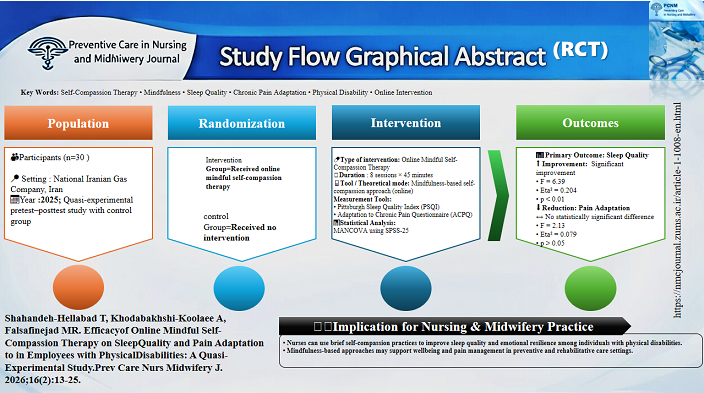
Efficacy of Online Mindful Self-Compassion Therapy on Sleep Quality and Pain Adaptation Among Employees with Physical Disabilities: A Quasi-experimental Study
Knowledge Translation Statement
Audience: Nursing managers and occupational health administrators
Online mindful self-compassion therapy was associated with improved sleep quality in employees with physical disabilities; findings on pain adaptation remained inconclusive due to low power. Managers may consider offering this accessible digital intervention as part of workplace health programs.
Letter to Editor
 , Yalda Amiri , Roghaieh Azimzadeh * , Mahsa Koohi Garebag , Zahra Heydari Tolash , Zahra Khezerlou

Knowledge Translation Statement
Audience: Psychiatric nursing managers and mental health policymakers
Families provide most psychiatric care in Iran, yet formal support remains limited. Managers may consider institutionalizing nurse-led, family-centered interventions, home visits, respite care, and psychoeducation as part of efforts to reduce relapse and caregiver burden.
Case Study
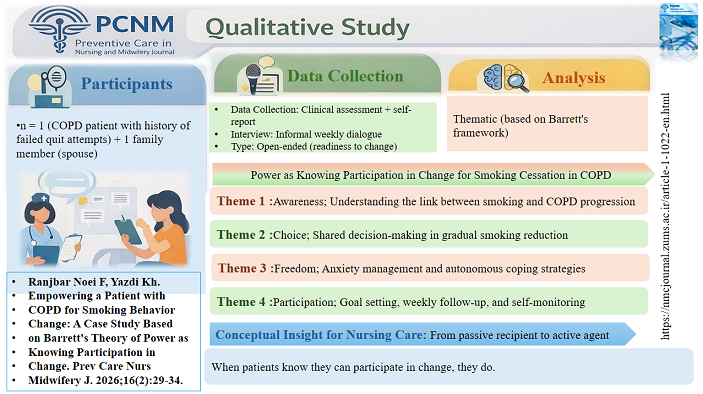
Empowering a Patient with COPD to Change Smoking Behavior: A Case Study Based on Barrett's Theory of Power as Knowing Participation in Change
Knowledge Translation Statement
Audience: Nursing managers and chronic disease care coordinators
A Barrett theory-based intervention was associated with reduced smoking and improved dyspnea in a COPD patient, with relapse reframed as nonlinear progress. Managers may consider supporting empowerment-based behavioral training in routine chronic care.
Original Article
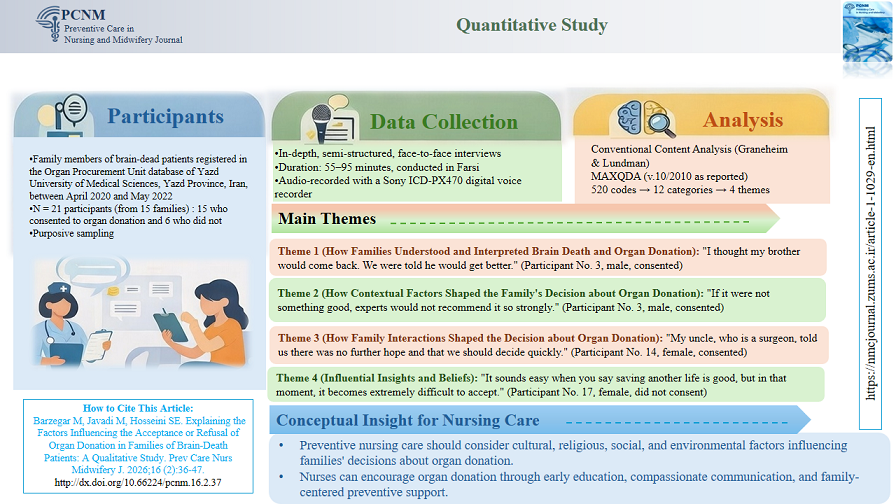
Explaining the Factors Influencing the Acceptance or Refusal of Organ Donation in Families of Brain-Death Patients: A Qualitative Study
Knowledge Translation Statement
Audience: Critical care nursing managers and organ procurement coordinators
Family organ donation decisions were shaped by understanding of brain death, trust in staff, media, religion, and fear. Managers may consider investing in compassionate communication training and culturally sensitive family support protocols.
Original Article
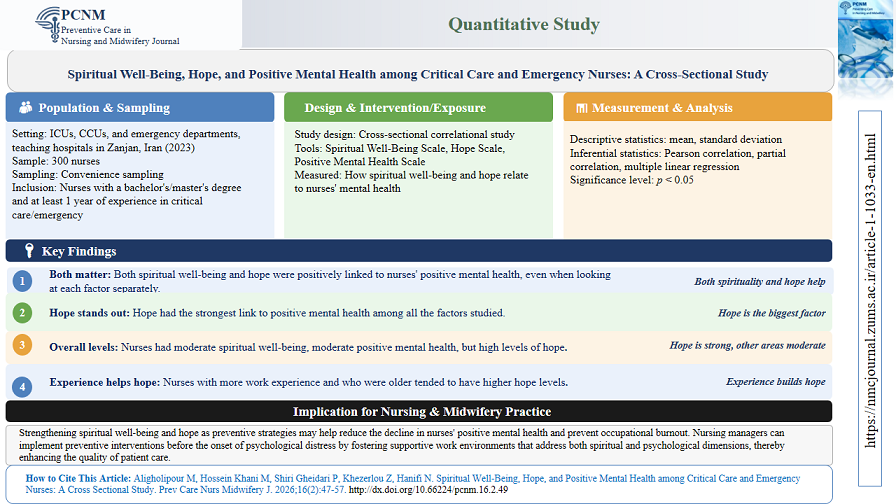
Spiritual Well-Being, Hope, and Positive Mental Health among Critical Care and Emergency Nurses: A Cross-Sectional Study
, Mohammad Hossein Khani , Parvin Shiri Gheidari , Zahra Khezerlou , Nasrin Hanifi *
Knowledge Translation Statement
Audience: Nursing managers and hospital administrators
Spiritual well-being and hope were associated with positive mental health among critical care nurses. Managers may consider hope-enhancement and spiritually sensitive programs as part of burnout-prevention efforts.
Original Article
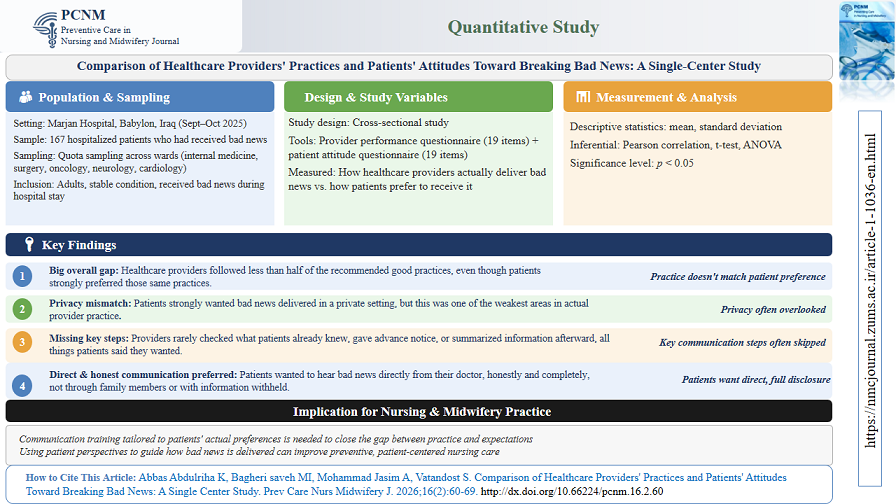
Comparison of Healthcare Providers' Practices and Patients' Attitudes Toward Breaking Bad News: A Single-Center Study
Knowledge Translation Statement
Audience: Nursing managers and clinical educators
Providers followed less than half of recommended bad-news practices, mismatching patient preferences on privacy, empathy, and gradual disclosure. Managers may consider integrating culturally adapted communication training such as SPIKES into continuing education.
Review Articles
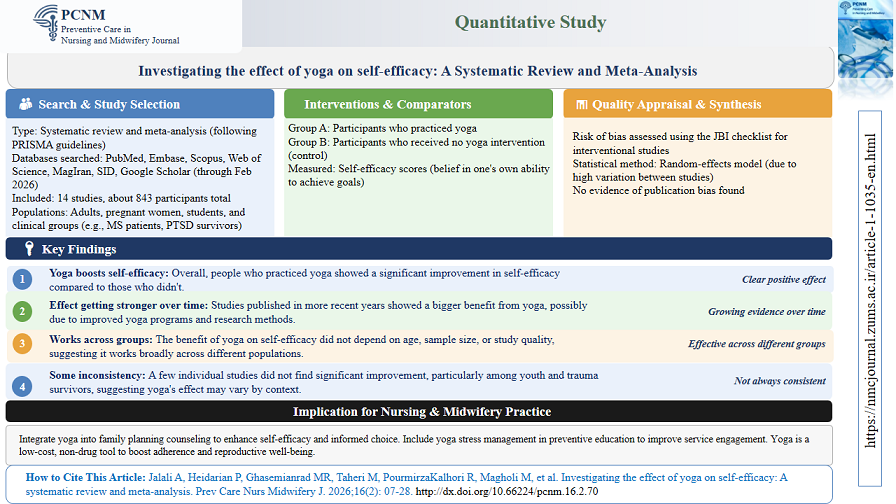
, Pegah Heidarian , Mohammad Rasool Ghasemianrad , Mostafa Taheri , Reza Pourmirza Kalhori , Marzieh Magholi , Mohsen Kazeminia *
Knowledge Translation Statement
Audience: Nursing managers and preventive care planners
Meta-analytic evidence suggests yoga is associated with improved self-efficacy. Managers may consider integrating this low-cost, non-pharmacological practice into routine health promotion and preventive care programs.
Original Article
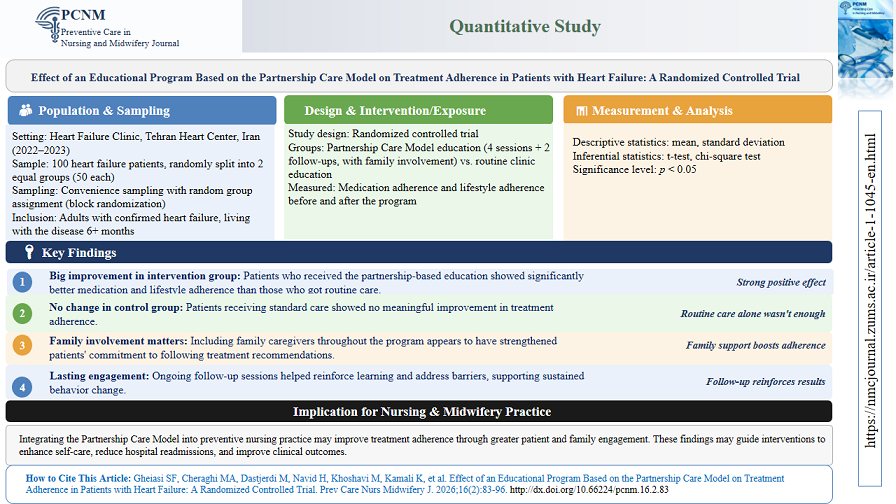
Effect of an Educational Program Based on the Partnership Care Model on Treatment Adherence in Patients with Heart Failure: A Randomized Controlled Trial
, Mohammad Ali Cheraghi , Mahdieh Dastjerdi , Hossein Navid , Meysam Khoshavi , Koorosh Kamali , Elham Navab *
Knowledge Translation Statement
Audience: Nursing managers and heart failure clinic administrators
A partnership care model program was associated with improved medication and lifestyle adherence in heart failure patients. Managers may consider incorporating this collaborative, nurse-led, family-engaging approach into routine heart failure care.
Knowledge Translation Statement
Audience: Nursing managers and mental health policymakers
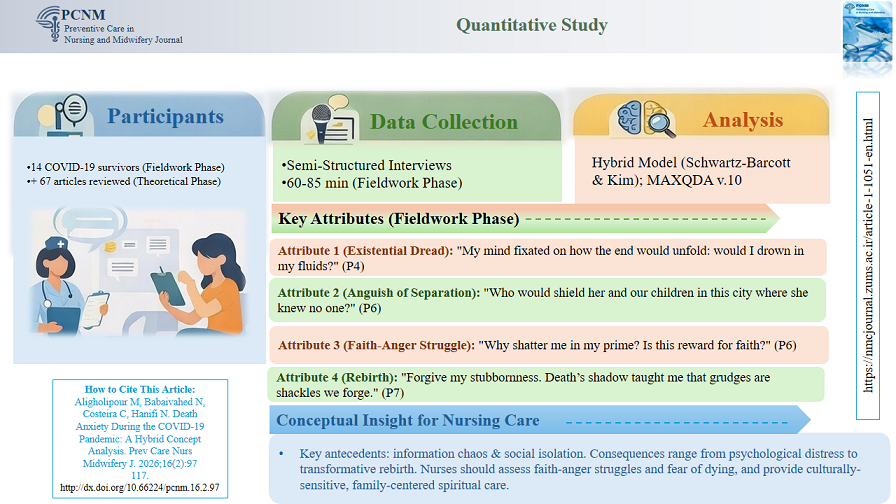
Death anxiety during COVID-19 involved information chaos, isolation, and a faith-anger struggle, with outcomes ranging from distress to rebirth. Managers may consider integrating existential and culturally sensitive spiritual care into crisis preparedness.
Review Articles
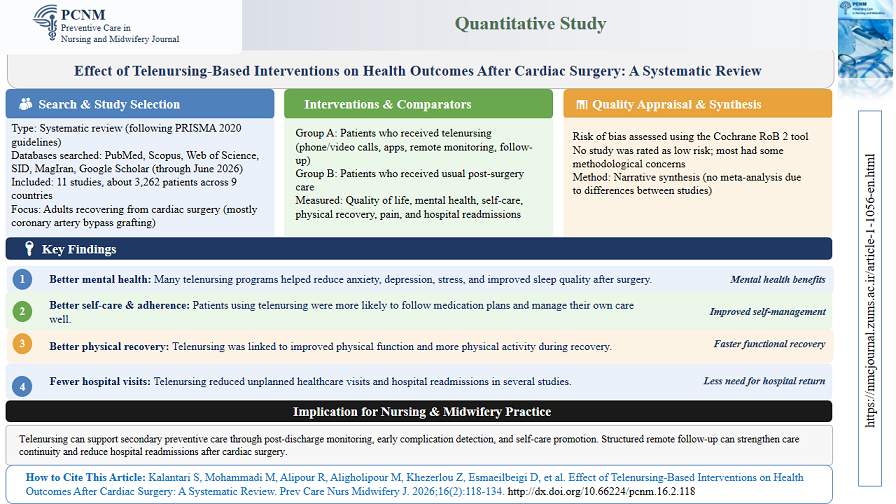
Effect of Telenursing Based Interventions on Health Outcomes After Cardiac Surgery: A Systematic Review
, Maryam Mohammadi * , Razie Alipour , Mahtab Aligholipour , Zahra Khezerlou , Darya Esmaeilbeigi , Kazem Hajimohammadi , Nima Sohrabi
Knowledge Translation Statement
Audience: Nursing managers, cardiac surgery ward administrators, and post-discharge care coordinators
Telenursing interventions were associated with improved psychological outcomes, self-care, and functional status, and with reduced healthcare utilization after cardiac surgery. Managers may consider telenursing as a complementary approach in structured post-discharge care.