Preventive Care in Nursing and Midwifery
Volume 16, Issue 2 (4-2026)
Prev Care Nurs Midwifery 2026, 16(2): 37-48 |
Back to browse issues page

Ethics code: IR.SSU.REC.1398.086


Download citation:
BibTeX | RIS | EndNote | Medlars | ProCite | Reference Manager | RefWorks
Send citation to:


BibTeX | RIS | EndNote | Medlars | ProCite | Reference Manager | RefWorks
Send citation to:
Barzegar M, javadi M, Hosseini S E. Explaining the Factors Influencing the Acceptance or Refusal of Organ Donation in Families of Brain-Death Patients: A Qualitative Study. Prev Care Nurs Midwifery 2026; 16 (2) :37-48
URL: http://nmcjournal.zums.ac.ir/article-1-1029-en.html
URL: http://nmcjournal.zums.ac.ir/article-1-1029-en.html

Department of Medical Surgical Nursing, School of Nursing and Midwifery, Iran University of Medical Sciences, Tehran, Iran , esmat.hosseini_110@yahoo.com
Full-Text [PDF 761 kb]
(291 Downloads)
| Abstract (HTML) (865 Views)
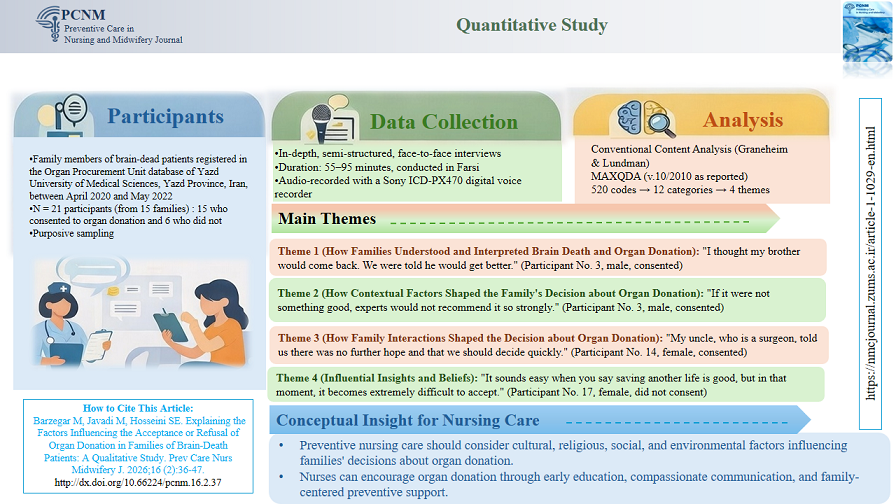
Graphical Abstract:
Reseach Highlights:
Knowledge Translation Statement
Audience: Critical care nursing managers and organ procurement coordinators
Family organ donation decisions were shaped by understanding of brain death, trust in staff, media, religion, and fear. Managers may consider investing in compassionate communication training and culturally sensitive family support protocols.
Full-Text: (120 Views)
Introduction
Transplantation is considered the most effective treatment for many advanced-stage diseases [1, 2]. However, mortality among patients on transplant waiting lists remains high [3]. The mismatch between the demand for and supply of organs persists as a serious challenge, and this gap continues to widen as waiting lists grow. Many patients die each day due to the limited availability of suitable organs [4]. In the United States, for example, the demand for organ transplantation has reached a critical point, with more than 120,048 individuals awaiting life-saving procedures. The fact that 21 patients on the waiting list die every day highlights the gravity of this crisis. Although the importance of organ donation is widely acknowledged, acceptance rates differ markedly across countries and regions, from as low as 31.3% to as high as 85%. This wide variation reflects the complex interaction of cultural, social, and systemic factors that shape organ donation decisions worldwide [5-7].
The organ shortage crisis is further exacerbated when families overturn the documented wishes of deceased individuals who had agreed to donate their organs. This situation underscores the urgent need to examine the factors that influence family decision‑making in this highly sensitive context [8]. A deeper understanding of these processes could help refine clinical practice, guide educational initiatives, and inform policy, thereby increasing donation rates and ultimately saving more lives. In the United States, for instance, although the need for organs is acute, acceptance rates still vary substantially between regions [9]. A similar pattern is observed in Iran, where the national deceased organ donation rate increased 19.06‑fold between 2002 and 2019, rising from 0.75 to 14.3 donations per million population (PMP). Despite this substantial progress, the COVID‑19 pandemic led to a notable decline in donation rates [10].
Organ donation rates reflect a complex phenomenon shaped by legal frameworks, cultural norms, regional differences, and individual-level knowledge and attitudes. Demographic characteristics also exert a considerable influence. Studies have highlighted the pivotal role of family dynamics in decision-making [10]. Donor families are central to the organ donation pathway, and evidence from various countries suggests that in approximately half of the cases where organs are deemed suitable for transplantation, families decline to donate [11]. In Iran, the consent of relatives is a key determinant of the availability of solid organs for transplantation, and family decision‑making strongly affects the number of organs ultimately accessible for life‑saving procedures [12]. In addition, refusal by individuals or their families continues to pose a major barrier. Understanding the psychosocial foundations of these decisions is therefore essential [13]. Although organ donation is rooted in medical science, it is profoundly influenced by ethical concerns, personal values, and deeply held beliefs. This complexity highlights the need for robust research on public attitudes and the factors that shape donation decisions [14].
Another contributor to reduced donation rates is the failure of some health professionals to identify potential donors on time and refer them appropriately to organ procurement organizations (OPOs) [15]. Differences observed between donor and non‑donor families further point to the influence of health care providers, whose actions and communication can encourage more families to consider donation. In many cases, refusal has been linked primarily to an inadequate understanding of the concept of death among families who decline donation [16]. Both donor and non‑donor families frequently report needing more time to make decisions about their loved ones; therefore, information must be conveyed clearly, questions and uncertainties should be carefully addressed, and the specific needs of families must be taken into account [17]. While the experiences and characteristics of families who consent to organ donation have been relatively well described, far less is known about the reasons why some families do not give consent [18].
As nursing knowledge about the reasons underlying families' willingness or unwillingness to accept organ donation for brain‑dead relatives expands, this evidence can be used to inform strategies aimed at preparing such families for potential donation decisions in the future. Only a limited number of studies have examined the specific interactions within Iranian families confronted with this choice. Research on factors influencing individuals' attitudes toward donation can help identify effective approaches to encourage and facilitate organ donation. However, comparing attitudes across social groups is difficult because studies have been conducted at different times and in different contexts. Consequently, further research is clearly needed, particularly given the pronounced regional variations in donation patterns. More studies focusing on local communities' attitudes and beliefs are required [19].
Quantitative methods alone appear insufficient to capture and examine the nuanced dimensions of individual experiences. In contrast, qualitative studies are better positioned to provide in‑depth insights into the factors that influence organ donation [20].
Objectives
This study aimed to explore the factors influencing families' decisions to accept or refuse organ donation for their brain‑dead relatives, considering cultural beliefs, personal values, family interactions, and the emotional experiences surrounding this difficult decision.
Methods
Research Paradigm
In this study, a descriptive qualitative methodology was used to explore the factors influencing the acceptance or refusal of organ donation among families of brain-dead patients.
The present study was conducted within the framework of a naturalistic and interpretive qualitative approach. Qualitative research is rooted in the phenomenological approach. It is individualistic and naturalistic, and its main goal is to understand social life and the meaning individuals give to their daily lives, given the limited theoretical and empirical knowledge available regarding the experiences of families of brain-dead patients in making decisions about organ donation, conventional content analysis was considered appropriate, as it allows codes and categories to be inductively derived from participants' narratives [21].
Participant Selection
Participants were recruited using purposive sampling among family members of brain-dead patients in Yazd Province, Iran, between April 2020 and May 2022.
Interviews were conducted with 15 families (21 participants) whose patients had been brain-dead for between 50 days and 22 months. Inclusion criteria included being a family member (parent, sibling, spouse, or child) of a brain-dead patient who had received an organ donation request and had signed the relevant forms about whether or not to donate and the ability to articulate their experiences.
Families whose patient died immediately after announcing their decision, whether or not they had consented to organ donation, and who also lived outside the provincial center (due to distance) were excluded from the study.
Participants were selected to ensure maximum variation in gender, age, and relationship to the deceased, and their information was obtained from the Transplantation Unit database at Yazd University of Medical Sciences.
Then, families of individuals who met the inclusion criteria were contacted, the study objectives were explained to them, and an interview time was arranged if they were willing.
Data Collection
Data were gathered through in-depth, semi-structured face-to-face interviews conducted in a private, tranquil environment.
Data collection continued until data saturation was achieved, defined as the point at which no new codes or themes emerged from the interviews.
All interviews were recorded with the participants' informed and written consent.
Interviews were conducted by a female master's student accompanied by a PhD in nursing, who is well-versed in qualitative research methods.
The researcher had participated in advanced qualitative research methods workshops and was skilled in this area. She also had experience working with families of brain-dead patients. The interviews were conducted in a quiet and peaceful environment, at a time of minimal stress for the individuals, at a suitable time and place, according to the participants' suggestions and preferences, in the training room of the hospital wards, the participants' workplace, the participants' homes, or the homes of one of their relatives.
Each interview started with open-ended questions such as What comes to your mind when you hear the word Brain Death?", "What did you do when you were told you could donate your patient's organs?", Can you please explain the events that followed the offer of organ donation?", "Explain how you made the decision to accept or decline organ donation after the offer was made to you?", "What were the reasons for your consent or non-consent to organ donation?", " How did you react when faced with opinions for or against your loved one's organ donation?", " How did you react when faced with the family of another brain-dead person regarding the issue of organ donation?" [Supplementary Data].
During the interviews, additional probing questions were posed to gain a deeper understanding of the participants' views. Each interview lasted between 55 and 95 minutes and was conducted in Farsi. The interviews were audio-recorded with a Sony ICD-PX470 digital voice recorder. To ensure the accuracy of the recorded information, all data were reviewed while listening to the interview audio files.
Data Analysis
MAXQDA 2010 software was used to manage and analyze the data. Data collection and analysis proceeded simultaneously.
This study was based on conventional content analysis following the steps proposed by Granheim and Lundman [21]. Immediately after each interview, the audio recordings were transcribed verbatim to ensure familiarity with the data and accuracy. The transcripts were read repeatedly to obtain a comprehensive understanding of the content, and any ambiguities were resolved through follow-up telephone calls with the participants.
In the next stage, the entire text was broken down into meaning units, which were then condensed while preserving the core ideas. These condensed meaning units were abstracted and assigned initial codes. The codes were constantly compared for similarities and differences and subsequently organized into more abstract and comprehensive categories. Finally, the latent content of the data was interpreted, yielding main categories and overarching themes.
Rigor and Trustworthiness
The study's rigor was assessed using Guba and Lincoln's criteria [22], including credibility, dependability, confirmability, and transferability. Credibility was enhanced through prolonged engagement, member checking (participants reviewing transcripts and codes), and researcher reflexivity. The transcripts of the coded interviews were also given to the participants to verify their consistency with their experiences, and in some cases, corrections were made.
To achieve dependability, the resulting codes and concepts were consulted and reviewed with experts and research project colleagues; several colleagues were also asked to code parts of the interview text, and the research team then agreed upon the coding.
Confirmability was ensured through peer debriefing with faculty members and external reviewers. In addition, study details were carefully documented to allow external observers to evaluate them. Transferability was addressed by providing a rich description of the research context and findings.
Result
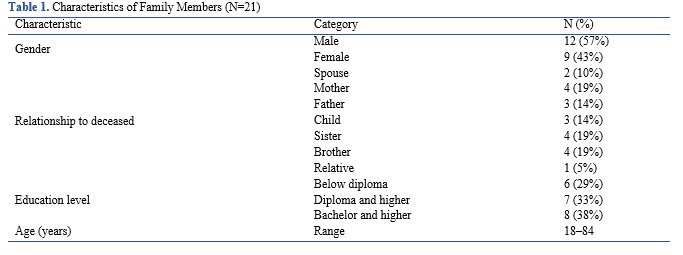
A total of 21 participants were recruited, including 15 family members who consented to organ donation and 6 who did not. The demographic characteristics of the participants are presented in Table 1. All participants were interviewed once, except for one individual who participated in a supplementary interview. No participants withdrew or declined further involvement in the study.
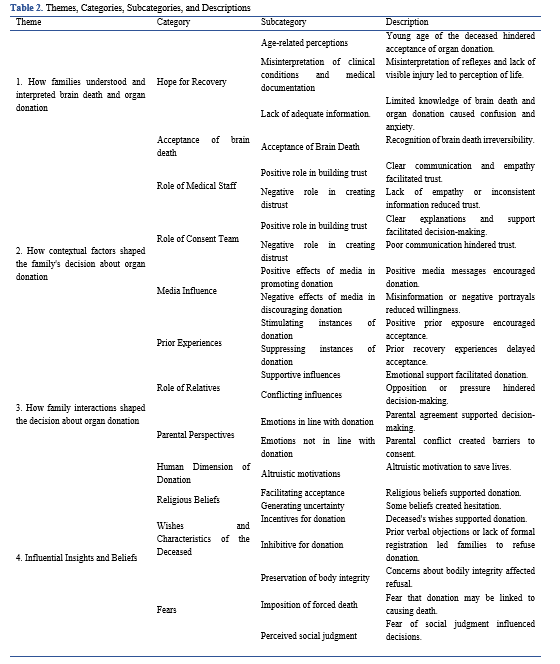
Overall, 520 open codes were generated (excluding overlap), which were subsequently organized into 12 categories and 4 main themes [Table 2]. The identified themes were: (1) how families understood and interpreted brain death and organ donation, (2) how contextual factors shaped that family's decision regarding organ donation, (3) how family interactions influenced the decision-making process, and (4) influential insights and beliefs.
Theme 1: How families understood and interpreted brain death and organ donation
This theme highlights the central role of understanding brain death in shaping families' decision-making processes. Many participants experienced considerable difficulty in comprehending brain death and often maintained hope for the patient's recovery, which complicated acceptance of the diagnosis. Meaningful acceptance of brain death, however, emerged as a critical prerequisite for making an informed decision regarding organ donation. This theme comprised two categories: hope for recovery and acceptance of brain death. The hope-for-recovery category included three subcategories: age-related perceptions, misinterpretation of clinical conditions and medical documentation, and inadequate information.
Despite the clinical explanation provided, families frequently maintained hope for recovery, which hindered acceptance of the finality of brain death. One participant (No. 3, male, consented) stated, "I thought my brother would come back. We were told he would get better. We believed that if surgery was performed and the doctor approved it, he would recover… we thought even if he survived with disability, he would still live."
In contrast, acceptance of brain death was described as a complex and emotionally challenging process, yet essential for understanding its irreversibility and recognizing organ donation as a potential way to give meaning to loss. A participant (No. 12, female, consented) explained, "They explained brain death thoroughly and confirmed it with several physicians. They said formal consent was needed, and I said if that is the case, we would sign."
Theme 2: How contextual factors shaped the family's decision regarding organ donation
This theme captures the multiple contextual influences that shape families' decisions throughout the donation process. Four categories emerged: role of medical staff, role of the consent team, media influence, and prior encounters. The role of medical staff and the consent team were each divided into positive and negative subcategories reflecting trust-building or distrust-inducing interactions. Media influence shaped both supportive and discouraging attitudes toward donation, while prior experiences either facilitated or hindered acceptance.
Medical staff played a pivotal role in establishing trust through their communication and clinical authority.
As one participant (No. 3, male, consented) noted, "If it were not something good, experts would not recommend it so strongly. Now that several specialists confirmed brain death, there is no point in hoping for recovery."
Similarly, the consent team was described as influential in clarifying the situation and guiding decision-making. A participant (No. 14, female, consented) stated, "They explained everything very clearly and professionally. Their words confirmed what we already felt, and it reassured us."
Media exposure also shaped perceptions, with participants reporting both motivational and discouraging effects on attitudes toward donation. One participant (No. 20, female, not consented) reflected, "I researched a lot through TV and the internet and realized transplantation can save lives. It made me feel that if people can help, they should."
Prior experiences with illness or episodes of unconsciousness shape families' interpretations of brain death. One participant (No. 19, female, not consented) noted that previous recovery episodes led the family to expect a similar outcome, which delayed their acceptance of death.
Theme 3: How family interactions shaped the decision regarding organ donation
Family dynamics played a decisive role in shaping decisions about organ donation. Two categories emerged: relatives' roles and parental perspectives. Each included both supportive and conflicting influences that either facilitated or hindered agreement.
Relatives often influence decisions through advice or emotional pressure. One participant (No. 14, female, consented) stated, "My uncle, who is a surgeon, told us there was no further hope and that we should decide quickly. That advice helped us reach a decision."
Parental agreement, particularly between spouses, was also crucial. A participant (No. 3, male, consented) noted, "My wife and I agreed that donating our child's organs could help save another life. We were able to reach the same decision, which made the process easier."
Theme 4: Influential insights and beliefs
This theme reflects the role of personal beliefs, values, and fears in shaping attitudes toward organ donation.
Four categories were identified: human dimension of donation, religious beliefs, wishes and characteristics of the deceased, and fears.
Religious beliefs and the deceased's wishes were further divided into facilitating and inhibiting subcategories, while fears included concerns about bodily integrity, premature declaration of death, and social judgment.
The human dimension of donation reflected altruistic motivations, though such perspectives were often described as difficult to sustain in real life. A participant (No. 17, female, did not consent) remarked, "It sounds easy when you say saving another life is good, but in that moment, it becomes extremely difficult to accept." Religious beliefs played a dual role, either facilitating acceptance or generating uncertainty. One participant (No. 1, male, consented) expressed a sense of divine approval and meaning in donation: "From that first moment, without any worries, I felt that God had given my brother a blessing, a success, an honor that was destined for us. I said, 'You just have to please his children."
The deceased's wishes also strongly influenced decision-making.
In some cases, prior verbal objections or lack of formal registration led families to refuse donation. A participant (No. 18, female, not consented) reported the deceased's explicit opposition to organ donation during their lifetime: "(The deceased) always said: 'I don't like them to cut my body into pieces after I die. I would suffer more. I didn't even go to fill out the organ donation card."
Finally, fears regarding bodily integrity, the possibility of recovery, and perceived social judgment were prominent barriers.
One participant (No. 18, female, not consented) expressed multiple interconnected fears, including the possibility of recovery and social stigma: "What if he wakes up? What if he gets better? Life is in God's hands; maybe he'll come back. What should I answer the neighbor? They say he killed his loved one with his own consent."
Discussion
The findings of this qualitative study shed light on the complex dynamics influencing family decisions regarding organ donation in the context of brain death. The identified themes, including "how families understood and interpreted brain death and organ donation", "how contextual factors shaped the family's decision about organ donation", "how family interactions shaped the decision about organ donation," and "influential Insights and beliefs" offer valuable insights into this critical decision-making process.
The theme of "how families understood and interpreted brain death and organ donation" has been one of the most key and influential concepts in our study. Many families were hesitant and confused in decision-making due to a lack of proper understanding of brain death. A concept that was contradictory and unbelievable to them. Families who have faced brain death describe it as a difficult concept to understand and accept [23], and the lack of proper understanding of brain death in families is associated with their refusal to donate [24].
The present study showed that one of the most important challenges for families of brain-dead patients, whether in the group in favor of or against organ donation, is the hope they have for their patients' recovery and return to life. The study's emphasis on the challenge of comprehending brain death aligns with previous research highlighting the difficulty families face in grasping this concept, often clinging to hope for the patient's recovery even after medical confirmation of brain death [13]. The emotional turmoil and lack of clarity surrounding brain death can create significant barriers to informed decision-making, underscoring the need for clear and compassionate communication from healthcare professionals [25].
The second extracted theme was "How contextual factors shaped the family's decision about organ donation", which essentially refers to all the mediating and moderating factors from the onset of brain death to the moment of consent or non-consent to donation. In this study, the influential role of the medical staff, both as a positive role in building trust and as a negative role in creating distrust, was clearly evident, so much so that in some cases even the details of the words, behavior, and reactions of the medical staff were not hidden from the families' eyes and were decisive in the family's final decision.
The roles of the medical staff and the consent team emerged as crucial factors in the decision-making process. The ability of these professionals to establish trust, provide clear information, and demonstrate empathy significantly influenced families' willingness to consider organ donation. This aligns with previous research emphasizing the importance of effective communication and support from healthcare professionals in facilitating informed and autonomous decision-making [26-28]. Nurses can be among the key players in resolving the organ donation crisis [29]. In fact, the positive role of medical staff in building trust is a strong driver of consent to donation. Our research findings showed that the media, as a pervasive force, plays a significant role in shaping public opinion. This importance becomes even more evident when we consider the media's pivotal role in organ donation and in shaping public opinion for or against donation, a doubly important issue due to its direct connection to human life and death [30].
Almost all families who agreed to donate organs stated that the media was an important factor in their decision-making. Conversely, families who opposed donation emphasized the media's negative impact on their decision not to donate [31]. All these studies were consistent with our findings. Previous studies have also demonstrated the potential influence of media and prior experiences on shaping families' perspectives regarding organ donation. These findings align with our study's results, underscoring the necessity for responsible media portrayals of organ donation and public education initiatives [32, 33].
Another important theme extracted in our study was the theme of " How family interactions shaped the decision about organ donation," which means the interactions and influences of different members of a family with a family relationship on each other and, consequently, the impact of these relationships on the family's final decisions in the donation process. The intervention of influential family members in the donation request process played a very important role in justifying and shaping the tendency to donate or reject the request in the consent process.
The fourth extracted theme was "Influential Insights and Beliefs ". One of the important categories of this theme was the "human dimension of donation", which included the importance of humanity and concern for one's fellow human beings, the need to pay attention to human suffering, and the understanding that saving human lives is very valuable. This category was one of the few categories where both the groups in favor and against donation acknowledged its value. Among many families in favor of donation, it was one of the main reasons for the tendency to donate.
Examining the multifaceted factors that shape family decision-making processes underscores the importance of relatives and the influence of parental views and beliefs on the decision to donate.
The findings suggest that altruism and family support are likely to encourage donation, aligning with previous research results [34, 35].
Family interactions and the influence of personal beliefs provide valuable insights into the cultural and social context of organ donation in Iran. The significant role of relatives, particularly parents, in the decision-making process underscores the importance of a family-centered approach to organ donation. The study further underscores the intricate interplay between religious beliefs and personal values in shaping attitudes toward organ donation, underscoring the necessity for culturally sensitive approaches that effectively address these multifaceted factors. Previous research has also emphasized the influence of religious beliefs, particularly Islamic beliefs, on organ donation decisions [36, 37].
The study's findings have several implications for practice and policy. First, they emphasize the need for comprehensive education and support for families of brain-dead patients, addressing their emotional needs and providing clear information about brain death and the organ donation process. Second, the findings highlight the importance of effective communication and trust-building between healthcare professionals and families. Third, the study suggests the need for culturally sensitive approaches to organ donation that consider the influence of religious beliefs and family dynamics. Finally, the findings underscore the importance of ongoing research to explore further the factors influencing family decisions and to develop interventions to increase organ donation rates in Iran and similar contexts.
While this study provides valuable insights, it is essential to acknowledge its limitations.
The study was conducted only on individuals in the provincial capital, and individuals outside the capital were excluded due to distance and travel difficulties. In addition, we were unable to find families with a similar length of time since the death of their patient. When interviewed, a variation of 50 days to 22 months had passed since the death of their loved one, which may have biased their expression of feelings and emotional states during the interview. This study was conducted in the city of Yazd, which has a religious and traditional context; given Iran's diverse cultural and religious conditions, it would be better to conduct this study in a culturally diverse population.
The relatively small sample size and the focus on a single province may limit the generalizability of the findings.
Conclusion
In conclusion, the findings highlight that a complex interaction of understanding of brain death, healthcare communication, family dynamics, and cultural, religious, and emotional factors shapes family decisions regarding organ donation in brain death. From a nursing perspective, these results emphasize the importance of preventive and supportive care approaches in critical care settings.
Nurses play a key role in providing clear and timely information about brain death, reducing misconceptions, and supporting families through effective communication and emotional support. Culturally sensitive, family-centered nursing care may help reduce distress, facilitate informed decision-making, and improve the organ donation process.
Ethical Considerations
The study was carried out in accordance with the Declaration of Helsinki. It was approved by the Ethics Committee of Shahid Sadoughi University of Medical Sciences (SSYUMS) under Ethics Code IR.SSU.REC.1398.086, as well as confirming that all research was performed in accordance with relevant guidelines/regulations. The patients/participants provided their written informed consent to participate in this study.
Acknowledgements
The authors express their gratitude to all participants. The article is extracted from the thesis of a master's degree student in nursing at Yazd University of Medical Sciences.
Conflict of Interest
The authors declare that the research was conducted in the absence of any commercial or financial relationships that could be construed as a potential conflict of interest.
Funding
No funding.
Authors' Contributions
Conceptualization: M. Barzegar, M. Javadi, S.E. Hosseini
Methodology (Study Design): M. Barzegar, M. Javadi, S.E. Hosseini
Investigation (Data Collection): M. Barzegar, M. Javadi, S.E. Hosseini
Formal Analysis (Data Analysis): M. Javadi, S.E. Hosseini
Writing – Original Draft: S.E. Hosseini
Writing – Review & Editing (Manuscript Revision): S.E. Hosseini
Supervision: M. Javadi, S.E. Hosseini
All authors read and approved the final manuscript.
Artificial Intelligence Utilization
Artificial intelligence was not used to write this article.
Data Availability Statement
Data available upon reasonable request.
Transplantation is considered the most effective treatment for many advanced-stage diseases [1, 2]. However, mortality among patients on transplant waiting lists remains high [3]. The mismatch between the demand for and supply of organs persists as a serious challenge, and this gap continues to widen as waiting lists grow. Many patients die each day due to the limited availability of suitable organs [4]. In the United States, for example, the demand for organ transplantation has reached a critical point, with more than 120,048 individuals awaiting life-saving procedures. The fact that 21 patients on the waiting list die every day highlights the gravity of this crisis. Although the importance of organ donation is widely acknowledged, acceptance rates differ markedly across countries and regions, from as low as 31.3% to as high as 85%. This wide variation reflects the complex interaction of cultural, social, and systemic factors that shape organ donation decisions worldwide [5-7].
The organ shortage crisis is further exacerbated when families overturn the documented wishes of deceased individuals who had agreed to donate their organs. This situation underscores the urgent need to examine the factors that influence family decision‑making in this highly sensitive context [8]. A deeper understanding of these processes could help refine clinical practice, guide educational initiatives, and inform policy, thereby increasing donation rates and ultimately saving more lives. In the United States, for instance, although the need for organs is acute, acceptance rates still vary substantially between regions [9]. A similar pattern is observed in Iran, where the national deceased organ donation rate increased 19.06‑fold between 2002 and 2019, rising from 0.75 to 14.3 donations per million population (PMP). Despite this substantial progress, the COVID‑19 pandemic led to a notable decline in donation rates [10].
Organ donation rates reflect a complex phenomenon shaped by legal frameworks, cultural norms, regional differences, and individual-level knowledge and attitudes. Demographic characteristics also exert a considerable influence. Studies have highlighted the pivotal role of family dynamics in decision-making [10]. Donor families are central to the organ donation pathway, and evidence from various countries suggests that in approximately half of the cases where organs are deemed suitable for transplantation, families decline to donate [11]. In Iran, the consent of relatives is a key determinant of the availability of solid organs for transplantation, and family decision‑making strongly affects the number of organs ultimately accessible for life‑saving procedures [12]. In addition, refusal by individuals or their families continues to pose a major barrier. Understanding the psychosocial foundations of these decisions is therefore essential [13]. Although organ donation is rooted in medical science, it is profoundly influenced by ethical concerns, personal values, and deeply held beliefs. This complexity highlights the need for robust research on public attitudes and the factors that shape donation decisions [14].
Another contributor to reduced donation rates is the failure of some health professionals to identify potential donors on time and refer them appropriately to organ procurement organizations (OPOs) [15]. Differences observed between donor and non‑donor families further point to the influence of health care providers, whose actions and communication can encourage more families to consider donation. In many cases, refusal has been linked primarily to an inadequate understanding of the concept of death among families who decline donation [16]. Both donor and non‑donor families frequently report needing more time to make decisions about their loved ones; therefore, information must be conveyed clearly, questions and uncertainties should be carefully addressed, and the specific needs of families must be taken into account [17]. While the experiences and characteristics of families who consent to organ donation have been relatively well described, far less is known about the reasons why some families do not give consent [18].
As nursing knowledge about the reasons underlying families' willingness or unwillingness to accept organ donation for brain‑dead relatives expands, this evidence can be used to inform strategies aimed at preparing such families for potential donation decisions in the future. Only a limited number of studies have examined the specific interactions within Iranian families confronted with this choice. Research on factors influencing individuals' attitudes toward donation can help identify effective approaches to encourage and facilitate organ donation. However, comparing attitudes across social groups is difficult because studies have been conducted at different times and in different contexts. Consequently, further research is clearly needed, particularly given the pronounced regional variations in donation patterns. More studies focusing on local communities' attitudes and beliefs are required [19].
Quantitative methods alone appear insufficient to capture and examine the nuanced dimensions of individual experiences. In contrast, qualitative studies are better positioned to provide in‑depth insights into the factors that influence organ donation [20].
Objectives
This study aimed to explore the factors influencing families' decisions to accept or refuse organ donation for their brain‑dead relatives, considering cultural beliefs, personal values, family interactions, and the emotional experiences surrounding this difficult decision.
Methods
Research Paradigm
In this study, a descriptive qualitative methodology was used to explore the factors influencing the acceptance or refusal of organ donation among families of brain-dead patients.
The present study was conducted within the framework of a naturalistic and interpretive qualitative approach. Qualitative research is rooted in the phenomenological approach. It is individualistic and naturalistic, and its main goal is to understand social life and the meaning individuals give to their daily lives, given the limited theoretical and empirical knowledge available regarding the experiences of families of brain-dead patients in making decisions about organ donation, conventional content analysis was considered appropriate, as it allows codes and categories to be inductively derived from participants' narratives [21].
Participant Selection
Participants were recruited using purposive sampling among family members of brain-dead patients in Yazd Province, Iran, between April 2020 and May 2022.
Interviews were conducted with 15 families (21 participants) whose patients had been brain-dead for between 50 days and 22 months. Inclusion criteria included being a family member (parent, sibling, spouse, or child) of a brain-dead patient who had received an organ donation request and had signed the relevant forms about whether or not to donate and the ability to articulate their experiences.
Families whose patient died immediately after announcing their decision, whether or not they had consented to organ donation, and who also lived outside the provincial center (due to distance) were excluded from the study.
Participants were selected to ensure maximum variation in gender, age, and relationship to the deceased, and their information was obtained from the Transplantation Unit database at Yazd University of Medical Sciences.
Then, families of individuals who met the inclusion criteria were contacted, the study objectives were explained to them, and an interview time was arranged if they were willing.
Data Collection
Data were gathered through in-depth, semi-structured face-to-face interviews conducted in a private, tranquil environment.
Data collection continued until data saturation was achieved, defined as the point at which no new codes or themes emerged from the interviews.
All interviews were recorded with the participants' informed and written consent.
Interviews were conducted by a female master's student accompanied by a PhD in nursing, who is well-versed in qualitative research methods.
The researcher had participated in advanced qualitative research methods workshops and was skilled in this area. She also had experience working with families of brain-dead patients. The interviews were conducted in a quiet and peaceful environment, at a time of minimal stress for the individuals, at a suitable time and place, according to the participants' suggestions and preferences, in the training room of the hospital wards, the participants' workplace, the participants' homes, or the homes of one of their relatives.
Each interview started with open-ended questions such as What comes to your mind when you hear the word Brain Death?", "What did you do when you were told you could donate your patient's organs?", Can you please explain the events that followed the offer of organ donation?", "Explain how you made the decision to accept or decline organ donation after the offer was made to you?", "What were the reasons for your consent or non-consent to organ donation?", " How did you react when faced with opinions for or against your loved one's organ donation?", " How did you react when faced with the family of another brain-dead person regarding the issue of organ donation?" [Supplementary Data].
During the interviews, additional probing questions were posed to gain a deeper understanding of the participants' views. Each interview lasted between 55 and 95 minutes and was conducted in Farsi. The interviews were audio-recorded with a Sony ICD-PX470 digital voice recorder. To ensure the accuracy of the recorded information, all data were reviewed while listening to the interview audio files.
Data Analysis
MAXQDA 2010 software was used to manage and analyze the data. Data collection and analysis proceeded simultaneously.
This study was based on conventional content analysis following the steps proposed by Granheim and Lundman [21]. Immediately after each interview, the audio recordings were transcribed verbatim to ensure familiarity with the data and accuracy. The transcripts were read repeatedly to obtain a comprehensive understanding of the content, and any ambiguities were resolved through follow-up telephone calls with the participants.
In the next stage, the entire text was broken down into meaning units, which were then condensed while preserving the core ideas. These condensed meaning units were abstracted and assigned initial codes. The codes were constantly compared for similarities and differences and subsequently organized into more abstract and comprehensive categories. Finally, the latent content of the data was interpreted, yielding main categories and overarching themes.
Rigor and Trustworthiness
The study's rigor was assessed using Guba and Lincoln's criteria [22], including credibility, dependability, confirmability, and transferability. Credibility was enhanced through prolonged engagement, member checking (participants reviewing transcripts and codes), and researcher reflexivity. The transcripts of the coded interviews were also given to the participants to verify their consistency with their experiences, and in some cases, corrections were made.
To achieve dependability, the resulting codes and concepts were consulted and reviewed with experts and research project colleagues; several colleagues were also asked to code parts of the interview text, and the research team then agreed upon the coding.
Confirmability was ensured through peer debriefing with faculty members and external reviewers. In addition, study details were carefully documented to allow external observers to evaluate them. Transferability was addressed by providing a rich description of the research context and findings.
Result
A total of 21 participants were recruited, including 15 family members who consented to organ donation and 6 who did not. The demographic characteristics of the participants are presented in Table 1. All participants were interviewed once, except for one individual who participated in a supplementary interview. No participants withdrew or declined further involvement in the study.
Overall, 520 open codes were generated (excluding overlap), which were subsequently organized into 12 categories and 4 main themes [Table 2]. The identified themes were: (1) how families understood and interpreted brain death and organ donation, (2) how contextual factors shaped that family's decision regarding organ donation, (3) how family interactions influenced the decision-making process, and (4) influential insights and beliefs.
Theme 1: How families understood and interpreted brain death and organ donation
This theme highlights the central role of understanding brain death in shaping families' decision-making processes. Many participants experienced considerable difficulty in comprehending brain death and often maintained hope for the patient's recovery, which complicated acceptance of the diagnosis. Meaningful acceptance of brain death, however, emerged as a critical prerequisite for making an informed decision regarding organ donation. This theme comprised two categories: hope for recovery and acceptance of brain death. The hope-for-recovery category included three subcategories: age-related perceptions, misinterpretation of clinical conditions and medical documentation, and inadequate information.
Despite the clinical explanation provided, families frequently maintained hope for recovery, which hindered acceptance of the finality of brain death. One participant (No. 3, male, consented) stated, "I thought my brother would come back. We were told he would get better. We believed that if surgery was performed and the doctor approved it, he would recover… we thought even if he survived with disability, he would still live."
In contrast, acceptance of brain death was described as a complex and emotionally challenging process, yet essential for understanding its irreversibility and recognizing organ donation as a potential way to give meaning to loss. A participant (No. 12, female, consented) explained, "They explained brain death thoroughly and confirmed it with several physicians. They said formal consent was needed, and I said if that is the case, we would sign."
Theme 2: How contextual factors shaped the family's decision regarding organ donation
This theme captures the multiple contextual influences that shape families' decisions throughout the donation process. Four categories emerged: role of medical staff, role of the consent team, media influence, and prior encounters. The role of medical staff and the consent team were each divided into positive and negative subcategories reflecting trust-building or distrust-inducing interactions. Media influence shaped both supportive and discouraging attitudes toward donation, while prior experiences either facilitated or hindered acceptance.
Medical staff played a pivotal role in establishing trust through their communication and clinical authority.
As one participant (No. 3, male, consented) noted, "If it were not something good, experts would not recommend it so strongly. Now that several specialists confirmed brain death, there is no point in hoping for recovery."
Similarly, the consent team was described as influential in clarifying the situation and guiding decision-making. A participant (No. 14, female, consented) stated, "They explained everything very clearly and professionally. Their words confirmed what we already felt, and it reassured us."
Media exposure also shaped perceptions, with participants reporting both motivational and discouraging effects on attitudes toward donation. One participant (No. 20, female, not consented) reflected, "I researched a lot through TV and the internet and realized transplantation can save lives. It made me feel that if people can help, they should."
Prior experiences with illness or episodes of unconsciousness shape families' interpretations of brain death. One participant (No. 19, female, not consented) noted that previous recovery episodes led the family to expect a similar outcome, which delayed their acceptance of death.
Theme 3: How family interactions shaped the decision regarding organ donation
Family dynamics played a decisive role in shaping decisions about organ donation. Two categories emerged: relatives' roles and parental perspectives. Each included both supportive and conflicting influences that either facilitated or hindered agreement.
Relatives often influence decisions through advice or emotional pressure. One participant (No. 14, female, consented) stated, "My uncle, who is a surgeon, told us there was no further hope and that we should decide quickly. That advice helped us reach a decision."
Parental agreement, particularly between spouses, was also crucial. A participant (No. 3, male, consented) noted, "My wife and I agreed that donating our child's organs could help save another life. We were able to reach the same decision, which made the process easier."
Theme 4: Influential insights and beliefs
This theme reflects the role of personal beliefs, values, and fears in shaping attitudes toward organ donation.
Four categories were identified: human dimension of donation, religious beliefs, wishes and characteristics of the deceased, and fears.
Religious beliefs and the deceased's wishes were further divided into facilitating and inhibiting subcategories, while fears included concerns about bodily integrity, premature declaration of death, and social judgment.
The human dimension of donation reflected altruistic motivations, though such perspectives were often described as difficult to sustain in real life. A participant (No. 17, female, did not consent) remarked, "It sounds easy when you say saving another life is good, but in that moment, it becomes extremely difficult to accept." Religious beliefs played a dual role, either facilitating acceptance or generating uncertainty. One participant (No. 1, male, consented) expressed a sense of divine approval and meaning in donation: "From that first moment, without any worries, I felt that God had given my brother a blessing, a success, an honor that was destined for us. I said, 'You just have to please his children."
The deceased's wishes also strongly influenced decision-making.
In some cases, prior verbal objections or lack of formal registration led families to refuse donation. A participant (No. 18, female, not consented) reported the deceased's explicit opposition to organ donation during their lifetime: "(The deceased) always said: 'I don't like them to cut my body into pieces after I die. I would suffer more. I didn't even go to fill out the organ donation card."
Finally, fears regarding bodily integrity, the possibility of recovery, and perceived social judgment were prominent barriers.
One participant (No. 18, female, not consented) expressed multiple interconnected fears, including the possibility of recovery and social stigma: "What if he wakes up? What if he gets better? Life is in God's hands; maybe he'll come back. What should I answer the neighbor? They say he killed his loved one with his own consent."
Discussion
The findings of this qualitative study shed light on the complex dynamics influencing family decisions regarding organ donation in the context of brain death. The identified themes, including "how families understood and interpreted brain death and organ donation", "how contextual factors shaped the family's decision about organ donation", "how family interactions shaped the decision about organ donation," and "influential Insights and beliefs" offer valuable insights into this critical decision-making process.
The theme of "how families understood and interpreted brain death and organ donation" has been one of the most key and influential concepts in our study. Many families were hesitant and confused in decision-making due to a lack of proper understanding of brain death. A concept that was contradictory and unbelievable to them. Families who have faced brain death describe it as a difficult concept to understand and accept [23], and the lack of proper understanding of brain death in families is associated with their refusal to donate [24].
The present study showed that one of the most important challenges for families of brain-dead patients, whether in the group in favor of or against organ donation, is the hope they have for their patients' recovery and return to life. The study's emphasis on the challenge of comprehending brain death aligns with previous research highlighting the difficulty families face in grasping this concept, often clinging to hope for the patient's recovery even after medical confirmation of brain death [13]. The emotional turmoil and lack of clarity surrounding brain death can create significant barriers to informed decision-making, underscoring the need for clear and compassionate communication from healthcare professionals [25].
The second extracted theme was "How contextual factors shaped the family's decision about organ donation", which essentially refers to all the mediating and moderating factors from the onset of brain death to the moment of consent or non-consent to donation. In this study, the influential role of the medical staff, both as a positive role in building trust and as a negative role in creating distrust, was clearly evident, so much so that in some cases even the details of the words, behavior, and reactions of the medical staff were not hidden from the families' eyes and were decisive in the family's final decision.
The roles of the medical staff and the consent team emerged as crucial factors in the decision-making process. The ability of these professionals to establish trust, provide clear information, and demonstrate empathy significantly influenced families' willingness to consider organ donation. This aligns with previous research emphasizing the importance of effective communication and support from healthcare professionals in facilitating informed and autonomous decision-making [26-28]. Nurses can be among the key players in resolving the organ donation crisis [29]. In fact, the positive role of medical staff in building trust is a strong driver of consent to donation. Our research findings showed that the media, as a pervasive force, plays a significant role in shaping public opinion. This importance becomes even more evident when we consider the media's pivotal role in organ donation and in shaping public opinion for or against donation, a doubly important issue due to its direct connection to human life and death [30].
Almost all families who agreed to donate organs stated that the media was an important factor in their decision-making. Conversely, families who opposed donation emphasized the media's negative impact on their decision not to donate [31]. All these studies were consistent with our findings. Previous studies have also demonstrated the potential influence of media and prior experiences on shaping families' perspectives regarding organ donation. These findings align with our study's results, underscoring the necessity for responsible media portrayals of organ donation and public education initiatives [32, 33].
Another important theme extracted in our study was the theme of " How family interactions shaped the decision about organ donation," which means the interactions and influences of different members of a family with a family relationship on each other and, consequently, the impact of these relationships on the family's final decisions in the donation process. The intervention of influential family members in the donation request process played a very important role in justifying and shaping the tendency to donate or reject the request in the consent process.
The fourth extracted theme was "Influential Insights and Beliefs ". One of the important categories of this theme was the "human dimension of donation", which included the importance of humanity and concern for one's fellow human beings, the need to pay attention to human suffering, and the understanding that saving human lives is very valuable. This category was one of the few categories where both the groups in favor and against donation acknowledged its value. Among many families in favor of donation, it was one of the main reasons for the tendency to donate.
Examining the multifaceted factors that shape family decision-making processes underscores the importance of relatives and the influence of parental views and beliefs on the decision to donate.
The findings suggest that altruism and family support are likely to encourage donation, aligning with previous research results [34, 35].
Family interactions and the influence of personal beliefs provide valuable insights into the cultural and social context of organ donation in Iran. The significant role of relatives, particularly parents, in the decision-making process underscores the importance of a family-centered approach to organ donation. The study further underscores the intricate interplay between religious beliefs and personal values in shaping attitudes toward organ donation, underscoring the necessity for culturally sensitive approaches that effectively address these multifaceted factors. Previous research has also emphasized the influence of religious beliefs, particularly Islamic beliefs, on organ donation decisions [36, 37].
The study's findings have several implications for practice and policy. First, they emphasize the need for comprehensive education and support for families of brain-dead patients, addressing their emotional needs and providing clear information about brain death and the organ donation process. Second, the findings highlight the importance of effective communication and trust-building between healthcare professionals and families. Third, the study suggests the need for culturally sensitive approaches to organ donation that consider the influence of religious beliefs and family dynamics. Finally, the findings underscore the importance of ongoing research to explore further the factors influencing family decisions and to develop interventions to increase organ donation rates in Iran and similar contexts.
While this study provides valuable insights, it is essential to acknowledge its limitations.
The study was conducted only on individuals in the provincial capital, and individuals outside the capital were excluded due to distance and travel difficulties. In addition, we were unable to find families with a similar length of time since the death of their patient. When interviewed, a variation of 50 days to 22 months had passed since the death of their loved one, which may have biased their expression of feelings and emotional states during the interview. This study was conducted in the city of Yazd, which has a religious and traditional context; given Iran's diverse cultural and religious conditions, it would be better to conduct this study in a culturally diverse population.
The relatively small sample size and the focus on a single province may limit the generalizability of the findings.
Conclusion
In conclusion, the findings highlight that a complex interaction of understanding of brain death, healthcare communication, family dynamics, and cultural, religious, and emotional factors shapes family decisions regarding organ donation in brain death. From a nursing perspective, these results emphasize the importance of preventive and supportive care approaches in critical care settings.
Nurses play a key role in providing clear and timely information about brain death, reducing misconceptions, and supporting families through effective communication and emotional support. Culturally sensitive, family-centered nursing care may help reduce distress, facilitate informed decision-making, and improve the organ donation process.
Ethical Considerations
The study was carried out in accordance with the Declaration of Helsinki. It was approved by the Ethics Committee of Shahid Sadoughi University of Medical Sciences (SSYUMS) under Ethics Code IR.SSU.REC.1398.086, as well as confirming that all research was performed in accordance with relevant guidelines/regulations. The patients/participants provided their written informed consent to participate in this study.
Acknowledgements
The authors express their gratitude to all participants. The article is extracted from the thesis of a master's degree student in nursing at Yazd University of Medical Sciences.
Conflict of Interest
The authors declare that the research was conducted in the absence of any commercial or financial relationships that could be construed as a potential conflict of interest.
Funding
No funding.
Authors' Contributions
Conceptualization: M. Barzegar, M. Javadi, S.E. Hosseini
Methodology (Study Design): M. Barzegar, M. Javadi, S.E. Hosseini
Investigation (Data Collection): M. Barzegar, M. Javadi, S.E. Hosseini
Formal Analysis (Data Analysis): M. Javadi, S.E. Hosseini
Writing – Original Draft: S.E. Hosseini
Writing – Review & Editing (Manuscript Revision): S.E. Hosseini
Supervision: M. Javadi, S.E. Hosseini
All authors read and approved the final manuscript.
Artificial Intelligence Utilization
Artificial intelligence was not used to write this article.
Data Availability Statement
Data available upon reasonable request.
Type of Study: Orginal research |
Subject:
Nursing
References
1. Chen X, Pan L, Zhou W, Ye S, He C, Xiong Y, et al. Management of the brain death organ donor: results of a comprehensive bibliometric analysis on research, 1992-2024. Experimental and Clinical Transplantation: Official Journal of the Middle East Society for Organ Transplantation. 2025;23(2):87-96. [https://doi.org/10.6002/ect.2024.0235]
2. Bery A, Marklin G, Itoh A, Kreisel D, Takahashi T, Meyers BF, et al. Specialized donor care facility model and advances in management of thoracic organ donors. The Annals of Thoracic Surgery. 2022;113(6):1778-1786. [https://doi.org/https://doi.org/10.1016/j.athoracsur.2020.12.026] [PMID]
3. Citerio G, Cypel M, Dobb GJ, Dominguez-Gil B, Frontera JA, Greer DM, et al. Organ donation in adults: a critical care perspective. Intensive Care Medicine. 2016;42(1):305-315. [https://doi.org/10.1007/s00134-015-4191-5] [PMID]
4. Chen X, Wei W, Ai W. Organ donation: Key factors influencing the younger generation's decision-making in China. Frontiers in Public Health. 2023;11(1):1-11. [https://doi.org/10.3389/fpubh.2023.1052875] [PMID]
5. Dibaba FK, Goro KK, Wolide AD, Fufa FG, Garedow AW, Tufa BE, Bobasa EM. Knowledge, attitude and willingness to donate organ among medical students of Jimma university, Jimma Ethiopia: cross-sectional study. BMC Public Health. 2020;20(1):1-7. [https://doi.org/10.1186/s12889-020-08931-y] [PMID]
6. Soqia J, Ataya J, Alhomsi R, Soqia H, Kakaje A, Saadoun R, Hamzeh A. Attitudes and factors influencing organ donation decision-making in Damascus, Syria: a cross-sectional study. Scientific Reports. 2023;13(1):1-9. [https://doi.org/10.1038/s41598-023-45388-6] [PMID]
7. Lewis A, Koukoura A, Tsianos G-I, Gargavanis AA, Nielsen AA, Vassiliadis E. Organ donation in the uS and europe: the supply vs demand imbalance. Transplantation Reviews. 2021;35(2):1-10. [https://doi.org/10.1016/j.trre.2020.100585] [PMID]
8. Han SY, Kim JI, Lee E-W, Jang H-Y, Han KH, Oh SW, et al. Factors associated with a family's delay of decision for organ donation after brain death. Annals of Transplantation. 2017;22(1):17-23. [https://doi.org/10.12659/AOT.901616] [PMID]
9. Miller C, Breakwell R. What factors influence a family's decision to agree to organ donation? a critical literature review. London Journal of Primary Care. 2018;10(4):103-107. [https://doi.org/10.1080/17571472.2018.1459226] [PMID]
10. Shadnoush M, Latifi M, Rahban H, Pourhosein E, Shadnoush A, Jafarian A, Dehghani S. Trends in organ donation and transplantation over the past eighteen years in Iran. Clinical Transplantation. 2023;37(2):1-7. [https://doi.org/10.1111/ctr.14889] [PMID]
11. Najafizadeh K, Latifi M, Ghobadi O. 332.4: What are the most important causes of family's refusal of organ donation from Iran's 10 provinces' organ donation coordinators? Transplantation. 2019;103(11S):S82-S83. [https://doi.org/10.1097/01.tp.0000612036.55662.30]
12. Pourhosein E, Bagherpour F, Latifi M, Pourhosein M, Pourmand G, Namdari F, et al. The influence of socioeconomic factors on deceased organ donation in Iran. Korean Journal of Transplantation. 2022;36(1):54-60. [https://doi.org/10.4285/kjt.21.0034] [PMID]
13. Carola V, Morale C, Vincenzo C, Cecchi V, Errico L, Nicolais G. Organ donation: psychosocial factors of the decision-making process. Frontiers in Psychology. 2023;14(1):1-7. [https://doi.org/10.3389/fpsyg.2023.1111328] [PMID]
14. Stadlbauer V, Zink C, Likar P, Zink M. Family discussions and demographic factors influence adolescent's knowledge and attitude towards organ donation after brain death: a questionnaire study. BMC Medical Ethics. 2020;21(1):1-11. [https://doi.org/10.1186/s12910-020-00499-x] [PMID]
15. Olawade DB, Marinze S, Qureshi N, Weerasinghe K, Teke JJEjoim. Transforming organ donation and transplantation: strategies for increasing donor participation and system efficiency. European Journal of Internal Medicine. 2025;133(1):14-24. [https://doi.org/10.1016/j.nedt.2003.10.001] [PMID]
16. Bjelland S, Jones KJPit. A systematic review on improving the family experience after consent for deceased organ donation. Progress in Transplantation. 2022;32(2):152-166. [https://doi.org/10.1177/15269248221087429] [PMID]
17. Molina-Perez A, Delgado J, Frunza M, Morgan M, Randhawa G, Reiger-Van de ea. Should the family have a role in deceased organ donation decision-making? a systematic review of public knowledge and attitudes towards organ procurement policies in Europe. Transplantation Reviews. 2022;36(1):1-21. [https://doi.org/10.1016/j.trre.2021.100673] [PMID]
18. Febrero B, Almela-Baeza J, Ros-Madrid I, Arias JA, Ruiz-Manzanera JJ, Jiménez-Mascuñán MI, et al. . The new age of organ donation-what factors have an influence on the attitude of older people? An attitudinal survey in southeastern Spain. International Journal of Environmental Research and Public Health. 2022;19(14):1-13. [https://doi.org/10.3390/ijerph19148524] [PMID]
19. Luo A, He H, Xu Z, Ouyang W, Chen Y, Li K, Xie WJTI. A qualitative study in family units on organ donation: attitude, influencing factors and communication patterns. Transplant International. 2022;35(1):1-8. [https://doi.org/10.3389/ti.2022.10411] [PMID]
20. Denise T, Cœur M, Martin-Lefevre L, Reignier J, Kentish-Barnes N, Laurent AJAoIC. Experience of clinicians and relatives with donation after controlled circulatory death: a prospective qualitative study. Annals of Intensive Care. 2025;16(1):1-11. [https://doi.org/10.1016/j.aicoj.2025.100002] [PMID]
21. Hsieh HF, Shannon SE. Three approaches to qualitative content analysis. Qualitative Health Research. 2005;15(9):1277-1288. [https://doi.org/10.1177/1049732305276687] [PMID]
22. Guba EG, Lincoln YS. Competing paradigms in qualitative research. Handbook of Qualitative Research. 1994;2(1):163-194. [https://miguelangelmartinez.net/IMG/pdf/1994_Guba_Lincoln_Paradigms_Quali_Research_chapter.]
23. Latifi M, Pourhosein E, Rahban H, Estebsari F, Pourhossein M, Dehghani SJSOM. Exploring grief and acceptance: Experiences and needs of family members of deceased organ donors. SAGE Open Medicine. 2025;13(1):1-10. [https://doi.org/10.1177/20503121251333973] [PMID]
24. Lalegani HA, Babaei S, Alimohammadi N, Yazdannik A, Sanei B, Ramezannezhad PJIJoN, Research M. A critical ethnographic study of families of brain-dead patients: Their experiences and attitudes to organ donation. Iranian Journal of Nursing and Midwifery Research. 2023;28(5):536-543. [https://doi.org/10.4103/ijnmr.ijnmr_267_22] [PMID]
25. Meyer A, Walabh P: Professional and Emotional Challenges Nurses Experience while Caring for Brain-Dead Donors. In., 12th edn.: IntechOpen; 2025. [https://doi.org/10.5772/intechopen.1007279]
26. Tocher J, Neades B, Smith GD, Kelly D. The role of specialist nurses for organ donation: a solution for maximising organ donation rates? Journal of Clinical Nursing. 2019;28(9-10):2020-2027. [https://doi.org/10.1111/jocn.14741] [PMID]
27. Witjes M, Jansen NE, van Dongen J, Herold IH, Otterspoor L, Haase‐Kromwijk BJ, et al. . Appointing nurses trained in organ donation to improve family consent rates. Nursing in Critical Care. 2020;25(5):299-304. [https://doi.org/10.1111/nicc.12462] [PMID]
28. Singh JM, Ball IM, Hartwick M, Malus E, Soliman K, Boyd JG, et al. Factors associated with consent for organ donation: a retrospective population-based study. CMAJ. 2021;193(45):E1725-E1732. [https://doi.org/10.1503/cmaj.210836]
29. Thilly Roth N, Åkerman EJNO. Critical care nurses' perceptions and experiences of the organ donation process: a systematic review. Nursing Open. 2026;13(1):1-11. [https://doi.org/10.1002/nop2.70420] [PMID]
30. Liu PL, Li Q, Zhao XJSS, Medicine. Organ donation information scanning, seeking, and discussing: Impacts on knowledge, attitudes, and donation intentions. Social Science & Medicine. 2025;365(1):1-11. [https://doi.org/10.1016/j.socscimed.2024.117543] [PMID]
31. Manzari ZS, Mohammadi E, Heidari A. Factors influencing organ donation decisions by brain death patients' families: a qualitative study. Payesh. 2012;11(6): 913-925. [https://payeshjournal.ir/browse.php?a_id=413&slc_lang=en&sid=1&printcase=1&hbnr=1&hmb=1]
32. Walker W, Broderick A, Sque M. Factors influencing bereaved families' decisions about organ donation: an integrative literature review. Western Journal of Nursing Research. 2013;35(10):1339-1359. [https://doi.org/10.1177/0193945913484987] [PMID]
33. Dahl AJ, Barber K, Peltier J. Social media's effectiveness for activating social declarations and motivating personal discussions to improve organ donation consent rates. Journal of Research in Interactive Marketing. 2019;13(1):47-61. [https://doi.org/10.1111/ajt.12312] [PMID]
34. Abbasi P, Yoosefi Lebni J, Nouri P, Ziapour A, Jalali A. The obstacles to organ donation following brain death in Iran: A qualitative study. BMC Medical Ethics. 2020;21(1):1-9. [https://doi.org/10.1186/s12910-020-00529-8] [PMID]
35. Dos Santos MJ, Feito L. Family perspectives on organ and tissue donation for transplantation: A principlist analysis. Nursing Ethics. 2018;25(8):1041-1050. [https://doi.org/10.1177/0969733016687156] [PMID]
36. Demırkiran O, Bozbay S, Elmaagac M, Agkoç M. Religious and Cultural Aspects of Organ Donation in the Turkish Population. Transplant Proceedings. 2019;51(7):2158-2162. [https://doi.org/10.1016/j.transproceed.2019.01.159] [PMID]
37. Soylu D, Özdemir A, Soylu A. Does religious attitude affect organ donation and transplantation? Transplant Immunology. 2022;71(1):1-9. [https://doi.org/10.1016/j.trim.2022.101555] [PMID]
Send email to the article author
| Rights and permissions | |
 |
This work is licensed under a Creative Commons Attribution-NonCommercial 4.0 International License. |