
Preventive Care in Nursing and Midwifery

Volume 16, Issue 2 (4-2026)
Prev Care Nurs Midwifery 2026, 16(2): 83-96 |
Back to browse issues page


Ethics code: IR.TUMS.FNM.REC.1398.019


Download citation:
BibTeX | RIS | EndNote | Medlars | ProCite | Reference Manager | RefWorks
Send citation to:


BibTeX | RIS | EndNote | Medlars | ProCite | Reference Manager | RefWorks
Send citation to:
Gheiasi S F, Cheraghi M A, Dastjerdi M, Navid H, Khoshavi M, Kamali K et al . Effect of an Educational Program Based on the Partnership Care Model on Treatment Adherence in Patients with Heart Failure: A Randomized Controlled Trial. Prev Care Nurs Midwifery 2026; 16 (2) :83-96
URL: http://nmcjournal.zums.ac.ir/article-1-1045-en.html
URL: http://nmcjournal.zums.ac.ir/article-1-1045-en.html
Seyede Fatemeh Gheiasi  , Mohammad Ali Cheraghi , Mahdieh Dastjerdi , Hossein Navid , Meysam Khoshavi , Koorosh Kamali , Elham Navab *
, Mohammad Ali Cheraghi , Mahdieh Dastjerdi , Hossein Navid , Meysam Khoshavi , Koorosh Kamali , Elham Navab *
Critical Care and Geriatric Nursing Department, Nursing & Midwifery School, Tehran University of Medical Sciences, Tehran, Iran , navab@sina.tums.ac.ir
Keywords: Partnership Care Model, Treatment Adherence, Heart Failure, Patient Compliance, Cooperative Behavior.
Full-Text [PDF 877 kb]
(152 Downloads)
| Abstract (HTML) (515 Views)
Graphical Abstract:
Reseach Highlights:
Knowledge Translation Statement
Audience: Nursing managers and heart failure clinic administrators
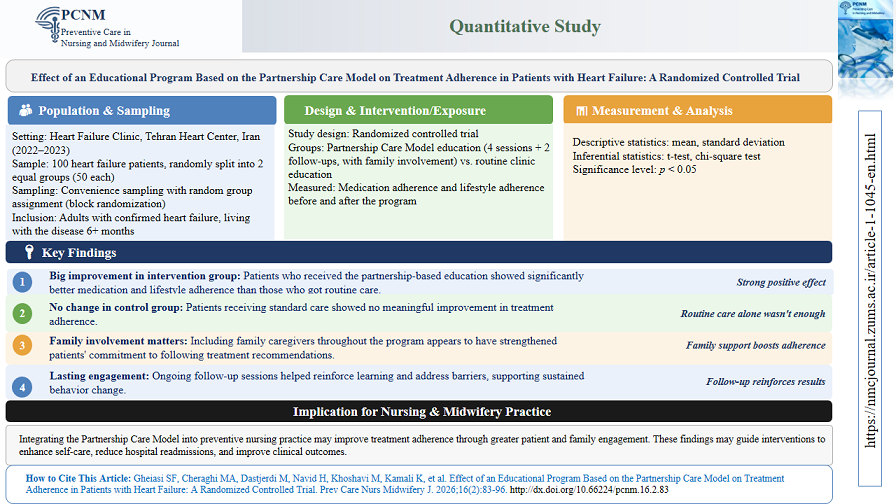
A partnership care model program was associated with improved medication and lifestyle adherence in heart failure patients. Managers may consider incorporating this collaborative, nurse-led, family-engaging approach into routine heart failure care.
Full-Text: (82 Views)
Introduction
Heart failure is a complex and debilitating clinical syndrome in which the heart is unable to pump sufficient blood to meet the body's metabolic demands [1]. Despite substantial advances in its diagnosis and treatment, the prevalence of heart failure continues to increase. It is estimated that approximately 7.5 million people in the United States [2] and 64.34 million individuals worldwide are living with heart failure [3]. Although reliable epidemiological data on the prevalence of heart failure in Iran remain limited, the growing life expectancy and aging population are expected to increase the burden of the disease in the coming years [4]. Heart failure is associated with considerable morbidity and mortality [5], with the one-year mortality rate in Iran reported to be approximately 32% [6].
Beyond its adverse effects on physical function, heart failure substantially impairs patients' quality of life. Effective disease management therefore requires adherence to both pharmacological and non-pharmacological treatment recommendations, including dietary modification, regular physical activity, and consistent medication use [7]. Current international guidelines recommend an integrated approach that combines pharmacological and non-pharmacological interventions for the management of heart failure [8].
Treatment adherence is a fundamental component of care for individuals with chronic diseases [9]. The World Health Organization defines treatment adherence as the extent to which a person's behaviors, including medication use, dietary practices, and lifestyle modifications, align with recommendations from healthcare professionals [10]. In heart failure, treatment adherence is particularly important because of the chronic nature of the disease, the complexity of treatment regimens, polypharmacy, restrictions on sodium and fluid intake, and the need for sustained lifestyle modification. Consequently, maintaining treatment adherence remains a major challenge in the management of heart failure [11, 12].
Poor treatment adherence, particularly with respect to medication use and lifestyle modification, is common among patients with heart failure and is associated with adverse consequences, including symptom exacerbation, disease recurrence, hospital readmission, increased healthcare costs, and mortality [13, 14]. In contrast, adherence to recommended treatment contributes to physiological stability, slows disease progression, improves quality of life, and reduces both hospital readmissions and mortality [15]. From a nursing perspective, promoting treatment adherence is a key component of preventive care, particularly secondary prevention, for patients with heart failure. Through educational and collaborative interventions, nurses can strengthen self-care, improve adherence to treatment recommendations, facilitate the early recognition of worsening symptoms, and ultimately reduce complications, prevent avoidable hospital readmissions, and improve health outcomes. Nevertheless, treatment nonadherence remains common, with reported rates ranging from 10% to 93% among patients with heart failure [16–18] and continues to represent a major challenge for healthcare systems [19]. Although a variety of interventions have been developed to improve treatment adherence, overall adherence rates have shown little meaningful improvement [20].
Several educational interventions have demonstrated positive effects on treatment adherence [21, 22], whereas others have reported limited effectiveness [23, 24]. One possible explanation for these inconsistent findings is the limited emphasis placed on the active involvement of patients and their families in the care process and treatment decision-making. Collaborative care has therefore emerged as an important approach to the management of chronic diseases by promoting constructive partnerships among patients, family members, and healthcare professionals.
As a knowledge-based profession, nursing draws on conceptual models and theories to improve the quality of care for individuals with chronic conditions [25, 26]. The partnership care model, originally developed and evaluated by Mohammadi and colleagues to improve hypertension control [27], emphasizes active collaboration among patients, family members, nurses, physicians, and other healthcare professionals throughout the care process [25-27]. Within this model, informed and responsible patient participation is regarded as the foundation of care and is expected to improve treatment adherence by strengthening therapeutic relationships, motivation, and accountability [27]. Despite these potential advantages, the application of partnership-based approaches in routine heart failure care requires further investigation.
Given the importance of treatment adherence in the management of heart failure, the inconsistent findings regarding the effectiveness of educational interventions, and the limited evidence on the application of the partnership care model in patients with heart failure, further research is warranted.
Objectives
This study aimed to compare the effects of an educational program based on the partnership care model with those of routine education on treatment adherence among patients with heart failure.
Methods
Study design
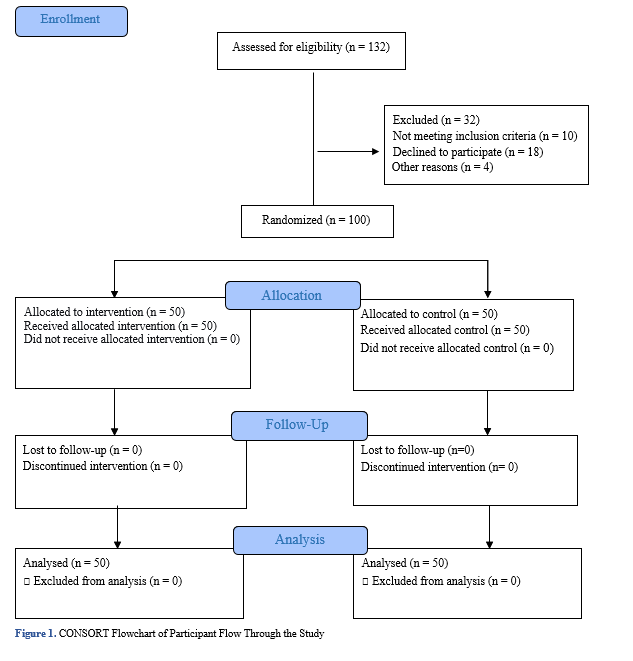
This study was a parallel-group, assessor-blinded randomized controlled trial. Due to the educational and behavioral nature of the intervention, blinding of participants and intervention providers was not feasible. However, to minimize detection bias, the outcome assessor and the statistician were blinded to group allocation throughout the study. The trial was conducted among 100 patients with heart failure who were referred to the Heart Failure Clinic at Tehran Heart Center, Tehran, Iran, between January and April 2023, and was reported in accordance with the Consolidated Standards of Reporting Trials (CONSORT) guideline [Figure 1]
Participants
Participants were recruited through convenience sampling from eligible patients referred to the Heart Failure Clinic. The sample size was calculated using the formula for comparing two independent means based on the mean and standard deviation of treatment adherence scores reported by Granger et al. [28]. Assuming a significance level of 0.05 and 90% power, the required sample size was estimated at 44 participants per group. The corresponding effect size (Cohen's d) was 0.68. To account for an anticipated attrition rate of approximately 10% while preserving study power, the final sample size was increased to 50 participants per group, yielding a total sample of 100.
After confirming eligibility and obtaining written informed consent, participants were randomly assigned to the intervention or control group using permuted-block randomization with a block size of 4 and a 1:1 allocation ratio. The randomization sequence was generated by an independent statistician using R software. To ensure allocation concealment, the randomization sequence was accessible only to the research supervisor until all participants had been enrolled, and the principal investigator had no access to it.
Following enrolment, the research supervisor determined the group assignment based on the randomization codes (A and B). Outcome assessment was performed under blinded conditions, with the outcome assessor remaining unaware of group allocation throughout the study. Data analysis was also conducted by a statistician who was blinded to group coding.
Eligible patients were aged 18 years or older, had a confirmed diagnosis of heart failure with New York Heart Association (NYHA) functional class I–III established by a heart failure specialist, had lived with the disease for at least six months, and were able to read and write. Family caregivers were required to have participated in the patient's care during the previous six months and to possess basic literacy skills.
Patients and family caregivers were excluded if they were simultaneously participating in another educational program. In addition, family caregivers with a self-reported history of chronic physical or psychiatric illness were not eligible for participation. The withdrawal criterion for patients was the development of clinical instability during the study period. No participants withdrew from the study, and all 100 participants were included in the final analysis.
Intervention
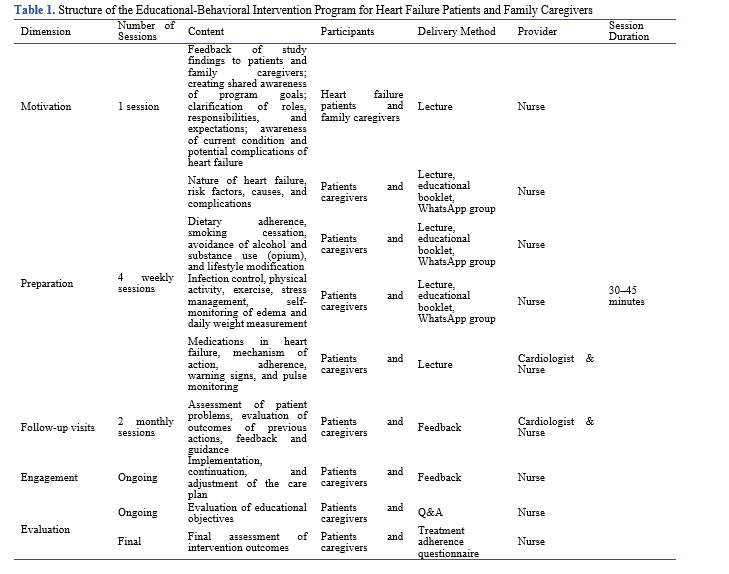
Following the baseline assessment, participants in the intervention group received an educational program based on the Partnership Care Model. In contrast, those in the control group received routine care provided by the clinic. Routine care consisted of standard outpatient visits, along with the usual verbal education provided by nurses or physicians on medication use, dietary recommendations, fluid restriction, physical activity, and follow-up care. The intervention was designed according to the four phases of the partnership care model, namely motivation, preparation, involvement, and evaluation, and all sessions were delivered by the principal investigator in collaboration with a heart failure specialist.
During the motivation phase, one 30- to 45-minute session was conducted to discuss the participants' current condition, the program's objectives, their roles and responsibilities in the care process, and the consequences of poor treatment adherence, to encourage active participation throughout the intervention.
The preparation phase comprised four weekly collaborative educational visits followed by two monthly collaborative follow-up visits. Educational sessions addressed heart failure, risk factors, dietary recommendations, physical activity, infection prevention, stress management, symptom monitoring, appropriate medication use, and self-care principles. During follow-up visits, participants' concerns, adherence to treatment recommendations, barriers to adherence, and strategies to overcome them were reviewed, and individualized feedback was provided.
During the involvement phase, patients and their family caregivers actively participated in implementing the care plan, shared decision-making, and modifying self-care behaviors throughout the intervention.
During the evaluation phase, achievement of the educational objectives and participants' level of engagement were assessed at the end of each session and again after completion of the intervention. A summary of the intervention phases, educational content, delivery methods, facilitators, and session duration is presented in Table 1.
Instruments and Measures
Two instruments were used for data collection: a demographic and clinical characteristics questionnaire and a researcher-developed treatment adherence questionnaire. All participants completed the treatment adherence questionnaire before and after the intervention, whereas only the demographic and clinical characteristics questionnaire was completed at baseline.
The demographic and clinical characteristics questionnaire collected information on patients' demographic characteristics, including age, sex, marital status, educational level, living arrangement, income, and place of residence, as well as clinical characteristics, including left ventricular ejection fraction and duration of heart failure. Information on family caregivers, including age, sex, educational level, and relationship to the patient, was also recorded.
To identify an appropriate instrument for assessing treatment adherence among patients with heart failure, a comprehensive literature search was conducted in national and international electronic databases, including Magiran, SID, Elsevier, PubMed, and Google Scholar, using the Persian and English keywords treatment adherence, treatment compliance, tools, and questionnaire. The search identified no standardized questionnaire specifically designed to assess treatment adherence in patients with heart failure comprehensively. Available instruments were either not specific to heart failure [29] or assessed only a single dimension of treatment adherence, such as adherence to self-care behaviors [30, 31] or medication adherence [32, 33]. In addition, several studies had used researcher-developed questionnaires to assess treatment adherence in patients with heart failure; however, these instruments lacked comprehensiveness or had not undergone adequate psychometric evaluation [17, 34-35]. Therefore, the research team developed a researcher-designed questionnaire to assess treatment adherence in patients with heart failure.
The questionnaire items were developed based on findings from the qualitative phase of the study, relevant textbooks and published literature, and existing instruments, including the European Heart Failure Self-care Behavior Scale, the Self-Care of Heart Failure Index, the Morisky Medication Adherence Questionnaire, the researcher-developed treatment adherence questionnaire used by Silva et al [17], and the researcher-developed treatment adherence questionnaire reported by Tam et al [34].
The preliminary version of the questionnaire consisted of 25 items scored on a five-point Likert scale ranging from 1 (never) to 5 (always). The instrument included two domains: medication adherence (5 items) and lifestyle modification (19 items). The lifestyle modification domain comprised healthy diet (3 items), fluid intake (2 items), avoidance of risk factors (2 items), self-monitoring (2 items), exercise and physical activity (2 items), stress management (1 item), prevention of respiratory infections (2 items), communication with healthcare providers (3 items), and treatment follow-up (2 items).
The medication adherence domain yielded scores ranging from 5 to 25, whereas the lifestyle modification domain ranged from 19 to 95. The total questionnaire score ranged from 24 to 120, with higher scores indicating better treatment adherence. Scores exceeding 70% of the maximum possible score were considered indicative of desirable treatment adherence, corresponding to ≥ 17.5 for medication adherence, ≥ 66.5 for lifestyle modification, and ≥ 84 for the total treatment adherence score.
Content validity was evaluated using both qualitative and quantitative approaches. For the qualitative assessment, the questionnaire was reviewed by 12 experts in heart failure, who provided feedback on the relevance, clarity, and wording of the items. Quantitative content validity assessment showed that the content validity ratio (CVR) ranged from 0.66 to 1.00, the item-level content validity index (I-CVI) ranged from 0.91 to 1.00, and the scale-level content validity index (S-CVI) was 0.96. Following expert review, two items within the fluid intake subdomain of the lifestyle modification domain were merged because of conceptual overlap, resulting in a final questionnaire comprising 24 items.
Face validity was also assessed using qualitative and quantitative methods. For the qualitative assessment, the questionnaire was administered through face-to-face interviews with 10 participants representing diverse demographic backgrounds. Participants were asked to evaluate each item on comprehensibility, ambiguity, wording, and interpretability. The impact score for every item exceeded 1.5, and no items were removed. Internal consistency was used to assess reliability, and Cronbach's alpha coefficient for the final questionnaire was 0.81.
Outcome Measures
The primary outcome was the change in treatment adherence scores among patients with heart failure from baseline to post-intervention. Treatment adherence was assessed using a researcher-developed questionnaire that measured two domains: medication adherence and lifestyle modification. Both domain-specific scores and the total treatment adherence score were calculated.
Statistical Analysis
Data were analyzed using SPSS version 16 (SPSS Inc., Chicago, IL, USA). Descriptive statistics, including means, standard deviations, frequencies, and percentages, were used to summarize the data. Between-group and within-group comparisons were performed using the chi-square test, independent-samples t test, and paired-samples t test, as appropriate. The normality of continuous variables was assessed by examining skewness and kurtosis. Variables with skewness and kurtosis values within the range of −2 to +2 were considered approximately normally distributed. Effect sizes (Cohen's d) were calculated to estimate the magnitude of between-group and within-group intervention effects. A two-sided p value of less than 0.05 was considered statistically significant.
Result
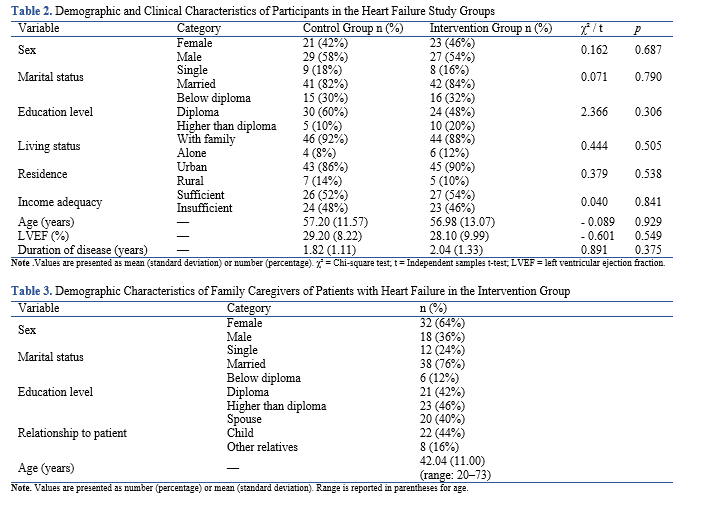
Participants ranged in age from 32 to 83 years. The duration of heart failure ranged from 1 to 7 years, and left ventricular ejection fraction (LVEF) ranged from 15% to 45%. Overall, most participants were male (56%), married (83%), had a high school diploma as their highest educational qualification (54%), and resided in urban areas (88%). In addition, most participants lived with their families (90%). Based on self-reported income, 53% considered their income to be sufficient. No statistically significant differences were observed between the intervention and control groups in demographic or clinical characteristics, indicating baseline comparability (p > 0.05). The demographic and clinical characteristics of the participants are presented in Table 2. Among the family caregivers, most were female (64%), married (76%), had an educational level above a high school diploma (46%), and were the patient's children (44%).
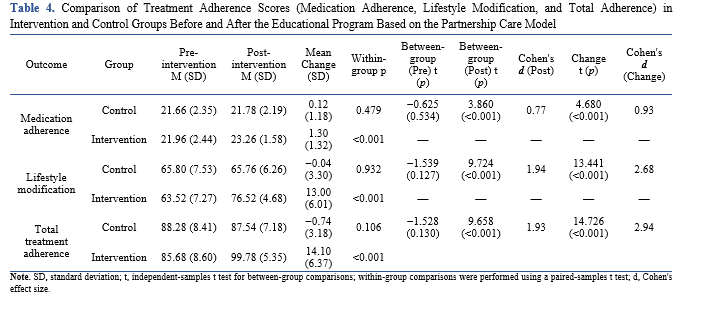
The age of the family caregivers ranged from 20 to 73 years. Their demographic characteristics are presented in Table 3. An independent-samples t-test showed no statistically significant differences between the intervention and control groups in mean medication adherence, lifestyle modification, or total treatment adherence scores before the intervention. Following the intervention, however, mean scores for medication adherence, lifestyle modification, and total treatment adherence were significantly higher in the intervention group than in the control group.
Within-group analysis using the paired-samples t test showed no significant changes in medication adherence, lifestyle modification, or total treatment adherence scores in the control group after the intervention. In contrast, participants in the intervention group demonstrated significant improvements in medication adherence, lifestyle modification, and overall treatment adherence following the educational program based on the partnership care model compared with their baseline scores. Effect size analysis indicated that the intervention had a large effect on medication adherence, lifestyle modification, and overall treatment adherence (d > 0.8) [Table 4].
Discussion
The present study examined the effect of an educational program based on the partnership care model on treatment adherence among patients with heart failure. The findings demonstrated that the intervention improved treatment adherence in the intervention group. These results suggest that educational interventions delivered within a structured, collaborative framework, together with ongoing follow-up, can positively influence treatment-related behaviors in patients with heart failure.
The observed effectiveness of the partnership care model is likely attributable to the synergistic effects of several complementary components. First, structured education tailored to patients' individual needs may enhance their understanding of heart failure, treatment goals, and the importance of adhering to recommended therapeutic regimens. Second, actively involving patients and their family caregivers in the educational process and shared decision-making may strengthen their sense of responsibility and promote sustained support for the implementation of treatment recommendations. These findings are consistent with previous studies demonstrating that family-centered educational interventions improve adherence-related behaviors and self-care among patients with heart failure [23, 36]. Third, follow-up sessions provide opportunities to reinforce learning, address patients' concerns, identify barriers to adherence, and offer individualized feedback, thereby facilitating adherence maintenance over time [23, 37]. In addition, greater patient participation in the care process may enhance self-efficacy, thereby increasing motivation to adhere to treatment recommendations [38]. Collectively, these components may explain the beneficial effects observed in the present study rather than education alone.
The findings are consistent with those reported by Mohammadzadeh et al., who found that an educational intervention based on the partnership care model improved self-efficacy related to self-care behaviors among patients with heart failure [38]. This consistency suggests that, beyond improving treatment adherence, the partnership care model may also promote treatment-related and self-care behaviors by enhancing patients' self-efficacy.
The present findings are also broadly consistent with those of Zakeri et al., who reported that implementing the continuous care model improved medication adherence among patients with myocardial infarction. However, the difference between the intervention and control groups in adherence to the medication regimen was not statistically significant [39]. Differences in disease characteristics, adherence assessment tools, intervention design, and study populations may explain the discrepancy between their findings and those of the present study. Nevertheless, both studies support the value of structured education and follow-up in promoting treatment adherence, although the magnitude of the intervention effect may vary across different clinical settings.
Our findings also align with those of Dessie et al., who demonstrated that a self-care education program grounded in social cognitive theory improved adherence to self-care behaviors among patients with heart failure [22]. Although the theoretical frameworks of those interventions differed from the partnership care model, both studies highlight the importance of structured education, repeated educational sessions, and regular follow-up in improving treatment adherence and self-care behaviors. It should be noted, however, that an imbalance between the study groups with respect to certain demographic and clinical characteristics in the study by Desy et al. may have influenced the interpretation of their findings.
The present results are further supported by the study conducted by Bahramnejad et al. (2021), which showed that a participatory educational intervention improved adherence to therapeutic recommendations, including dietary modifications, medication use, and physical activity, among patients undergoing open-heart surgery [40]. Despite differences in patient populations and outcome measures, both studies emphasize the importance of engaging patients and their caregivers throughout the educational process. These findings suggest that collaborative educational approaches may be an effective strategy for improving treatment adherence across patient groups with cardiovascular disease. Active involvement of both patients and family caregivers may have been a common factor contributing to the positive outcomes observed in both studies.
Najafi et al. also reported findings consistent with those of the present study. They demonstrated that a self-management–based discharge program incorporating face-to-face education and telephone follow-up improved treatment adherence among patients with heart failure [37]. The consistency between these findings highlights the importance of maintaining educational support after hospital discharge. It suggests that educational interventions are more effective when they extend beyond hospitalization and continue throughout follow-up care.
Similarly, Kobraei et al. reported that a five-session face-to-face educational program improved both treatment adherence and health literacy among patients with heart failure [41]. Their findings further support the results of the present study. However, unlike our findings, treatment adherence decreased significantly in the control group of their study, whereas no significant change was observed in the control group in the present study. This discrepancy may reflect differences in routine care, participant characteristics, and the content of the educational interventions.
The findings of the present study are also generally consistent with those reported by Fallahinia et al. They found that education delivered with family caregiver participation resulted in greater improvements in adherence to dietary recommendations, medication regimens, and physical activity than individual education alone. However, no significant difference was observed in health-protective behaviors [42]. These findings suggest that the different dimensions of treatment adherence may not respond equally to educational interventions and that variations in measurement instruments, sample size, and intervention characteristics may contribute to these differences.
Clements et al. also reported findings that support the present results. They demonstrated that a caregiver-focused educational intervention significantly improved heart failure self-care and reduced hospital readmissions, highlighting the important role of family engagement in supporting long-term disease management and adherence-related behaviors [36]. These findings suggest that structured education, combined with active involvement of family caregivers, can strengthen patients' engagement in self-care and adherence to treatment recommendations, consistent with the principles of the partnership care model adopted in the present study.
Borhani et al. also demonstrated that the partnership care model improved all dimensions of quality of life among patients with heart failure [43]. Although quality of life was the primary outcome in their study rather than treatment adherence, their findings further support the partnership care model's positive contribution to improving outcomes among patients with heart failure.
Overall, comparisons with previous research suggest that educational interventions are most effective when they combine active patient and family participation, structured education, and continuous follow-up, regardless of the underlying theoretical framework. The differences observed across studies are likely attributable to variations in disease characteristics, study populations, outcome measures, intervention intensity and duration, follow-up period, and the quality of routine care provided to control groups. These findings indicate that the effectiveness of educational interventions depends not only on the intervention itself but also on how it is implemented and the clinical context in which it is delivered. The improvement in treatment adherence observed in the present study was therefore likely the result of the combined effects of structured education, active patient and family involvement, and ongoing follow-up, which together facilitated positive changes in treatment-related behaviors.
This study has several limitations that should be considered when interpreting the findings. First, treatment adherence was assessed using a researcher-developed questionnaire. Although its face validity, content validity, and internal consistency were established before use, its construct validity was not evaluated using exploratory or confirmatory factor analysis. In addition, test–retest reliability was not assessed using the intraclass correlation coefficient (ICC). Furthermore, the cut-off value used to define desirable treatment adherence was based on a percentage of the maximum possible score and requires further validation in future studies. Second, treatment adherence was measured via self-reported data, which may have introduced response and social desirability biases. Third, study outcomes were assessed only at the end of the intervention, and the absence of long-term follow-up precluded evaluation of the durability of the intervention effects. Finally, the intervention was delivered by the research team without the involvement of a multidisciplinary team, such as dietitians, psychologists, and pharmacists, which may have influenced its effectiveness across some dimensions of treatment adherence.
Accordingly, future studies should conduct a comprehensive psychometric evaluation of this instrument, assess the long-term effectiveness of the intervention through extended follow-up, and undertake multicentre studies with larger sample sizes and multidisciplinary teams to enhance the generalizability of the findings.
Conclusion
The present study found that an educational program based on the partnership care model significantly improved treatment adherence, including medication adherence and lifestyle modification, among patients with heart failure. These findings suggest that this educational approach enhances treatment adherence by promoting active engagement among patients, family caregivers, and healthcare providers throughout the care process. Given its practical, feasible, and collaborative nature, this model may represent a useful approach for incorporating structured educational interventions into routine care for patients with heart failure. Further studies with longer follow-up are needed to determine whether these improvements are sustained and to evaluate the intervention's effects on other clinical outcomes.
Ethical Consideration
This study was approved by the Institutional Ethics Committee of the School of Nursing and Midwifery and the School of Rehabilitation, Tehran University of Medical Sciences (Approval No. IR.TUMS.FNM.REC.1398.019). The trial was prospectively registered with the Iranian Registry of Clinical Trials (IRCT) (Registration No. IRCT20200910048678N3). Written informed consent was obtained from all participants before enrolment.
Acknowledgements
The authors would like to sincerely thank all participants of this study, including patients and their family caregivers, for their valuable cooperation and time. The authors also appreciate the support from the staff of the participating clinic, which facilitated data collection. This study was derived from a PhD dissertation approved by the School of Nursing and Midwifery, Tehran University of Medical Sciences, Tehran, Iran.
Conflict of Interest
Some of the authors are affiliated with the journal Preventive Care in Nursing and Midwifery (PCNM) as members of the Editorial Board and the journal team.
To ensure transparency and impartiality, this manuscript was processed through the journal's standard peer‑review workflow, independent of the involved editors.
The final editorial decision was made solely by the Editorial Board, without the participation of the affiliated authors in the review or acceptance process.
All other authors declare no conflicts of interest.
Funding
This study was supported by Tehran University of Medical Sciences (TUMS), Tehran, Iran (Grant No. [45651]).
Authors' Contributions
Conceptualization: S.F. Gheiasi, E. Navab
Methodology: S.F. Gheiasi, E. Navab, K. Kamali, M.A. Cheraghi, M. Dastjerdi, H. Navid, M. Khoshavi
Investigation: S.F. Gheiasi
Data Curation: S.F. Gheiasi
Formal Analysis: S.F. Gheiasi, K. Kamali
Validation: E. Navab, K. Kamali, M.A. Cheraghi, M. Dastjerdi, H. Navid, M. Khoshavi
Software: K. Kamali
Writing – Original Draft: S.F. Gheiasi
Writing – Review & Editing: E. Navab, M.A. Cheraghi, M. Dastjerdi, H. Navid, M. Khoshavi
Supervision: E. Navab
Project Administration: S.F. Gheiasi
All authors read and approved the final manuscript.
Artificial Intelligence Utilization
The authors declare that ChatGPT and Consensus were used solely to assist with the initial translation of the manuscript, language editing, and improving readability. All scientific content, study design, data analysis, interpretation of the findings, and final approval of the manuscript were performed independently by the authors, who take full responsibility for the accuracy, integrity, and originality of the work.
Data Availability Statement
The datasets generated and/or analyzed during the current study are available from the corresponding author on reasonable request.
Heart failure is a complex and debilitating clinical syndrome in which the heart is unable to pump sufficient blood to meet the body's metabolic demands [1]. Despite substantial advances in its diagnosis and treatment, the prevalence of heart failure continues to increase. It is estimated that approximately 7.5 million people in the United States [2] and 64.34 million individuals worldwide are living with heart failure [3]. Although reliable epidemiological data on the prevalence of heart failure in Iran remain limited, the growing life expectancy and aging population are expected to increase the burden of the disease in the coming years [4]. Heart failure is associated with considerable morbidity and mortality [5], with the one-year mortality rate in Iran reported to be approximately 32% [6].
Beyond its adverse effects on physical function, heart failure substantially impairs patients' quality of life. Effective disease management therefore requires adherence to both pharmacological and non-pharmacological treatment recommendations, including dietary modification, regular physical activity, and consistent medication use [7]. Current international guidelines recommend an integrated approach that combines pharmacological and non-pharmacological interventions for the management of heart failure [8].
Treatment adherence is a fundamental component of care for individuals with chronic diseases [9]. The World Health Organization defines treatment adherence as the extent to which a person's behaviors, including medication use, dietary practices, and lifestyle modifications, align with recommendations from healthcare professionals [10]. In heart failure, treatment adherence is particularly important because of the chronic nature of the disease, the complexity of treatment regimens, polypharmacy, restrictions on sodium and fluid intake, and the need for sustained lifestyle modification. Consequently, maintaining treatment adherence remains a major challenge in the management of heart failure [11, 12].
Poor treatment adherence, particularly with respect to medication use and lifestyle modification, is common among patients with heart failure and is associated with adverse consequences, including symptom exacerbation, disease recurrence, hospital readmission, increased healthcare costs, and mortality [13, 14]. In contrast, adherence to recommended treatment contributes to physiological stability, slows disease progression, improves quality of life, and reduces both hospital readmissions and mortality [15]. From a nursing perspective, promoting treatment adherence is a key component of preventive care, particularly secondary prevention, for patients with heart failure. Through educational and collaborative interventions, nurses can strengthen self-care, improve adherence to treatment recommendations, facilitate the early recognition of worsening symptoms, and ultimately reduce complications, prevent avoidable hospital readmissions, and improve health outcomes. Nevertheless, treatment nonadherence remains common, with reported rates ranging from 10% to 93% among patients with heart failure [16–18] and continues to represent a major challenge for healthcare systems [19]. Although a variety of interventions have been developed to improve treatment adherence, overall adherence rates have shown little meaningful improvement [20].
Several educational interventions have demonstrated positive effects on treatment adherence [21, 22], whereas others have reported limited effectiveness [23, 24]. One possible explanation for these inconsistent findings is the limited emphasis placed on the active involvement of patients and their families in the care process and treatment decision-making. Collaborative care has therefore emerged as an important approach to the management of chronic diseases by promoting constructive partnerships among patients, family members, and healthcare professionals.
As a knowledge-based profession, nursing draws on conceptual models and theories to improve the quality of care for individuals with chronic conditions [25, 26]. The partnership care model, originally developed and evaluated by Mohammadi and colleagues to improve hypertension control [27], emphasizes active collaboration among patients, family members, nurses, physicians, and other healthcare professionals throughout the care process [25-27]. Within this model, informed and responsible patient participation is regarded as the foundation of care and is expected to improve treatment adherence by strengthening therapeutic relationships, motivation, and accountability [27]. Despite these potential advantages, the application of partnership-based approaches in routine heart failure care requires further investigation.
Given the importance of treatment adherence in the management of heart failure, the inconsistent findings regarding the effectiveness of educational interventions, and the limited evidence on the application of the partnership care model in patients with heart failure, further research is warranted.
Objectives
This study aimed to compare the effects of an educational program based on the partnership care model with those of routine education on treatment adherence among patients with heart failure.
Methods
Study design
This study was a parallel-group, assessor-blinded randomized controlled trial. Due to the educational and behavioral nature of the intervention, blinding of participants and intervention providers was not feasible. However, to minimize detection bias, the outcome assessor and the statistician were blinded to group allocation throughout the study. The trial was conducted among 100 patients with heart failure who were referred to the Heart Failure Clinic at Tehran Heart Center, Tehran, Iran, between January and April 2023, and was reported in accordance with the Consolidated Standards of Reporting Trials (CONSORT) guideline [Figure 1]
Participants
Participants were recruited through convenience sampling from eligible patients referred to the Heart Failure Clinic. The sample size was calculated using the formula for comparing two independent means based on the mean and standard deviation of treatment adherence scores reported by Granger et al. [28]. Assuming a significance level of 0.05 and 90% power, the required sample size was estimated at 44 participants per group. The corresponding effect size (Cohen's d) was 0.68. To account for an anticipated attrition rate of approximately 10% while preserving study power, the final sample size was increased to 50 participants per group, yielding a total sample of 100.
After confirming eligibility and obtaining written informed consent, participants were randomly assigned to the intervention or control group using permuted-block randomization with a block size of 4 and a 1:1 allocation ratio. The randomization sequence was generated by an independent statistician using R software. To ensure allocation concealment, the randomization sequence was accessible only to the research supervisor until all participants had been enrolled, and the principal investigator had no access to it.
Following enrolment, the research supervisor determined the group assignment based on the randomization codes (A and B). Outcome assessment was performed under blinded conditions, with the outcome assessor remaining unaware of group allocation throughout the study. Data analysis was also conducted by a statistician who was blinded to group coding.
Eligible patients were aged 18 years or older, had a confirmed diagnosis of heart failure with New York Heart Association (NYHA) functional class I–III established by a heart failure specialist, had lived with the disease for at least six months, and were able to read and write. Family caregivers were required to have participated in the patient's care during the previous six months and to possess basic literacy skills.
Patients and family caregivers were excluded if they were simultaneously participating in another educational program. In addition, family caregivers with a self-reported history of chronic physical or psychiatric illness were not eligible for participation. The withdrawal criterion for patients was the development of clinical instability during the study period. No participants withdrew from the study, and all 100 participants were included in the final analysis.
Intervention
Following the baseline assessment, participants in the intervention group received an educational program based on the Partnership Care Model. In contrast, those in the control group received routine care provided by the clinic. Routine care consisted of standard outpatient visits, along with the usual verbal education provided by nurses or physicians on medication use, dietary recommendations, fluid restriction, physical activity, and follow-up care. The intervention was designed according to the four phases of the partnership care model, namely motivation, preparation, involvement, and evaluation, and all sessions were delivered by the principal investigator in collaboration with a heart failure specialist.
During the motivation phase, one 30- to 45-minute session was conducted to discuss the participants' current condition, the program's objectives, their roles and responsibilities in the care process, and the consequences of poor treatment adherence, to encourage active participation throughout the intervention.
The preparation phase comprised four weekly collaborative educational visits followed by two monthly collaborative follow-up visits. Educational sessions addressed heart failure, risk factors, dietary recommendations, physical activity, infection prevention, stress management, symptom monitoring, appropriate medication use, and self-care principles. During follow-up visits, participants' concerns, adherence to treatment recommendations, barriers to adherence, and strategies to overcome them were reviewed, and individualized feedback was provided.
During the involvement phase, patients and their family caregivers actively participated in implementing the care plan, shared decision-making, and modifying self-care behaviors throughout the intervention.
During the evaluation phase, achievement of the educational objectives and participants' level of engagement were assessed at the end of each session and again after completion of the intervention. A summary of the intervention phases, educational content, delivery methods, facilitators, and session duration is presented in Table 1.
Instruments and Measures
Two instruments were used for data collection: a demographic and clinical characteristics questionnaire and a researcher-developed treatment adherence questionnaire. All participants completed the treatment adherence questionnaire before and after the intervention, whereas only the demographic and clinical characteristics questionnaire was completed at baseline.
The demographic and clinical characteristics questionnaire collected information on patients' demographic characteristics, including age, sex, marital status, educational level, living arrangement, income, and place of residence, as well as clinical characteristics, including left ventricular ejection fraction and duration of heart failure. Information on family caregivers, including age, sex, educational level, and relationship to the patient, was also recorded.
To identify an appropriate instrument for assessing treatment adherence among patients with heart failure, a comprehensive literature search was conducted in national and international electronic databases, including Magiran, SID, Elsevier, PubMed, and Google Scholar, using the Persian and English keywords treatment adherence, treatment compliance, tools, and questionnaire. The search identified no standardized questionnaire specifically designed to assess treatment adherence in patients with heart failure comprehensively. Available instruments were either not specific to heart failure [29] or assessed only a single dimension of treatment adherence, such as adherence to self-care behaviors [30, 31] or medication adherence [32, 33]. In addition, several studies had used researcher-developed questionnaires to assess treatment adherence in patients with heart failure; however, these instruments lacked comprehensiveness or had not undergone adequate psychometric evaluation [17, 34-35]. Therefore, the research team developed a researcher-designed questionnaire to assess treatment adherence in patients with heart failure.
The questionnaire items were developed based on findings from the qualitative phase of the study, relevant textbooks and published literature, and existing instruments, including the European Heart Failure Self-care Behavior Scale, the Self-Care of Heart Failure Index, the Morisky Medication Adherence Questionnaire, the researcher-developed treatment adherence questionnaire used by Silva et al [17], and the researcher-developed treatment adherence questionnaire reported by Tam et al [34].
The preliminary version of the questionnaire consisted of 25 items scored on a five-point Likert scale ranging from 1 (never) to 5 (always). The instrument included two domains: medication adherence (5 items) and lifestyle modification (19 items). The lifestyle modification domain comprised healthy diet (3 items), fluid intake (2 items), avoidance of risk factors (2 items), self-monitoring (2 items), exercise and physical activity (2 items), stress management (1 item), prevention of respiratory infections (2 items), communication with healthcare providers (3 items), and treatment follow-up (2 items).
The medication adherence domain yielded scores ranging from 5 to 25, whereas the lifestyle modification domain ranged from 19 to 95. The total questionnaire score ranged from 24 to 120, with higher scores indicating better treatment adherence. Scores exceeding 70% of the maximum possible score were considered indicative of desirable treatment adherence, corresponding to ≥ 17.5 for medication adherence, ≥ 66.5 for lifestyle modification, and ≥ 84 for the total treatment adherence score.
Content validity was evaluated using both qualitative and quantitative approaches. For the qualitative assessment, the questionnaire was reviewed by 12 experts in heart failure, who provided feedback on the relevance, clarity, and wording of the items. Quantitative content validity assessment showed that the content validity ratio (CVR) ranged from 0.66 to 1.00, the item-level content validity index (I-CVI) ranged from 0.91 to 1.00, and the scale-level content validity index (S-CVI) was 0.96. Following expert review, two items within the fluid intake subdomain of the lifestyle modification domain were merged because of conceptual overlap, resulting in a final questionnaire comprising 24 items.
Face validity was also assessed using qualitative and quantitative methods. For the qualitative assessment, the questionnaire was administered through face-to-face interviews with 10 participants representing diverse demographic backgrounds. Participants were asked to evaluate each item on comprehensibility, ambiguity, wording, and interpretability. The impact score for every item exceeded 1.5, and no items were removed. Internal consistency was used to assess reliability, and Cronbach's alpha coefficient for the final questionnaire was 0.81.
Outcome Measures
The primary outcome was the change in treatment adherence scores among patients with heart failure from baseline to post-intervention. Treatment adherence was assessed using a researcher-developed questionnaire that measured two domains: medication adherence and lifestyle modification. Both domain-specific scores and the total treatment adherence score were calculated.
Statistical Analysis
Data were analyzed using SPSS version 16 (SPSS Inc., Chicago, IL, USA). Descriptive statistics, including means, standard deviations, frequencies, and percentages, were used to summarize the data. Between-group and within-group comparisons were performed using the chi-square test, independent-samples t test, and paired-samples t test, as appropriate. The normality of continuous variables was assessed by examining skewness and kurtosis. Variables with skewness and kurtosis values within the range of −2 to +2 were considered approximately normally distributed. Effect sizes (Cohen's d) were calculated to estimate the magnitude of between-group and within-group intervention effects. A two-sided p value of less than 0.05 was considered statistically significant.
Result
Participants ranged in age from 32 to 83 years. The duration of heart failure ranged from 1 to 7 years, and left ventricular ejection fraction (LVEF) ranged from 15% to 45%. Overall, most participants were male (56%), married (83%), had a high school diploma as their highest educational qualification (54%), and resided in urban areas (88%). In addition, most participants lived with their families (90%). Based on self-reported income, 53% considered their income to be sufficient. No statistically significant differences were observed between the intervention and control groups in demographic or clinical characteristics, indicating baseline comparability (p > 0.05). The demographic and clinical characteristics of the participants are presented in Table 2. Among the family caregivers, most were female (64%), married (76%), had an educational level above a high school diploma (46%), and were the patient's children (44%).
The age of the family caregivers ranged from 20 to 73 years. Their demographic characteristics are presented in Table 3. An independent-samples t-test showed no statistically significant differences between the intervention and control groups in mean medication adherence, lifestyle modification, or total treatment adherence scores before the intervention. Following the intervention, however, mean scores for medication adherence, lifestyle modification, and total treatment adherence were significantly higher in the intervention group than in the control group.
Within-group analysis using the paired-samples t test showed no significant changes in medication adherence, lifestyle modification, or total treatment adherence scores in the control group after the intervention. In contrast, participants in the intervention group demonstrated significant improvements in medication adherence, lifestyle modification, and overall treatment adherence following the educational program based on the partnership care model compared with their baseline scores. Effect size analysis indicated that the intervention had a large effect on medication adherence, lifestyle modification, and overall treatment adherence (d > 0.8) [Table 4].
Discussion
The present study examined the effect of an educational program based on the partnership care model on treatment adherence among patients with heart failure. The findings demonstrated that the intervention improved treatment adherence in the intervention group. These results suggest that educational interventions delivered within a structured, collaborative framework, together with ongoing follow-up, can positively influence treatment-related behaviors in patients with heart failure.
The observed effectiveness of the partnership care model is likely attributable to the synergistic effects of several complementary components. First, structured education tailored to patients' individual needs may enhance their understanding of heart failure, treatment goals, and the importance of adhering to recommended therapeutic regimens. Second, actively involving patients and their family caregivers in the educational process and shared decision-making may strengthen their sense of responsibility and promote sustained support for the implementation of treatment recommendations. These findings are consistent with previous studies demonstrating that family-centered educational interventions improve adherence-related behaviors and self-care among patients with heart failure [23, 36]. Third, follow-up sessions provide opportunities to reinforce learning, address patients' concerns, identify barriers to adherence, and offer individualized feedback, thereby facilitating adherence maintenance over time [23, 37]. In addition, greater patient participation in the care process may enhance self-efficacy, thereby increasing motivation to adhere to treatment recommendations [38]. Collectively, these components may explain the beneficial effects observed in the present study rather than education alone.
The findings are consistent with those reported by Mohammadzadeh et al., who found that an educational intervention based on the partnership care model improved self-efficacy related to self-care behaviors among patients with heart failure [38]. This consistency suggests that, beyond improving treatment adherence, the partnership care model may also promote treatment-related and self-care behaviors by enhancing patients' self-efficacy.
The present findings are also broadly consistent with those of Zakeri et al., who reported that implementing the continuous care model improved medication adherence among patients with myocardial infarction. However, the difference between the intervention and control groups in adherence to the medication regimen was not statistically significant [39]. Differences in disease characteristics, adherence assessment tools, intervention design, and study populations may explain the discrepancy between their findings and those of the present study. Nevertheless, both studies support the value of structured education and follow-up in promoting treatment adherence, although the magnitude of the intervention effect may vary across different clinical settings.
Our findings also align with those of Dessie et al., who demonstrated that a self-care education program grounded in social cognitive theory improved adherence to self-care behaviors among patients with heart failure [22]. Although the theoretical frameworks of those interventions differed from the partnership care model, both studies highlight the importance of structured education, repeated educational sessions, and regular follow-up in improving treatment adherence and self-care behaviors. It should be noted, however, that an imbalance between the study groups with respect to certain demographic and clinical characteristics in the study by Desy et al. may have influenced the interpretation of their findings.
The present results are further supported by the study conducted by Bahramnejad et al. (2021), which showed that a participatory educational intervention improved adherence to therapeutic recommendations, including dietary modifications, medication use, and physical activity, among patients undergoing open-heart surgery [40]. Despite differences in patient populations and outcome measures, both studies emphasize the importance of engaging patients and their caregivers throughout the educational process. These findings suggest that collaborative educational approaches may be an effective strategy for improving treatment adherence across patient groups with cardiovascular disease. Active involvement of both patients and family caregivers may have been a common factor contributing to the positive outcomes observed in both studies.
Najafi et al. also reported findings consistent with those of the present study. They demonstrated that a self-management–based discharge program incorporating face-to-face education and telephone follow-up improved treatment adherence among patients with heart failure [37]. The consistency between these findings highlights the importance of maintaining educational support after hospital discharge. It suggests that educational interventions are more effective when they extend beyond hospitalization and continue throughout follow-up care.
Similarly, Kobraei et al. reported that a five-session face-to-face educational program improved both treatment adherence and health literacy among patients with heart failure [41]. Their findings further support the results of the present study. However, unlike our findings, treatment adherence decreased significantly in the control group of their study, whereas no significant change was observed in the control group in the present study. This discrepancy may reflect differences in routine care, participant characteristics, and the content of the educational interventions.
The findings of the present study are also generally consistent with those reported by Fallahinia et al. They found that education delivered with family caregiver participation resulted in greater improvements in adherence to dietary recommendations, medication regimens, and physical activity than individual education alone. However, no significant difference was observed in health-protective behaviors [42]. These findings suggest that the different dimensions of treatment adherence may not respond equally to educational interventions and that variations in measurement instruments, sample size, and intervention characteristics may contribute to these differences.
Clements et al. also reported findings that support the present results. They demonstrated that a caregiver-focused educational intervention significantly improved heart failure self-care and reduced hospital readmissions, highlighting the important role of family engagement in supporting long-term disease management and adherence-related behaviors [36]. These findings suggest that structured education, combined with active involvement of family caregivers, can strengthen patients' engagement in self-care and adherence to treatment recommendations, consistent with the principles of the partnership care model adopted in the present study.
Borhani et al. also demonstrated that the partnership care model improved all dimensions of quality of life among patients with heart failure [43]. Although quality of life was the primary outcome in their study rather than treatment adherence, their findings further support the partnership care model's positive contribution to improving outcomes among patients with heart failure.
Overall, comparisons with previous research suggest that educational interventions are most effective when they combine active patient and family participation, structured education, and continuous follow-up, regardless of the underlying theoretical framework. The differences observed across studies are likely attributable to variations in disease characteristics, study populations, outcome measures, intervention intensity and duration, follow-up period, and the quality of routine care provided to control groups. These findings indicate that the effectiveness of educational interventions depends not only on the intervention itself but also on how it is implemented and the clinical context in which it is delivered. The improvement in treatment adherence observed in the present study was therefore likely the result of the combined effects of structured education, active patient and family involvement, and ongoing follow-up, which together facilitated positive changes in treatment-related behaviors.
This study has several limitations that should be considered when interpreting the findings. First, treatment adherence was assessed using a researcher-developed questionnaire. Although its face validity, content validity, and internal consistency were established before use, its construct validity was not evaluated using exploratory or confirmatory factor analysis. In addition, test–retest reliability was not assessed using the intraclass correlation coefficient (ICC). Furthermore, the cut-off value used to define desirable treatment adherence was based on a percentage of the maximum possible score and requires further validation in future studies. Second, treatment adherence was measured via self-reported data, which may have introduced response and social desirability biases. Third, study outcomes were assessed only at the end of the intervention, and the absence of long-term follow-up precluded evaluation of the durability of the intervention effects. Finally, the intervention was delivered by the research team without the involvement of a multidisciplinary team, such as dietitians, psychologists, and pharmacists, which may have influenced its effectiveness across some dimensions of treatment adherence.
Accordingly, future studies should conduct a comprehensive psychometric evaluation of this instrument, assess the long-term effectiveness of the intervention through extended follow-up, and undertake multicentre studies with larger sample sizes and multidisciplinary teams to enhance the generalizability of the findings.
Conclusion
The present study found that an educational program based on the partnership care model significantly improved treatment adherence, including medication adherence and lifestyle modification, among patients with heart failure. These findings suggest that this educational approach enhances treatment adherence by promoting active engagement among patients, family caregivers, and healthcare providers throughout the care process. Given its practical, feasible, and collaborative nature, this model may represent a useful approach for incorporating structured educational interventions into routine care for patients with heart failure. Further studies with longer follow-up are needed to determine whether these improvements are sustained and to evaluate the intervention's effects on other clinical outcomes.
Ethical Consideration
This study was approved by the Institutional Ethics Committee of the School of Nursing and Midwifery and the School of Rehabilitation, Tehran University of Medical Sciences (Approval No. IR.TUMS.FNM.REC.1398.019). The trial was prospectively registered with the Iranian Registry of Clinical Trials (IRCT) (Registration No. IRCT20200910048678N3). Written informed consent was obtained from all participants before enrolment.
Acknowledgements
The authors would like to sincerely thank all participants of this study, including patients and their family caregivers, for their valuable cooperation and time. The authors also appreciate the support from the staff of the participating clinic, which facilitated data collection. This study was derived from a PhD dissertation approved by the School of Nursing and Midwifery, Tehran University of Medical Sciences, Tehran, Iran.
Conflict of Interest
Some of the authors are affiliated with the journal Preventive Care in Nursing and Midwifery (PCNM) as members of the Editorial Board and the journal team.
To ensure transparency and impartiality, this manuscript was processed through the journal's standard peer‑review workflow, independent of the involved editors.
The final editorial decision was made solely by the Editorial Board, without the participation of the affiliated authors in the review or acceptance process.
All other authors declare no conflicts of interest.
Funding
This study was supported by Tehran University of Medical Sciences (TUMS), Tehran, Iran (Grant No. [45651]).
Authors' Contributions
Conceptualization: S.F. Gheiasi, E. Navab
Methodology: S.F. Gheiasi, E. Navab, K. Kamali, M.A. Cheraghi, M. Dastjerdi, H. Navid, M. Khoshavi
Investigation: S.F. Gheiasi
Data Curation: S.F. Gheiasi
Formal Analysis: S.F. Gheiasi, K. Kamali
Validation: E. Navab, K. Kamali, M.A. Cheraghi, M. Dastjerdi, H. Navid, M. Khoshavi
Software: K. Kamali
Writing – Original Draft: S.F. Gheiasi
Writing – Review & Editing: E. Navab, M.A. Cheraghi, M. Dastjerdi, H. Navid, M. Khoshavi
Supervision: E. Navab
Project Administration: S.F. Gheiasi
All authors read and approved the final manuscript.
Artificial Intelligence Utilization
The authors declare that ChatGPT and Consensus were used solely to assist with the initial translation of the manuscript, language editing, and improving readability. All scientific content, study design, data analysis, interpretation of the findings, and final approval of the manuscript were performed independently by the authors, who take full responsibility for the accuracy, integrity, and originality of the work.
Data Availability Statement
The datasets generated and/or analyzed during the current study are available from the corresponding author on reasonable request.
Type of Study: Orginal research |
Subject:
Nursing
References
1. Herber OR, Kastaun S, Wilm S, Barroso J. From Qualitative Meta-Summary to Qualitative Meta-Synthesis: Introducing a New Situation-Specific Theory of Barriers and Facilitators for Self-Care in Patients with Heart Failure. Qualitative Health Research. 2019;29(1):96-106. [https://doi.org/10.1177/1049732318800290] [PMID]
2. Heidenreich PA, Bozkurt B, Aguilar D, Allen LA, Byun JJ, Colvin MM, et al. 2022 AHA/ACC/HFSA Guideline for the Management of Heart Failure: Executive Summary: A Report of the American College of Cardiology/American Heart Association Joint Committee on Clinical Practice Guidelines. Journal of the American College of Cardiology. 2022;145(18):e876-e894. [https://doi.org/10.1161/CIR.0000000000001062]
3. Lippi G, Sanchis-Gomar F. Global Epidemiology and Future Trends of Heart Failure. AME Medical Journal. 2020;5:1-6. [https://doi.org/10.21037/amj.2020.03.03]
4. Zahed Nakhjiri L, et al. Assessing the Self-Care Status in Older Adults Diagnosed with Heart Failure and Hospitalized in the Cardiovascular Intensive Care Units of the Public Hospitals in the East of Guilan, Iran (2020). Iran Journal of Nursing. 2021;34(129):67-81. [https://doi.org/10.52547/ijn.34.129.67]
5. Nordfonn OK, Morken IM, Bru LE, Husebø AML. Patients' Experience with Heart Failure Treatment and Self-Care: A Qualitative Study Exploring the Burden of Treatment. Journal of Clinical Nursing. 2019;28(9-10):1782-1793. [https://doi.org/10.1111/jocn.14799] [PMID]
6. Sarrafzadegan N, Mohammmadifard N. Cardiovascular Disease in Iran in the Last 40 Years: Prevalence, Mortality, Morbidity, Challenges and Strategies for Cardiovascular Prevention. Archives of Iranian Medicine. 2019;22(4):204-210. [https://pubmed.ncbi.nlm.nih.gov/31126179/]
7. Bahroodi PS, Safa A, Ajorpaz NM. Medication Nonadherence in Patients with Heart Failure: A Systematic Review. Journal of Education and Health Promotion. 2026;15:1-9. [https://doi.org/10.4103/jehp.jehp_1550_24] [PMID]
8. Jankowska-Polańska B, Świątoniowska-Lonc N, Sławuta A, Krówczyńska D, Dudek K, Mazur G. Patient-Reported Compliance in Older Age Patients with Chronic Heart Failure. PLoS One. 2020;15(4):1-16. [https://doi.org/10.1371/journal.pone.0231076] [PMID]
9. Goudarzi H, Barati M, Bashirian S, Moeini B. Determinants of Medication Adherence among Hypertensive Patients Using the Pender's Health Promotion Model. Journal of Education and Health Promotion. 2020;9:1-7. [https://doi.org/10.4103/jehp.jehp_687_19]
10. Gunnthorsdottir I, Gunnarsdottir AI, Andersen K, Svansdottir E, Thrainsdottir IS, Forsyth P, et al. Exploring Medication Adherence in Heart Failure from a Patient Perspective: A Qualitative Study. Circulation: Heart Failure Journal. 2026;19(5):598-609. [https://doi.org/10.1161/CIRCHEARTFAILURE.125.014133] [PMID]
11. Kvarnström K, Westerholm A, Airaksinen M, Liira H. Factors Contributing to Medication Adherence in Patients with a Chronic Condition: A Scoping Review of Qualitative Research. Pharmaceutics. 2021;13(7):1-41. [https://doi.org/10.3390/pharmaceutics13071100] [PMID]
12. ShariatPanahi S, Farahani MA, Rafii F, Rassouli M, Tehrani FJ. Application of Roy Adaptation Model on Adherence to Treatment in Patients with Heart Failure. Revista Latinoamericana de Hipertensión. 2020;15(2):128-137. [https://doi.org/10.5281/zenodo.4074387]
13. Kamrani F, Nikkhah S, Borhani F, Jalali M, Shahsavari S, Nirumand-Zandi K. The Effect of Patient Education and Nurse-Led Telephone Follow-Up (Telenursing) on Adherence to Treatment in Patients with Acute Coronary Syndrome. Iranian Journal of Cardiovascular Nursing. 2015;4(3):16-24. [http://journal.icns.org.ir/article-1-346-en.html]
14. Wu JR, Moser DK. Medication Adherence Mediates the Relationship between Heart Failure Symptoms and Cardiac Event-Free Survival in Patients with Heart Failure. Journal of Cardiovascular Nursing. 2018;33(1):40-46. [https://doi.org/10.1097/JCN.0000000000000427] [PMID]
15. Pallangyo P, Millinga J, Bhalia S, Mkojera Z, Misidai N, Swai HJ, et al. Medication Adherence and Survival among Hospitalized Heart Failure Patients in a Tertiary Hospital in Tanzania: A Prospective Cohort Study. BMC Research Notes. 2020;13(1):1-8. [https://doi.org/10.1186/s13104-020-04959-w] [PMID]
16. Sánchez LZR, Correa LEE, Figuera FAC. Adherence to Pharmacological and Non-Pharmacological Treatment in Patients with Heart Failure. Enfermería Global. 2014;13(4):15. [https://doi.org/10.6018/eglobal.13.4.178311]
17. Silva AF, Cavalcanti AC, Malta M, Arruda CS, Gandin T, Fé AD, et al. Treatment Adherence in Heart Failure Patients Followed Up by Nurses in Two Specialized Clinics. Revista Latino-Americana de Enfermagem. 2015;23(5):888-894. [https://doi.org/10.1590/0104-1169.0268.2628] [PMID]
18. Ruppar TM, et al. Medication Adherence Interventions Improve Heart Failure Mortality and Readmission Rates: Systematic Review and Meta-Analysis of Controlled Trials. Journal of the American Heart Association. 2016;5(6):e002606. [https://doi.org/10.1161/JAHA.115.002606] [PMID]
19. Mikaili N, Ghasemi MA, Salari S, Sakeni Z. Theoretical and Practical Dimensions of Adherence to Treatment in Patients: A Review Study. Medical Journal of Mashhad University of Medical Sciences. 2019;62(2):1403-1419. [https://doi.org/10.22038/mjms.2019.14116]
20. Shah D, Simms K, Barksdale DJ, Wu JR. Improving Medication Adherence of Patients with Chronic Heart Failure: Challenges and Solutions. Research Reports in Clinical Cardiology. 2015;6:87-95. [https://doi.org/10.2147/RRCC.S50658]
21. Albano MG, Jourdain P, De Andrade V, Domenke A, Desnos M, d'Ivernois JF. Therapeutic Patient Education in Heart Failure: Do Studies Provide Sufficient Information about the Educational Program? Archives of Cardiovascular Diseases. 2014;107(5):328-339. [https://doi.org/10.1016/j.acvd.2013.12.002] [PMID]
22. Dessie G, Burrowes S, Mulugeta H, Haile D, Negess A, Jara D, et al. Effect of a Self-Care Educational Intervention to Improve Self-Care Adherence among Patients with Chronic Heart Failure: A Clustered Randomized Controlled Trial in Northwest Ethiopia. BMC Cardiovascular Disorders. 2021;21(1):1-11. [https://doi.org/10.1186/s12872-021-02170-8] [PMID]
23. Unverzagt S, Meyer G, Mittmann S, Samos FA, Unverzagt M, Prondzinsky R. Improving Treatment Adherence in Heart Failure: A Systematic Review and Meta-Analysis of Pharmacological and Lifestyle Interventions. Deutsches Ärzteblatt International. 2016;113(25):423-430. [https://doi.org/10.3238/arztebl.2016.0423] [PMID]
24. Kollia ZA, Giakoumidakis K, Brokalaki H. The Effectiveness of Nursing Education on Clinical Outcomes of Patients with Heart Failure: A Systematic Review. Jundishapur Journal of Chronic Disease Care. 2016;5(2):1-11. [https://doi.org/10.17795/jjcdc-35881]
25. Tabarsy B, Ghiasvandian S, Moslemi Meheni S, Mohammadzadeh Zarankesh S. Evaluation of the Effectiveness of Collaborative Care Model on the Quality of Life and Metabolic Indexes in Patients with Type 2 Diabetes. Journal of Education and Community Health. 2018;5(1):4-12. [https://doi.org/10.21859/jech.5.1.4]
26. Borji M, Motaghi M. The Effect of Collaborative Care Model on Social Support and General Self-Efficacy of the Elderly. Iranian Journal of Psychiatric Nursing. 2017;5(1):21-29. [https://doi.org/10.21859/ijpn-05014]
27. Mohammadi E. Design and Evaluation of Partnership Care Model in Control of High Blood Pressure [PhD dissertation]. Tehran: Tarbiat Modares University, Faculty of Medical Sciences; 2002. p. 198.
28. Granger BB, Ekman I, Hernandez AF, Sawyer T, Bowers MT, DeWald TA, et al. Results of the Chronic Heart Failure Intervention to Improve Medication Adherence Study: A Randomized Intervention in High-Risk Patients. American Heart Journal. 2015;169(4):539-548. [https://doi.org/10.1016/j.ahj.2015.01.006] [PMID]
29. Seyed Fatemi N, Rafii F, Hajizadeh E, Modanloo M. Psychometric Properties of the Adherence Questionnaire in Patients with Chronic Disease: A Mixed-Methods Study. Koomesh. 2018;20(2):179-191. [https://brieflands.com/journals/koomesh/articles/152948]
30. Seid MA, Abdela OA, Zeleke EG. Adherence to Self-Care Recommendations and Associated Factors among Adult Heart Failure Patients: From the Patients' Point of View. PLoS One. 2019;14(2):1-13. [https://doi.org/10.1371/journal.pone.0211768] [PMID]
31. Vellone E, De Maria M, Iovino P, Barbaranelli C, Zeffiro V, Pucciarelli G, et al. The Self-Care of Heart Failure Index Version 7.2: Further Psychometric Testing. Research in Nursing & Health. 2020;43(6):640-650. [https://doi.org/10.1002/nur.22083] [PMID]
32. Seyedfatemi N, Zeinali E, Bahremand M, Mehran A, Zeinali M. The Relationship between Medication Adherence and Coping Skills in Patients with Heart Failure. Avicenna Journal of Nursing and Midwifery Care. 2019;27(2):89-96. [https://doi.org/10.30699/sjhnmf.27.2.89]
33. Amininasab SS, Lolaty HA, Moosazadeh M, Shafipour V. Medication Adherence and Its Predictors among Patients with Heart Failure. Nursing and Midwifery Studies. 2018;7(2):81-86. [https://doi.org/10.4103/nms.nms_9_17]
34. Tam NB, Chunlestskul K, Deoisres W, Rosenberg E. Factors Predicting Treatment Adherence among Patients with Heart Failure in Vietnam. Journal of Nursing and Health Care. 2016;34(1):143-152. [https://he01.tci-thaijo.org/index.php/jnat-ned/article/view/57367]
35. Baymot A, Gela D, Bedada T. Adherence to Self-Care Recommendations and Associated Factors among Adult Heart Failure Patients in Public Hospitals, Addis Ababa, Ethiopia, 2021: Cross-Sectional Study. BMC Cardiovascular Disorders. 2022;22(1):1-11. [https://doi.org/10.1186/s12872-022-02717-3] [PMID]
36. Clements L, Frazier SK, Lennie TA, Chung ML, Moser DK. Improvement in Heart Failure Self-Care and Patient Readmissions with Caregiver Education: A Randomized Controlled Trial. Western Journal of Nursing Research. 2023;45(5):402-415. [https://doi.org/10.1177/01939459221141296] [PMID]
37. Najafi F, Pishkar Mofrad Z, Ayubi E, Hosseini R. The Effect of Self-Management Based Discharge Planning on Treatment Adherence in Patients with Heart Failure. Hayat. 2021;26(4):455-468. [https://sid.ir/paper/396584/en]
38. Mohammadzadeh S, Olyaie N, Ghanei-Gheshlagh R. Effect of Education Based on Collaborative Care Model on the Self-Efficacy of Patients with Heart Failure. Journal of Preventive and Complementary Medicine. 2022;1(3):143-150. [https://doi.org/10.22034/ncm.2022.336458.1034]
39. Zakeri MA, Khoshnood Z, Dehghan M, Abazari F. The Effect of the Continuous Care Model on Treatment Adherence in Patients with Myocardial Infarction: A Randomized Controlled Trial. Journal of Research in Nursing. 2020;25(1):54-65. [https://doi.org/10.1177/1744987119890666] [PMID]
40. Bahramnezhad F, Sanaie N, Jackson AC, Shariati E, Atashzadeh-Shoorideh F. The Effect of Partnership-Based Education on Adherence to the Treatment Plans in Open Heart Surgery. Journal of Education and Health Promotion. 2021;10:1-21. [https://doi.org/10.4103/jehp.jehp_1463_20] [PMID]
41. Kobraei AA, Adib HM, Kargar K, Miranzadeh S. The Effect of Educational Package on Adherence to Treatment and Health Literacy in Patients with Heart Failure. Feyz Journal of Kashan University of Medical Sciences. 2022;26(3):302-310. [https://sid.ir/paper/1021370/en]
42. Falahinia G, Ghanbari Azarm Z, Soltanian AR, Maghsoudi Z, Oshvandi K. Comparing the Effect of Patient Education with or without Participation of Family on Adherence to Treatment Regimen in Patients with Chronic Heart Failure. Avicenna Journal of Nursing and Midwifery Care. 2018;26(4):267-274. [https://doi.org/10.30699/sjhnmf.26.4.267]
43. Borhani F, Khoshab H, Abbaszadeh A, Rashidinejad H, Mohammadi E. Study of the Effect of Partnership Care Model on the Quality of Life in Patients with Heart Failure. Journal of Critical Care Nursing. 2012;5(1):43-48. [http://jccnursing.com/article-1-213-en.html]
Send email to the article author
| Rights and permissions | |
 |
This work is licensed under a Creative Commons Attribution-NonCommercial 4.0 International License. |