
Preventive Care in Nursing and Midwifery

Volume 16, Issue 2 (4-2026)
Prev Care Nurs Midwifery 2026, 16(2): 97-117 |
Back to browse issues page


Ethics code: IR.ZUMS.REC.1400.398


Download citation:
BibTeX | RIS | EndNote | Medlars | ProCite | Reference Manager | RefWorks
Send citation to:


BibTeX | RIS | EndNote | Medlars | ProCite | Reference Manager | RefWorks
Send citation to:
Aligholipour M, Babaivahed N, Costeira C, Hanifi N. Death Anxiety During the COVID-19 Pandemic: A Hybrid Concept Analysis. Prev Care Nurs Midwifery 2026; 16 (2) :97-117
URL: http://nmcjournal.zums.ac.ir/article-1-1051-en.html
URL: http://nmcjournal.zums.ac.ir/article-1-1051-en.html

Social Determinants of Health Research Center, Health and Metabolic Diseases Research Institute, Zanjan University of Medical Sciences, Zanjan, Iran , nasrinhanifi@zums.ac.ir
Keywords: Death Anxiety, COVID-19, Hybrid Concept Analysis, Schwartz-Barcott and Kim's Model, Spiritual Care.
Full-Text [PDF 970 kb]
(140 Downloads)
| Abstract (HTML) (532 Views)
Graphical Abstract:
Reseach Highlights:
Knowledge Translation Statement
Audience: Nursing managers and mental health policymakers
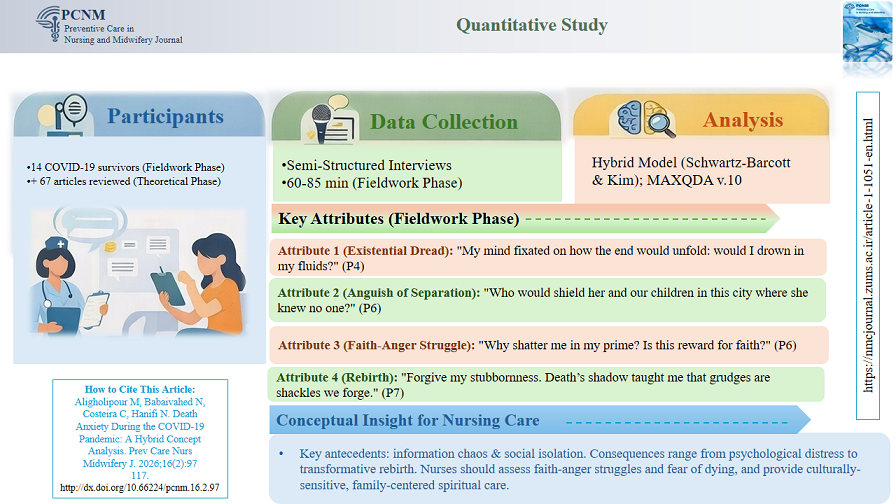
Death anxiety during COVID-19 involved information chaos, isolation, and a faith-anger struggle, with outcomes ranging from distress to rebirth. Managers may consider integrating existential and culturally sensitive spiritual care into crisis preparedness.
Full-Text: (93 Views)
Introduction
Death anxiety is a form of existential anxiety triggered by an individual's acceptance of their mortality [1]. This type of anxiety is capable of significantly impacting an individual's personal and social life, as well as their behavioral and physiological changes [2, 3].
Factors such as personal health, age, religion, life experiences, and level of education can influence death anxiety [4, 5]. The impact of the COVID-19 pandemic has dramatically increased its focus as a central concern in mental health [6]. Many people are worried about Death and severe illness due to the disease's unknown nature and rapid spread. Death anxiety has been significantly heightened in various communities due to the COVID-19 pandemic's increased mortality rates and uncertainties about public health [7]. The fear of sudden Death, severe illness, and losing loved ones is becoming more common [8]. The COVID-19 crisis, as an acute global health event, significantly altered cultural and social attitudes toward Death, reshaping perceptions of mortality and illness. This shift necessitates a formal reassessment and conceptual redefinition of death anxiety to identify influential factors and develop effective, context-specific coping strategies.
Despite the growing body of research on death anxiety during the COVID-19 pandemic, most existing studies have employed quantitative approaches focusing on prevalence rates and associated factors [9-12]. While these studies have provided valuable epidemiological insights, they have largely failed to capture the contextual, cultural, and spiritual nuances of death anxiety as experienced by individuals during acute health crises. Furthermore, most available literature lacks a comprehensive conceptual framework that integrates theoretical foundations with lived experiences, leaving a significant gap in understanding the multidimensional nature of this phenomenon [13, 14].
Although several studies have examined death anxiety in various populations [15-17], there remains a conceptual ambiguity regarding its defining attributes, antecedents, and consequences specifically within the context of a global pandemic. This ambiguity hinders the development of context-sensitive assessment tools and targeted interventions for healthcare providers, particularly nurses and midwives who are at the frontline of patient care during health crises.
Given these gaps, the use of a hybrid model of concept analysis, as proposed by Schwartz-Barcott and Kim, is particularly warranted. This approach uniquely combines theoretical inquiry with empirical fieldwork, allowing for a comprehensive and contextually grounded understanding of the concept [18]. Unlike purely theoretical or purely empirical approaches, the hybrid model facilitates the integration of existing knowledge with the lived experiences of those directly affected, thereby producing a more culturally relevant and clinically applicable conceptual framework. This methodology is especially suited for exploring complex, culturally-loaded phenomena such as death anxiety during COVID-19, where individual experiences are deeply intertwined with sociocultural, spiritual, and existential dimensions.
Objectives
This study aimed to analyze the concept of death anxiety in the context of the COVID-19 pandemic and develop a comprehensive conceptual definition using the Schwartz-Barcott and Kim hybrid model.
Methods
Study design
This study employed a concept analysis approach using Schwartz-Barcott and Kim's hybrid model to explore death anxiety among COVID-19 patients. The development of this model consists of three interconnected stages: theoretical investigation, fieldwork, and final analysis [19].
Theoretical phase
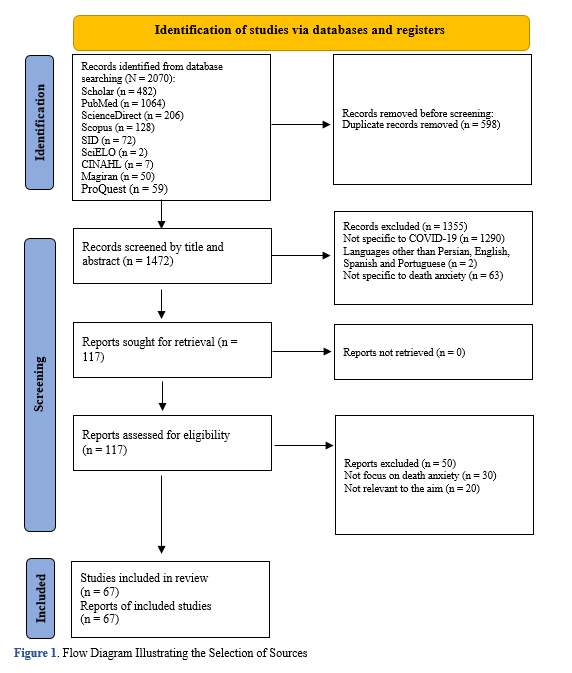
The theoretical phase began with an exploration of the concept of death anxiety in the context of COVID-19 through a review of the existing literature. A systematic search was conducted in major and reliable databases, including PubMed, Scopus, Web of Science, SID, SciELO, CINAHL, and MagIran, using adjusted keywords related to COVID-19 and death anxiety. All qualitative and quantitative studies published up to 2024 were reviewed. The first and third authors independently performed the search and had it validated by the second author. In total, 2,070 articles were identified; after removing irrelevant and duplicate records, 1,481 abstracts remained for screening, and 67 articles were found to be significantly related to "death anxiety in COVID-19 [Figure 1]. These 67 articles were thoroughly analyzed to define and measure death anxiety and to identify various aspects of the impact of COVID-19 on death anxiety [Appendix 1].
Fieldwork phase
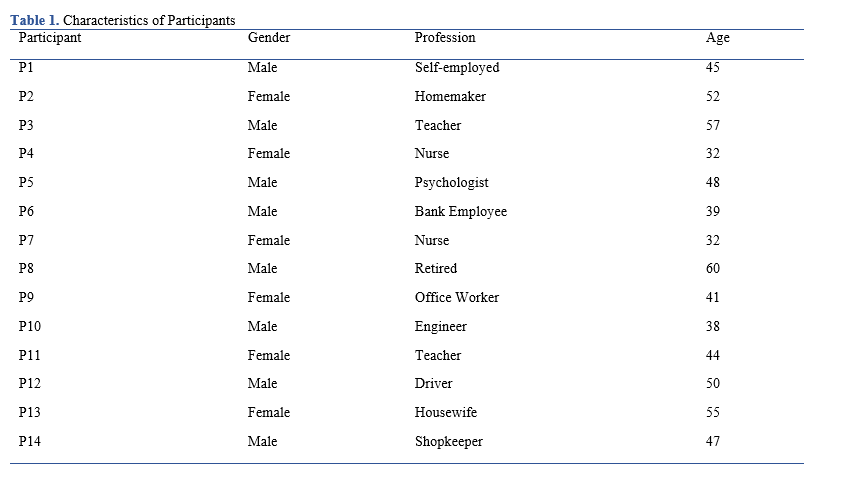
This phase validated theoretical findings via qualitative interviews [20]. Semi-structured interviews were conducted with 14 COVID-19 survivors who were purposively selected from Zanjan University of Medical Sciences hospitals (March 2020–June 2021) to validate theoretical findings and explore novel attributes [Table 1]. Inclusion criteria comprised: Laboratory-confirmed COVID-19 diagnosis, ≥7-day hospitalization with severe symptoms (e.g., oxygen saturation <90%), Age 30–60 years, and fluency in Persian. Exclusion criteria excluded individuals with psychiatric disorders or cognitive impairment.
Data saturation was defined as the point at which no new codes, subcategories, or themes emerged from the interview data [20].
To determine saturation, the first author and a research assistant independently reviewed transcripts after each interview and held weekly team meetings to discuss emerging patterns. Sampling continued until data saturation was achieved, defined as the point at which no new. Odes, subcategories, or themes emerged from the interview data [21].
Following iterative review of the transcripts and ongoing discussion of emerging patterns within the research team, the final sample comprised 14 participants, at which point no substantively new information emerged.
They were scheduled according to participants' time and location preferences and audio-recorded. The interviews explored experiences of death anxiety before, during, and after COVID-19 infection. The first author conducted semi-structured interviews using a guide developed during the theoretical phase. Example questions: "Describe your thoughts about death during hospitalization. “How did healthcare workers' behaviors affect your fear of dying?" Interviews lasted between 60 and 85 minutes. They were conducted promptly at locations convenient for participants. All interviews were audio-recorded and transcribed word-for-word. Participants were purposively selected to ensure diversity in terms of profession, gender, and age, enhancing the transferability of findings.
Qualitative data from semi-structured interviews were analyzed using conventional content analysis [20]. The process commenced with immersive familiarization: transcripts were read repeatedly to gain holistic insights. Subsequently, initial coding was performed line by line, generating 314 initial codes (e.g., "suffocation imagery," "guilt about infecting family").
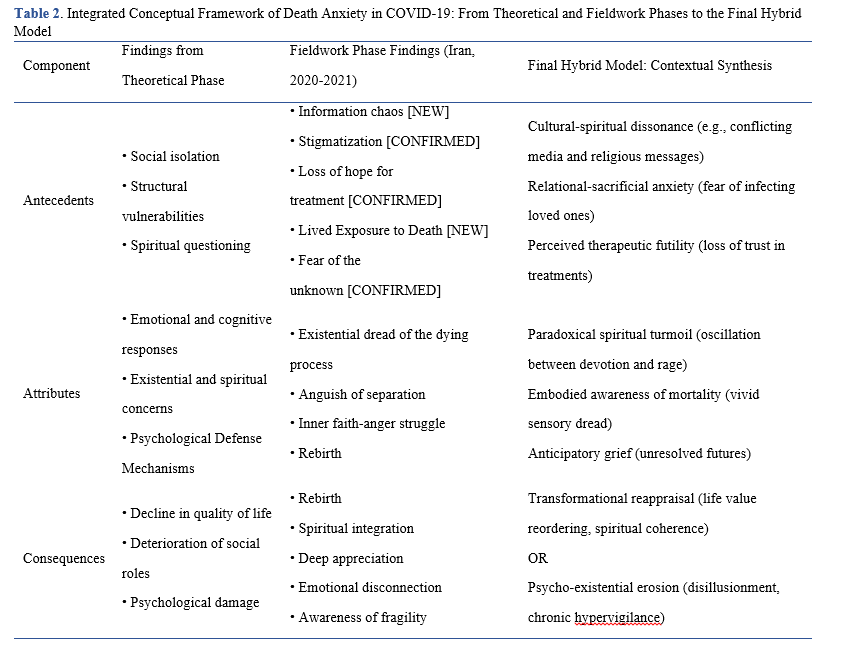
These codes were then clustered into 10 subcategories based on semantic and contextual similarities (e.g., "fear of dying process" and "spiritual conflict" were merged into "existential dread"). Through iterative abstraction, subcategories were synthesized into four core categories that capture the essence of death anxiety in COVID-19 [Table 2]. To ensure trustworthiness, intercoder agreement was calculated (κ = 0.82 via Cohen's Kappa) through independent coding by two researchers, with discrepancies resolved via consensus. Member checking was employed with three participants to validate interpretive accuracy. All analytical procedures were conducted in MAXQDA software (v. 10), with an audit trail maintained to document the decision-making processes.
Analytical phase
The analytical phase used a three-step integration of theoretical and fieldwork findings via Schwartz-Barcott & Kim's hybrid model.
Step 1: Comparative analysis
First, convergences and divergences between theoretical and fieldwork data were systematically identified. Convergences included shared themes such as "existential-spiritual concerns" versus "inner faith-anger struggle," while divergences included contrasting consequences like "loss of meaning" versus "rebirth."
Step 2: Contextual reconciliation
Second, discrepancies were reconciled through team discussions involving all authors, who collectively considered contextual factors such as Iranian religiosity, cultural norms, and the timing of data collection during the pandemic's acute phase.
Step 3: Model refinement
Finally, the model was refined to define core attributes, antecedents, and consequences of COVID-19-related death anxiety within a contextually embedded framework [Table 2], highlighting cultural-spiritual dissonance and information chaos as new contextual antecedents, with transformational reappraisal of life (including "rebirth" and "spiritual integration") as a key consequence.
Result
Review of the literature from multiple databases (Theoretical phase) identified different definitions and aspects of COVID-19 death anxiety and its attributes.
Attributes and the concept definition
The three defining attributes of death anxiety during COVID-19 were extracted through a systematic synthesis of the theoretical literature.
The process began with an initial identification of all characteristics mentioned across the 67 selected articles. These characteristics were then coded and categorized based on semantic and conceptual similarities.
Through iterative comparison and abstraction, three overarching attributes emerged: (1) emotional and cognitive responses, (2) existential and spiritual concerns, and (3) psychological defense mechanisms.
These three attributes were selected because they (a) appeared consistently across the majority of reviewed studies, (b) captured the multidimensional nature of the phenomenon, and (c) distinguished death anxiety from related constructs such as general anxiety or fear of illness.
The attributes were further validated through the fieldwork phase, where they were confirmed and refined based on the lived experiences of COVID-19 survivors.
1. Emotional and Cognitive Responses
Emotional and cognitive responses to dying are central to death anxiety, often causing intense feelings like anger, anxiety, and dread. These emotional and cognitive responses typically manifest as chronic, irrational worry about one's own Death or that of a loved one [22-28]. Cognitive issues involve intrusive thoughts about Death, causing distractibility and emotional distress, often accompanied by psychosomatic symptoms like increased heart rate, sweating, and nausea. These reactions reflect intense panic and fear of Death and the dying process [29, 30]. This constellation of emotional-cognitive symptoms highlights the profound psychological impact that awareness of mortality exerts on individuals [31, 32].
2. Existential and Spiritual Concerns
In addition to immediate worries, individuals experience panic about how their Death affects their existence, raising deep philosophical and spiritual concerns. They reflect on existence, purpose, and meaning, including life's finiteness and the possibility of life after Death, which can lead to distress, fear of disappearing, and a sense of uncertainty [33-36].
3. Psychological Defense Mechanisms
Death anxiety is heavily influenced by sociocultural factors, with cultural norms often leading individuals to suppress fears about mortality. Worries about dying alone or being forgotten by loved ones further intensify this anxiety [37-40].People coping with death anxiety often use defense mechanisms, with denial being a common initial strategy to block the unsettling reality of life after Death [23, 41].
Other coping mechanisms include pursuing symbolic immortality through achievements or humor, rationalizing the meaning or inevitability of Death, and utilizing religious or spiritual practices to mitigate fear and foster a sense of continuity beyond life [42, 43].
Antecedents of the concept
The literature review identified several categories of factors influencing death anxiety in COVID-19. It is important to distinguish between direct antecedents (factors that immediately trigger or precipitate death anxiety) and contextual/risk factors (predisposing characteristics that increase vulnerability to death anxiety).
A. Direct Antecedents (Precipitating Factors)
These factors directly trigger or exacerbate death anxiety during the COVID-19 pandemic:
1. Information chaos
Exposure to inconsistent, contradictory, or overwhelming information from media and health authorities created cognitive disorganization and psychological disturbance, directly precipitating death anxiety.
Participants reported that conflicting statistics, changing guidelines, and sensationalized reporting made Death feel tangible and imminent.
2. Social isolation
Quarantine, physical distancing, and restricted visitation policies disrupted social connections and support networks, directly intensifying fears of dying alone and concerns about leaving loved ones behind.
3. Lived exposure to Death
Direct encounters with Death, whether through witnessing patient deaths, losing family members or friends to COVID-19, or providing end-of-life care, served as immediate triggers for death anxiety among both patients and healthcare workers.
4. Fear of the unknown
The unpredictable disease trajectory, lack of clear prognostic information, and uncertainty about treatment efficacy directly precipitated anxiety about the dying process itself.
5. Loss of hope for treatment
Witnessing treatment ineffectiveness and rapid deterioration of others fostered fatalism and directly diminished psychological resilience.
6. Stigmatization
Fear of transmitting the virus to loved ones and potential social rejection directly contributed to emotional isolation and guilt.
B. Contextual and Risk Factors (Predisposing Characteristics)
These factors increase individuals' vulnerability to death anxiety but do not directly cause it:
1. Structural vulnerabilities
Demographic characteristics including younger age (particularly 20–30-year-olds), female gender, lower education levels, low socioeconomic status, and being married (especially among older women) were associated with higher death anxiety [36, 42, 44, 45]. Healthcare workers, particularly nurses and medical students, showed elevated vulnerability due to occupational exposure [28, 39, 46, 47].
2. Physical health conditions
Chronic physical ailments, advanced age, functional dependencies, and underlying health conditions (e.g., cancer, heart disease) increased vulnerability to death anxiety [48-52].
Among COVID-19 patients, severe symptoms and prolonged hospitalization heightened susceptibility.
3. Psychological vulnerabilities
Personality traits such as neuroticism, introversion, and intolerance of uncertainty increased psychological vulnerability [40, 53-57]. Persistent stress, depressive symptoms, dissatisfaction with life, and reduced hope further predisposed individuals to death-related distress [23, 44, 58-62].
4. Spiritual and religious context
Cultural and religious factors, including beliefs, norms, and perceived existential threats, influenced vulnerability [28, 37, 43, 53].
While higher spirituality could be protective, spiritual struggles, particularly questioning God's justice or the meaning of suffering, amplified vulnerability [63].
Consequences
The consequences of death anxiety during COVID-19 were categorized into two distinct domains: psycho-existential consequences (internal psychological and spiritual impacts) and socio-functional consequences (external impacts on social roles and functioning).
A. Psycho-Existential Consequences
1. Psychological distress and impaired functioning
Death anxiety directly contributed to severe psychological distress, including depression, generalized anxiety, and phobic reactions [30, 57, 64, 65].
Individuals experienced reduced coping capacity, maladaptive behavioral responses, and increased risk of high-risk behaviors [49, 66, 67]. Sleep disturbances and chronic hypervigilance were commonly reported [68-72]. Among healthcare workers, death anxiety was associated with burnout, decreased resilience, and diminished mental health [27, 73, 74].
2. Spiritual and existential crisis
Individuals experienced profound spiritual struggles, including questioning divine justice, loss of meaning, and existential despair.
This spiritual dissonance often manifested as a volatile oscillation between devotion and anger toward God. In some cases, however, near-death experiences catalyzed transformative outcomes:
Posttraumatic transformation sometimes came at the cost of intimacy. Participants described estrangement from partners who were unable to comprehend their internal changes [Fieldwork finding]. Healthcare workers reported profound disillusionment with their professional roles and values [Fieldwork finding].
B. Socio-Functional Consequences
1. Deterioration of professional performance
Among healthcare professionals, death anxiety caused occupational burnout, reduced quality of patient care, and impaired clinical decision-making [62, 75, 76].
It was associated with increased likelihood of medical errors, decreased patient satisfaction, and higher rates of nurses leaving the profession [57, 77, 78].
2. Decline in social roles and relationships
Individuals disengaged from self-care behaviors and developed dissatisfaction with healing processes [24, 79].
Family relationships suffered due to emotional withdrawal, guilt about potential virus transmission, and the psychological burden of separation during hospitalization [Fieldwork finding].
The awareness of life's fragility disrupted previous patterns of social engagement and created lasting relational challenges.
3. Quality of life deterioration
Profound feelings of hopelessness and discontent were associated with perceived suffering, reduced motivation for self-care, and diminished overall life satisfaction [24, 79, 80]. Among patients and healthcare workers alike, death anxiety eroded perceived quality of life across physical, psychological, and social domains.
Fieldwork phase
The following antecedents were identified through the fieldwork phase and represent either novel findings or confirmations of theoretical phase findings:
1. Information chaos [NEW FINDING - Fieldwork]
Several participants reported psychological disturbance and cognitive disorganization due to inconsistent information from the government and media.
Disinformation and uncertainty about infection risk, mortality rates, and treatment efficacy undermined public confidence, making Death feel tangible, cold, and alarmingly close. This antecedent emerged as a novel finding from the fieldwork phase and was not previously emphasized in the theoretical literature as a distinct antecedent of death anxiety.
Participant 6 reflected: "I felt like officials were... lying to us. Had they shown actual footage of patients in ICUs without vaccines, people would have responded differently to the situation. That downplays the entire situation and provides us with unreal footage, making people question everything."
Participant 7 observed: "Media that covered the struggle of the frontline workers stopped portraying the battle. It felt like the calm is in the storm. They stopped covering us while we watched people die."
2. Stigmatization [CONFIRMED - Fieldwork]
Fear of transmitting the virus to loved ones and potential social rejection emerged as significant stressors. This finding confirmed theoretical phase literature suggesting that social stigma amplifies psychological distress during infectious disease outbreaks. Several participants reported concealing their diagnosis to shield family members from distress. This self-imposed silence, while protective, led to emotional isolation and guilt.
Participant 4 recounted: "When hospitalized, I begged my colleagues: 'Don't tell my mother, tell only my father.' Her panic would have shattered me. I carried guilt for potentially exposing my family."
Similarly, Participant 6 remarked: "My wife sobbed daily after my positive test. Her despair became a mirror; I'd think, 'If I die, who will care for her and our three children?'"
3. Loss of hope for treatment [CONFIRMED - Fieldwork]
Participants frequently spoke of the psychological burden caused by witnessing the ineffectiveness of treatment and the rapid deterioration of others. This finding reinforced theoretical phase evidence regarding perceived therapeutic futility. This awareness fostered a sense of fatalism, as hope in medical recovery diminished.
Participant 6 recalled: "I visualized suffocating like ICU patients I'd treated. With no cure, I awaited the worst; each breath felt borrowed."
"At diagnosis, I told myself: 'It's over. I'll die within days.' Statistics became personal prophecies."
4. Lived Exposure to Death [NEW FINDING - Fieldwork]
Direct encounters with Death, especially among younger patients, left enduring psychological impressions. This antecedent emerged as a novel finding from the fieldwork phase. At the same time, theoretical literature acknowledged occupational exposure; participants' vivid descriptions of personal encounters with Death among peers and family members represented a distinct and powerful trigger. For both patients and frontline workers, the line between witness and victim became increasingly blurred.
Participant 7 described: "Each young patient's Death was a rehearsal for our own. We'd code for 24 hours, fail, and watch bodies wheeled out, then return next shift to repeat the cycle."
Participant 6 added, "Losing my father-in-law and best friend to COVID made Death tangible. Their absence screamed: 'You're next.'"
5. Fear of the unknown [CONFIRMED - Fieldwork]
The absence of clear prognostic information and the unpredictable course of the disease intensified participants' psychological distress. This finding confirmed theoretical phase literature regarding uncertainty as a key driver of death anxiety. Anxiety centered not only on Death itself, but on the ambiguity surrounding its process.
Participant 6 reflected: "I obsessed over how Death would claim me, slow suffocation? Cardiac arrest? The uncertainty was worse than the symptoms."
Participant 4 noted: "Doctors said 'lung infection' but couldn't predict my trajectory. Not knowing if I'd live or die was torture."
Attributes of death anxiety during COVID-19
1. Existential dread of the dying process
A central characteristic of death anxiety was not simply fear of mortality, but an overwhelming dread of how Death would unfold. Participants vividly described suffocation scenarios, often shaped by clinical language or firsthand experiences.
Participant 4 shared: "When doctors confirmed bilateral pneumonia, my mind fixated on how the end would unfold: would I drown in my fluids like the ICU patients I'd intubated?"
Participant 6 echoed: "I envisioned myself tethered to ventilators, reduced to a gasping statistic. The uncertainty of whether Death would come slowly or suddenly felt more torturous than the disease itself."
2. Anguish of separation
Beyond fear of dying, many participants expressed intense sorrow over potential separation from their children and families. This anguish encompassed emotional detachment, financial abandonment, and the impossibility of closure.
Participant 6 shared: "Her despair became a mirror reflecting my deepest fear: Who would shield her and our children in this city where she knew no one? I started drafting lists of debts and school schedules, a pathetic attempt to control the uncontrollable."
Participant 7 recalled: "During intubation preparations, I made my husband swear to tell our son daily, 'Mama loved you beyond measure.' The thought of him growing up without me was an abyss I couldn't fathom."
3. Inner faith-anger struggle
Spirituality functioned as both a sanctuary and a battleground. Participants reported vacillating between devout prayer and existential rage, a duality often triggered by worsening symptoms.
Participant 6 shared: "Those verses calmed me until the fever spiked, and I'd scream at God: 'Why shatter me in my prime? Is this reward for faith?"
Participant 4 added: "I vowed lifelong service if spared, but when my oxygen dropped, I shook my fist at the ceiling: 'Why toy with me? Answer!' This dance between devotion and fury left me spiritually seasick."
4. Rebirth
Experiences of near-death prompted a reordering of values. Participants described a renewed emphasis on spiritual reconciliation, relational healing, and attentiveness to the present moment.
Participant 7 stated: "Ten years of silence evaporated when I said, 'Forgive my stubbornness.' Death's shadow taught me that grudges are shackles we forge ourselves."
Participant 1 recalled: "I overpaid the grocer's tiny bill, haunted by imagined whispers: 'He died owing bread money.'"
Consequences of death anxiety during COVID-19
1. Life-changing outcomes
1.1. Rebirth
Many participants emerged with recalibrated priorities. Authentic connection replaced performative roles, and meaning was sought in small acts of care.
Participant 7 described this shift: "After surviving, I quit my 80-hour work weeks. Now I teach community first aid, holding my son's hand while bandaging wounds. That crisis taught me: Legacies aren't built in ICUs but in living rooms."
1.2. Spiritual integration
Several participants transitioned from bargaining with a higher power to embracing uncertainty as a sacred aspect of life. Faith was no longer transactional, but contemplative.
Participant 3 explained: "I stopped bargaining with God. Now, when I recite Surah Yasin, it's not to survive but to remember: Whether breath continues or stops, both are sacred."
1.3. Deep appreciation
Heightened sensory awareness and a renewed gratitude for the mundane were commonly reported. Everyday experiences became repositories of meaning.
Participant 4 noted: "Before, I'd gulp coffee, rushing to shifts. Now I taste each bitter note. Surviving suffocation makes oxygen itself a miracle."
2. Devastating consequences
2.1 Emotional disconnection
Posttraumatic transformation sometimes came at the cost of intimacy. Participants described estrangement from partners who were unable to comprehend their internal changes.
Participant 5 revealed: "My wife said, 'You've become a stranger since COVID.' How could she understand? I met Death; we don't unsee such things."
2.2 Awareness of fragility
Healthcare workers, in particular, reported profound disillusionment with their professional roles, describing a rupture between previous purpose and current values.
Participant 7 stated: "Saving others felt meaningless when I couldn't save myself from terror. Now I garden, and things grow when I nurture them. No surprises."
Many expressed a lasting awareness of life's fragility. Dreams, flashbacks, and a feeling of impending breakdown highlighted the psychological impact of the pandemic.
Participant 4 shared: "I'm intubating a patient who morphs into myself. I wake, gagging. The horror isn't dying; it's knowing everything can shatter in one breath."
Discussion
The study's findings, viewed in the context of COVID-19 as a high-threat global health crisis, show that death anxiety in Iranian society often oscillated between faith and anger. Emotions frequently shifted between these extremes, highlighting the role of spiritual belief in managing crises. Soleimani's research indicated that religiosity can either increase or decrease death anxiety, depending on factors such as type of religiosity, certainty in beliefs, perceived meaning of religion, and level of religious commitment [81]. Another study showed that individuals' spiritual and religious values can predict death anxiety, and strengthening spiritual dimensions can help reduce it [82]. Furthermore, information chaos and media contradictions during acute public crises led to public distrust about the threat and its treatment, contributing to increased death anxiety, consistent with findings from both the theoretical and fieldwork phases [83].
Fear of the Unknown as a Driver of Death Anxiety
The present study identified "fear of the unknown" as a significant antecedent of death anxiety during COVID-19, consistent with existing literature on existential distress during health crises.
Participants consistently reported that the unpredictable disease trajectory, lack of clear prognostic information, and uncertainty about treatment outcomes were more distressing than the physical symptoms themselves. This finding aligns with Menzies and Menzies [84], who argued that intolerance of uncertainty is a transdiagnostic construct underlying death anxiety during the pandemic. Similarly, Damirchi et al. [24] found that uncertainty about disease progression and recovery significantly predicted death anxiety among COVID-19 patients.
The absence of clear medical guidance and contradictory information from health authorities amplified this uncertainty, reinforcing the need for transparent and consistent communication strategies during health crises [83].
Stigmatization and Its Contribution to Death Anxiety
Another significant antecedent identified in this study was stigmatization, the fear of transmitting the virus to loved ones and the potential for social rejection. This finding is consistent with the work of Heidaranlu et al. [38], who reported that Iranian COVID-19 patients experienced profound spiritual-cultural needs related to stigma and isolation. Similarly, Toulabi et al. [83] documented that COVID-19 patients experienced psychological distress partly due to concerns about being labeled as carriers and the resulting social exclusion. The present study extends these findings by demonstrating that self-imposed silence, concealing one's diagnosis to protect family members, paradoxically intensifies emotional isolation and guilt, thereby amplifying death anxiety. This finding suggests that stigmatization operates not only through external social rejection but also through internalized shame and self-blame.
Lived Exposure to Death as a Novel Antecedent
A particularly novel finding of this study was the identification of "lived exposure to death" as a distinct antecedent of death anxiety. While theoretical literature has acknowledged occupational exposure to Death among healthcare workers [46, 73, 74], the present study revealed that personal encounters with Death, including losing family members, friends, or colleagues to COVID-19, served as a uniquely powerful trigger for death anxiety. Participants described how witnessing the Death of younger patients or loved ones made mortality feel intensely personal and imminent. This finding is consistent with the observations of Firouzkouhi et al. [23], who noted that critically ill COVID-19 patients experienced heightened death awareness through vicarious exposure to others' suffering. However, the present study extends this understanding by demonstrating that such exposure blurs the boundaries between witness and potential victim, a phenomenon not previously emphasized in the literature. This antecedent is particularly salient in the Iranian context, where extended family networks and close-knit communities meant that most individuals knew someone who had died from COVID-19. A defining attribute of death anxiety identified in this study was the overwhelming dread of the dying process itself, rather than merely the fact of mortality. Participants vividly described fears of suffocation, ventilator dependency, and dying alone, imagery often shaped by clinical language or firsthand experiences.
This finding resonates with the work of Firouzkouhi et al. [23], who documented that COVID-19 patients experienced existential distress related to the manner of their Death. Similarly, Weisskirch and Crossman [25] found that exposure to Death and dying education influenced undergraduate students' death anxiety during the pandemic, suggesting that detailed knowledge of the dying process can paradoxically heighten distress. The present study contributes to this literature by demonstrating that this dread is not merely cognitive but also deeply sensory and embodied; participants described anticipating specific physical sensations (e.g., drowning in fluids, gasping for air) that intensified their psychological distress. This finding underscores the importance of addressing not only abstract fears of mortality but also concrete concerns about the dying experience in clinical interventions.
Definition and Conceptualization of "Rebirth"
The concept of "rebirth" emerged from the fieldwork phase as a transformative consequence of death anxiety during COVID-19. In this study, rebirth is defined as a profound and enduring reorientation of personal values, priorities, and life meaning following a near-death or life-threatening experience. This transformation manifests through three interrelated dimensions:
(1) Recalibration of priorities: Individuals reported a shift from materialistic or performative pursuits toward authentic connections, relational healing, and meaningful engagement in daily activities.
(2) Enhanced appreciation for life: Participants described heightened sensory awareness and gratitude for mundane experiences, transforming ordinary moments into sources of profound meaning.
(3) Spiritual integration: Individuals transitioned from transactional faith (bargaining with God for survival) to contemplative acceptance of life's uncertainty as sacred.
Importantly, rebirth is distinct from simple recovery or posttraumatic growth in that it specifically involves a volitional reconstruction of one's life narrative in response to mortality awareness. This conceptualization aligns with Tedeschi and Calhoun's posttraumatic growth framework [85], which identifies similar dimensions (appreciation of life, new possibilities, spiritual change) but differs in its emphasis on the cultural-spiritual context; in Iranian participants, rebirth was inextricably linked to religious reconciliation and relational healing within extended family networks.
Divergence Between Theoretical and Fieldwork Findings
An intriguing divergence emerged between theoretical and fieldwork findings regarding consequences. While the theoretical phase predominantly highlighted a 'loss of life meaning' even after recovery [33, 79], our fieldwork revealed a distinct outcome: a 'deep appreciation for being alive,' giving ordinary experiences new significance. This finding contrasts with theoretical studies, reflecting contextual and temporal differences; acute-phase experiences (2020–2021) prompted immediate existential reevaluation, while prolonged pandemic stressors in other studies could erode meaning. Iran's strong socioreligious context likely supported transformative 'spiritual integration,' buffering against sustained meaninglessness, consistent with Soleimani's findings [81] that intrinsic religiosity moderates death anxiety. Thus, the contradiction underscores death anxiety's context-dependent trajectory: while Karabağ's conclusions [80] confirm its detrimental impact on quality of life in some settings, our data suggest that within specific cultural-spiritual contexts like Iran, existential threat can catalyze profound value reorientation and 'rebirth' alongside distress. Cross-cultural posttraumatic growth (PTG) patterns further contextualize this phenomenon [86, 87]. While Western studies link PTG to individualistic values like autonomy, Iranian participants emphasized collective-spiritual growth, suggesting culture influences whether death anxiety leads to PTG or deterioration. Based on the findings of this study, integrating systematic screening for death anxiety and implementing targeted psychological and spiritual interventions in the care of patients during acute global health crises are essential. Professional capacity building for healthcare providers in identifying and managing this phenomenon should be prioritized in educational programs. Moreover, health policies should structurally incorporate mental health support as a core component of pandemic response strategies. Further research is recommended to develop and validate assessment instruments grounded in the present conceptual model.
This study has six key limitations affecting the generalizability of its findings. First, excluding grey literature limited insights into public discourse shaping death anxiety. Second, sampling only hospitals in Iran restricts transferability to non-Muslim or resource-limited settings. Third, retrospective interviews may introduce recall bias, idealizing reported spiritual experiences. Fourth, data collection during 2020–2021 captured acute-phase anxiety but not long-term trajectories. Fifth, cultural homogeneity in the Iranian sample may not reflect subcultural diversities, limiting transferability.
Sixth, the relatively small sample size (N=14) and the inclusion of only two nurses among the participants may limit the transferability of findings, particularly regarding healthcare workers' experiences. While data saturation was achieved, a larger and more occupationally diverse sample might have captured a broader range of perspectives, especially from other healthcare professions or patients with different clinical trajectories.
Conclusion
This hybrid concept analysis provides a comprehensive conceptual definition of death anxiety during COVID-19, clarifying its multidimensional attributes, antecedents, and dual consequences, ranging from psychological distress to transformative outcomes such as rebirth and spiritual integration.
The findings underscore the faith-anger struggle and cultural-spiritual dissonance as central features, informing culturally sensitive nursing interventions, future instrument development, and theory advancement in existential care.
Further empirical validation across diverse populations is needed to confirm the transferability of this conceptual model.
Ethical Considerations
Ethical approval was obtained from the Ethics Committee of Zanjan University of Medical Sciences (IR.ZUMS.REC.1400.398). Institutional permission was obtained from the relevant hospital administration.
Written informed consent was obtained from all participants before enrollment in this study. For illiterate participants, verbally informed consent and a thumbprint were obtained. Participants were assured of the confidentiality of their responses and their right to withdraw from the study at any time without affecting their care. All methods were carried out in accordance with the STROBE guidelines and the Declaration of Helsinki.
Acknowledgements
The researchers thank the Vice Chancellor for Research of Zanjan University of Medical Sciences for their financial support. We also extend our gratitude to the nurses who participated in this study, as well as the head nurses of the wards and the hospital officials for their cooperation and facilitation of the research process.
Conflict of Interest
The authors declared no potential conflicts of interest with respect to the research, authorship, and/or publication of this article.
Funding
The Vice Chancellor for Research of Zanjan University of Medical Sciences financially supported this research.
The funding source had no role in the study design, data collection, analysis, interpretation, or decision to submit the manuscript for publication.
Authors' Contributions
Conceptualization: Negin Babaivahed, Nasrin Hanifi
Methodology: Negin Babaivahed, Mahtab Aligholipour, Cristina Costeira, Nasrin Hanifi
Investigation: Negin Babaivahed, Mahtab Aligholipour, Cristina Costeira
Data Curation: Negin Babaivahed, Mahtab Aligholipour
Formal Analysis: Negin Babaivahed, Mahtab Aligholipour, Cristina Costeira
Validation: Cristina Costeira, Nasrin Hanifi
Writing – Original Draft: Negin Babaivahed, Mahtab Aligholipour, Cristina Costeira
Writing – Review & Editing: All authors
Supervision: Cristina Costeira, Nasrin Hanifi
All authors read and approved the final manuscript.
Artificial Intelligence Utilization
Artificial intelligence–based tools were used solely for language editing purposes. Specifically, ChatGPT-4 (OpenAI) was employed to improve grammar, clarity, and sentence structure during the manuscript revision process. After using this tool, the authors carefully reviewed, verified, and edited all generated content and accept full responsibility for the integrity and accuracy of the final manuscript. AI tools were not used for data analysis, interpretation, or generation of results.
Data Availability Statement
The datasets generated and/or analyzed during the current study contain sensitive information related to patients and cannot be made publicly available to ensure confidentiality. However, anonymized data may be available from the corresponding author upon reasonable request. Access will be granted to qualified researchers who provide a methodologically sound proposal and sign a confidentiality agreement, subject to institutional ethics committee approval.
Death anxiety is a form of existential anxiety triggered by an individual's acceptance of their mortality [1]. This type of anxiety is capable of significantly impacting an individual's personal and social life, as well as their behavioral and physiological changes [2, 3].
Factors such as personal health, age, religion, life experiences, and level of education can influence death anxiety [4, 5]. The impact of the COVID-19 pandemic has dramatically increased its focus as a central concern in mental health [6]. Many people are worried about Death and severe illness due to the disease's unknown nature and rapid spread. Death anxiety has been significantly heightened in various communities due to the COVID-19 pandemic's increased mortality rates and uncertainties about public health [7]. The fear of sudden Death, severe illness, and losing loved ones is becoming more common [8]. The COVID-19 crisis, as an acute global health event, significantly altered cultural and social attitudes toward Death, reshaping perceptions of mortality and illness. This shift necessitates a formal reassessment and conceptual redefinition of death anxiety to identify influential factors and develop effective, context-specific coping strategies.
Despite the growing body of research on death anxiety during the COVID-19 pandemic, most existing studies have employed quantitative approaches focusing on prevalence rates and associated factors [9-12]. While these studies have provided valuable epidemiological insights, they have largely failed to capture the contextual, cultural, and spiritual nuances of death anxiety as experienced by individuals during acute health crises. Furthermore, most available literature lacks a comprehensive conceptual framework that integrates theoretical foundations with lived experiences, leaving a significant gap in understanding the multidimensional nature of this phenomenon [13, 14].
Although several studies have examined death anxiety in various populations [15-17], there remains a conceptual ambiguity regarding its defining attributes, antecedents, and consequences specifically within the context of a global pandemic. This ambiguity hinders the development of context-sensitive assessment tools and targeted interventions for healthcare providers, particularly nurses and midwives who are at the frontline of patient care during health crises.
Given these gaps, the use of a hybrid model of concept analysis, as proposed by Schwartz-Barcott and Kim, is particularly warranted. This approach uniquely combines theoretical inquiry with empirical fieldwork, allowing for a comprehensive and contextually grounded understanding of the concept [18]. Unlike purely theoretical or purely empirical approaches, the hybrid model facilitates the integration of existing knowledge with the lived experiences of those directly affected, thereby producing a more culturally relevant and clinically applicable conceptual framework. This methodology is especially suited for exploring complex, culturally-loaded phenomena such as death anxiety during COVID-19, where individual experiences are deeply intertwined with sociocultural, spiritual, and existential dimensions.
Objectives
This study aimed to analyze the concept of death anxiety in the context of the COVID-19 pandemic and develop a comprehensive conceptual definition using the Schwartz-Barcott and Kim hybrid model.
Methods
Study design
This study employed a concept analysis approach using Schwartz-Barcott and Kim's hybrid model to explore death anxiety among COVID-19 patients. The development of this model consists of three interconnected stages: theoretical investigation, fieldwork, and final analysis [19].
Theoretical phase
The theoretical phase began with an exploration of the concept of death anxiety in the context of COVID-19 through a review of the existing literature. A systematic search was conducted in major and reliable databases, including PubMed, Scopus, Web of Science, SID, SciELO, CINAHL, and MagIran, using adjusted keywords related to COVID-19 and death anxiety. All qualitative and quantitative studies published up to 2024 were reviewed. The first and third authors independently performed the search and had it validated by the second author. In total, 2,070 articles were identified; after removing irrelevant and duplicate records, 1,481 abstracts remained for screening, and 67 articles were found to be significantly related to "death anxiety in COVID-19 [Figure 1]. These 67 articles were thoroughly analyzed to define and measure death anxiety and to identify various aspects of the impact of COVID-19 on death anxiety [Appendix 1].
Fieldwork phase
This phase validated theoretical findings via qualitative interviews [20]. Semi-structured interviews were conducted with 14 COVID-19 survivors who were purposively selected from Zanjan University of Medical Sciences hospitals (March 2020–June 2021) to validate theoretical findings and explore novel attributes [Table 1]. Inclusion criteria comprised: Laboratory-confirmed COVID-19 diagnosis, ≥7-day hospitalization with severe symptoms (e.g., oxygen saturation <90%), Age 30–60 years, and fluency in Persian. Exclusion criteria excluded individuals with psychiatric disorders or cognitive impairment.
Data saturation was defined as the point at which no new codes, subcategories, or themes emerged from the interview data [20].
To determine saturation, the first author and a research assistant independently reviewed transcripts after each interview and held weekly team meetings to discuss emerging patterns. Sampling continued until data saturation was achieved, defined as the point at which no new. Odes, subcategories, or themes emerged from the interview data [21].
Following iterative review of the transcripts and ongoing discussion of emerging patterns within the research team, the final sample comprised 14 participants, at which point no substantively new information emerged.
They were scheduled according to participants' time and location preferences and audio-recorded. The interviews explored experiences of death anxiety before, during, and after COVID-19 infection. The first author conducted semi-structured interviews using a guide developed during the theoretical phase. Example questions: "Describe your thoughts about death during hospitalization. “How did healthcare workers' behaviors affect your fear of dying?" Interviews lasted between 60 and 85 minutes. They were conducted promptly at locations convenient for participants. All interviews were audio-recorded and transcribed word-for-word. Participants were purposively selected to ensure diversity in terms of profession, gender, and age, enhancing the transferability of findings.
Qualitative data from semi-structured interviews were analyzed using conventional content analysis [20]. The process commenced with immersive familiarization: transcripts were read repeatedly to gain holistic insights. Subsequently, initial coding was performed line by line, generating 314 initial codes (e.g., "suffocation imagery," "guilt about infecting family").
These codes were then clustered into 10 subcategories based on semantic and contextual similarities (e.g., "fear of dying process" and "spiritual conflict" were merged into "existential dread"). Through iterative abstraction, subcategories were synthesized into four core categories that capture the essence of death anxiety in COVID-19 [Table 2]. To ensure trustworthiness, intercoder agreement was calculated (κ = 0.82 via Cohen's Kappa) through independent coding by two researchers, with discrepancies resolved via consensus. Member checking was employed with three participants to validate interpretive accuracy. All analytical procedures were conducted in MAXQDA software (v. 10), with an audit trail maintained to document the decision-making processes.
Analytical phase
The analytical phase used a three-step integration of theoretical and fieldwork findings via Schwartz-Barcott & Kim's hybrid model.
Step 1: Comparative analysis
First, convergences and divergences between theoretical and fieldwork data were systematically identified. Convergences included shared themes such as "existential-spiritual concerns" versus "inner faith-anger struggle," while divergences included contrasting consequences like "loss of meaning" versus "rebirth."
Step 2: Contextual reconciliation
Second, discrepancies were reconciled through team discussions involving all authors, who collectively considered contextual factors such as Iranian religiosity, cultural norms, and the timing of data collection during the pandemic's acute phase.
Step 3: Model refinement
Finally, the model was refined to define core attributes, antecedents, and consequences of COVID-19-related death anxiety within a contextually embedded framework [Table 2], highlighting cultural-spiritual dissonance and information chaos as new contextual antecedents, with transformational reappraisal of life (including "rebirth" and "spiritual integration") as a key consequence.
Result
Review of the literature from multiple databases (Theoretical phase) identified different definitions and aspects of COVID-19 death anxiety and its attributes.
Attributes and the concept definition
The three defining attributes of death anxiety during COVID-19 were extracted through a systematic synthesis of the theoretical literature.
The process began with an initial identification of all characteristics mentioned across the 67 selected articles. These characteristics were then coded and categorized based on semantic and conceptual similarities.
Through iterative comparison and abstraction, three overarching attributes emerged: (1) emotional and cognitive responses, (2) existential and spiritual concerns, and (3) psychological defense mechanisms.
These three attributes were selected because they (a) appeared consistently across the majority of reviewed studies, (b) captured the multidimensional nature of the phenomenon, and (c) distinguished death anxiety from related constructs such as general anxiety or fear of illness.
The attributes were further validated through the fieldwork phase, where they were confirmed and refined based on the lived experiences of COVID-19 survivors.
1. Emotional and Cognitive Responses
Emotional and cognitive responses to dying are central to death anxiety, often causing intense feelings like anger, anxiety, and dread. These emotional and cognitive responses typically manifest as chronic, irrational worry about one's own Death or that of a loved one [22-28]. Cognitive issues involve intrusive thoughts about Death, causing distractibility and emotional distress, often accompanied by psychosomatic symptoms like increased heart rate, sweating, and nausea. These reactions reflect intense panic and fear of Death and the dying process [29, 30]. This constellation of emotional-cognitive symptoms highlights the profound psychological impact that awareness of mortality exerts on individuals [31, 32].
2. Existential and Spiritual Concerns
In addition to immediate worries, individuals experience panic about how their Death affects their existence, raising deep philosophical and spiritual concerns. They reflect on existence, purpose, and meaning, including life's finiteness and the possibility of life after Death, which can lead to distress, fear of disappearing, and a sense of uncertainty [33-36].
3. Psychological Defense Mechanisms
Death anxiety is heavily influenced by sociocultural factors, with cultural norms often leading individuals to suppress fears about mortality. Worries about dying alone or being forgotten by loved ones further intensify this anxiety [37-40].People coping with death anxiety often use defense mechanisms, with denial being a common initial strategy to block the unsettling reality of life after Death [23, 41].
Other coping mechanisms include pursuing symbolic immortality through achievements or humor, rationalizing the meaning or inevitability of Death, and utilizing religious or spiritual practices to mitigate fear and foster a sense of continuity beyond life [42, 43].
Antecedents of the concept
The literature review identified several categories of factors influencing death anxiety in COVID-19. It is important to distinguish between direct antecedents (factors that immediately trigger or precipitate death anxiety) and contextual/risk factors (predisposing characteristics that increase vulnerability to death anxiety).
A. Direct Antecedents (Precipitating Factors)
These factors directly trigger or exacerbate death anxiety during the COVID-19 pandemic:
1. Information chaos
Exposure to inconsistent, contradictory, or overwhelming information from media and health authorities created cognitive disorganization and psychological disturbance, directly precipitating death anxiety.
Participants reported that conflicting statistics, changing guidelines, and sensationalized reporting made Death feel tangible and imminent.
2. Social isolation
Quarantine, physical distancing, and restricted visitation policies disrupted social connections and support networks, directly intensifying fears of dying alone and concerns about leaving loved ones behind.
3. Lived exposure to Death
Direct encounters with Death, whether through witnessing patient deaths, losing family members or friends to COVID-19, or providing end-of-life care, served as immediate triggers for death anxiety among both patients and healthcare workers.
4. Fear of the unknown
The unpredictable disease trajectory, lack of clear prognostic information, and uncertainty about treatment efficacy directly precipitated anxiety about the dying process itself.
5. Loss of hope for treatment
Witnessing treatment ineffectiveness and rapid deterioration of others fostered fatalism and directly diminished psychological resilience.
6. Stigmatization
Fear of transmitting the virus to loved ones and potential social rejection directly contributed to emotional isolation and guilt.
B. Contextual and Risk Factors (Predisposing Characteristics)
These factors increase individuals' vulnerability to death anxiety but do not directly cause it:
1. Structural vulnerabilities
Demographic characteristics including younger age (particularly 20–30-year-olds), female gender, lower education levels, low socioeconomic status, and being married (especially among older women) were associated with higher death anxiety [36, 42, 44, 45]. Healthcare workers, particularly nurses and medical students, showed elevated vulnerability due to occupational exposure [28, 39, 46, 47].
2. Physical health conditions
Chronic physical ailments, advanced age, functional dependencies, and underlying health conditions (e.g., cancer, heart disease) increased vulnerability to death anxiety [48-52].
Among COVID-19 patients, severe symptoms and prolonged hospitalization heightened susceptibility.
3. Psychological vulnerabilities
Personality traits such as neuroticism, introversion, and intolerance of uncertainty increased psychological vulnerability [40, 53-57]. Persistent stress, depressive symptoms, dissatisfaction with life, and reduced hope further predisposed individuals to death-related distress [23, 44, 58-62].
4. Spiritual and religious context
Cultural and religious factors, including beliefs, norms, and perceived existential threats, influenced vulnerability [28, 37, 43, 53].
While higher spirituality could be protective, spiritual struggles, particularly questioning God's justice or the meaning of suffering, amplified vulnerability [63].
Consequences
The consequences of death anxiety during COVID-19 were categorized into two distinct domains: psycho-existential consequences (internal psychological and spiritual impacts) and socio-functional consequences (external impacts on social roles and functioning).
A. Psycho-Existential Consequences
1. Psychological distress and impaired functioning
Death anxiety directly contributed to severe psychological distress, including depression, generalized anxiety, and phobic reactions [30, 57, 64, 65].
Individuals experienced reduced coping capacity, maladaptive behavioral responses, and increased risk of high-risk behaviors [49, 66, 67]. Sleep disturbances and chronic hypervigilance were commonly reported [68-72]. Among healthcare workers, death anxiety was associated with burnout, decreased resilience, and diminished mental health [27, 73, 74].
2. Spiritual and existential crisis
Individuals experienced profound spiritual struggles, including questioning divine justice, loss of meaning, and existential despair.
This spiritual dissonance often manifested as a volatile oscillation between devotion and anger toward God. In some cases, however, near-death experiences catalyzed transformative outcomes:
- Rebirth: Recalibrated priorities, enhanced appreciation for life, and reorientation toward meaningful connections [Fieldwork finding].
- Spiritual integration: Transition from transactional faith to contemplative acceptance of uncertainty [Fieldwork finding].
Posttraumatic transformation sometimes came at the cost of intimacy. Participants described estrangement from partners who were unable to comprehend their internal changes [Fieldwork finding]. Healthcare workers reported profound disillusionment with their professional roles and values [Fieldwork finding].
B. Socio-Functional Consequences
1. Deterioration of professional performance
Among healthcare professionals, death anxiety caused occupational burnout, reduced quality of patient care, and impaired clinical decision-making [62, 75, 76].
It was associated with increased likelihood of medical errors, decreased patient satisfaction, and higher rates of nurses leaving the profession [57, 77, 78].
2. Decline in social roles and relationships
Individuals disengaged from self-care behaviors and developed dissatisfaction with healing processes [24, 79].
Family relationships suffered due to emotional withdrawal, guilt about potential virus transmission, and the psychological burden of separation during hospitalization [Fieldwork finding].
The awareness of life's fragility disrupted previous patterns of social engagement and created lasting relational challenges.
3. Quality of life deterioration
Profound feelings of hopelessness and discontent were associated with perceived suffering, reduced motivation for self-care, and diminished overall life satisfaction [24, 79, 80]. Among patients and healthcare workers alike, death anxiety eroded perceived quality of life across physical, psychological, and social domains.
Fieldwork phase
The following antecedents were identified through the fieldwork phase and represent either novel findings or confirmations of theoretical phase findings:
1. Information chaos [NEW FINDING - Fieldwork]
Several participants reported psychological disturbance and cognitive disorganization due to inconsistent information from the government and media.
Disinformation and uncertainty about infection risk, mortality rates, and treatment efficacy undermined public confidence, making Death feel tangible, cold, and alarmingly close. This antecedent emerged as a novel finding from the fieldwork phase and was not previously emphasized in the theoretical literature as a distinct antecedent of death anxiety.
Participant 6 reflected: "I felt like officials were... lying to us. Had they shown actual footage of patients in ICUs without vaccines, people would have responded differently to the situation. That downplays the entire situation and provides us with unreal footage, making people question everything."
Participant 7 observed: "Media that covered the struggle of the frontline workers stopped portraying the battle. It felt like the calm is in the storm. They stopped covering us while we watched people die."
2. Stigmatization [CONFIRMED - Fieldwork]
Fear of transmitting the virus to loved ones and potential social rejection emerged as significant stressors. This finding confirmed theoretical phase literature suggesting that social stigma amplifies psychological distress during infectious disease outbreaks. Several participants reported concealing their diagnosis to shield family members from distress. This self-imposed silence, while protective, led to emotional isolation and guilt.
Participant 4 recounted: "When hospitalized, I begged my colleagues: 'Don't tell my mother, tell only my father.' Her panic would have shattered me. I carried guilt for potentially exposing my family."
Similarly, Participant 6 remarked: "My wife sobbed daily after my positive test. Her despair became a mirror; I'd think, 'If I die, who will care for her and our three children?'"
3. Loss of hope for treatment [CONFIRMED - Fieldwork]
Participants frequently spoke of the psychological burden caused by witnessing the ineffectiveness of treatment and the rapid deterioration of others. This finding reinforced theoretical phase evidence regarding perceived therapeutic futility. This awareness fostered a sense of fatalism, as hope in medical recovery diminished.
Participant 6 recalled: "I visualized suffocating like ICU patients I'd treated. With no cure, I awaited the worst; each breath felt borrowed."
"At diagnosis, I told myself: 'It's over. I'll die within days.' Statistics became personal prophecies."
4. Lived Exposure to Death [NEW FINDING - Fieldwork]
Direct encounters with Death, especially among younger patients, left enduring psychological impressions. This antecedent emerged as a novel finding from the fieldwork phase. At the same time, theoretical literature acknowledged occupational exposure; participants' vivid descriptions of personal encounters with Death among peers and family members represented a distinct and powerful trigger. For both patients and frontline workers, the line between witness and victim became increasingly blurred.
Participant 7 described: "Each young patient's Death was a rehearsal for our own. We'd code for 24 hours, fail, and watch bodies wheeled out, then return next shift to repeat the cycle."
Participant 6 added, "Losing my father-in-law and best friend to COVID made Death tangible. Their absence screamed: 'You're next.'"
5. Fear of the unknown [CONFIRMED - Fieldwork]
The absence of clear prognostic information and the unpredictable course of the disease intensified participants' psychological distress. This finding confirmed theoretical phase literature regarding uncertainty as a key driver of death anxiety. Anxiety centered not only on Death itself, but on the ambiguity surrounding its process.
Participant 6 reflected: "I obsessed over how Death would claim me, slow suffocation? Cardiac arrest? The uncertainty was worse than the symptoms."
Participant 4 noted: "Doctors said 'lung infection' but couldn't predict my trajectory. Not knowing if I'd live or die was torture."
Attributes of death anxiety during COVID-19
1. Existential dread of the dying process
A central characteristic of death anxiety was not simply fear of mortality, but an overwhelming dread of how Death would unfold. Participants vividly described suffocation scenarios, often shaped by clinical language or firsthand experiences.
Participant 4 shared: "When doctors confirmed bilateral pneumonia, my mind fixated on how the end would unfold: would I drown in my fluids like the ICU patients I'd intubated?"
Participant 6 echoed: "I envisioned myself tethered to ventilators, reduced to a gasping statistic. The uncertainty of whether Death would come slowly or suddenly felt more torturous than the disease itself."
2. Anguish of separation
Beyond fear of dying, many participants expressed intense sorrow over potential separation from their children and families. This anguish encompassed emotional detachment, financial abandonment, and the impossibility of closure.
Participant 6 shared: "Her despair became a mirror reflecting my deepest fear: Who would shield her and our children in this city where she knew no one? I started drafting lists of debts and school schedules, a pathetic attempt to control the uncontrollable."
Participant 7 recalled: "During intubation preparations, I made my husband swear to tell our son daily, 'Mama loved you beyond measure.' The thought of him growing up without me was an abyss I couldn't fathom."
3. Inner faith-anger struggle
Spirituality functioned as both a sanctuary and a battleground. Participants reported vacillating between devout prayer and existential rage, a duality often triggered by worsening symptoms.
Participant 6 shared: "Those verses calmed me until the fever spiked, and I'd scream at God: 'Why shatter me in my prime? Is this reward for faith?"
Participant 4 added: "I vowed lifelong service if spared, but when my oxygen dropped, I shook my fist at the ceiling: 'Why toy with me? Answer!' This dance between devotion and fury left me spiritually seasick."
4. Rebirth
Experiences of near-death prompted a reordering of values. Participants described a renewed emphasis on spiritual reconciliation, relational healing, and attentiveness to the present moment.
Participant 7 stated: "Ten years of silence evaporated when I said, 'Forgive my stubbornness.' Death's shadow taught me that grudges are shackles we forge ourselves."
Participant 1 recalled: "I overpaid the grocer's tiny bill, haunted by imagined whispers: 'He died owing bread money.'"
Consequences of death anxiety during COVID-19
1. Life-changing outcomes
1.1. Rebirth
Many participants emerged with recalibrated priorities. Authentic connection replaced performative roles, and meaning was sought in small acts of care.
Participant 7 described this shift: "After surviving, I quit my 80-hour work weeks. Now I teach community first aid, holding my son's hand while bandaging wounds. That crisis taught me: Legacies aren't built in ICUs but in living rooms."
1.2. Spiritual integration
Several participants transitioned from bargaining with a higher power to embracing uncertainty as a sacred aspect of life. Faith was no longer transactional, but contemplative.
Participant 3 explained: "I stopped bargaining with God. Now, when I recite Surah Yasin, it's not to survive but to remember: Whether breath continues or stops, both are sacred."
1.3. Deep appreciation
Heightened sensory awareness and a renewed gratitude for the mundane were commonly reported. Everyday experiences became repositories of meaning.
Participant 4 noted: "Before, I'd gulp coffee, rushing to shifts. Now I taste each bitter note. Surviving suffocation makes oxygen itself a miracle."
2. Devastating consequences
2.1 Emotional disconnection
Posttraumatic transformation sometimes came at the cost of intimacy. Participants described estrangement from partners who were unable to comprehend their internal changes.
Participant 5 revealed: "My wife said, 'You've become a stranger since COVID.' How could she understand? I met Death; we don't unsee such things."
2.2 Awareness of fragility
Healthcare workers, in particular, reported profound disillusionment with their professional roles, describing a rupture between previous purpose and current values.
Participant 7 stated: "Saving others felt meaningless when I couldn't save myself from terror. Now I garden, and things grow when I nurture them. No surprises."
Many expressed a lasting awareness of life's fragility. Dreams, flashbacks, and a feeling of impending breakdown highlighted the psychological impact of the pandemic.
Participant 4 shared: "I'm intubating a patient who morphs into myself. I wake, gagging. The horror isn't dying; it's knowing everything can shatter in one breath."
Discussion
The study's findings, viewed in the context of COVID-19 as a high-threat global health crisis, show that death anxiety in Iranian society often oscillated between faith and anger. Emotions frequently shifted between these extremes, highlighting the role of spiritual belief in managing crises. Soleimani's research indicated that religiosity can either increase or decrease death anxiety, depending on factors such as type of religiosity, certainty in beliefs, perceived meaning of religion, and level of religious commitment [81]. Another study showed that individuals' spiritual and religious values can predict death anxiety, and strengthening spiritual dimensions can help reduce it [82]. Furthermore, information chaos and media contradictions during acute public crises led to public distrust about the threat and its treatment, contributing to increased death anxiety, consistent with findings from both the theoretical and fieldwork phases [83].
Fear of the Unknown as a Driver of Death Anxiety
The present study identified "fear of the unknown" as a significant antecedent of death anxiety during COVID-19, consistent with existing literature on existential distress during health crises.
Participants consistently reported that the unpredictable disease trajectory, lack of clear prognostic information, and uncertainty about treatment outcomes were more distressing than the physical symptoms themselves. This finding aligns with Menzies and Menzies [84], who argued that intolerance of uncertainty is a transdiagnostic construct underlying death anxiety during the pandemic. Similarly, Damirchi et al. [24] found that uncertainty about disease progression and recovery significantly predicted death anxiety among COVID-19 patients.
The absence of clear medical guidance and contradictory information from health authorities amplified this uncertainty, reinforcing the need for transparent and consistent communication strategies during health crises [83].
Stigmatization and Its Contribution to Death Anxiety
Another significant antecedent identified in this study was stigmatization, the fear of transmitting the virus to loved ones and the potential for social rejection. This finding is consistent with the work of Heidaranlu et al. [38], who reported that Iranian COVID-19 patients experienced profound spiritual-cultural needs related to stigma and isolation. Similarly, Toulabi et al. [83] documented that COVID-19 patients experienced psychological distress partly due to concerns about being labeled as carriers and the resulting social exclusion. The present study extends these findings by demonstrating that self-imposed silence, concealing one's diagnosis to protect family members, paradoxically intensifies emotional isolation and guilt, thereby amplifying death anxiety. This finding suggests that stigmatization operates not only through external social rejection but also through internalized shame and self-blame.
Lived Exposure to Death as a Novel Antecedent
A particularly novel finding of this study was the identification of "lived exposure to death" as a distinct antecedent of death anxiety. While theoretical literature has acknowledged occupational exposure to Death among healthcare workers [46, 73, 74], the present study revealed that personal encounters with Death, including losing family members, friends, or colleagues to COVID-19, served as a uniquely powerful trigger for death anxiety. Participants described how witnessing the Death of younger patients or loved ones made mortality feel intensely personal and imminent. This finding is consistent with the observations of Firouzkouhi et al. [23], who noted that critically ill COVID-19 patients experienced heightened death awareness through vicarious exposure to others' suffering. However, the present study extends this understanding by demonstrating that such exposure blurs the boundaries between witness and potential victim, a phenomenon not previously emphasized in the literature. This antecedent is particularly salient in the Iranian context, where extended family networks and close-knit communities meant that most individuals knew someone who had died from COVID-19. A defining attribute of death anxiety identified in this study was the overwhelming dread of the dying process itself, rather than merely the fact of mortality. Participants vividly described fears of suffocation, ventilator dependency, and dying alone, imagery often shaped by clinical language or firsthand experiences.
This finding resonates with the work of Firouzkouhi et al. [23], who documented that COVID-19 patients experienced existential distress related to the manner of their Death. Similarly, Weisskirch and Crossman [25] found that exposure to Death and dying education influenced undergraduate students' death anxiety during the pandemic, suggesting that detailed knowledge of the dying process can paradoxically heighten distress. The present study contributes to this literature by demonstrating that this dread is not merely cognitive but also deeply sensory and embodied; participants described anticipating specific physical sensations (e.g., drowning in fluids, gasping for air) that intensified their psychological distress. This finding underscores the importance of addressing not only abstract fears of mortality but also concrete concerns about the dying experience in clinical interventions.
Definition and Conceptualization of "Rebirth"
The concept of "rebirth" emerged from the fieldwork phase as a transformative consequence of death anxiety during COVID-19. In this study, rebirth is defined as a profound and enduring reorientation of personal values, priorities, and life meaning following a near-death or life-threatening experience. This transformation manifests through three interrelated dimensions:
(1) Recalibration of priorities: Individuals reported a shift from materialistic or performative pursuits toward authentic connections, relational healing, and meaningful engagement in daily activities.
(2) Enhanced appreciation for life: Participants described heightened sensory awareness and gratitude for mundane experiences, transforming ordinary moments into sources of profound meaning.
(3) Spiritual integration: Individuals transitioned from transactional faith (bargaining with God for survival) to contemplative acceptance of life's uncertainty as sacred.
Importantly, rebirth is distinct from simple recovery or posttraumatic growth in that it specifically involves a volitional reconstruction of one's life narrative in response to mortality awareness. This conceptualization aligns with Tedeschi and Calhoun's posttraumatic growth framework [85], which identifies similar dimensions (appreciation of life, new possibilities, spiritual change) but differs in its emphasis on the cultural-spiritual context; in Iranian participants, rebirth was inextricably linked to religious reconciliation and relational healing within extended family networks.
Divergence Between Theoretical and Fieldwork Findings
An intriguing divergence emerged between theoretical and fieldwork findings regarding consequences. While the theoretical phase predominantly highlighted a 'loss of life meaning' even after recovery [33, 79], our fieldwork revealed a distinct outcome: a 'deep appreciation for being alive,' giving ordinary experiences new significance. This finding contrasts with theoretical studies, reflecting contextual and temporal differences; acute-phase experiences (2020–2021) prompted immediate existential reevaluation, while prolonged pandemic stressors in other studies could erode meaning. Iran's strong socioreligious context likely supported transformative 'spiritual integration,' buffering against sustained meaninglessness, consistent with Soleimani's findings [81] that intrinsic religiosity moderates death anxiety. Thus, the contradiction underscores death anxiety's context-dependent trajectory: while Karabağ's conclusions [80] confirm its detrimental impact on quality of life in some settings, our data suggest that within specific cultural-spiritual contexts like Iran, existential threat can catalyze profound value reorientation and 'rebirth' alongside distress. Cross-cultural posttraumatic growth (PTG) patterns further contextualize this phenomenon [86, 87]. While Western studies link PTG to individualistic values like autonomy, Iranian participants emphasized collective-spiritual growth, suggesting culture influences whether death anxiety leads to PTG or deterioration. Based on the findings of this study, integrating systematic screening for death anxiety and implementing targeted psychological and spiritual interventions in the care of patients during acute global health crises are essential. Professional capacity building for healthcare providers in identifying and managing this phenomenon should be prioritized in educational programs. Moreover, health policies should structurally incorporate mental health support as a core component of pandemic response strategies. Further research is recommended to develop and validate assessment instruments grounded in the present conceptual model.
This study has six key limitations affecting the generalizability of its findings. First, excluding grey literature limited insights into public discourse shaping death anxiety. Second, sampling only hospitals in Iran restricts transferability to non-Muslim or resource-limited settings. Third, retrospective interviews may introduce recall bias, idealizing reported spiritual experiences. Fourth, data collection during 2020–2021 captured acute-phase anxiety but not long-term trajectories. Fifth, cultural homogeneity in the Iranian sample may not reflect subcultural diversities, limiting transferability.
Sixth, the relatively small sample size (N=14) and the inclusion of only two nurses among the participants may limit the transferability of findings, particularly regarding healthcare workers' experiences. While data saturation was achieved, a larger and more occupationally diverse sample might have captured a broader range of perspectives, especially from other healthcare professions or patients with different clinical trajectories.
Conclusion
This hybrid concept analysis provides a comprehensive conceptual definition of death anxiety during COVID-19, clarifying its multidimensional attributes, antecedents, and dual consequences, ranging from psychological distress to transformative outcomes such as rebirth and spiritual integration.
The findings underscore the faith-anger struggle and cultural-spiritual dissonance as central features, informing culturally sensitive nursing interventions, future instrument development, and theory advancement in existential care.
Further empirical validation across diverse populations is needed to confirm the transferability of this conceptual model.
Ethical Considerations
Ethical approval was obtained from the Ethics Committee of Zanjan University of Medical Sciences (IR.ZUMS.REC.1400.398). Institutional permission was obtained from the relevant hospital administration.
Written informed consent was obtained from all participants before enrollment in this study. For illiterate participants, verbally informed consent and a thumbprint were obtained. Participants were assured of the confidentiality of their responses and their right to withdraw from the study at any time without affecting their care. All methods were carried out in accordance with the STROBE guidelines and the Declaration of Helsinki.
Acknowledgements
The researchers thank the Vice Chancellor for Research of Zanjan University of Medical Sciences for their financial support. We also extend our gratitude to the nurses who participated in this study, as well as the head nurses of the wards and the hospital officials for their cooperation and facilitation of the research process.
Conflict of Interest
The authors declared no potential conflicts of interest with respect to the research, authorship, and/or publication of this article.
Funding
The Vice Chancellor for Research of Zanjan University of Medical Sciences financially supported this research.
The funding source had no role in the study design, data collection, analysis, interpretation, or decision to submit the manuscript for publication.
Authors' Contributions
Conceptualization: Negin Babaivahed, Nasrin Hanifi
Methodology: Negin Babaivahed, Mahtab Aligholipour, Cristina Costeira, Nasrin Hanifi
Investigation: Negin Babaivahed, Mahtab Aligholipour, Cristina Costeira
Data Curation: Negin Babaivahed, Mahtab Aligholipour
Formal Analysis: Negin Babaivahed, Mahtab Aligholipour, Cristina Costeira
Validation: Cristina Costeira, Nasrin Hanifi
Writing – Original Draft: Negin Babaivahed, Mahtab Aligholipour, Cristina Costeira
Writing – Review & Editing: All authors
Supervision: Cristina Costeira, Nasrin Hanifi
All authors read and approved the final manuscript.
Artificial Intelligence Utilization
Artificial intelligence–based tools were used solely for language editing purposes. Specifically, ChatGPT-4 (OpenAI) was employed to improve grammar, clarity, and sentence structure during the manuscript revision process. After using this tool, the authors carefully reviewed, verified, and edited all generated content and accept full responsibility for the integrity and accuracy of the final manuscript. AI tools were not used for data analysis, interpretation, or generation of results.
Data Availability Statement
The datasets generated and/or analyzed during the current study contain sensitive information related to patients and cannot be made publicly available to ensure confidentiality. However, anonymized data may be available from the corresponding author upon reasonable request. Access will be granted to qualified researchers who provide a methodologically sound proposal and sign a confidentiality agreement, subject to institutional ethics committee approval.
Type of Study: Orginal research |
Subject:
Nursing
References
1. Davidov J, Russo-Netzer P. Exploring the Phenomenological Structure of Existential Anxie-ty as Lived Through Transformative Life Experiences. Anxiety, Stress and Coping. 2022;35(2):232-247. [http://doi.org/10.1080/10615806.2021.1921162] [PMID]
2. Iverach L, Menzies RG, Menzies RE. Death Anxiety and Its Role in Psychopathology: Re-viewing the Status of a Transdiagnostic Construct. Clinical Psychology Review. 2014;34(7):580-593. [http://doi.org/10.1016/j.cpr.2014.09.002] [PMID]
3. Balaji M, Ramya R. A Sententious Review Article on Thanatophobia: Perceptive Death Anxiety. RGUHS Journal of Nursing Sciences. 2024;14(1). [http://doi.org/10.26463/rjns.14_1_11]
4. Soleimani MA, Bahrami N, Allen KA, Alimoradi Z. Death Anxiety in Patients with Cancer: A Systematic Review and Meta-Analysis. European Journal of Oncology Nursing. 2020;48:101803. [http://doi.org/10.1016/j.ejon.2020.101803] [PMID]
5. Soleimani MA, Bahrami N, Zarabadi-Pour S, Motalebi SA, Parker A, Chan YH. Predictors of Death Anxiety Among Patients with Heart Disease. Death Studies. 2020;44(3):160-167. [http://doi.org/10.1080/07481187.2018.1527416] [PMID]
6. Almeida M, Shrestha AD, Stojanac D, Miller LJ. The Impact of the COVID-19 Pandemic on Women's Mental Health. Archives of Women's Mental Health. 2020;23(6):741-748. [http://doi.org/10.1007/s00737-020-01092-2] [PMID]
7. Alimoradi Z, Ohayon MM, Griffiths MD, Lin CY, Pakpour AH. Fear of COVID-19 and Its Association with Mental Health-Related Factors: Systematic Review and Meta-Analysis. BJPsych Open. 2022;8(2):e73. [http://doi.org/10.1192/bjo.2022.26] [PMID]
8. Patra I, Muda I, Dwijendra NKA, Najm MA, Alshahrani SH, Kadhim SS, et al. A Systematic Review and Meta-Analysis on Death Anxiety During COVID-19 Pandemic. OMEGA-Journal of Death and Dying. 2025;91(3):1079-1097. [http://doi.org/10.1177/00302228221144791] [PMID]
9. Mani A, Fereidooni R, Salehi-Marzijarani M, Ardekani A, Sasannia S, Habibi P, et al. The Prevalence and Risk Factors of Death Anxiety and Fear of COVID-19 in an Iranian Com-munity: A Cross-Sectional Study. Health Science Reports. 2022;5(4):e706. [http://doi.org/10.1002/hsr2.706] [PMID]
10. Mirhosseini S, Dadgari A, Basirinezhad MH, Mohammadpourhodki R, Ebrahimi H. The Proportion of Death Anxiety and Its Related Factors During the COVID-19 Pandemic in the Iranian Population. Family Medicine and Primary Care Review. 2021;23(1). [http://doi.org/10.5114/fmpcr.2021.103154]
11. Bakhtiari-Dovvombaygi H, Askari M, Rahimkhani M, Abdollahi M, Baladastian M, Alipour A, et al. Prevalence of Death Anxiety and Its Related Factors in the Population of Eastern Iran: A Cross-Sectional Study in the Era of COVID-19. Frontiers in Public Health. 2024;12:1427995. [http://doi.org/10.3389/fpubh.2024.1427995] [PMID]
12. Chalhoub Z, Koubeissy H, Fares Y, Abou-Abbas L. Fear and Death Anxiety in the Shadow of COVID-19 Among the Lebanese Population: A Cross-Sectional Study. PLOS ONE. 2022;17(7):e0270567. [http://doi.org/10.1371/journal.pone.0270567] [PMID]
13. Firouzkouhi M, Abdollahimohammad A, Alimohammadi N, Naderifar M, Akbarizadeh M. Lived Experiences of Critically Ill COVID-19 Patients About Death and Dying: A Descrip-tive Phenomenology. OMEGA-Journal of Death and Dying. 2024;89(1):333-346. [http://doi.org/10.1177/00302228211073269] [PMID]
14. Heidaranlu E, Moayed MS, Parandeh A. Spiritual-Cultural Needs as the Main Causative Factor of Death Anxiety in Iranian COVID-19 Patients: A Qualitative Study. Journal of Re-ligion and Health. 2024;63(1):817-837. [http://doi.org/10.1007/s10943-023-01972-8] [PMID]
15. Rababa M, Hayajneh AA, Bani-Iss W. Association of Death Anxiety with Spiritual Well-Being and Religious Coping in Older Adults During the COVID-19 Pandemic. Journal of Religion and Health. 2021;60(1):50-63. [http://doi.org/10.1007/s10943-020-01166-6] [PMID]
16. Guner TA, Erdogan Z, Demir I. The Effect of Loneliness on Death Anxiety in the Elderly During the COVID-19 Pandemic. OMEGA-Journal of Death and Dying. 2023;87(1):262-282. [http://doi.org/10.1177/00302228211010587] [PMID]
17. Yang D, Xia Y, Wu W, Feng Y, Liang J, Zhang J. Death Anxiety During COVID-19 and Its Related Factors Among Chinese Elderly People. OMEGA-Journal of Death and Dying. 2025;91(3):1509-1527. [http://doi.org/10.1177/00302228231157446] [PMID]
18. Meleis AI. Theoretical Nursing: Development and Progress. 5th ed. Philadelphia (PA): Lip-pincott Williams & Wilkins; 2011.
19. Graneheim UH, Lundman B. Qualitative Content Analysis in Nursing Research: Concepts, Procedures and Measures to Achieve Trustworthiness. Nurse Education Today. 2004;24(2):105-112. [http://doi.org/10.1016/j.nedt.2003.10.001] [PMID]
20. Polit DF, Beck CT. Nursing Research: Generating and Assessing Evidence for Nursing Prac-tice. 8th ed. Philadelphia (PA): Lippincott Williams & Wilkins; 2008.
21. Walker LO, Avant KC. Strategies for Theory Construction in Nursing. 4th ed. Upper Saddle River (NJ): Pearson Prentice Hall; 2005.
22. Damirchi ES, Mojarrad A, Pireinaladin S, Grjibovski AM. The Role of Self-Talk in Predict-ing Death Anxiety, Obsessive-Compulsive Disorder, and Coping Strategies in the Face of Coronavirus Disease (COVID-19). Iranian Journal of Psychiatry. 2020;15(3):182-188. [http://doi.org/10.18502/ijps.v15i3.3810] [PMID]
23. Weisskirch RS, Crossman KA. The Impact of Death and Dying Education for Undergradu-ate Students During the COVID-19 Pandemic. OMEGA-Journal of Death and Dying. 2024;89(3):998-1009. [http://doi.org/10.1177/00302228221089818] [PMID]
24. Mena C, Cortes F, Romero M. Supporting a Double Hospitalization During the Pandemic: The Experience of Fathers Whose Infants Were Hospitalized While Their Mothers Were Al-so Hospitalized Due to COVID-19. Archivos Argentinos de Pediatría. 2024;122(1):e202202969. h [ttp://doi.org/10.5546/aap.2022-02969.eng]
25. Machado MH, Coelho MCR, Pereira EJ, Telles AO, Soares Neto JJ, Ximenes Neto FRG, et al. Work Conditions and Biosafety of Health Professionals and Invisible Health Workers in the Context of COVID-19 in Brazil. Ciência & Saúde Coletiva. 2023;28(10):2809-2822. [http://doi.org/10.1590/1413-812320232810.10072023] [PMID]
26. Canales BDB, Huamán DB. Ansiedad ante la Muerte en Adultos Peruanos, Durante la Pan-demia de la COVID-19. Revista Cubana de Enfermería. 2020;36(Suppl 1). [https://revenfermeria.sld.cu/index.php/enf/article/view/3778]
27. AlZaben M, Al Adwan F. The Effectiveness of a Counseling Program in Reducing Death Anxiety and Improving Self-Efficacy Among a Sample of Female Middle-Aged Teachers Recovered from COVID-19 Virus. OMEGA-Journal of Death and Dying. 2024;89(4):1366-1384. [http://doi.org/10.1177/00302228221086704] [PMID]
28. Gholami S, Omidi Moghadam E, Ghadampour E, Bavazin F. The Prediction of Death Anxi-ety Based on Expressed Emotion, Intolerance of Uncertainty and Experiential Avoidance in Patients Recovered from COVID-19 Hospitalization. Journal of Health and Care. 2024;26(3):265-279. [http://hcjournal.arums.ac.ir/article-1-1583-fa.html]
29. Aghaei V, Kazemi R, Taklovi S, Nazari V. The Effect of Treatment Based on Acceptance and Commitment on Pathological Worry and Death Anxiety in Nurses with the Experience of Complicated Grief Caused by COVID-19. Journal of Health and Care. 2024;26(1):52-62. [https://hcjournal.arums.ac.ir/article-1-2096-en.html]
30. Tavakkoli S, Daman PV, Pourmosavi SM. Evaluation of Death Anxiety of Nurses Working in Intensive Care Units During the Coronavirus Epidemic. Qom University of Medical Sci-ences. 2021. [https://journal.muq.ac.ir/article-1-2575-en.html]
31. Shirkavand L, Abbaszadeh A, Borhani F, Momenyan S. Correlation Between Spiritual Well-Being with Satisfaction with Life and Death Anxiety Among the Elderly Suffering from Cancer. Electronic Journal of General Medicine. 2018;15(3):1-7. [http://doi.org/10.29333/ejgm/85501]
32. Khademi F, Moayedi S, Golitaleb M, Karbalaie N. The COVID-19 Pandemic and Death Anxiety in the Elderly. International Journal of Mental Health Nursing. 2021;30(1):346-349. [http://doi.org/10.1111/inm.12824] [PMID]
33. Wass H, Neimeyer RA. Dying: Facing the Facts. 3rd ed. Washington (DC): Taylor & Fran-cis; 1995.
34. de Oliveira DC, da Silva KP, Machado YY, Stefaisk RLM, Domingues JP, de Pontes APM, et al. Representação Social da COVID-19 para a População de uma Cidade de Pequeno Porte. Revista Enfermagem UERJ. 2024;32:e76360. [http://doi.org/10.12957/reuerj.2024.76360]
35. Galbadage T, Peterson BM, Wang DC, Wang JS, Gunasekera RS. Biopsychosocial and Spir-itual Implications of Patients with COVID-19 Dying in Isolation. Frontiers in Psychology. 2020;11:588623. [http://doi.org/10.3389/fpsyg.2020.588623] [PMID]
36. Parvin A, Sadeghiyan E, Tapak L, Shamsaei F. Comparison of Death Anxiety and Happi-ness of Nurses Working in Corona Wards with Those of Nurses Working in Other Wards in Educational-Medical Centers of Shiraz, Iran, in 2020. Avicenna Journal of Nursing and Midwifery Care. 2022;30(4):270-279. [http://doi.org/10.32592/ajnmc.30.4.270]
37. Rostami P, Ebrahimi LS, Asl AM, Allahverdipour H. The Relationship Between Feeling of Loneliness, Source of Control, and Intolerance of Ambiguity with Death Anxiety in the El-derly During the COVID-19 Era. Medical Journal of Tabriz University of Medical Sciences. 2023;45(6):528-538. [http://doi.org/10.34172/mj.2024.005]
38. Shakil M, Ashraf F, Muazzam A, Amjad M, Javed S. Work Status, Death Anxiety and Psy-chological Distress During COVID-19 Pandemic: Implications of the Terror Management Theory. Death Studies. 2022;46(5):1100-1105. [http://doi.org/10.1080/07481187.2020.1865479] [PMID]
39. Kiyak S, Turkben Polat H. The Relationship Between Death Anxiety and COVID-19 Fear and Anxiety in Women with Breast Cancer. OMEGA-Journal of Death and Dying. 2024;89(3):1128-1141. [http://doi.org/10.1177/00302228221086056] [PMID]
40. Sadeghi A, Mohamadzadeh M, Shoraka HR, Pirouzeh R, Rahimi Khalifeh Kandi Z. The Re-lationship Between the Perception of Aging and Death Anxiety in the Older Adults of East-ern Iran During COVID-19. Health and Social Care in the Community. 2024;2024:3236251. [http://doi.org/10.1155/2024/3236251]
41. Ghazanfari MJ, Chaghian Arani R, Mollaei A, Mollaei A, Falakdami A, Takasi P, et al. Death Anxiety and Related Factors in Nurses During the COVID-19 Pandemic: A Systemat-ic Review. Jorjani Biomedicine Journal. 2022;10(3):35-42. [https://jorjanibiomedj.com/article-1-795-en.html]
42. Fathian B, Payami Bousari M, Ahmadi F. Relationship Between Death Anxiety and Happi-ness of Undergraduate Students of Zanjan University of Medical Sciences During the Coro-navirus Disease (COVID-19) Pandemic. Preventive Care in Nursing and Midwifery Journal. 2023;13(3):49-58. [http://doi.org/10.61186/pcnm.13.3.49]
43. Belash I, Barzagar F, Mousavi G, Janbazian K, Aghasi Z, Ladari AT, et al. COVID-19 Pan-demic and Death Anxiety Among Intensive Care Nurses Working at the Hospitals Affiliated to Tehran University of Medical Sciences. Journal of Family Medicine and Primary Care. 2021;10(7):2499-2502. [http://doi.org/10.4103/jfmpc.jfmpc_2105_20] [PMID]
44. Martínez-López JÁ, Lázaro-Pérez C, Gómez-Galán J. Death Anxiety in Social Workers as a Consequence of the COVID-19 Pandemic. Behavioral Sciences. 2021;11(5):61. [http://doi.org/10.3390/bs11050061] [PMID]
45. Strang P, Bergström J, Martinsson L, Lundström S. Dying From COVID-19: Loneliness, End-of-Life Discussions, and Support for Patients and Their Families in Nursing Homes and Hospitals: A National Register Study. Journal of Pain and Symptom Management. 2020;60(4):e2-e13. [http://doi.org/10.1016/j.jpainsymman.2020.07.020] [PMID]
46. Toulabi T, Pour FJ, Veiskramian A, Heydari H. Exploring COVID-19 Patients' Experiences of Psychological Distress During the Disease Course: A Qualitative Study. BMC Psychiatry. 2021;21(1):625. [http://doi.org/10.1186/s12888-021-03626-z] [PMID]
47. Ehsani S, Shahvardi A, Firouzi M, Soltani F. The Effect of Anxiety and the Risk of Death on the Mother-Child Conflict During the Period of Home Quarantine Due to COVID-19. Journal Women's Studies Sociological and Psychological.2023; 21(1):22-30. [https://journals.alzahra.ac.ir/article_7162_a0769c1d1509160ae97fc8a16765a7e7.pdf]
48. Chen X, Liu T, Li P, Wei W, Chao M. The Relationship Between Media Involvement and Death Anxiety of Self-Quarantined People in the COVID-19 Outbreak in China: The Medi-ating Roles of Empathy and Sympathy. OMEGA-Journal of Death and Dying. 2022;85(4):974-989. [http://doi.org/10.1177/0030222820960283] [PMID]
49. Zarabadi Poor F, Mohammadi F, Hosseinkhani Z, Motalebi SA. Association Between Fear of COVID-19 and Death Anxiety with the Moderator Role of Self-Regulation Among Older Adults Residing in Qazvin. Iranian Journal of Epidemiology. 2022;18(3):204-213. [https://irje.tums.ac.ir/article-1-7073-en.html]
50. Erbesler ZA, Demir G. Determination of Death Anxiety and Death-Related Depression Lev-els in the Elderly During the COVID-19 Pandemic. OMEGA-Journal of Death and Dying. 2023;88(1):274-286. [http://doi.org/10.1177/00302228221082429] [PMID]
51. Nekhlyudov L, Duijts S, Hudson SV, Jones JM, Keogh J, Love B, et al. Addressing the Needs of Cancer Survivors During the COVID-19 Pandemic. Cancer. 2020;126(6):601-606. [http://doi.org/10.1002/cncr.32635] [PMID]
52. Noroziyan K, Peyadekoohsar A. Prediction of Death Anxiety Based on Personality Traits and God Image in Patients with COVID-19. Journal of Research in Behavioural Sciences. 2022;20(2):204-219. [https://rbs.mui.ac.ir/article-1-1595-en.html]
53. Choobsaz A, Taher M, Tabatabaee SM, Hoosseinkhanzadeh AA. The Effectiveness of Vir-tual Acceptance and Commitment Therapy Based on Compassion in Perfectionism and Death Anxiety in Nurses with Obsessive-Compulsive Personality Traits: A Quasi-Experimental Study. Journal of Rafsanjan University of Medical Sciences. 2023;22(3):259-276. [https://journal.rums.ac.ir/article-1-6948-en.html]
54. Mirhosseini S, Nouhi S, Janbozorgi M, Mohajer H, Naseryfadafan M. The Role of Spiritual Health and Religious Coping in Predicting Death Anxiety Among Patients with Coronavirus. Studies in Islam and Psychology. 2020;14(26):29-42. [http://doi.org/10.30471/psy.2020.6545.1701]
55. Chegini N, Soltani S, Noorian S, Amiri M, Rashvand F, Rahmani S, et al. Investigating the Role of Predictive Death Anxiety in the Job Satisfaction of Pre-Hospital Emergency Per-sonnel During the COVID-19 Pandemic. BMC Emergency Medicine. 2022;22(1):196. [http://doi.org/10.1186/s12873-022-00762-x] [PMID]
56. Rahmatinejad P, Yazdi M, Khosravi Z, Shahisadrabadi F. Lived Experience of Patients with Coronavirus (COVID-19): A Phenomenological Study. Journal of Research in Psychologi-cal Health. 2020;14(1):71-86. [https://rph.khu.ac.ir/article-1-3308-en.html]
57. Ozer O, Ozkan O, Ozmen S, Ercoban N. Investigation of the Effect of COVID-19 Per-ceived Risk on Death Anxiety, Satisfaction With Life, and Psychological Well-Being. OMEGA-Journal of Death and Dying. 2023;87(2):572-590. [http://doi.org/10.1177/00302228211026169] [PMID]
58. Mirzapour AM, Sharmi AF, Hasanzadeh M, Mirzapour AF. Predicting Death Anxiety and Quality of Life Based on Cognitive Emotion Regulation Strategies in the COVID-19 Epi-demic. 2022. No DOI or publisher URL available.
59. Mushtaque I, Awais EYM, Zahra R, Anas M. Quality of Life and Illness Acceptance Among End-Stage Renal Disease Patients on Hemodialysis: The Moderating Effect of Death Anxiety During the COVID-19 Pandemic. OMEGA-Journal of Death and Dying. 2024;89(2):567-586. [http://doi.org/10.1177/00302228221075202] [PMID]
60. Rasouli Magham Z, Salehi S. The Mediating Role of Death Anxiety and Corona Anxiety in the Relationship Between Resilience and Hypochondriasis Among Nurses in Tehran: A De-scriptive Study. Journal of Rafsanjan University of Medical Sciences. 2023;22(2):111-128. [https://journal.rums.ac.ir/article-1-6805-en.html]
61. Eren N, Zararsiz Y, Medetalibeyoglu A, Polat I. Relationship Between Psychological Resili-ence, Perceived Stress, Death Anxiety and Progression of Disease in Individuals with COVID-19. Archives of Neuropsychiatry. 2023;60(3):245-251. [http://doi.org/10.29399/npa.28264]
62. Akbari Balootbangan A, Talepasand S, Rezaei AM, Rahimian Boogar I. Effectiveness of Victims' Assertiveness Training Program on Health Promoting Behaviors of Bullying Victim Adolescents. Clinical Psychology Studies. 2024;14(53):76-92.
63. Farahifar A, Aryaeenezhad A, Nasiriani K. Relationship Between COVID-19 Anxiety with Sleep Quality and Death Anxiety in Zoroastrian Elderly: A Structural Equation Approach. Quarterly Journal of Caspian Health and Aging. 2021;6(2):101-114. [http://doi.org/10.22088/cjhaa.6.2.8]
64. Galon T, Navarro VL, Gonçalves AMS. Percepções de Profissionais de Enfermagem Sobre Suas Condições de Trabalho e Saúde no Contexto da Pandemia de COVID-19. Revista Bra-sileira de Saúde Ocupacional. 2022;47:eCov2. [http://doi.org/10.1590/2317-6369/15821PT2022v47ecov2]
65. Seyedfatemi N, Abbasi Z, Bahrami R, Siah Mansour Khorin Z. The Association Between Caring Behavior and Death Anxiety Among Iranian Nurses Working in COVID-19 Wards. SAGE Open Nursing. 2023;9:23779608231219125. [http://doi.org/10.1177/23779608231219125] [PMID]
66. Doustinouri M, Rahnama M, Abdollahimohammad A, Moghadam MP, Moghadam ES, Asa-di-Bidmeshki E. Effect of Positive Thinking Skills on Optimism and Death Anxiety of COVID-19 Nurses: A Quasi-Experimental Study. Ethiopian Journal of Health Sciences. 2024;34(2):143-148. [http://doi.org/10.4314/ejhs.v34i2.5] [PMID]
67. Farhadi A, Javadian H, Farokhnezhad Afshar P. Prediction of Mental Health by Religious Orientation and the Mediating Role of Death Anxiety Among Nurses in the COVID-19 Pan-demic. Journal of Health Sciences and Surveillance System. 2022;10(4):495-501. [http://doi.org/10.30476/jhsss.2021.92795.1390]
68. Veisi R, Kakabarai K, Chehri A, Arefi M. The Role of Death Anxiety as a Mediator in the Relationship Between Personality Types and Psychological Well-Being in Coronavirus Dis-ease-2019 Patients. Journal of Education and Health Promotion. 2023;12(1):104. [http://doi.org/10.4103/jehp.jehp_195_22] [PMID]
69. Asadi N, Royani Z, Pourkhajoei S. Care Intertwined with Anxiety and Helplessness: The Experiences of ICU Nurses from COVID-19 Disease's End of Life-A Qualitative Study. BMJ Open. 2025;15(1):e087329. [http://doi.org/10.1136/bmjopen-2024-087329] [PMID]
70. Shahbazi A, Mehrabadi MS, Ghahari S, Davoodi R, Farokhnezhad Afshar P. Predictors of Corona Anxiety in Patients with COVID-19. Iranian Journal of Psychiatric Nursing. 2023;11(4):1-8. [http://doi.org/10.22034/IJPN.11.4.1]
71. Yarahmadi F, Goudarzi F, Namdari S, Mokhayeri Y, Znoori S. Investigating the Anxiety of the Coronavirus and Its Relationship with Death Anxiety and Emotional Intelligence in Nurses Working in Government Medical Centers in Borujerd City in 2020. Military Caring Sciences. 2024;11(1):59-67. [http://doi.org/10.22034/11.1.59]
72. Joneghani NA, Sajjaian I. The Mediating Role of Perceived Stress in the Relationship Be-tween Neuroticism and Death Anxiety Among Women in Isfahan During the Coronavirus Pandemic. Journal of Education and Health Promotion. 2023;12(1):78. [http://doi.org/10.4103/jehp.jehp_505_22] [PMID]
73. Mohammadi F, Masoumi Z, Oshvandi K, Khazaei S, Bijani M. Death Anxiety, Moral Cour-age, and Resilience in Nursing Students Who Care for COVID-19 Patients: A Cross-Sectional Study. BMC Nursing. 2022;21(1):150. [http://doi.org/10.1186/s12912-022-00931-0] [PMID]
74. Jazaiery M, Rezaeifar K, Sayyah M, Cheraghi M. Relationship Between Mental Health and Death Anxiety During the COVID-19 Pandemic in Dental Staff and Students: A Cross-Sectional Study. Frontiers in Psychiatry. 2022;13:849868. [http://doi.org/10.3389/fpsyt.2022.849868] [PMID]
75. Yousefi Afrashteh M, Masoumi S. Psychological Well-Being and Death Anxiety Among Breast Cancer Survivors During the COVID-19 Pandemic: The Mediating Role of Self-Compassion. BMC Women's Health. 2021;21(1):387. [http://doi.org/10.1186/s12905-021-01533-9] [PMID]
76. Hamidi R, Ghodsi P, Taghiloo S. The Mediating Role of Psychological Well-Being in Ex-plaining the Effect of a Health-Promoting Lifestyle on Death Anxiety in Seniors with COVID-19 Experience. Health Nexus. 2024;2(1):89-98. [http://doi.org/10.61838/kman.hn.2.1.10]
77. Sepidnameh K, Hosseinabadi-Farahani MJ, Norouzi M, Norouzi Tabrizi K. The Relation-ship of Loneliness and Death Anxiety in the Post-COVID-19 Era Among Older People in Ilam Province in 2023. Iranian Journal of Psychiatric Nursing. 2024;11(6):1-12. [http://doi.org/10.22034/IJPN.11.6.9]
78. Aghaee V, Kazemi R, Taklavi S, Nazari V. The Effectiveness of Existential Therapy on Pathological Worry and Death Anxiety of Nurses Who Experienced Sorrow Due to the COVID-19 Pandemic: A Semi-Experimental Study. Nursing Development in Health. 2024;14(2):50-61. [https://ndhj.lums.ac.ir/article-1-557-en.html]
79. Soleimani MA, Lehto RH, Negarandeh R, Bahrami N, Nia HS. Relationships Between Death Anxiety and Quality of Life in Iranian Patients with Cancer. Asia-Pacific Journal of Oncol-ogy Nursing. 2016;3(2):183-191. [http://doi.org/10.4103/2347-5625.182935] [PMID]
80. Pandya AK, Kathuria T. Death Anxiety, Religiosity and Culture: Implications for Therapeu-tic Process and Future Research. Religions. 2021;12(1):61. [http://doi.org/10.3390/rel12010061]
81. Karabağ Aydin A, Fidan H. The Effect of Nurses' Death Anxiety on Life Satisfaction Dur-ing the COVID-19 Pandemic in Turkey. Journal of Religion and Health. 2022;61(1):811-826. [http://doi.org/10.1007/s10943-021-01357-9] [PMID]
82. Tedeschi RG, Calhoun LG. Posttraumatic Growth: Conceptual Foundations and Empirical Evidence. Psychological Inquiry. 2004;15(1):1-18. [http://doi.org/10.1207/s15327965pli1501_01]
83. Chan CS, Lowe SR, Weber E, Rhodes JE. The Contribution of Pre- and Postdisaster Social Support to Short- and Long-Term Mental Health After Hurricanes Katrina: A Longitudinal Study of Low-Income Survivors. Social Science & Medicine. 2015;138:38-43. [http://doi.org/10.1016/j.socscimed.2015.05.037] [PMID]
84. Nienaber K, Goedereis E. Death Anxiety and Education: A Comparison Among Undergrad-uate and Graduate Students. Death Studies. 2015;39(8):483-490. [http://doi.org/10.1080/07481187.2015.1047057] [PMID]
85. Menzies RE, Menzies RG. Death Anxiety in the Time of COVID-19: Theoretical Explana-tions and Clinical Implications. The Cognitive Behaviour Therapist. 2020;13:e19. [http://doi.org/10.1017/S1754470X20000215] [PMID]
86. Sousa AR, Carvalho ESS, Santana TDS, Sousa AFL, Figueiredo TFG, Escobar OJV, et al. Men's Feelings and Emotions in the COVID-19 Framing. Ciência & Saúde Coletiva. 2020;25(9):3481-3491. [http://doi.org/10.1590/1413-81232020259.18772020] [PMID]
87. Lok N, Aydin Z, Uzun G, Kayaaslan B, Selcuk Tosun A. Relationship of Depression, Hopelessness and Life Satisfaction with Death Anxiety in Individuals Who Have Had COVID-19. OMEGA-Journal of Death and Dying. 2023;87(4). [http://doi.org/10.1177/00302228231174602] [PMID]
Send email to the article author
| Rights and permissions | |
 |
This work is licensed under a Creative Commons Attribution-NonCommercial 4.0 International License. |