
Preventive Care in Nursing and Midwifery Journal

Volume 15, Issue 3 (7-2025)
Prev Care Nurs Midwifery J 2025, 15(3): 71-79 |
Back to browse issues page


Ethics code: IR.ZUMS.REC.1397.308


Download citation:
BibTeX | RIS | EndNote | Medlars | ProCite | Reference Manager | RefWorks
Send citation to:


BibTeX | RIS | EndNote | Medlars | ProCite | Reference Manager | RefWorks
Send citation to:
Mostafaei M, Mokhtari Zanjani M, Emamghooli Khooshehchin T. The effect of group counseling with positive psychological approach on psychological capital of pregnant women: A randomized clinical trial. Prev Care Nurs Midwifery J 2025; 15 (3) :71-79
URL: http://nmcjournal.zums.ac.ir/article-1-985-en.html
URL: http://nmcjournal.zums.ac.ir/article-1-985-en.html

Department of Midwifery, School of Nursing and Midwifery, Zanjan University of Medical Sciences, Zanjan, Iran. , khoosheh@zums.ac.ir
Full-Text [PDF 796 kb]
(346 Downloads)
| Abstract (HTML) (889 Views)
Data Collection Instrument
Data were collected using the Psychological Capital Questionnaire (PCQ) developed by McGee in 2011 [21], which includes 26 items across four subscales: self-efficacy, hope, resilience, and optimism. Responses are recorded on a six-point Likert scale (1 = strongly disagree to 6 = strongly agree). Total scores range from 26 to 156, with higher scores indicating higher psychological capital. Subscale scores are calculated individually and summed to obtain the total psychological capital score.
McGee has extensively examined the validity and reliability of this questionnaire, along with the 25- and 12-question psychological capital forms, and has provided solid evidence of its validity and reliability [21]. In Iran, Golparvar et al. (2011) reported Cronbach’s alpha coefficients of 0.88, 0.86, 0.83, and 0.83 for self-efficacy, resilience, optimism, and hope, respectively [22].
Similarly, Barghi Irani et al. (2016) found alpha coefficients of 0.84, 0.86, 0.78, and 0.82 for the same subscales in a study on 350 elderly diabetic participants [23].
Statistical Analysis
Data obtained from the remaining subjects in the study were analyzed using SPSS version 16 software. Descriptive statistics (mean, standard deviation, frequency) were calculated. Chi-square tests were used for categorical variables. The Kolmogorov-Smirnov test was applied to examine the normality of variables. Independent-samples t-tests and Mann-Whitney tests were used for between-group comparisons, and repeated-measures ANOVA (with Mauchly’s sphericity assumption) and the Friedman test were used for within-group comparisons.
A p-value < 0.05 was considered statistically significant. A per-protocol analysis approach was employed. Among the initial 56 participants, three in the intervention group and two in the control group were lost to follow-up or discontinued the intervention. Therefore, the final analysis included data from the 25 participants who completed the study in the intervention group and the 26 participants who completed the study in the control group.
Results
At baseline, each group included 28 pregnant women. During the study, three participants in the intervention group (due to immigration, unwillingness to participate, and premature birth) and two in the control group were lost to follow-up. Consequently, the final analysis included 25 participants in the intervention group and 26 in the control group.
As shown in Table 2, all demographic and baseline psychological variables were normally distributed. Participants in both groups were homogeneous regarding sociodemographic characteristics and obstetric history, with mild-to-moderate scores on stress, anxiety, and depression scales; no significant differences were observed in these variables between groups (p > 0.05 for all comparisons).
Table 2. Comparison of Demographic and Psychological Characteristics
All study variables, except self-efficacy and optimism at follow-up, were normally distributed. There were no significant differences between the groups in total psychological capital and its subscales at baseline (p > 0.05) (Tables 3 & 4).
Post-intervention, significant differences were observed between the intervention and control groups in total psychological capital (p = 0.021) and in all four subscales: self-efficacy (p = 0.042), hope (p = 0.032), resilience (p = 0.023), and optimism (p = 0.040). At the six-week follow-up, a significant difference remained only in total psychological capital (p= 0.049), while differences in the individual subscales were no longer statistically significant (p > 0.05) Within-group comparisons showed significant improvements across the three time points in the intervention group for total psychological capital and all subscales (p < 0.001 for all), while no significant changes were observed in the control group over time (p > 0.05) (Tables 3 & 4).
Table 4. Comparison of Mean Scores for Psychological Capital Subscales Between the Intervention and Control Groups Across Time Points
Discussion
A comparison of mean scores between the intervention and control groups showed that group counseling based on a positive psychology approach had a significant effect on the psychological capital of pregnant women. This effect on the total psychological capital score persisted up to six weeks after the intervention. However, at the six-week follow-up, no significant differences were observed between the groups on any of the individual subscales.
In line with the present study, Daee Jafari et al. (2017) concluded that positive psychotherapy improved psychological capital in adolescent girls by fostering their strengths and abilities [24]. Arshadi et al. (2018) reported similar results among employed women at Ahvaz University, demonstrating the effectiveness of positive psychology training on psychological capital [25]. Namazi et al. (2016) also found that positive psychology interventions led to significant differences in psychological coherence and psychological capital between intervention and control groups [26]. Other research using various psychological approaches confirms that psychological capital is a developable and trainable construct. For instance, acceptance and commitment group therapy improved psychological capital in cardiac patients [27], and Ellis' rational-emotive behavior therapy significantly enhanced psychological capital [28]. Hope-based interventions in diabetic patients also showed sustained improvements across all four psychological capital components up to three months post-intervention [29]. Additionally, Saketi et al. (2022) reported that positive psychotherapy improved both psychological capital and social competence in married, childless women, emphasizing the utility of optimism and hope training in enhancing these capacities [30].
In contrast, a study conducted on 9 mothers of college students rejected the effect of positive psychology on resilience [31], which may be due to the small sample size and differences in the type of questionnaire. Furthermore, the results of a study by Hakimi et al. (2018) on personality strengths showed that positive training does not affect optimism [32]. This discrepancy with the results of the present study could be due to the low age of the participants and the difference in the type of questionnaire. Alipour and colleagues also conducted a study in 2014 entitled "The Effect of Psychological Capital Training Using Luthans' Intervention Model on the Psychological Capital of Experts Working in an Industrial Company" [33]. The results showed that the average scores in the three components of self-efficacy, resilience, and hope increased, but no improvement was observed in the optimism dimension. This discrepancy with the present study may be due to the difference in the approach used.
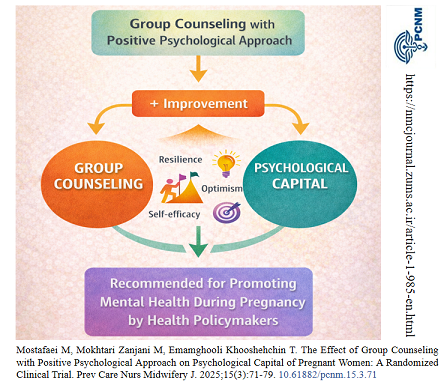
Psychological capital (PsyCap) is a positive psychological resource comprising self-efficacy, hope, resilience, and optimism [4-6]. This framework emphasizes the development of positive and learnable psychological states. The findings of this study support the theory that these components can be enhanced through structured interventions such as group counseling based on positive psychology, which focuses on cultivating strengths and positive emotions. The overall improvement in psychological capital post-intervention, even without sustained differences in individual subscales at follow-up, may indicate the integrated and holistic impact of the intervention on PsyCap as a unified construct. This aligns with the multidimensional yet cohesive nature of this construct in Luthans' theory [5].
A significant proportion of pregnant women experience depression, anxiety, and stress during pregnancy, which are also highly prevalent in our country [34,35]. These disorders have been associated with decreased self-care during pregnancy, increased incidence of interventions during labor, and a 2.3-fold increase in the incidence of cesarean section [36-38]. Based on these findings, incorporating positive psychology-based group interventions into antenatal care packages offers a preventive, cost-effective, and scalable strategy for increasing the psychological capital of pregnant women. These findings can be used to design comprehensive mental health promotion programs that aim to reduce unnecessary obstetric interventions, increase maternal coping skills, and improve pregnancy outcomes and infant health. Considering the continuous interaction between midwifery personnel and expectant mothers during pregnancy, this group of healthcare providers may be ideally positioned to integrate psychological and physical care for pregnant women.
This study had several limitations. The use of self-report questionnaires may have introduced response bias; to mitigate this, participants were provided with detailed instructions emphasizing the importance of accurate and careful completion. Moreover, participation in counseling sessions required sustained engagement, and reluctance among some participants may have affected adherence. To encourage consistent participation, participants were fully informed about how their involvement could contribute to improving maternal mental health, pregnancy outcomes, and the well-being of their future children.
Although this study was conducted in a limited statistical population, given the paucity of psychological studies with a positive approach in pregnant women, it is hoped that the results of this study can be used to develop comprehensive health and treatment programs for pregnant mothers and benefit from its effect on promoting mental health and healthy behaviors, along with other routine pregnancy care. Finally, it is suggested that the effect of the positive psychology approach be studied in larger statistical groups and on variables such as common physical problems during pregnancy. It is also suggested that this research be conducted on other groups in the population and the results be compared with each other.
Conclusion
Group counseling based on a positive psychology approach provides a reliable framework for developing psychological capital in pregnant women. Its effects on total psychological capital persist up to six weeks post-intervention.
Considering the continuous interaction between midwifery personnel and expectant mothers during pregnancy, this group of healthcare providers may be ideally positioned to integrate psychological and physical care for pregnant women.
Ethical Consideration
This article is derived from a Master’s thesis in Midwifery Counseling with ethics code (IR.ZUMS.REC.1397.308) and is registered in the Clinical Trials Registry with code IRCT20160521027994N6.
Additionally, all methods were carried out according to relevant guidelines and regulations, and participants provided consent to participate in the study.
Acknowledgements
The authors would like to sincerely thank the Deputy of Research and Technology at Zanjan University of Medical Sciences for their financial support of this study. The authors also extend their heartfelt appreciation to all mothers who participated in this study.
Conflict of Interest
The authors have no conflict of interest to declare.
Funding
The present article has been derived from the master’s thesis of the first author in Midwifery
Counseling (code: A-11-108-8), financially supported by the Research and Technology Vice-Chancellor of Zanjan University of Medical Sciences.
Authors' Contributions
Mostafaei M.: The study conception and design; data collection, analysis, and interpretation; and the manuscript preparation, reading, revision, and approval.
Mokhtari Zanjani M., and Emamghooli Khooshehchin T.: The study design, data analysis, and the manuscript preparation, reading, revision, and approval. All authors read and approved the final manuscript and agreed to be personally accountable for their contributions.
Artificial Intelligence Utilization
During manuscript preparation, minor assistance from artificial intelligence (AI) tools was utilized to enhance English phrasing and improve the clarity of scientific writing. All analytical decisions and final editing were performed by the authors. The use of AI complied with ethical standards of academic publishing and did not replace the author's responsibility.
Data availability statement
The data supporting the findings of this study are available from the corresponding author upon reasonable request.
Knowledge Translation Statement
Audience: Midwives, prenatal care nurses, maternal mental health specialists, and clinical psychologists
Group counseling based on a positive psychological approach is an effective intervention for enhancing psychological capital (hope, efficacy, resilience, optimism) in pregnant women. Integrate this structured, group-based counseling model into routine prenatal care programs to proactively build psychological resources, promote mental well-being, and support adaptive coping during pregnancy.
Audience: Midwives, prenatal care nurses, maternal mental health specialists, and clinical psychologists
Group counseling based on a positive psychological approach is an effective intervention for enhancing psychological capital (hope, efficacy, resilience, optimism) in pregnant women. Integrate this structured, group-based counseling model into routine prenatal care programs to proactively build psychological resources, promote mental well-being, and support adaptive coping during pregnancy.
Full-Text: (110 Views)
Introduction
Maternal physical health is closely linked to mental well-being, which is considered by some as a key determinant of family health and the well-being of the soon-to-be-born child [1]. Poor maternal mental health is associated with adverse outcomes such as preterm birth, low birth weight, early developmental disorders, neurodevelopmental problems in adolescence, as well as psychosocial problems in adulthood [2].
Evidently, the physiological, psychological, and social challenges of pregnancy can affect women’s psychological capital [3]. Psychological capital (PsyCap) is a positive psychological resource comprising self-efficacy, hope, resilience, and optimism [4-6]. This method improves stress coping strategies and overall functioning while also positively impacting health outcomes [7-9]. PsyCap has been found to predict postpartum anxiety and depression [10]. First introduced by Seligman and colleagues in 1998, positive psychology focuses on strengths, psychological assets, and human potential rather than on deficits and illness, aiming to enhance positive perceptions, behaviors, and emotions, thereby improving life quality and coping with life events [11].
Individual components, such as self-efficacy, are directly linked to self-care behaviors in pregnant women [12], resilience mitigates pregnancy-related stress and facilitates confidence during labor [13], and optimism correlates positively with psychological well-being and reduced stress perception [14]. Interventions based on hope have shown improvements in mental health and reduced labor pain [15]. All dimensions of psychological capital are learnable and developable, with positive psychology being one prominent intervention strategy [16,17]. It has been recommended that psychological capital be incorporated into maternal mental health promotion programs [18,19].
Objectives
This study aimed to determine the effect of group counseling with a positive psychological approach on the psychological capital of pregnant women.
Methods
Study Design
This single-blind clinical trial was conducted in 2019 in Zanjan, with participants unaware of their assignment to either the intervention or control group.
Participants
The study population consisted of pregnant women referring to health centers in Zanjan. Eligible participants who met the inclusion criteria and were willing to participate were selected. After providing detailed explanations regarding the study objectives, procedures, and ensuring confidentiality of information, written informed consent was obtained from all participants.
The inclusion criteria were: gestational age between 14 and 28 weeks, completion of the informed consent form, no history of pregnancy-related complications, absence of medical or surgical conditions, absence of psychiatric disorders or cognitive impairments, no use of psychotropic medications or illicit substances, no clinical depression or mild-to-moderate scores on anxiety, stress, and depression scales, at least a junior high school education, and no prior participation in similar educational or counseling sessions. Exclusion criteria included withdrawal from the study, absence from more than two counseling sessions, pregnancy complications or termination, medical or surgical events, and major stressful life events during the study.
Sample Size Calculation
The sample size was calculated based on data from a previous study by Dehghan Nejad et al. [20], with the following parameters: a mean (μ) of 67.48 and standard deviation (s) of 8.89 for the control group, and a mean of 75.5 with a standard deviation of 9.61 for the intervention group.
Using a significance level (α) of 0.05 and a power (1−β) of 80% (corresponding to Z1−β = 0.84), and accounting for an estimated 20% dropout rate, the required sample size was determined.
Sampling and Randomization
Sampling was conducted among 142 eligible pregnant women referring to health centers in Zanjan city, and 56 women meeting the eligibility criteria were selected (Flowchart 1). To control confounding factors, block randomization was used: in each block of four, two participants were allocated to the intervention group and two to the control group, resulting in six blocks in various arrangements, each numbered. Blocks were randomly selected until the sample size reached 56. Finally, 28 participants were assigned to each group.
Intervention
The intervention was implemented by a researcher in the field of midwifery counseling who had completed a workshop on positive psychotherapy. The content of the sessions was designed based on the positive psychotherapy protocols of Tayeb Rashid and Martin Seligman, under the supervision of the research team. This intervention consisted of eight one-hour sessions, held twice a week in two groups of 10 people and one group of 8 people by the first author (MM). The control group received only routine prenatal care.
Session Structure
Each session began with a welcome and acknowledgment of the participants, followed by a review of the previous session’s topics and assignments. Participants’ questions, concerns, and needs were addressed. The content of the current session was then presented, and mothers were encouraged to share their opinions and experiences in a group discussion. At the end of each session, homework assignments were provided according to the study protocol
Outcome Assessment
Upon completion of the intervention, participants were asked to complete the psychological capital and quality of life questionnaires immediately after the final session and again six weeks later, returning the completed forms to the researcher. The description of the sessions is given in Table 1. Psychological capital was assessed at three time points: pre-intervention, post-intervention, and six weeks after the intervention.
Table 1. Content of the Intervention Sessions
Maternal physical health is closely linked to mental well-being, which is considered by some as a key determinant of family health and the well-being of the soon-to-be-born child [1]. Poor maternal mental health is associated with adverse outcomes such as preterm birth, low birth weight, early developmental disorders, neurodevelopmental problems in adolescence, as well as psychosocial problems in adulthood [2].
Evidently, the physiological, psychological, and social challenges of pregnancy can affect women’s psychological capital [3]. Psychological capital (PsyCap) is a positive psychological resource comprising self-efficacy, hope, resilience, and optimism [4-6]. This method improves stress coping strategies and overall functioning while also positively impacting health outcomes [7-9]. PsyCap has been found to predict postpartum anxiety and depression [10]. First introduced by Seligman and colleagues in 1998, positive psychology focuses on strengths, psychological assets, and human potential rather than on deficits and illness, aiming to enhance positive perceptions, behaviors, and emotions, thereby improving life quality and coping with life events [11].
Individual components, such as self-efficacy, are directly linked to self-care behaviors in pregnant women [12], resilience mitigates pregnancy-related stress and facilitates confidence during labor [13], and optimism correlates positively with psychological well-being and reduced stress perception [14]. Interventions based on hope have shown improvements in mental health and reduced labor pain [15]. All dimensions of psychological capital are learnable and developable, with positive psychology being one prominent intervention strategy [16,17]. It has been recommended that psychological capital be incorporated into maternal mental health promotion programs [18,19].
Objectives
This study aimed to determine the effect of group counseling with a positive psychological approach on the psychological capital of pregnant women.
Methods
Study Design
This single-blind clinical trial was conducted in 2019 in Zanjan, with participants unaware of their assignment to either the intervention or control group.
Participants
The study population consisted of pregnant women referring to health centers in Zanjan. Eligible participants who met the inclusion criteria and were willing to participate were selected. After providing detailed explanations regarding the study objectives, procedures, and ensuring confidentiality of information, written informed consent was obtained from all participants.
The inclusion criteria were: gestational age between 14 and 28 weeks, completion of the informed consent form, no history of pregnancy-related complications, absence of medical or surgical conditions, absence of psychiatric disorders or cognitive impairments, no use of psychotropic medications or illicit substances, no clinical depression or mild-to-moderate scores on anxiety, stress, and depression scales, at least a junior high school education, and no prior participation in similar educational or counseling sessions. Exclusion criteria included withdrawal from the study, absence from more than two counseling sessions, pregnancy complications or termination, medical or surgical events, and major stressful life events during the study.
Sample Size Calculation
The sample size was calculated based on data from a previous study by Dehghan Nejad et al. [20], with the following parameters: a mean (μ) of 67.48 and standard deviation (s) of 8.89 for the control group, and a mean of 75.5 with a standard deviation of 9.61 for the intervention group.
Using a significance level (α) of 0.05 and a power (1−β) of 80% (corresponding to Z1−β = 0.84), and accounting for an estimated 20% dropout rate, the required sample size was determined.
Sampling and Randomization
Sampling was conducted among 142 eligible pregnant women referring to health centers in Zanjan city, and 56 women meeting the eligibility criteria were selected (Flowchart 1). To control confounding factors, block randomization was used: in each block of four, two participants were allocated to the intervention group and two to the control group, resulting in six blocks in various arrangements, each numbered. Blocks were randomly selected until the sample size reached 56. Finally, 28 participants were assigned to each group.
Intervention
The intervention was implemented by a researcher in the field of midwifery counseling who had completed a workshop on positive psychotherapy. The content of the sessions was designed based on the positive psychotherapy protocols of Tayeb Rashid and Martin Seligman, under the supervision of the research team. This intervention consisted of eight one-hour sessions, held twice a week in two groups of 10 people and one group of 8 people by the first author (MM). The control group received only routine prenatal care.
Session Structure
Each session began with a welcome and acknowledgment of the participants, followed by a review of the previous session’s topics and assignments. Participants’ questions, concerns, and needs were addressed. The content of the current session was then presented, and mothers were encouraged to share their opinions and experiences in a group discussion. At the end of each session, homework assignments were provided according to the study protocol
Outcome Assessment
Upon completion of the intervention, participants were asked to complete the psychological capital and quality of life questionnaires immediately after the final session and again six weeks later, returning the completed forms to the researcher. The description of the sessions is given in Table 1. Psychological capital was assessed at three time points: pre-intervention, post-intervention, and six weeks after the intervention.
Table 1. Content of the Intervention Sessions
| Session | Topic |
| Session 1 | Introduction to Positive Psychology |
| Session 2 | Capabilities |
| Session 3 | Positive Emotions and Pleasure |
| Session 4 | Positive Relationships |
| Session 5 | Gratitude and Forgiveness |
| Session 6 | Optimism and Hope and Debating Pessimistic Thoughts |
| Session 7 | Meaning in Life and Altruism |
| Session 8 | Summary of the Sessions |
Data Collection Instrument
Data were collected using the Psychological Capital Questionnaire (PCQ) developed by McGee in 2011 [21], which includes 26 items across four subscales: self-efficacy, hope, resilience, and optimism. Responses are recorded on a six-point Likert scale (1 = strongly disagree to 6 = strongly agree). Total scores range from 26 to 156, with higher scores indicating higher psychological capital. Subscale scores are calculated individually and summed to obtain the total psychological capital score.
McGee has extensively examined the validity and reliability of this questionnaire, along with the 25- and 12-question psychological capital forms, and has provided solid evidence of its validity and reliability [21]. In Iran, Golparvar et al. (2011) reported Cronbach’s alpha coefficients of 0.88, 0.86, 0.83, and 0.83 for self-efficacy, resilience, optimism, and hope, respectively [22].
Similarly, Barghi Irani et al. (2016) found alpha coefficients of 0.84, 0.86, 0.78, and 0.82 for the same subscales in a study on 350 elderly diabetic participants [23].
Statistical Analysis
Data obtained from the remaining subjects in the study were analyzed using SPSS version 16 software. Descriptive statistics (mean, standard deviation, frequency) were calculated. Chi-square tests were used for categorical variables. The Kolmogorov-Smirnov test was applied to examine the normality of variables. Independent-samples t-tests and Mann-Whitney tests were used for between-group comparisons, and repeated-measures ANOVA (with Mauchly’s sphericity assumption) and the Friedman test were used for within-group comparisons.
A p-value < 0.05 was considered statistically significant. A per-protocol analysis approach was employed. Among the initial 56 participants, three in the intervention group and two in the control group were lost to follow-up or discontinued the intervention. Therefore, the final analysis included data from the 25 participants who completed the study in the intervention group and the 26 participants who completed the study in the control group.
Results
At baseline, each group included 28 pregnant women. During the study, three participants in the intervention group (due to immigration, unwillingness to participate, and premature birth) and two in the control group were lost to follow-up. Consequently, the final analysis included 25 participants in the intervention group and 26 in the control group.
As shown in Table 2, all demographic and baseline psychological variables were normally distributed. Participants in both groups were homogeneous regarding sociodemographic characteristics and obstetric history, with mild-to-moderate scores on stress, anxiety, and depression scales; no significant differences were observed in these variables between groups (p > 0.05 for all comparisons).
Table 2. Comparison of Demographic and Psychological Characteristics
| Variable | Intervention Group (n = 25) | Control Group (n = 26) | p |
| Education | |||
| Undergraduate | 2 (8.0%) | 3 (11.5%) | |
| Diploma | 10 (40.0%) | 12 (46.2%) | 0.770 |
| University | 13 (52.0%) | 11 (42.3%) | |
| Job | |||
| Housewife | 22 (88.0%) | 22 (84.6%) | |
| Freelance | 2 (8.0%) | 2 (7.7%) | 0.990 |
| Employee | 1 (4.0%) | 2 (7.7%) | |
| Number of Pregnancies | |||
| Nulliparous | 11 (44.0%) | 9 (34.6%) | |
| Multiparous | 14 (56.0%) | 17 (65.4%) | 0.490 |
| Maternal Age | 30.08 (4.17) | 29.23 (4.25) | 0.470 |
| Gestational Age | 20.24 (4.41) | 21.07 (4.27) | 0.490 |
| Anxiety | 7.92 (4.22) | 7.30 (5.08) | 0.670 |
| Stress | 12.24 (5.78) | 11.92 (7.09) | 0.860 |
| Depression | 8.00 (5.32) | 7.53 (6.20) | 0.610 |
All study variables, except self-efficacy and optimism at follow-up, were normally distributed. There were no significant differences between the groups in total psychological capital and its subscales at baseline (p > 0.05) (Tables 3 & 4).
Post-intervention, significant differences were observed between the intervention and control groups in total psychological capital (p = 0.021) and in all four subscales: self-efficacy (p = 0.042), hope (p = 0.032), resilience (p = 0.023), and optimism (p = 0.040). At the six-week follow-up, a significant difference remained only in total psychological capital (p= 0.049), while differences in the individual subscales were no longer statistically significant (p > 0.05) Within-group comparisons showed significant improvements across the three time points in the intervention group for total psychological capital and all subscales (p < 0.001 for all), while no significant changes were observed in the control group over time (p > 0.05) (Tables 3 & 4).
Table 3. comparison of mean total psychological capital scores between the intervention and control groups across time points
| Variable | Intervention Group (n = 25) | Control Group (n = 26) | p |
| Psychological Capital Before Intervention | 108.56 (15.19) | 109.26 (15.28) | 0.860 |
| Psychological Capital After Intervention | 118.04 (13.83) | 108.61 (14.41) | 0.021 |
| Psychological Capital Six Weeks Later | 116.16 (13.15) | 108.61 (13.53) | 0.049 |
| Test Result (Within Group) | F = 118.89, p < 0.001 | F = 0.22, p = 0.800 |
Table 4. Comparison of Mean Scores for Psychological Capital Subscales Between the Intervention and Control Groups Across Time Points
| Variable | Time Point | Intervention Group (n=25) | Control Group (n=26) | p | Within-Group Test (Intervention) | Within-Group Test (Control) |
| Self-Efficacy | Before | 30.48 (4.85) | 30.61 (4.04) | 0.914 | ||
| After | 32.92 (4.26) | 30.26 (4.78) | 0.042 | χ² = 26.17, p< 0.001 | F = 0.95, p = 0.390 | |
| Six Weeks | 32.24 (4.71) | 29.96 (4.40) | 0.079 | |||
| Hope | Before | 29.72 (4.57) | 29.34 (4.39) | 0.760 | ||
| After | 32.44 (4.47) | 29.79 (4.16) | 0.032 | F = 31.93, p < 0.001 | F = 0.44, p = 0.640 | |
| Six Weeks | 31.88 (4.49) | 29.69 (4.24) | 0.080 | |||
| Resilience | Before | 25.80 (3.71) | 26.15 (3.56) | 0.730 | ||
| After | 28.20 (3.39) | 25.76 (3.97) | 0.023 | F = 42.24, p < 0.001 | F = 0.41, p = 0.660 | |
| Six Weeks | 27.76 (2.97) | 26.00 (3.78) | 0.072 | |||
| Optimism | Before | 22.56 (2.90) | 23.15 (3.96) | 0.540 | ||
| After | 24.48 (2.63) | 22.80 (3.03) | 0.040 | χ² = 27.83, p < 0.001 | F = 0.26, p = 0.760 | |
| Six Weeks | 24.28 (2.28) | 22.96 (2.89) | 0.096 |
Discussion
A comparison of mean scores between the intervention and control groups showed that group counseling based on a positive psychology approach had a significant effect on the psychological capital of pregnant women. This effect on the total psychological capital score persisted up to six weeks after the intervention. However, at the six-week follow-up, no significant differences were observed between the groups on any of the individual subscales.
In line with the present study, Daee Jafari et al. (2017) concluded that positive psychotherapy improved psychological capital in adolescent girls by fostering their strengths and abilities [24]. Arshadi et al. (2018) reported similar results among employed women at Ahvaz University, demonstrating the effectiveness of positive psychology training on psychological capital [25]. Namazi et al. (2016) also found that positive psychology interventions led to significant differences in psychological coherence and psychological capital between intervention and control groups [26]. Other research using various psychological approaches confirms that psychological capital is a developable and trainable construct. For instance, acceptance and commitment group therapy improved psychological capital in cardiac patients [27], and Ellis' rational-emotive behavior therapy significantly enhanced psychological capital [28]. Hope-based interventions in diabetic patients also showed sustained improvements across all four psychological capital components up to three months post-intervention [29]. Additionally, Saketi et al. (2022) reported that positive psychotherapy improved both psychological capital and social competence in married, childless women, emphasizing the utility of optimism and hope training in enhancing these capacities [30].
In contrast, a study conducted on 9 mothers of college students rejected the effect of positive psychology on resilience [31], which may be due to the small sample size and differences in the type of questionnaire. Furthermore, the results of a study by Hakimi et al. (2018) on personality strengths showed that positive training does not affect optimism [32]. This discrepancy with the results of the present study could be due to the low age of the participants and the difference in the type of questionnaire. Alipour and colleagues also conducted a study in 2014 entitled "The Effect of Psychological Capital Training Using Luthans' Intervention Model on the Psychological Capital of Experts Working in an Industrial Company" [33]. The results showed that the average scores in the three components of self-efficacy, resilience, and hope increased, but no improvement was observed in the optimism dimension. This discrepancy with the present study may be due to the difference in the approach used.
Psychological capital (PsyCap) is a positive psychological resource comprising self-efficacy, hope, resilience, and optimism [4-6]. This framework emphasizes the development of positive and learnable psychological states. The findings of this study support the theory that these components can be enhanced through structured interventions such as group counseling based on positive psychology, which focuses on cultivating strengths and positive emotions. The overall improvement in psychological capital post-intervention, even without sustained differences in individual subscales at follow-up, may indicate the integrated and holistic impact of the intervention on PsyCap as a unified construct. This aligns with the multidimensional yet cohesive nature of this construct in Luthans' theory [5].
A significant proportion of pregnant women experience depression, anxiety, and stress during pregnancy, which are also highly prevalent in our country [34,35]. These disorders have been associated with decreased self-care during pregnancy, increased incidence of interventions during labor, and a 2.3-fold increase in the incidence of cesarean section [36-38]. Based on these findings, incorporating positive psychology-based group interventions into antenatal care packages offers a preventive, cost-effective, and scalable strategy for increasing the psychological capital of pregnant women. These findings can be used to design comprehensive mental health promotion programs that aim to reduce unnecessary obstetric interventions, increase maternal coping skills, and improve pregnancy outcomes and infant health. Considering the continuous interaction between midwifery personnel and expectant mothers during pregnancy, this group of healthcare providers may be ideally positioned to integrate psychological and physical care for pregnant women.
This study had several limitations. The use of self-report questionnaires may have introduced response bias; to mitigate this, participants were provided with detailed instructions emphasizing the importance of accurate and careful completion. Moreover, participation in counseling sessions required sustained engagement, and reluctance among some participants may have affected adherence. To encourage consistent participation, participants were fully informed about how their involvement could contribute to improving maternal mental health, pregnancy outcomes, and the well-being of their future children.
Although this study was conducted in a limited statistical population, given the paucity of psychological studies with a positive approach in pregnant women, it is hoped that the results of this study can be used to develop comprehensive health and treatment programs for pregnant mothers and benefit from its effect on promoting mental health and healthy behaviors, along with other routine pregnancy care. Finally, it is suggested that the effect of the positive psychology approach be studied in larger statistical groups and on variables such as common physical problems during pregnancy. It is also suggested that this research be conducted on other groups in the population and the results be compared with each other.
Conclusion
Group counseling based on a positive psychology approach provides a reliable framework for developing psychological capital in pregnant women. Its effects on total psychological capital persist up to six weeks post-intervention.
Considering the continuous interaction between midwifery personnel and expectant mothers during pregnancy, this group of healthcare providers may be ideally positioned to integrate psychological and physical care for pregnant women.
Ethical Consideration
This article is derived from a Master’s thesis in Midwifery Counseling with ethics code (IR.ZUMS.REC.1397.308) and is registered in the Clinical Trials Registry with code IRCT20160521027994N6.
Additionally, all methods were carried out according to relevant guidelines and regulations, and participants provided consent to participate in the study.
Acknowledgements
The authors would like to sincerely thank the Deputy of Research and Technology at Zanjan University of Medical Sciences for their financial support of this study. The authors also extend their heartfelt appreciation to all mothers who participated in this study.
Conflict of Interest
The authors have no conflict of interest to declare.
Funding
The present article has been derived from the master’s thesis of the first author in Midwifery
Counseling (code: A-11-108-8), financially supported by the Research and Technology Vice-Chancellor of Zanjan University of Medical Sciences.
Authors' Contributions
Mostafaei M.: The study conception and design; data collection, analysis, and interpretation; and the manuscript preparation, reading, revision, and approval.
Mokhtari Zanjani M., and Emamghooli Khooshehchin T.: The study design, data analysis, and the manuscript preparation, reading, revision, and approval. All authors read and approved the final manuscript and agreed to be personally accountable for their contributions.
Artificial Intelligence Utilization
During manuscript preparation, minor assistance from artificial intelligence (AI) tools was utilized to enhance English phrasing and improve the clarity of scientific writing. All analytical decisions and final editing were performed by the authors. The use of AI complied with ethical standards of academic publishing and did not replace the author's responsibility.
Data availability statement
The data supporting the findings of this study are available from the corresponding author upon reasonable request.
Type of Study: Orginal research |
Subject:
Midwifery
References
1. von Hinke S, Rice N, Tominey E. Mental health around pregnancy and child development from early childhood to adolescence. Labour Economics. 2022;78:1-13. [https://doi.org/10.1016/j.labeco.2022.102245]
2. Ahmad M, Vismara L. The psychological impact of COVID-19 pandemic on women's mental health during pregnancy: a rapid evidence review. International Journal of Environmental Research and Public Health. 2021;18(13):7112. [https://doi.org/10.3390/ijerph18137112] [PMID]
3. Wojujutari AK, Alabi OT, Matthew O. Prenatal stress and sleep quality influence on antenatal women psychological capital in mother/child hospital in Akure, Ondo State. Journal of Sleep Disorders and Therapy. 2018;7(2):25. [https://doi.org/10.4172/2167-0277.1000286]
4. Khan A, Zeb I, Zhang Y, Fazal S, Ding J. Relationship between psychological capital and mental health at higher education: role of perceived social support as a mediator. Heliyon. 2024;10(8):e29472. [https://doi.org/10.1016/j.heliyon.2024.e29472] [PMID]
5. Luthans F, Youssef CM, Avolio BJ. Psychological capital: developing the human competitive edge. Oxford University Press; 2007. p.47-70. [https://doi.org/10.1093/acprof:oso/9780195187526.001.0001] [PMID]
6. Luthans F, Youssef CM, Sweetman DS, Harms PD. Meeting the leadership challenge of employee well-being through relationship PsyCap and health PsyCap. Journal of Leadership and Organizational Studies. 2013;20(1):118-33. [https://doi.org/10.1177/1548051812465893]
7. Javaheri A. Psychological capital: an internal resource for counseling students coping with academic and clinical stress [dissertation]. College of William and Mary in Virginia; 2017.
8. Rabenu E, Yaniv E, Elizur D. The relationship between psychological capital, coping with stress, well-being, and performance. Current Psychology. 2017;36(4):875-87. [https://doi.org/10.1007/s12144-016-9477-4]
9. Steptoe A, Dockray S, Wardle J. Positive affect and psychobiological processes relevant to health. Journal of Personality. 2009;77(6):1747-76. [https://doi.org/10.1111/j.1467-6494.2009.00599.x] [PMID]
10. Nadjafi-Semnani M, Nadjafi-Semnani A, Mohammadi Y, Nadjafi-Semnani F, Nadjafi-Semnani M, Shahriyari A. Evaluation of relation between psychiatric capital and prevalence of postpartum anxiety and depression in different health center Birjand. Journal of Surgery and Trauma. 2018;6(2):60-70. [http://jsurgery.bums.ac.ir/article-1-119-en.html]
11. Kobau R, Seligman ME, Peterson C, Diener E, Zack MM, Chapman D, et al. Mental health promotion in public health: perspectives and strategies from positive psychology. American Journal of Public Health. 2011;101(8):e1-9. [https://doi.org/10.2105/AJPH.2010.300083] [PMID]
12. Izadirad H, Niknami S, Zareban I, Hidarnia A. Predictors of self-care in pregnancy based on integration of health belief model and social support. Journal of Guilan University of Medical Sciences. 2017;26(103):53-62. [http://journal.gums.ac.ir/article-1-1520-en.html]
13. Min S. The relationship between the resilience, prenatal stress, and confidence for childbirth: focused on pregnant woman. Indian Journal of Science and Technology. 2016;9(43):1-4. [https://doi.org/10.17485/ijst/2016/v9i43/105026]
14. Bakhtary B, Bakhtary N, Qasemi Nejad F. The role of optimism in improving women's psychological well-being indexes. Academic Journal of Psychological Studies. 2017;6(2):48-52.
15. Samavi SA, Najarpourian S, Javdan M. The effectiveness of group hope therapy in labor pain and mental health of pregnant women. Psychological Reports. 2019;122(6):2063-73. [https://doi.org/10.1177/0033294118798625] [PMID]
16. Yousefzadeh S, Esmaeili Darmian M, Asadi Yoonesi MR, Mohammad Taghi Shakeri MT. Investigating the effect of optimism training during pregnancy on attitude and mode of delivery in nulliparous women. Arak Medical University Journal. 2015;19(2):89-98. [http://jams.arakmu.ac.ir/article-1-3974-en.html]
17. Nolzen N. The concept of psychological capital: a comprehensive review. Management Review Quarterly. 2018;68:237-77. [https://doi.org/10.1007/s11301-018-0138-6]
18. Javaheri Mohammadi Z, Rasouli R, Pourshahriari MS. The mediating role of psychological capital in the relationship between mindfulness and mental health of pregnant women. Rooyesh. 2023;11(11):15-26. [http://frooyesh.ir/article-1-4321-en.html]
19. Zeng K, Li Y, Yang R. The mediation role of psychological capital between family relationship and antenatal depressive symptoms among women with advanced maternal age: a cross-sectional study. BMC Pregnancy and Childbirth. 2022;22(1):488. [https://doi.org/10.1186/s12884-022-04811-y] [PMID]
20. Dehghannezhad S, Hajhosseini M, Ejei J. The effectiveness of positive thinking skills training on social adjustment and psychological capital of insociable young females. Journal of School Psychology. 2017;6(1):161-8. [https://doi.org/10.22098/jsp.2017.537]
21. McGee EA. An examination of the stability of positive psychological capital using frequency-based measurement [dissertation]. University of Tennessee; 2011.
22. Golparvar M, Jafari M, Javadian Z. Prediction of psychological capital through components of spirituality among nurses. Iranian Journal of Psychiatric Nursing. 2013;1(3):35-44. [http://ijpn.ir/article-1-115-fa.html]
23. Barghi Irani Z, Rajabi M, Nazami M, Bagiyan Koulemarz MJ. The role of lifestyle, psychological capital and self-care behaviors in predicting subjective well-being of diabetic elderly peoples. Health Psychology. 2017;6(3):17-8. [https://doi.org/20.1001.1.23221283.1396.6.23.2.8]
24. Daei Jafari MR, Rashidi Pour M, Moradi Nia A. The effect of positive group psychosocial interventions on the meaning of life and psychological capital of teenage girls. Contemporary Psychology. 2017;12(1):660-4. [http://ijpcp.iums.ac.ir/article-1-2821-en.html]
25. Arshadi N, Azadi S, Bassak Nejad S, Beshlideh K, Neisi A. The effectiveness of flourishing training on psychological capital in female employees of Shahid Chamran University of Ahvaz. Journal of Modern Psychological Researches. 2018;13(50):45-65. [https://doi.org/20.1001.1.27173852.1397.13.50.3.3]
26. Namazi A, Asghari MJ, Kimiai SA. The effectiveness of positive group therapy on feeling of psychological coherence and psychological capital in orphaned girls [thesis]. Ferdowsi University of Mashhad; 2017.
27. Fazeli Kebria M, Hasanzadeh R, Mirzaeian B, Khjevand Khosheli A. The effectiveness of acceptance and commitment group therapy on psychological capital in cardiovascular patients in Babol. Journal of Babol University of Medical Sciences. 2018;20(4):68-73. [http://jbums.org/article-1-7320-en.html]
28. Elmy Manesh N, Arab Shibani K. Effects of Ellis rational emotive behavior therapy on promotion of psychological capital. Psychological Research. 2018;20(2):78-88.
29. Karimi S, Delavar A, Ghaemi F, Dortaj F. Effectiveness of hope therapy on psychological capital of patients with type II diabetes mellitus. Journal of Diabetes Nursing. 2019;7(2):809-19. [http://jdn.zbmu.ac.ir/article-1-362-en.html]
30. Saketi Z, Farhadi H, Atashpour H. Efficacy of positivist psychotherapy on the psychological capital and social competence in married childless women. Journal of Modern Psychological Researches. 2023;18(71):119-27. [https://doi.org/10.22034/jmpr.2023.16929]
31. Asadolah Tooyserkani M, Payvastegar M, Banijamali SS, Dehshiri GR. Comparing the effects of positive psychotherapy and self-review on the well-being and resilience in students as mothers. Positive Psychology Research. 2017;3(3):1-15.
32. Hakimi S, Talea Pasand S, Sajedi Z. The effectiveness of positive education intervention on well-being, personality empowerment, and optimism in students. Journal of Educational Innovation. 2018;17(66):113-28.
33. Alipour A, Akhondi T, Sarami Foroughani GR, Safari Nia M, Agah Harris M. The effect of psychological capital training using the Luthans intervention model on psychological capital of experts working in an industrial company. Psychological Research Journal. 2015;17(1):86-105.
34. Aneja J, Chavan BS, Huria A, Goel P, Kohli N, Chhabra P. Perceived stress and its psychological correlates in pregnant women. International Journal of Culture and Mental Health. 2018;11(3):268-79. [https://doi.org/10.1080/17542863.2017.1364284]
35. Isfahani P, Afshin M, Rasulkhani F, Azizi N. The prevalence of depression in Iranian pregnant women: a meta-analysis. Health-Based Research. 2020;6(1):51-65. [https://doi.org/10.1155/2020/5871402] [PMID]
36. Jahan N, Went TR, Sultan W, Sapkota A, Khurshid H, Qureshi IA, et al. Untreated depression during pregnancy and its effect on pregnancy outcomes: a systematic review. Cureus. 2021;13(8):e17251. [https://doi.org/10.7759/cureus.17251]
37. Acheampong K, Pan X, Kaminga AC, Wen SW, Liu A. Risk of adverse maternal outcomes associated with prenatal exposure to moderate-severe depression compared with mild depression: a follow-up study. Journal of Psychiatric Research. 2021;136:32-7. [https://doi.org/10.1016/j.jpsychires.2021.01.036] [PMID]
38. Azami M, Badfar G, Shohani M, Mansouri A, Soleymani A, Bigdeli Shamloo MB, et al. The prevalence of depression in pregnant Iranian women: a systematic review and meta-analysis. Iranian Journal of Psychiatry and Behavioral Sciences. 2018;12(3):e9975. [https://doi.org/10.5812/ijpbs.9975]
Send email to the article author
| Rights and permissions | |
 |
This work is licensed under a Creative Commons Attribution-NonCommercial 4.0 International License. |