
Preventive Care in Nursing and Midwifery Journal

Volume 15, Issue 4 (10-2025)
Prev Care Nurs Midwifery J 2025, 15(4): 42-51 |
Back to browse issues page


Ethics code: IR.MUK.REC.1404.055


Download citation:
BibTeX | RIS | EndNote | Medlars | ProCite | Reference Manager | RefWorks
Send citation to:


BibTeX | RIS | EndNote | Medlars | ProCite | Reference Manager | RefWorks
Send citation to:
Kareem Halool A, Salah Razzaq M, Valiee S. Characteristics and Temporal Trends of Patients Visiting the Emergency Department in Najaf, Iraq: A Cross-Sectional Study. Prev Care Nurs Midwifery J 2025; 15 (4) :42-51
URL: http://nmcjournal.zums.ac.ir/article-1-1002-en.html
URL: http://nmcjournal.zums.ac.ir/article-1-1002-en.html

Clinical Care Research Center, Research Institute for Health Development, Kurdistan University of Medical Sciences, Sanandaj, Iran , sinavaliee@yahoo.com
Full-Text [PDF 759 kb]
(197 Downloads)
| Abstract (HTML) (524 Views)
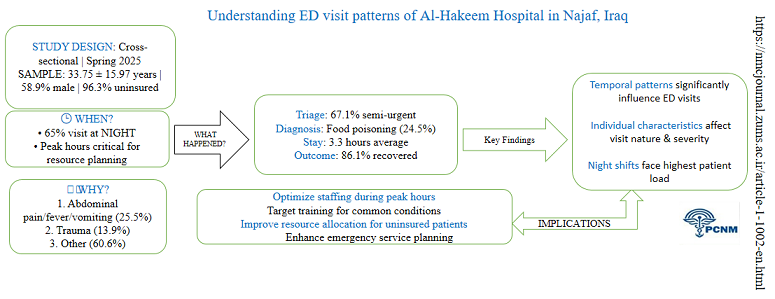
The findings reveal a predominantly young, uninsured population using the emergency department for acute, often non-critical conditions, potentially due to critical gaps in primary care and health insurance coverage, leading to key recommendations including: strengthening the primary care system and public referral pathways to reduce non-urgent ED visits; implementing targeted public health campaigns on proper food handling, smoking risks, and healthy lifestyles; ensuring adequate staffing and resources during peak night hours; expanding health insurance coverage to facilitate access to continuous care; utilizing the ED as a strategic point for brief interventions like smoking cessation counseling; and continuously monitoring key performance indicators such as length of stay to systematically improve ED efficiency and patient satisfaction. Public education about the function of ED and classification of patients, increasing the primary care accessibility in different places and times, health insurance coverage, and preventive public health strategies can reduce the burden of un necessary referring and helping to od the main goal of ED. Analysis of the relationship between demographic/clinical characteristics and the timing of visits (morning, evening, night, after midnight) revealed significant associations with numerous variables: residence, occupation, marital status, insurance status, triage level, chief complaint, underlying disease, medication use, initial diagnosis, illness severity, trauma, family medical history, physical activity level, diagnostic tests performed, procedures performed, prescribed medications, final diagnosis, age, symptom onset duration, heart rate, pain level, consciousness level, and time to physician consultation. These findings indicate that patient profiles and clinical needs vary significantly across different times of day. These patterns align with previous studies. For instance, a pediatric study found that patients visiting at night often had higher acuity triage levels [34]. The significant link between visit time and factors like occupation and residence may reflect access patterns, where urban residents might prefer visiting the ED at night due to the availability of outpatient centers during the day. Furthermore, the association between visit time and illness severity (triage level), chief complaint, and diagnosis, also reported in other studies [27, 35] could relate to patients' help-seeking behavior and their perception of urgency. The association of clinical parameters like heart rate, pain level, and consciousness with the time of visit, observed in other studies [35-37], suggests the nature and severity of presenting symptoms may differ across shifts. For example, younger patients, who presented more at night in this study, might have different activity patterns. Practical Implications: These findings underscore the importance of resource planning and staff deployment according to time-specific visit patterns. For instance, allocating personnel and necessary specialties should align with the type and severity of cases presenting during each shift. Public education guiding patients on appropriate ED use versus primary care can optimize patient flow and reduce overcrowding during peak hours. Understanding these patterns also enables better epidemiological surveillance and targeted planning for conditions prevalent during specific timeframes. One of the main limitations of this study is the use of convenience sampling, which may introduce selection bias. Since the sample was collected only from patients visiting during a specific season, the results may not fully represent all emergency department visitors throughout the year. Seasonal factors, such as the prevalence of specific diseases or changes in visit patterns, could also influence the findings. Additionally, convenience sampling may lead to insufficient diversity in the sample, potentially underrepresenting certain demographic groups or specific cases. The cross-sectional design inherently prevents the establishment of causal inferences; for instance, while an association may be observed, it cannot be concluded that factors like fast food consumption directly cause emergency visits. There is also a potential for misclassification bias in a busy ED setting, where the accurate recording of triage levels or preliminary diagnoses may be compromised under time pressure and high patient volume. Another limitation is the possibility of inaccuracies in patient records or missing data in some cases. Given that this study was conducted in a busy emergency department, some information may not have been accurately recorded due to staff workload or emergency conditions. Furthermore, this study may not fully explore the social, economic, or cultural factors influencing emergency department visits, as these often require qualitative methods or longitudinal studies. Finally, the generalizability of the results to other hospitals or cities may be limited.
Conclusion
The results of this study revealed significant diversity in the demographic and clinical characteristics of patients visiting the emergency department of Al-Hakeem Hospital in Najaf. The majority of patients were married Arab men, urban residents, without health insurance, and with low levels of physical activity. The visitation pattern was predominantly at night, using private vehicles and through self-referral. The most common reasons for visitation included the triad of abdominal pain, fever, and vomiting, with most patients classified under semi-urgent triage levels and presenting stable vital signs. Food poisoning and Helicobacter pylori infection were the most frequent final diagnoses, and the vast majority of patients experienced positive outcomes and were discharged. Statistical analyses revealed significant relationships between demographic/clinical variables and the timing of visits. Factors such as residence, marital status, occupation, insurance status, triage level, primary clinical problem, underlying diseases, and medication patterns showed statistically significant associations with the time of visit (morning, evening, night, after midnight). Additionally, indicators like mode of arrival, referral source, allergy history, substance use, family medical history, and lifestyle patterns correlated with specific days of the week. These findings underscore that a comprehensive understanding of these temporal patterns can significantly contribute to optimizing services, allocating resources efficiently, and enhancing the quality of emergency care based on the actual needs of patients across different time frames.
Ethical Considerations
Ethical approval was obtained from the Ethics Committee of Kurdistan University of Medical Sciences (IR.MUK.REC.1404.055), followed by permissions from the university's Vice-Chancellor for Research and the International Affairs Office, as well as obtaining official permits from the management of hospitals in Najaf, Iraq, after which the purpose and nature of the study were explained to all participating patients, informed consent was obtained from all participants, confidentiality of collected data was ensured with no personal identifiers recorded, participation was entirely voluntary with the right to withdraw at any time.
Acknowledgments
This study was derived from the first author's Master of Science in Emergency Nursing thesis. The authors wish to express their sincere gratitude to the administrators of Al-Hakeem General Hospital in Najaf for their cooperation and administrative support, which facilitated access to the emergency department for data collection. We also extend our thanks to the International Affairs Office of Kurdistan University of Medical Sciences for their assistance throughout this research.
Conflict of Interest
The authors declare that there is no conflict of interest.
Funding
This research received no specific grant from any funding agency in the public, commercial, or not-for-profit sectors.
Authors' Contributions
Kareem Halool A: Conceptualization, Methodology, Investigation, Data Curation, Formal Analysis, Writing – Original Draft Preparation.
Salah Razzaq M: Conceptualization, Supervision, Validation, Writing – Review & Editing.
Valiee S: Conceptualization, Methodology, Formal Analysis, Writing – Review & Editing.
All authors have read and approved the final version of the manuscript.
Artificial Intelligence Utilization for Article Writing
We used artificial intelligence chatbots to improve the readability and language of the work.
Data Availability Statement
The data that support the findings of this study are available from the corresponding author upon reasonable request.
Knowledge Translation Statement
Audience: Nursing managers and hospital administrators
Emergency department patients in Najaf, Iraq are predominantly young, uninsured (96.3%), self-referred (66.3%), and present at night (65%) with semi-urgent conditions, most commonly food poisoning and H. pylori infection, while 89.2% are discharged after recovery. Nursing managers should strengthen primary care referral pathways to reduce non-urgent ED visits, ensure adequate night-shift staffing, and implement targeted public health campaigns on food safety and healthy lifestyles using the ED as a strategic point for brief interventions.
Full-Text: (158 Views)
Introduction
Identifying the characteristics of clients to any specific organization or profession plays a fundamental role in needs-based planning and providing tailored services. This issue gains even greater importance when the clients have high-priority needs and limited time to address them [1]. Among the most important organizations in this context are healthcare centers, especially emergency departments, as they are intended to serve individuals whose health is at risk [2].
The emergency department is one of the most critical units in a hospital, operating 24 hours a day, 7 days a week. It differs from other hospital departments in various aspects, such as the criticality of time, high patient volume, unpredictability of the number and timing of visits, and the diversity of patients [3, 4]. Some patients require urgent care, while others do not have a true emergency and could receive necessary care without complications from other centers. However, disregarding referral systems and the acuity of their condition, they visit the emergency department, causing unnecessary overcrowding [5]. This leads to delays in service delivery or a reduction in the quality of care for patients with genuine emergency needs [6].
Depending on the situation, emergency departments can be affected by various incidents such as accidents or significant global events like emerging diseases, which alter the volume and type of visits. For instance, during the COVID-19 pandemic, despite an increase in emergency department visits, the variety of illnesses and care needs changed, with non-essential visits decreasing and more critical visits increasing [7, 8].
Armed conflicts are a major cause of morbidity and mortality, both directly from battlefield injuries and indirectly due to population displacement and disruption of health and social services. Iraq is one of the countries experiencing periods of such instability, which represents another factor driving emergency department visits [9].
Overcrowding in emergency departments has consistently been a serious, widespread problem affecting the quality-of-service delivery.
Failure to manage and provide timely services to patients increases the risk of adverse outcomes, patient and companion dissatisfaction, and ultimately leads to violence and disruption of normal operations [10]. Contributing factors to these negative outcomes include a lack of diagnostic equipment and devices, and insufficient planning for recruiting specialized human resources proportionate to the patient load. Therefore, both hardware and software resources must be reviewed and prepared for service delivery based on the fundamental characteristics of the clients [11].
According to the latest published results from 2021 by the World Health Organization, the leading causes of death in Iraq were, in order, heart attack, stroke, COVID-19, and traffic accidents. In contrast, the statistics for Iran were, in order, COVID-19, heart attack, road accidents, and stroke [12]. Epidemiological studies in emergency departments in Iraq show varying results: a 2018 study in Baghdad indicated that the average age of patient deaths in the emergency department was about 42 years, with cerebrovascular events and traffic accidents being the most common causes at 25% and 15%, respectively [13]. Another study in Iraq revealed that among patients visiting a burn center, 69% of these patients were under 20 years of age [14].
Given the geographical and temporal variability of epidemiological data, localized studies are essential for accurate health planning.
As no prior research has examined emergency department visits in Najaf, this study aimed to characterize the demographic and clinical profiles of patients and determine the reasons and temporal patterns of visits to the emergency department of Al-Hakeem Hospital in 2025.
Objectives
This study aimed to characterize the demographic and clinical profiles of patients and determine the reasons and temporal patterns of visits to the emergency department of Al-Hakeem Hospital in Najaf, Iraq, in 2025.
Methods
Study Design
This study employed a cross-sectional design.
Participants and Setting
The study was conducted at the emergency department (ED) of Al-Hakeem Hospital in Najaf, Iraq. The ED includes units for triage, pediatric and adult examination, injection/dressing, casting, observation halls, an operating room, and isolation rooms for infectious and psychiatric cases. As a public hospital, it is open to all patients 24/7 without prior appointment.
Sampling Method
The sample size was calculated using Cochran’s formula. Considering an estimated emergency department patient visit of 30,000 people annually and approximately 7,500 during the spring season, a 95% confidence level (Z = 1.96), a margin of error of 5%, and maximum variability (p = 0.5), the minimum required sample size was calculated as 365 participants after applying the finite population correction.
To compensate for potential non-response or incomplete questionnaires, a total of 380 patients were included in the study. Data collection was performed using convenience sampling, where patients presenting to the emergency department who were willing to participate were selected, and their demographic and clinical information was collected. Employing convenience and consecutive sampling, all patients meeting the inclusion criteria who visited the emergency department during three work shifts in the spring of 2025 were included in the study.
Data Collection
Data were collected using a demographic and clinical information form. This form included the following variables: age, gender, marital status, ethnicity, place of residence, occupation, insurance status, time of visit, day of visit, mode of arrival, referral source, triage level (based on ESI), reason for visit, underlying medical conditions, medication use, allergy history, vital signs (blood pressure in mmHg, heart rate in bpm, respiratory rate in breaths per minute, temperature in °C, oxygen saturation in %, pain score on a 0–10 scale, and level of consciousness), initial diagnosis, severity of condition, type of trauma, tobacco use, alcohol consumption, drug use, family medical history, recent travel history, immunization status, dietary patterns, physical activity level, diagnostic tests, performed procedures, patient disposition, time to first physician assessment, length of stay in the emergency department, final medical diagnosis, outcome, and follow-up plan.
The form was developed based on a literature review [14-18] and reviewed by 10 faculty members from the Nursing Faculty of Kurdistan University of Medical Sciences for qualitative content validity. After incorporating their feedback and pilot testing in the study setting, the finalized form was used.
After obtaining ethical approval from Kurdistan University of Medical Sciences and an official referral letter from the International Affairs Office of the university, the researcher introduced themselves to the administrators of Al-Hakeem Hospital in Najaf. The sample was selected using convenience sampling.
Data were collected on a consecutive sample of eligible patients presenting to the ED over 12 weeks. Patients were enrolled across all three daily shifts (morning, evening, night) on randomly selected shifts.
Statistical Methods
Data were analyzed using SPSS version 23. Frequency distribution tables were generated for qualitative variables, and measures of central tendency and dispersion with a 95% confidence interval were calculated for quantitative variables. The Shapiro-Wilk test did not confirm normal distribution; thus, non-parametric tests were used for analysis.
The Chi-square test, Fisher's exact test, and Kruskal-Wallis test were employed to examine the study hypotheses.
A significance level of 5% was considered for all tests.
Results:
Demographic and Clinical Characteristics
The study included 380 patients with a mean age of 33.75 (15.97) years. The majority were male (58.9%), married (63.2%), and urban residents (82.4%). All participants were of Arab ethnicity. A substantial majority (96.3%) lacked health insurance. Notable lifestyle characteristics included a high prevalence of fast food consumption (53.4%) and a sedentary lifestyle (79.5%). Most patients (86.1%) reported no alcohol consumption (Table 1).
Visit Patterns and Clinical Presentation
Most visits occurred during the night shift (65.0%), with patients primarily arriving via private vehicle (92.4%) and as self-referrals (66.3%). According to the Emergency Severity Index (ESI), the majority of cases were triaged as urgent (67.1%). The most frequent chief complaint was a combination of abdominal pain, fever, and vomiting (25.5%), followed by trauma (13.9%), chest pain (10.5%), shortness of breath (7.9%), stomach pain (7.1%), decreased consciousness (5.3%), and other (22.7%). Most patients had no underlying chronic diseases (63.2%) and were not on regular medication (64.2%) (Table 2).
Diagnoses, Management, and Outcomes
Food poisoning was the most common initial (21.8%) and final (24.5%) diagnosis. Other frequent final diagnoses included H. pylori infection (8.9%) and acute gastroenteritis (6.3%). Most cases were of moderate severity (59.2%). The primary diagnostic approach was blood testing (60.0%), and the most common procedure was vital signs monitoring with IV access establishment (80.5%). The mean time to physician consultation was 25.17 (10.24) minutes. The average length of stay (LOS) in the ED was 3.3 (3.74) hours. The vast majority of patients were discharged (89.2%) with an outcome of recovery (86.1%), and the primary follow-up plan was prescription medication (83.7%) (Table 3).
Key Associations with Time of Visit
The time of visit (morning, afternoon, night, midnight) was a significant factor associated with distinct patient profiles. For instance, night shifts saw a higher proportion of self-referred patients and presentations related to abdominal complaints, while triage acuity levels varied significantly across shifts (p<0.05).
Discussion
This study provides a portrait of emergency department utilization patterns at a public hospital in Iraq. Further than describing patient characteristics, the findings of the present study highlight structural and systemic factors affecting emergency department referrals in Iraq. The observed patterns suggest that the ED is often used not only for acute emergencies but also as a primary access point to healthcare.
Demographic Profile and Healthcare System Challenges
The findings indicate that the patients were predominantly young (mean age 33.75 years), which aligns with similar studies in the Middle East region [17, 19, 20]. However, a striking feature of this population is the extremely high rate of lack of health insurance (96.3%), reflecting a structural challenge within the healthcare system that has been previously reported in studies from Yemen [21]. This situation likely limits access to primary care and may channel patients towards using the ED as the first point of entry into the healthcare system, especially since the vast majority of visits were self-referred (66.3%) and by private vehicle (92.4%) [22]. The very high amount of uninsured patients reflects the current healthcare financing structure in Iraq, where comprehensive health insurance coverage is limited and direct payment remains common. So public hospital emergency departments often represent the most accessible source of free or low-cost medical care that can lead to a large number of non-urgent visits observed in the study. The majority of self-referred and night-time visits suggest gaps in the availability and accessibility of primary and outpatient care, particularly outside regular working hours. Increasing the number of outpatient centers with the work hours can help reducing the referring to the ED. Visit Patterns and Clinical Presentation
Clinically, most patients were triaged as semi-urgent, aligning with studies from Jordan and Iran [23, 24]. The most common presenting complaints were abdominal pain, hyperthermia, and vomiting, and trauma, consistent with regional patterns [25, 26]. Most patients had no underlying diseases, took no regular medications, and had no allergy history. Vital signs upon arrival were generally within normal limits [27, 28]. The association between emergency department visits and lifestyle-related factors such as fast-food consumption and health behavior may reflect ongoing nutritional transitions in urban Iraqi populations. Increased availability of low-cost fast food, joint with reduced physical activity, may contribute to gastrointestinal complaints. Educating patients for primary health behavior and self-care, mainly in the consumption of foods outside of the home, can help in the prevention of food poisoning.
Diagnoses, Management, and Outcomes
The most frequent initial diagnoses were food poisoning and fractures, and most cases were of moderate severity. Notably, nearly half of the patients were current smokers, while alcohol and drug abuse were rare [29, 30]. Most patients reported no significant family medical history or recent travel. Lifestyle factors were concerning, with most patients consuming a fast-food diet and being physically sedentary [31].
The most common diagnostic test was blood tests, and the most frequent procedure was vital signs monitoring and IV access. The majority of patients were discharged. The mean time to physician consultation was 25.17)7.811( minutes, and the mean length of stay in the ED was 3.3) 3.74( hours, which falls within an acceptable global range, though benchmarking against the 4-hour standard common in advanced systems is recommended [32, 33]. The most common final diagnoses were food poisoning and H. pylori infection, and most patients recovered, with medication prescription being the primary follow-up plan. The high prevalence of food poisoning shows a significant public health signal. Potential contributing factors may include inadequate food safety regulation, improper food storage and cultural food preparation performs. In this context, emergency departments play a critical role not only in acute management but also in early outbreak detection, and triggering public health preventions.
Table 1: Sociodemographic and Clinical Characteristics of Patients Referred to the Emergency Department (N=380)
Identifying the characteristics of clients to any specific organization or profession plays a fundamental role in needs-based planning and providing tailored services. This issue gains even greater importance when the clients have high-priority needs and limited time to address them [1]. Among the most important organizations in this context are healthcare centers, especially emergency departments, as they are intended to serve individuals whose health is at risk [2].
The emergency department is one of the most critical units in a hospital, operating 24 hours a day, 7 days a week. It differs from other hospital departments in various aspects, such as the criticality of time, high patient volume, unpredictability of the number and timing of visits, and the diversity of patients [3, 4]. Some patients require urgent care, while others do not have a true emergency and could receive necessary care without complications from other centers. However, disregarding referral systems and the acuity of their condition, they visit the emergency department, causing unnecessary overcrowding [5]. This leads to delays in service delivery or a reduction in the quality of care for patients with genuine emergency needs [6].
Depending on the situation, emergency departments can be affected by various incidents such as accidents or significant global events like emerging diseases, which alter the volume and type of visits. For instance, during the COVID-19 pandemic, despite an increase in emergency department visits, the variety of illnesses and care needs changed, with non-essential visits decreasing and more critical visits increasing [7, 8].
Armed conflicts are a major cause of morbidity and mortality, both directly from battlefield injuries and indirectly due to population displacement and disruption of health and social services. Iraq is one of the countries experiencing periods of such instability, which represents another factor driving emergency department visits [9].
Overcrowding in emergency departments has consistently been a serious, widespread problem affecting the quality-of-service delivery.
Failure to manage and provide timely services to patients increases the risk of adverse outcomes, patient and companion dissatisfaction, and ultimately leads to violence and disruption of normal operations [10]. Contributing factors to these negative outcomes include a lack of diagnostic equipment and devices, and insufficient planning for recruiting specialized human resources proportionate to the patient load. Therefore, both hardware and software resources must be reviewed and prepared for service delivery based on the fundamental characteristics of the clients [11].
According to the latest published results from 2021 by the World Health Organization, the leading causes of death in Iraq were, in order, heart attack, stroke, COVID-19, and traffic accidents. In contrast, the statistics for Iran were, in order, COVID-19, heart attack, road accidents, and stroke [12]. Epidemiological studies in emergency departments in Iraq show varying results: a 2018 study in Baghdad indicated that the average age of patient deaths in the emergency department was about 42 years, with cerebrovascular events and traffic accidents being the most common causes at 25% and 15%, respectively [13]. Another study in Iraq revealed that among patients visiting a burn center, 69% of these patients were under 20 years of age [14].
Given the geographical and temporal variability of epidemiological data, localized studies are essential for accurate health planning.
As no prior research has examined emergency department visits in Najaf, this study aimed to characterize the demographic and clinical profiles of patients and determine the reasons and temporal patterns of visits to the emergency department of Al-Hakeem Hospital in 2025.
Objectives
This study aimed to characterize the demographic and clinical profiles of patients and determine the reasons and temporal patterns of visits to the emergency department of Al-Hakeem Hospital in Najaf, Iraq, in 2025.
Methods
Study Design
This study employed a cross-sectional design.
Participants and Setting
The study was conducted at the emergency department (ED) of Al-Hakeem Hospital in Najaf, Iraq. The ED includes units for triage, pediatric and adult examination, injection/dressing, casting, observation halls, an operating room, and isolation rooms for infectious and psychiatric cases. As a public hospital, it is open to all patients 24/7 without prior appointment.
Sampling Method
The sample size was calculated using Cochran’s formula. Considering an estimated emergency department patient visit of 30,000 people annually and approximately 7,500 during the spring season, a 95% confidence level (Z = 1.96), a margin of error of 5%, and maximum variability (p = 0.5), the minimum required sample size was calculated as 365 participants after applying the finite population correction.
To compensate for potential non-response or incomplete questionnaires, a total of 380 patients were included in the study. Data collection was performed using convenience sampling, where patients presenting to the emergency department who were willing to participate were selected, and their demographic and clinical information was collected. Employing convenience and consecutive sampling, all patients meeting the inclusion criteria who visited the emergency department during three work shifts in the spring of 2025 were included in the study.
Data Collection
Data were collected using a demographic and clinical information form. This form included the following variables: age, gender, marital status, ethnicity, place of residence, occupation, insurance status, time of visit, day of visit, mode of arrival, referral source, triage level (based on ESI), reason for visit, underlying medical conditions, medication use, allergy history, vital signs (blood pressure in mmHg, heart rate in bpm, respiratory rate in breaths per minute, temperature in °C, oxygen saturation in %, pain score on a 0–10 scale, and level of consciousness), initial diagnosis, severity of condition, type of trauma, tobacco use, alcohol consumption, drug use, family medical history, recent travel history, immunization status, dietary patterns, physical activity level, diagnostic tests, performed procedures, patient disposition, time to first physician assessment, length of stay in the emergency department, final medical diagnosis, outcome, and follow-up plan.
The form was developed based on a literature review [14-18] and reviewed by 10 faculty members from the Nursing Faculty of Kurdistan University of Medical Sciences for qualitative content validity. After incorporating their feedback and pilot testing in the study setting, the finalized form was used.
After obtaining ethical approval from Kurdistan University of Medical Sciences and an official referral letter from the International Affairs Office of the university, the researcher introduced themselves to the administrators of Al-Hakeem Hospital in Najaf. The sample was selected using convenience sampling.
Data were collected on a consecutive sample of eligible patients presenting to the ED over 12 weeks. Patients were enrolled across all three daily shifts (morning, evening, night) on randomly selected shifts.
Statistical Methods
Data were analyzed using SPSS version 23. Frequency distribution tables were generated for qualitative variables, and measures of central tendency and dispersion with a 95% confidence interval were calculated for quantitative variables. The Shapiro-Wilk test did not confirm normal distribution; thus, non-parametric tests were used for analysis.
The Chi-square test, Fisher's exact test, and Kruskal-Wallis test were employed to examine the study hypotheses.
A significance level of 5% was considered for all tests.
Results:
Demographic and Clinical Characteristics
The study included 380 patients with a mean age of 33.75 (15.97) years. The majority were male (58.9%), married (63.2%), and urban residents (82.4%). All participants were of Arab ethnicity. A substantial majority (96.3%) lacked health insurance. Notable lifestyle characteristics included a high prevalence of fast food consumption (53.4%) and a sedentary lifestyle (79.5%). Most patients (86.1%) reported no alcohol consumption (Table 1).
Visit Patterns and Clinical Presentation
Most visits occurred during the night shift (65.0%), with patients primarily arriving via private vehicle (92.4%) and as self-referrals (66.3%). According to the Emergency Severity Index (ESI), the majority of cases were triaged as urgent (67.1%). The most frequent chief complaint was a combination of abdominal pain, fever, and vomiting (25.5%), followed by trauma (13.9%), chest pain (10.5%), shortness of breath (7.9%), stomach pain (7.1%), decreased consciousness (5.3%), and other (22.7%). Most patients had no underlying chronic diseases (63.2%) and were not on regular medication (64.2%) (Table 2).
Diagnoses, Management, and Outcomes
Food poisoning was the most common initial (21.8%) and final (24.5%) diagnosis. Other frequent final diagnoses included H. pylori infection (8.9%) and acute gastroenteritis (6.3%). Most cases were of moderate severity (59.2%). The primary diagnostic approach was blood testing (60.0%), and the most common procedure was vital signs monitoring with IV access establishment (80.5%). The mean time to physician consultation was 25.17 (10.24) minutes. The average length of stay (LOS) in the ED was 3.3 (3.74) hours. The vast majority of patients were discharged (89.2%) with an outcome of recovery (86.1%), and the primary follow-up plan was prescription medication (83.7%) (Table 3).
Key Associations with Time of Visit
The time of visit (morning, afternoon, night, midnight) was a significant factor associated with distinct patient profiles. For instance, night shifts saw a higher proportion of self-referred patients and presentations related to abdominal complaints, while triage acuity levels varied significantly across shifts (p<0.05).
Discussion
This study provides a portrait of emergency department utilization patterns at a public hospital in Iraq. Further than describing patient characteristics, the findings of the present study highlight structural and systemic factors affecting emergency department referrals in Iraq. The observed patterns suggest that the ED is often used not only for acute emergencies but also as a primary access point to healthcare.
Demographic Profile and Healthcare System Challenges
The findings indicate that the patients were predominantly young (mean age 33.75 years), which aligns with similar studies in the Middle East region [17, 19, 20]. However, a striking feature of this population is the extremely high rate of lack of health insurance (96.3%), reflecting a structural challenge within the healthcare system that has been previously reported in studies from Yemen [21]. This situation likely limits access to primary care and may channel patients towards using the ED as the first point of entry into the healthcare system, especially since the vast majority of visits were self-referred (66.3%) and by private vehicle (92.4%) [22]. The very high amount of uninsured patients reflects the current healthcare financing structure in Iraq, where comprehensive health insurance coverage is limited and direct payment remains common. So public hospital emergency departments often represent the most accessible source of free or low-cost medical care that can lead to a large number of non-urgent visits observed in the study. The majority of self-referred and night-time visits suggest gaps in the availability and accessibility of primary and outpatient care, particularly outside regular working hours. Increasing the number of outpatient centers with the work hours can help reducing the referring to the ED. Visit Patterns and Clinical Presentation
Clinically, most patients were triaged as semi-urgent, aligning with studies from Jordan and Iran [23, 24]. The most common presenting complaints were abdominal pain, hyperthermia, and vomiting, and trauma, consistent with regional patterns [25, 26]. Most patients had no underlying diseases, took no regular medications, and had no allergy history. Vital signs upon arrival were generally within normal limits [27, 28]. The association between emergency department visits and lifestyle-related factors such as fast-food consumption and health behavior may reflect ongoing nutritional transitions in urban Iraqi populations. Increased availability of low-cost fast food, joint with reduced physical activity, may contribute to gastrointestinal complaints. Educating patients for primary health behavior and self-care, mainly in the consumption of foods outside of the home, can help in the prevention of food poisoning.
Diagnoses, Management, and Outcomes
The most frequent initial diagnoses were food poisoning and fractures, and most cases were of moderate severity. Notably, nearly half of the patients were current smokers, while alcohol and drug abuse were rare [29, 30]. Most patients reported no significant family medical history or recent travel. Lifestyle factors were concerning, with most patients consuming a fast-food diet and being physically sedentary [31].
The most common diagnostic test was blood tests, and the most frequent procedure was vital signs monitoring and IV access. The majority of patients were discharged. The mean time to physician consultation was 25.17)7.811( minutes, and the mean length of stay in the ED was 3.3) 3.74( hours, which falls within an acceptable global range, though benchmarking against the 4-hour standard common in advanced systems is recommended [32, 33]. The most common final diagnoses were food poisoning and H. pylori infection, and most patients recovered, with medication prescription being the primary follow-up plan. The high prevalence of food poisoning shows a significant public health signal. Potential contributing factors may include inadequate food safety regulation, improper food storage and cultural food preparation performs. In this context, emergency departments play a critical role not only in acute management but also in early outbreak detection, and triggering public health preventions.
Table 1: Sociodemographic and Clinical Characteristics of Patients Referred to the Emergency Department (N=380)
| Characteristic | Category | n | % |
| Age (Years) | Mean (SD) 33.75 (15.97) | - | - |
| Gender | Female | 156 | 41.1 |
| Male | 224 | 58.9 | |
| Marital Status | Single | 114 | 30.0 |
| Married | 240 | 63.2 | |
| Divorced | 12 | 3.2 | |
| Widowed | 14 | 3.7 | |
| Ethnicity | Arab | 380 | 100.0 |
| Others | 0 | 0.0 | |
| Residence | Urban | 313 | 82.4 |
| Rural | 67 | 17.6 | |
| Occupation | Student | 100 | 26.3 |
| Housewife | 96 | 25.3 | |
| Worker | 89 | 23.4 | |
| Employed | 71 | 18.7 | |
| Retired | 20 | 5.3 | |
| Health Insurance | Yes | 14 | 3.7 |
| No | 366 | 96.3 | |
| Smoking Status | Current smoker | 188 | 49.5 |
| Never smoked | 173 | 45.5 | |
| Former smoker | 19 | 5.0 | |
| Alcohol Consumption | No | 337 | 88.7 |
| Yes | 43 | 11.3 | |
| Drug Abuse | No | 378 | 99.5 |
| Yes | 2 | 0.5 | |
| Family Medical History | None | 248 | 65.3 |
| Hypertension | 77 | 20.3 | |
| Diabetes | 44 | 11.6 | |
| Asthma | 11 | 2.9 | |
| Recent Travel History | No | 380 | 100.0 |
| Yes | 0 | 0.0 | |
| COVID-19 Immunization | Vaccinated | 226 | 59.5 |
| Not vaccinated | 154 | 40.5 | |
| Dietary Pattern | Fast food | 203 | 53.4 |
| Salty diet | 84 | 22.1 | |
| Balanced diet | 93 | 24.5 | |
| Physical Activity Level | Sedentary | 302 | 79.5 |
| Moderate | 74 | 19.5 | |
| Active | 4 | 1.1 |
Table 2: Visit Details, Clinical Presentation, and History of Patients Referred to the Emergency Department (N=380)
| Characteristic | Category | n | % |
| Time of Visit | Morning | 58 | 15.3 |
| Evening | 55 | 14.5 | |
| Night | 247 | 65.0 | |
| After Midnight | 20 | 5.3 | |
| Day of Visit | Sunday | 65 | 17.1 |
| Monday | 62 | 16.3 | |
| Tuesday | 60 | 15.8 | |
| Wednesday | 62 | 16.3 | |
| Thursday | 51 | 13.4 | |
| Friday | 43 | 11.3 | |
| Saturday | 37 | 9.7 | |
| Mode of Arrival | Private Vehicle | 351 | 92.4 |
| Ambulance | 23 | 6.1 | |
| Police | 6 | 1.6 | |
| Referral Source | Self-referred | 252 | 66.3 |
| General Practitioner | 101 | 26.6 | |
| Clinic | 25 | 6.6 | |
| Other Hospitals | 1 | 0.3 | |
| Other | 1 | 0.3 | |
| Triage Level | Urgent | 36 | 9.5 |
| Emergency | 66 | 17.4 | |
| Semi-urgent | 255 | 67.1 | |
| Non-urgent | 23 | 6.1 | |
| Chief Complaint | Abdominal pain-Hyperthermia-Vomiting | 97 | 25.5 |
| Trauma | 53 | 13.9 | |
| Chest pain | 40 | 10.5 | |
| Shortness of breath | 30 | 7.9 | |
| Stomach pain | 27 | 7.1 | |
| Decreased Consciousness | 20 | 5.3 | |
| Drug Injection | 14 | 3.7 | |
| Headache | 13 | 3.4 | |
| Other complaints | 86 | 22.7 | |
| Underlying Disease | None | 240 | 63.2 |
| Hypertension | 48 | 12.6 | |
| Diabetes | 27 | 7.1 | |
| Diabetes and Hypertension | 25 | 6.6 | |
| Other diseases | 40 | 10.5 | |
| Medication Use | None | 244 | 64.2 |
| Antihypertensive drugs | 50 | 13.2 | |
| Diabetes and Hypertension treatment | 28 | 7.4 | |
| Hypoglycemic drugs | 27 | 7.1 | |
| Other medications | 31 | 8.2 | |
| Allergy History | None | 343 | 90.3 |
| Environmental | 20 | 5.3 | |
| Drug | 13 | 3.4 | |
| Food | 4 | 1.1 |
Table 3: Clinical Diagnosis, Management, and Outcomes of Patients Referred to the Emergency Department (N=380)
| Characteristic | Category | n | % |
| Initial Diagnosis | Food poisoning | 83 | 21.8 |
| Fracture | 55 | 14.5 | |
| Gastritis | 42 | 11.1 | |
| Myocardial Infarction (MI) | 23 | 6.1 | |
| Bronchitis | 22 | 5.8 | |
| HYS | 21 | 5.5 | |
| Urinary Tract Infection (UTI) | 20 | 5.3 | |
| Colitis | 19 | 5.0 | |
| Other Diagnoses | 95 | 25.0 | |
| Illness Severity | Moderate | 225 | 59.2 |
| Severe | 90 | 23.7 | |
| Critical | 47 | 12.4 | |
| Mild | 18 | 4.7 | |
| Trauma Type |
None | 329 | 86.6 |
| Accident | 41 | 10.8 | |
| Assault | 6 | 1.6 | |
| Fall | 4 | 1.1 | |
| Diagnostic Tests Performed | Blood test only | 228 | 60.0 |
| Imaging only | 90 | 23.7 | |
| ECG and Blood test | 33 | 8.7 | |
| ECG only | 29 | 7.6 | |
| Procedures Performed | Vital signs monitoring & IV access | 306 | 80.5 |
| Fracture fixation | 54 | 14.2 | |
| Cardiopulmonary resuscitation (CPR) | 15 | 3.9 | |
| Suturing | 4 | 1.1 | |
| Catheterization | 1 | 0.3 | |
| Disposition | Discharge | 339 | 89.2 |
| Transfer to another hospital | 13 | 3.4 | |
| Admission to the ward | 13 | 3.4 | |
| Death | 15 | 3.9 | |
| Final Diagnosis | Food poisoning | 93 | 24.5 |
| H. pylori infection | 34 | 8.9 | |
| Left leg fracture | 30 | 7.9 | |
| Urinary tract infection | 21 | 5.5 | |
| Bronchitis | 20 | 5.3 | |
| HYS | 22 | 5.8 | |
| Left arm fracture | 22 | 5.8 | |
| Myocardial infarction | 17 | 4.5 | |
| Hypertension | 17 | 4.5 | |
| Colitis | 17 | 4.5 | |
| Cardiac arrest | 15 | 3.9 | |
| Other diagnoses | 83 | 21.8 | |
| Final Outcome | Recovery | 327 | 86.1 |
| Referral for follow-up | 38 | 10.0 | |
| Death | 15 | 3.9 | |
| Follow-up Plan | Medication prescribed | 318 | 83.7 |
| Referral to the center | 20 | 5.3 | |
| Referral to the clinic | 16 | 4.2 | |
| Referral to the surgeon | 9 | 2.4 | |
| Other | 17 | 4.5 |
The findings reveal a predominantly young, uninsured population using the emergency department for acute, often non-critical conditions, potentially due to critical gaps in primary care and health insurance coverage, leading to key recommendations including: strengthening the primary care system and public referral pathways to reduce non-urgent ED visits; implementing targeted public health campaigns on proper food handling, smoking risks, and healthy lifestyles; ensuring adequate staffing and resources during peak night hours; expanding health insurance coverage to facilitate access to continuous care; utilizing the ED as a strategic point for brief interventions like smoking cessation counseling; and continuously monitoring key performance indicators such as length of stay to systematically improve ED efficiency and patient satisfaction. Public education about the function of ED and classification of patients, increasing the primary care accessibility in different places and times, health insurance coverage, and preventive public health strategies can reduce the burden of un necessary referring and helping to od the main goal of ED. Analysis of the relationship between demographic/clinical characteristics and the timing of visits (morning, evening, night, after midnight) revealed significant associations with numerous variables: residence, occupation, marital status, insurance status, triage level, chief complaint, underlying disease, medication use, initial diagnosis, illness severity, trauma, family medical history, physical activity level, diagnostic tests performed, procedures performed, prescribed medications, final diagnosis, age, symptom onset duration, heart rate, pain level, consciousness level, and time to physician consultation. These findings indicate that patient profiles and clinical needs vary significantly across different times of day. These patterns align with previous studies. For instance, a pediatric study found that patients visiting at night often had higher acuity triage levels [34]. The significant link between visit time and factors like occupation and residence may reflect access patterns, where urban residents might prefer visiting the ED at night due to the availability of outpatient centers during the day. Furthermore, the association between visit time and illness severity (triage level), chief complaint, and diagnosis, also reported in other studies [27, 35] could relate to patients' help-seeking behavior and their perception of urgency. The association of clinical parameters like heart rate, pain level, and consciousness with the time of visit, observed in other studies [35-37], suggests the nature and severity of presenting symptoms may differ across shifts. For example, younger patients, who presented more at night in this study, might have different activity patterns. Practical Implications: These findings underscore the importance of resource planning and staff deployment according to time-specific visit patterns. For instance, allocating personnel and necessary specialties should align with the type and severity of cases presenting during each shift. Public education guiding patients on appropriate ED use versus primary care can optimize patient flow and reduce overcrowding during peak hours. Understanding these patterns also enables better epidemiological surveillance and targeted planning for conditions prevalent during specific timeframes. One of the main limitations of this study is the use of convenience sampling, which may introduce selection bias. Since the sample was collected only from patients visiting during a specific season, the results may not fully represent all emergency department visitors throughout the year. Seasonal factors, such as the prevalence of specific diseases or changes in visit patterns, could also influence the findings. Additionally, convenience sampling may lead to insufficient diversity in the sample, potentially underrepresenting certain demographic groups or specific cases. The cross-sectional design inherently prevents the establishment of causal inferences; for instance, while an association may be observed, it cannot be concluded that factors like fast food consumption directly cause emergency visits. There is also a potential for misclassification bias in a busy ED setting, where the accurate recording of triage levels or preliminary diagnoses may be compromised under time pressure and high patient volume. Another limitation is the possibility of inaccuracies in patient records or missing data in some cases. Given that this study was conducted in a busy emergency department, some information may not have been accurately recorded due to staff workload or emergency conditions. Furthermore, this study may not fully explore the social, economic, or cultural factors influencing emergency department visits, as these often require qualitative methods or longitudinal studies. Finally, the generalizability of the results to other hospitals or cities may be limited.
Conclusion
The results of this study revealed significant diversity in the demographic and clinical characteristics of patients visiting the emergency department of Al-Hakeem Hospital in Najaf. The majority of patients were married Arab men, urban residents, without health insurance, and with low levels of physical activity. The visitation pattern was predominantly at night, using private vehicles and through self-referral. The most common reasons for visitation included the triad of abdominal pain, fever, and vomiting, with most patients classified under semi-urgent triage levels and presenting stable vital signs. Food poisoning and Helicobacter pylori infection were the most frequent final diagnoses, and the vast majority of patients experienced positive outcomes and were discharged. Statistical analyses revealed significant relationships between demographic/clinical variables and the timing of visits. Factors such as residence, marital status, occupation, insurance status, triage level, primary clinical problem, underlying diseases, and medication patterns showed statistically significant associations with the time of visit (morning, evening, night, after midnight). Additionally, indicators like mode of arrival, referral source, allergy history, substance use, family medical history, and lifestyle patterns correlated with specific days of the week. These findings underscore that a comprehensive understanding of these temporal patterns can significantly contribute to optimizing services, allocating resources efficiently, and enhancing the quality of emergency care based on the actual needs of patients across different time frames.
Ethical Considerations
Ethical approval was obtained from the Ethics Committee of Kurdistan University of Medical Sciences (IR.MUK.REC.1404.055), followed by permissions from the university's Vice-Chancellor for Research and the International Affairs Office, as well as obtaining official permits from the management of hospitals in Najaf, Iraq, after which the purpose and nature of the study were explained to all participating patients, informed consent was obtained from all participants, confidentiality of collected data was ensured with no personal identifiers recorded, participation was entirely voluntary with the right to withdraw at any time.
Acknowledgments
This study was derived from the first author's Master of Science in Emergency Nursing thesis. The authors wish to express their sincere gratitude to the administrators of Al-Hakeem General Hospital in Najaf for their cooperation and administrative support, which facilitated access to the emergency department for data collection. We also extend our thanks to the International Affairs Office of Kurdistan University of Medical Sciences for their assistance throughout this research.
Conflict of Interest
The authors declare that there is no conflict of interest.
Funding
This research received no specific grant from any funding agency in the public, commercial, or not-for-profit sectors.
Authors' Contributions
Kareem Halool A: Conceptualization, Methodology, Investigation, Data Curation, Formal Analysis, Writing – Original Draft Preparation.
Salah Razzaq M: Conceptualization, Supervision, Validation, Writing – Review & Editing.
Valiee S: Conceptualization, Methodology, Formal Analysis, Writing – Review & Editing.
All authors have read and approved the final version of the manuscript.
Artificial Intelligence Utilization for Article Writing
We used artificial intelligence chatbots to improve the readability and language of the work.
Data Availability Statement
The data that support the findings of this study are available from the corresponding author upon reasonable request.
Type of Study: Orginal research |
Subject:
Nursing
Send email to the article author
| Rights and permissions | |
 |
This work is licensed under a Creative Commons Attribution-NonCommercial 4.0 International License. |