
Preventive Care in Nursing and Midwifery Journal

Volume 15, Issue 3 (7-2025)
Prev Care Nurs Midwifery J 2025, 15(3): 14-23 |
Back to browse issues page


Ethics code: IR.IAU.AHVAZ.REC.1403.445


Download citation:
BibTeX | RIS | EndNote | Medlars | ProCite | Reference Manager | RefWorks
Send citation to:


BibTeX | RIS | EndNote | Medlars | ProCite | Reference Manager | RefWorks
Send citation to:
Behbahani Mondanizadeh A, Homaei R, Hafezi F, Talebzadeh Shoushtari M. Psychological resilience as a mediator in infertile women: A structural equation modeling analysis of self-efficacy, stigma, and fertility quality of life. Prev Care Nurs Midwifery J 2025; 15 (3) :14-23
URL: http://nmcjournal.zums.ac.ir/article-1-988-en.html
URL: http://nmcjournal.zums.ac.ir/article-1-988-en.html


Department of Psychology, Ahv.C., Islamic Azad University, Ahvaz, Iran , rzhomaei@gmail.com
Full-Text [PDF 901 kb]
(349 Downloads)
| Abstract (HTML) (576 Views)
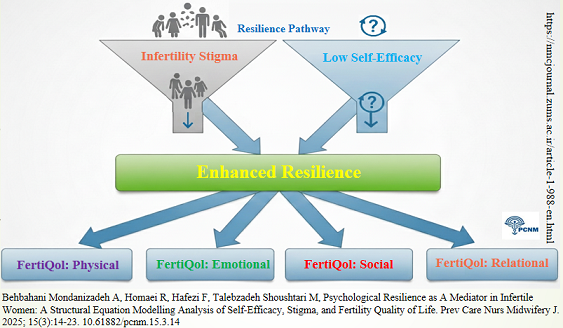
Table 3 details the standardized path coefficients (β) for direct and indirect effects in the proposed and final models. In the proposed model, direct paths from infertility stigma to FertiQoL (β=0.04, P=0.614) and from self-efficacy to FertiQoL (β=0.02, P=0.940) were non-significant and thus removed in the final model. Significant direct paths included infertility stigma to resilience (β=-0.22, P=0.001), self-efficacy to resilience (β=0.24, P=0.001), and resilience to FertiQoL (β=0.25, P=0.001) in the final model. These results indicate that resilience directly influences FertiQoL and is significantly affected by both stigma and self-efficacy, supporting its mediating role.
Discussion
The present study aimed to investigate the complex interplay between infertility self-efficacy, infertility stigma, psychological resilience, and FertiQoL in infertile women, with a specific focus on the mediating role of psychological resilience. Our findings reveal a nuanced model of these relationships, underscoring the central importance of resilience as a critical psychological resource. Contrary to what might be expected, our results indicated that the direct paths from both infertility stigma and infertility self-efficacy to FertiQoL were statistically nonsignificant. This absence of direct effects suggests that the influence of stigma and self-efficacy on quality of life operates exclusively through intermediary psychological processes, rather than exerting unmediated impact. Theoretically, this aligns with a process-oriented view of coping, wherein distal factors (e.g., perceived stigma or confidence in managing infertility) do not automatically translate into well-being outcomes without the engagement of adaptive resources such as resilience. Practically, it implies that clinical efforts aimed solely at reducing stigma or enhancing self-efficacy without concurrently strengthening resilience may yield limited benefits for FertiQoL. This finding provides a more comprehensive understanding of the pathways through which psychological factors influence well-being in the context of infertility.
Our analysis revealed a significant mediating role of psychological resilience in the relationship between infertility stigma and FertiQoL. This suggests that while infertility stigma may not directly diminish a woman's quality of life, its detrimental effect is channeled through its negative impact on psychological resilience. In essence, the social pressure and negative perceptions associated with infertility can erode an individual's ability to cope and adapt, which in turn leads to a decline in their quality of life [33]. However, for those with a high level of resilience, this negative influence is buffered [20]. This finding aligns with previous research highlighting resilience as a protective factor against the psychological harm of social stigma [17, 21]. For example, a study by Zhao et al. [17] in a Chinese population similarly found that psychological resilience significantly mediated the relationship between infertility stigma and social avoidance and distress, indicating its crucial buffering role. Another study on women with breast cancer also demonstrated that resilience mediated the effects of perceived social support on health-related quality of life, further confirming resilience's function as a mediator in coping with health-related social stressors [34].
Furthermore, our study found that psychological resilience also mediates the relationship between infertility self-efficacy and FertiQoL. This is a crucial finding, as it provides a pathway for how a woman's belief in her ability to manage her situation translates into improved well-being. A strong sense of self-efficacy does not directly enhance quality of life, but rather, it does so by strengthening a woman's overall psychological resilience [14]. Confident women are better equipped to face setbacks, manage emotions, and persevere through the challenges of infertility, thereby building their resilience [16]. Although the indirect effect of self-efficacy through resilience was statistically significant, the small effect size suggests that its clinical or practical impact may be limited. This accumulated resilience is what ultimately allows them to maintain a higher quality of life despite their circumstances. This finding is consistent with research that links self-efficacy to adaptive outcomes through the cultivation of resilience [13, 35]. For instance, studies in academic and professional settings have shown that self-efficacy beliefs contribute to resilience, which in turn predicts performance and well-being [35]. Moreover, a meta-analysis on health psychology found that self-efficacy is consistently linked to better coping and positive outcomes, often through mechanisms that are characteristic of resilience, such as emotional regulation and adaptive problem-solving [36]. The present study extends prior work by demonstrating full mediation via resilience in an Iranian clinical sample, where cultural pronatalism amplifies stigma, thus highlighting resilience as a culturally salient mechanism beyond Western contexts.
The results of this study have significant clinical implications for the psychological care of infertile women. Since the direct effects of stigma and self-efficacy on FertiQoL were not significant, interventions should not focus solely on changing external perceptions or boosting self-belief in isolation. Instead, a more holistic approach that prioritizes the enhancement of psychological resilience is warranted.
Therapeutic interventions aimed at building resilience could include structured cognitive-behavioral programs that teach cognitive restructuring to reframe stigmatizing beliefs, guided mindfulness-based stress reduction sessions to enhance present-moment awareness and emotional regulation, and resilience-focused group therapy that incorporates goal-setting, problem-solving skills training, and peer support to foster a sense of mastery and social connection. These interventions can help women develop internal resources to effectively cope with both the social pressures of stigma and the personal challenges of their journey, thereby improving their overall quality of life. By focusing on resilience, clinicians can equip women with a robust psychological framework that applies to all facets of their infertility experience.
This study has some limitations that should be acknowledged. The cross-sectional design does not allow for the establishment of causal relationships. The use of convenience sampling from fertility clinics in a single city (Ahvaz) limits the generalizability of the findings to broader or more diverse populations. Additionally, the use of a convenience sample from a specific city limits the generalizability of the findings to a broader population. Future research should consider longitudinal designs to better understand the temporal relationships between these variables and employ a more diverse sample.
Conclusion
This study has provided a deeper understanding of how infertility self-efficacy and infertility stigma influence the quality of life of infertile women through a psychological resilience mediating model. Our findings suggest that, contrary to direct causal assumptions, the effects of both self-efficacy and stigma on quality of life are not direct but are instead channeled through psychological resilience. In other words, resilience acts as a vital resource, playing a pivotal role in buffering the negative impacts of stigma while enhancing the positive effects of self-efficacy.
Consequently, clinical interventions for infertile women should extend beyond merely reducing stigma or boosting self-belief. Clinicians should instead focus on cultivating resilience as a key skill, empowering women to more effectively cope with the psychological and social challenges of infertility and ultimately improve their FertiQoL. These findings pave the way for the development of more targeted and holistic support programs for this vulnerable population.
Ethical Consideration
The research received approval from the Ethics Committee of Islamic Azad University, Ahvaz Branch (IR.IAU.AHVAZ.REC.1403.445).
Acknowledgments
The authors express their sincere gratitude to all the women who participated in this study for their time, trust, and valuable contributions. We also thank the staff at the fertility clinics in Ahvaz for their cooperation and support during data collection.
Conflict of Interest
The authors declare no conflict of interest.
Funding
This research received no specific grant from any funding agency in the public, commercial, or not-for-profit sectors.
Authors’ Contributions
Behbahani Mondanizadeh A: Conceptualization, Data curation, Investigation, Writing – original draft. Homaei R: Supervision, Methodology, Formal analysis, Writing – review & editing. Hafezi F: Project administration, Validation, Writing – review & editing. Talebzadeh Shoushtari M: Resources, Visualization, Writing – review & editing.
Artificial Intelligence Utilization for Article Writing
No artificial intelligence tools were used in the writing of this manuscript.
Data Availability Statement
The data are available from the corresponding author upon reasonable request.
Knowledge Translation Statement
Audience: Infertility counselors, reproductive health nurses, clinical psychologists, and fertility clinic healthcare teams
Psychological resilience is a critical mediator, not just a correlate, that explains how higher self-efficacy leads to better fertility quality of life in infertile women. Integrate targeted resilience-building interventions, such as cognitive-behavioral techniques and stress management training, into standard counseling and nursing care protocols to mitigate the negative impact of stigma and directly enhance patients' psycho-social well-being.
Audience: Infertility counselors, reproductive health nurses, clinical psychologists, and fertility clinic healthcare teams
Psychological resilience is a critical mediator, not just a correlate, that explains how higher self-efficacy leads to better fertility quality of life in infertile women. Integrate targeted resilience-building interventions, such as cognitive-behavioral techniques and stress management training, into standard counseling and nursing care protocols to mitigate the negative impact of stigma and directly enhance patients' psycho-social well-being.
Full-Text: (66 Views)
Introduction
Infertility, defined as the inability to achieve a pregnancy after one year or more of regular unprotected sexual intercourse, affects a significant number of individuals and couples worldwide, with a global prevalence estimated at approximately 15% [1]. Beyond the biological and medical aspects, involuntary childlessness represents a profound life crisis that carries immense psychological and social consequences [2]. For women, in particular, the experience of infertility is often associated with intense emotional distress, including feelings of grief, loss, anxiety, depression, guilt, and low self-worth [3, 4]. In many societies, the cultural and social pressure to procreate places a heavy burden on women, whose social identity and value are often inextricably linked to motherhood [5]. In Iran, where pronatalist cultural norms strongly emphasize motherhood as a central component of feminine identity, infertility stigma is particularly pronounced, often leading to social exclusion, familial pressure, and internalized shame among affected women [6]. This can lead to social isolation and significant marital strain, as couples navigate the challenges of treatment, financial burdens, and emotional turmoil [7]. The multifaceted distress of infertility highlights the critical need to explore psychological factors that can either exacerbate or mitigate its negative impacts on women's well-being.
The psychosocial burden of infertility is deeply influenced by the concepts of infertility stigma and infertility self-efficacy. Stigma, in the context of infertility, refers to the social disgrace and discrimination that individuals, especially women, face due to their inability to conceive [6]. This stigma can lead to feelings of being "less than" or incomplete and can result in social avoidance and withdrawal [8]. Women internalize negative societal perceptions, which can erode their self-esteem and lead to significant psychological distress [9]. A growing body of research has established a strong link between infertility stigma and a range of negative mental health outcomes, including depression, anxiety, and a decline in overall quality of life [10, 11]. The perceived judgment and exclusion from family and community circles further amplify the emotional pain, creating a cycle of distress that is difficult to break [12].
Conversely, infertility self-efficacy is an individual’s belief in their own capacity to manage the emotional and practical challenges associated with infertility [13]. This concept, rooted in Bandura’s social cognitive theory, is not about the ability to achieve a pregnancy but rather about the confidence to cope with the process of diagnosis, treatment, and the emotional roller coaster that accompanies it [14]. Higher levels of infertility self-efficacy are associated with a more proactive and adaptive approach to coping, greater emotional stability, and an increased likelihood of adhering to treatment plans [15]. Research suggests that women with strong self-efficacy beliefs are better equipped to handle the stress of fertility treatments and maintain a more positive outlook, which can, in turn, buffer them from the negative effects of social stigma and distress [16].
An additional crucial factor in the psychological adaptation to infertility is psychological resilience. Resilience is a dynamic process by which individuals successfully adapt to adversity, stress, or trauma [17]. It is not merely an innate trait but a capacity that can be developed and enhanced through a combination of personal resources and environmental support [18]. In the face of infertility, psychological resilience acts as a protective buffer, allowing women to "bounce back" from setbacks and maintain their psychological equilibrium [19]. Studies have shown that resilient individuals are better able to regulate their emotions, utilize effective coping strategies, and find meaning in their struggles, which helps them navigate the emotional challenges of infertility more effectively [20, 21]. The relationship between resilience and quality of life is well-documented, with resilience serving as a key predictor of positive health outcomes across various chronic health conditions [22].
Ultimately, the goal of fertility treatment and psychological support is to enhance the fertility-related quality of life (FertiQoL), a multidimensional concept encompassing the physical, emotional, social, and relational aspects of a person’s life as affected by infertility [23]. FertiQoL is a critical outcome measure that moves beyond simple clinical success rates to evaluate the overall well-being of the individual [24]. While previous studies have examined the direct relationships between stigma, self-efficacy, and FertiQoL, as well as the independent role of resilience, few have comprehensively investigated the intricate interplay among these variables. Understanding how resilience acts as a mediator - a mechanism through which stigma and self-efficacy influence FertiQoL -is essential for developing targeted and effective psychological interventions.
Objectives
The primary objective was to investigate the mediating role of psychological resilience in the relationship between infertility self-efficacy, infertility stigma, and FertiQoL in infertile women. By elucidating these complex pathways, this research aims to provide valuable insights for clinicians and mental health professionals, highlighting the importance of fostering psychological resilience as a central component of holistic care for women experiencing the challenges of infertility.
Methods
Study Design
This study employed a quantitative, cross-sectional, and correlational research design to examine the relationships among infertility self-efficacy, infertility stigma, psychological resilience, and fertility-related quality of life.
Participants
The target population included all infertile married women with a confirmed diagnosis of infertility in Ahvaz, Iran. A total of 380 women were approached at fertility clinics, of whom 315 (82.9%) agreed to participate and provided informed consent. Of these, 20 questionnaires were excluded due to incompleteness, yielding a final sample of 295 women. The inclusion criteria were a diagnosis of infertility for at least one year, an age between 20 and 45 years, and the ability to read and understand Persian. Exclusion criteria included a history of any other severe physical or psychological illness, or the diagnosis of a male-factor infertility as the sole cause of the couple’s infertility. Additionally, incomplete questionnaires were excluded from the analysis. The study was conducted in full compliance with ethical principles. All participants provided informed consent, and their confidentiality and anonymity were guaranteed throughout the research process.
Sampling Method
A sample of 295 women was recruited for this study during the year 2024 using a convenience sampling method from fertility clinics and treatment centers in Ahvaz. The sample size was determined a priori using power analysis for structural equation modeling (SEM), based on the number of observed and latent variables in the model, with an anticipated effect size of 0.3, α = 0.05, and power = 0.80, recommending a minimum of 200 participants. The final sample of 295 exceeded this threshold, ensuring adequate statistical power.
Data Collection
Data were collected through a self-administered questionnaire package. Participants were approached at fertility clinics and given a brief overview of the study's purpose. Those who agreed to participate were provided with a consent form and the questionnaire booklet. The survey was designed to take approximately 25-30 minutes to complete. A research assistant was available on-site to answer any questions and ensure the proper completion of the questionnaires. The data collection process was managed to ensure a comfortable and private environment for the participants, allowing them to provide honest and thoughtful responses. All completed questionnaires were collected in sealed envelopes to maintain confidentiality.
Variables
The independent variables were infertility stigma and infertility self-efficacy. The mediating variable was psychological resilience, and the dependent variable was fertility-related quality of life (FertiQoL).
Measurement Tools
Fertility-Related Quality of Life (FertiQoL) Scale: The FertiQoL scale, developed by Boivin et al. [25], is a 36-item self-report measure designed to assess the quality of life in individuals with infertility. It consists of two main parts: a core module and a treatment module. The core module, which was used in this study, comprises four subscales: emotional, mind-body, social, and relational. Items are rated on a 5-point Likert scale, ranging from 0 (very low) to 4 (very high). Higher total scores indicate a better quality of life. The reliability of the Persian version of the scale was previously examined by Hekmatzadeh et al. [26], who reported a Cronbach's alpha coefficient of 0.82 and confirmed its construct validity through confirmatory factor analysis. In this study, the Cronbach's alpha was 0.88, indicating high reliability.
Infertility Stigma Scale (ISS): The ISS, developed by Fu et al. [27], is a 27-item measure used to assess the level of perceived infertility stigma. It measures the perceived stigma from different sources, including self, family, and society. The scale uses a 5-point Likert-type scoring format, with higher scores indicating a greater degree of perceived stigma. The scale demonstrated good psychometric properties in previous research. The reliability of the Persian version of the scale was previously investigated by Rajabi et al. [28], who reported a Cronbach's alpha of 0.95 and established its validity via exploratory and confirmatory factor analyses. In the current study, the Persian version of the ISS showed an excellent internal consistency with a Cronbach’s alpha of 0.92.
Infertility Self-Efficacy Scale (ISES): The ISES, developed by Cousineau et al. [29], is a 20-item scale that measures a woman's confidence in her ability to manage the emotional and physical aspects of infertility. The scale uses a 5-point Likert scale ranging from 1 (not at all confident) to 5 (completely confident). Higher scores reflect a higher level of infertility self-efficacy.
Previous studies have established the reliability and validity of this scale. In Iran, the reliability of the questionnaire with Cronbach's alpha was 0.90 [30], and its construct validity was supported through factor analysis. In the present study, the Cronbach’s alpha for the Persian version was 0.85, confirming its reliability.
Connor-Davidson Resilience Scale (CD-RISC): The CD-RISC, developed by Connor and Davidson [31], is a 25-item self-report scale that assesses psychological resilience. Items are rated on a 5-point scale from 0 (not at all true) to 4 (true nearly all the time). A higher total score indicates a greater capacity for resilience. The scale is widely used and has demonstrated strong psychometric properties. According to the psychometric properties of the Farsi version of the resilience scale (CD-RISC) among Iranian athletic adolescent girls by Nooripour et al. [32], the scale has high reliability and acceptable construct validity. In this study, the Cronbach’s alpha for the Persian version of the CD-RISC was 0.90, which is indicative of excellent internal consistency.
Data Analysis
Statistical analyses were performed using SPSS version 26 and AMOS version 24. Descriptive statistics were used to summarize participant characteristics and the study variables. A correlational analysis was conducted to examine the relationships among the variables. To test the mediating role of psychological resilience, we used Structural Equation Modeling (SEM). Maximum likelihood estimation was employed. Missing data were minimal (<1%) and handled using full information maximum likelihood (FIML). Normality was assessed via skewness and kurtosis values (all within ±2), indicating no severe violations. The fit of the proposed model was evaluated using several indices, including Chi-square/degrees of freedom (χ²/df < 3 acceptable), the Comparative Fit Index (CFI > 0.90 acceptable, > 0.95 excellent), the Root Mean Square Error of Approximation (RMSEA < 0.08 acceptable, < 0.06 good), and the Standardized Root Mean Square Residual (SRMR < 0.08).
The significance of the direct and indirect paths was determined using the bootstrapping method with 5,000 resamples.
Results
The research involved 295 married women diagnosed with infertility, selected from fertility clinics in Ahvaz (Iran). The participants had an average age of 34.46 years (SD=6.41). Concerning education, 75 women (25.4%) had a high school diploma or less, while 220 (74.6%) possessed a university degree. Regarding employment, 198 participants (67.1%) were homemakers, and 97 (32.9%) were in paid employment. The average duration of marriage was 8.45 years (SD=3.67).
Table 1 presents the mean, standard deviation, skewness, kurtosis, and correlations among study variables. All correlations are based on N=295. Infertility stigma had a mean of 76.07 (SD=24.93), with slight negative skewness (-0.73). Infertility self-efficacy averaged 18.81 (SD=7.69, skewness=-1.16), FertiQoL 39.63 (SD=19.92, skewness=-0.48), and resilience 44.62 (SD=19.71, skewness=-0.47). Kurtosis values indicated near-normal distributions. The absolute values of skewness (< 2) and kurtosis (< 0.5) indicated that the data did not severely deviate from univariate normality, supporting the use of maximum likelihood estimation. Significant correlations were observed: infertility stigma negatively correlated with self-efficacy (r=-0.37, P<0.01), FertiQoL (r=-0.27, P<0.01), and resilience (r=-0.34, P<0.01). Self-efficacy positively correlated with FertiQoL (r=0.24, P<0.01) and resilience (r=0.39, P<0.01), and resilience positively correlated with FertiQoL (r=0.38, P<0.01). These findings confirm expected relationships among variables.
Infertility, defined as the inability to achieve a pregnancy after one year or more of regular unprotected sexual intercourse, affects a significant number of individuals and couples worldwide, with a global prevalence estimated at approximately 15% [1]. Beyond the biological and medical aspects, involuntary childlessness represents a profound life crisis that carries immense psychological and social consequences [2]. For women, in particular, the experience of infertility is often associated with intense emotional distress, including feelings of grief, loss, anxiety, depression, guilt, and low self-worth [3, 4]. In many societies, the cultural and social pressure to procreate places a heavy burden on women, whose social identity and value are often inextricably linked to motherhood [5]. In Iran, where pronatalist cultural norms strongly emphasize motherhood as a central component of feminine identity, infertility stigma is particularly pronounced, often leading to social exclusion, familial pressure, and internalized shame among affected women [6]. This can lead to social isolation and significant marital strain, as couples navigate the challenges of treatment, financial burdens, and emotional turmoil [7]. The multifaceted distress of infertility highlights the critical need to explore psychological factors that can either exacerbate or mitigate its negative impacts on women's well-being.
The psychosocial burden of infertility is deeply influenced by the concepts of infertility stigma and infertility self-efficacy. Stigma, in the context of infertility, refers to the social disgrace and discrimination that individuals, especially women, face due to their inability to conceive [6]. This stigma can lead to feelings of being "less than" or incomplete and can result in social avoidance and withdrawal [8]. Women internalize negative societal perceptions, which can erode their self-esteem and lead to significant psychological distress [9]. A growing body of research has established a strong link between infertility stigma and a range of negative mental health outcomes, including depression, anxiety, and a decline in overall quality of life [10, 11]. The perceived judgment and exclusion from family and community circles further amplify the emotional pain, creating a cycle of distress that is difficult to break [12].
Conversely, infertility self-efficacy is an individual’s belief in their own capacity to manage the emotional and practical challenges associated with infertility [13]. This concept, rooted in Bandura’s social cognitive theory, is not about the ability to achieve a pregnancy but rather about the confidence to cope with the process of diagnosis, treatment, and the emotional roller coaster that accompanies it [14]. Higher levels of infertility self-efficacy are associated with a more proactive and adaptive approach to coping, greater emotional stability, and an increased likelihood of adhering to treatment plans [15]. Research suggests that women with strong self-efficacy beliefs are better equipped to handle the stress of fertility treatments and maintain a more positive outlook, which can, in turn, buffer them from the negative effects of social stigma and distress [16].
An additional crucial factor in the psychological adaptation to infertility is psychological resilience. Resilience is a dynamic process by which individuals successfully adapt to adversity, stress, or trauma [17]. It is not merely an innate trait but a capacity that can be developed and enhanced through a combination of personal resources and environmental support [18]. In the face of infertility, psychological resilience acts as a protective buffer, allowing women to "bounce back" from setbacks and maintain their psychological equilibrium [19]. Studies have shown that resilient individuals are better able to regulate their emotions, utilize effective coping strategies, and find meaning in their struggles, which helps them navigate the emotional challenges of infertility more effectively [20, 21]. The relationship between resilience and quality of life is well-documented, with resilience serving as a key predictor of positive health outcomes across various chronic health conditions [22].
Ultimately, the goal of fertility treatment and psychological support is to enhance the fertility-related quality of life (FertiQoL), a multidimensional concept encompassing the physical, emotional, social, and relational aspects of a person’s life as affected by infertility [23]. FertiQoL is a critical outcome measure that moves beyond simple clinical success rates to evaluate the overall well-being of the individual [24]. While previous studies have examined the direct relationships between stigma, self-efficacy, and FertiQoL, as well as the independent role of resilience, few have comprehensively investigated the intricate interplay among these variables. Understanding how resilience acts as a mediator - a mechanism through which stigma and self-efficacy influence FertiQoL -is essential for developing targeted and effective psychological interventions.
Objectives
The primary objective was to investigate the mediating role of psychological resilience in the relationship between infertility self-efficacy, infertility stigma, and FertiQoL in infertile women. By elucidating these complex pathways, this research aims to provide valuable insights for clinicians and mental health professionals, highlighting the importance of fostering psychological resilience as a central component of holistic care for women experiencing the challenges of infertility.
Methods
Study Design
This study employed a quantitative, cross-sectional, and correlational research design to examine the relationships among infertility self-efficacy, infertility stigma, psychological resilience, and fertility-related quality of life.
Participants
The target population included all infertile married women with a confirmed diagnosis of infertility in Ahvaz, Iran. A total of 380 women were approached at fertility clinics, of whom 315 (82.9%) agreed to participate and provided informed consent. Of these, 20 questionnaires were excluded due to incompleteness, yielding a final sample of 295 women. The inclusion criteria were a diagnosis of infertility for at least one year, an age between 20 and 45 years, and the ability to read and understand Persian. Exclusion criteria included a history of any other severe physical or psychological illness, or the diagnosis of a male-factor infertility as the sole cause of the couple’s infertility. Additionally, incomplete questionnaires were excluded from the analysis. The study was conducted in full compliance with ethical principles. All participants provided informed consent, and their confidentiality and anonymity were guaranteed throughout the research process.
Sampling Method
A sample of 295 women was recruited for this study during the year 2024 using a convenience sampling method from fertility clinics and treatment centers in Ahvaz. The sample size was determined a priori using power analysis for structural equation modeling (SEM), based on the number of observed and latent variables in the model, with an anticipated effect size of 0.3, α = 0.05, and power = 0.80, recommending a minimum of 200 participants. The final sample of 295 exceeded this threshold, ensuring adequate statistical power.
Data Collection
Data were collected through a self-administered questionnaire package. Participants were approached at fertility clinics and given a brief overview of the study's purpose. Those who agreed to participate were provided with a consent form and the questionnaire booklet. The survey was designed to take approximately 25-30 minutes to complete. A research assistant was available on-site to answer any questions and ensure the proper completion of the questionnaires. The data collection process was managed to ensure a comfortable and private environment for the participants, allowing them to provide honest and thoughtful responses. All completed questionnaires were collected in sealed envelopes to maintain confidentiality.
Variables
The independent variables were infertility stigma and infertility self-efficacy. The mediating variable was psychological resilience, and the dependent variable was fertility-related quality of life (FertiQoL).
Measurement Tools
Fertility-Related Quality of Life (FertiQoL) Scale: The FertiQoL scale, developed by Boivin et al. [25], is a 36-item self-report measure designed to assess the quality of life in individuals with infertility. It consists of two main parts: a core module and a treatment module. The core module, which was used in this study, comprises four subscales: emotional, mind-body, social, and relational. Items are rated on a 5-point Likert scale, ranging from 0 (very low) to 4 (very high). Higher total scores indicate a better quality of life. The reliability of the Persian version of the scale was previously examined by Hekmatzadeh et al. [26], who reported a Cronbach's alpha coefficient of 0.82 and confirmed its construct validity through confirmatory factor analysis. In this study, the Cronbach's alpha was 0.88, indicating high reliability.
Infertility Stigma Scale (ISS): The ISS, developed by Fu et al. [27], is a 27-item measure used to assess the level of perceived infertility stigma. It measures the perceived stigma from different sources, including self, family, and society. The scale uses a 5-point Likert-type scoring format, with higher scores indicating a greater degree of perceived stigma. The scale demonstrated good psychometric properties in previous research. The reliability of the Persian version of the scale was previously investigated by Rajabi et al. [28], who reported a Cronbach's alpha of 0.95 and established its validity via exploratory and confirmatory factor analyses. In the current study, the Persian version of the ISS showed an excellent internal consistency with a Cronbach’s alpha of 0.92.
Infertility Self-Efficacy Scale (ISES): The ISES, developed by Cousineau et al. [29], is a 20-item scale that measures a woman's confidence in her ability to manage the emotional and physical aspects of infertility. The scale uses a 5-point Likert scale ranging from 1 (not at all confident) to 5 (completely confident). Higher scores reflect a higher level of infertility self-efficacy.
Previous studies have established the reliability and validity of this scale. In Iran, the reliability of the questionnaire with Cronbach's alpha was 0.90 [30], and its construct validity was supported through factor analysis. In the present study, the Cronbach’s alpha for the Persian version was 0.85, confirming its reliability.
Connor-Davidson Resilience Scale (CD-RISC): The CD-RISC, developed by Connor and Davidson [31], is a 25-item self-report scale that assesses psychological resilience. Items are rated on a 5-point scale from 0 (not at all true) to 4 (true nearly all the time). A higher total score indicates a greater capacity for resilience. The scale is widely used and has demonstrated strong psychometric properties. According to the psychometric properties of the Farsi version of the resilience scale (CD-RISC) among Iranian athletic adolescent girls by Nooripour et al. [32], the scale has high reliability and acceptable construct validity. In this study, the Cronbach’s alpha for the Persian version of the CD-RISC was 0.90, which is indicative of excellent internal consistency.
Data Analysis
Statistical analyses were performed using SPSS version 26 and AMOS version 24. Descriptive statistics were used to summarize participant characteristics and the study variables. A correlational analysis was conducted to examine the relationships among the variables. To test the mediating role of psychological resilience, we used Structural Equation Modeling (SEM). Maximum likelihood estimation was employed. Missing data were minimal (<1%) and handled using full information maximum likelihood (FIML). Normality was assessed via skewness and kurtosis values (all within ±2), indicating no severe violations. The fit of the proposed model was evaluated using several indices, including Chi-square/degrees of freedom (χ²/df < 3 acceptable), the Comparative Fit Index (CFI > 0.90 acceptable, > 0.95 excellent), the Root Mean Square Error of Approximation (RMSEA < 0.08 acceptable, < 0.06 good), and the Standardized Root Mean Square Residual (SRMR < 0.08).
The significance of the direct and indirect paths was determined using the bootstrapping method with 5,000 resamples.
Results
The research involved 295 married women diagnosed with infertility, selected from fertility clinics in Ahvaz (Iran). The participants had an average age of 34.46 years (SD=6.41). Concerning education, 75 women (25.4%) had a high school diploma or less, while 220 (74.6%) possessed a university degree. Regarding employment, 198 participants (67.1%) were homemakers, and 97 (32.9%) were in paid employment. The average duration of marriage was 8.45 years (SD=3.67).
Table 1 presents the mean, standard deviation, skewness, kurtosis, and correlations among study variables. All correlations are based on N=295. Infertility stigma had a mean of 76.07 (SD=24.93), with slight negative skewness (-0.73). Infertility self-efficacy averaged 18.81 (SD=7.69, skewness=-1.16), FertiQoL 39.63 (SD=19.92, skewness=-0.48), and resilience 44.62 (SD=19.71, skewness=-0.47). Kurtosis values indicated near-normal distributions. The absolute values of skewness (< 2) and kurtosis (< 0.5) indicated that the data did not severely deviate from univariate normality, supporting the use of maximum likelihood estimation. Significant correlations were observed: infertility stigma negatively correlated with self-efficacy (r=-0.37, P<0.01), FertiQoL (r=-0.27, P<0.01), and resilience (r=-0.34, P<0.01). Self-efficacy positively correlated with FertiQoL (r=0.24, P<0.01) and resilience (r=0.39, P<0.01), and resilience positively correlated with FertiQoL (r=0.38, P<0.01). These findings confirm expected relationships among variables.
Table 1. Descriptive Statistics and Correlations for Study Variables
| Variable | Mean (SD) | Skewness | Kurtosis | 1 | 2 | 3 | 4 |
| 1. Infertility stigma | 76.07 (24.93) | -0.73 | 0.01 | 1 | |||
| 2. Infertility self-efficacy | 18.81 (7.69) | -1.16 | 0.01 | -0.37** | 1 | ||
| 3. FertiQoL | 39.63 (19.92) | -0.48 | 0.50 | -0.27** | 0.24** | 1 | |
| 4. Resilience | 44.62 (19.71) | -0.47 | 0.25 | -0.34** | 0.39** | 0.38** | 1 |
**p <0 .01
Table 2 summarizes the fit indices for the proposed and final models (χ²/df=1.66, CFI=0.93, TFI=0.92, IFI=0.93, GFI=0.88, RMSEA=0.09, SRMR=0.07). The proposed model showed an acceptable fit to the data according to some indices (e.g., CFI, TLI), but a mediocre fit according to others (e.g., RMSEA). The final model, refined by removing non-significant paths, demonstrated an improved fit (χ²/df=1.60, CFI=0.94, TFI=0.93, IFI=0.94, GFI=0.90, RMSEA=0.04, SRMR=0.05). All indices met acceptable thresholds (e.g., RMSEA<0.08, CFI>0.90), confirming the robustness of the final model.
This suggests that the hypothesized relationships, particularly the mediating role of resilience, were well-supported by the data. Figure 1 illustrates the proposed model, which hypothesizes direct and indirect relationships among infertility stigma, self-efficacy, resilience, and FertiQoL.
Table 2. Model Fit Indices for the Final Model
This suggests that the hypothesized relationships, particularly the mediating role of resilience, were well-supported by the data. Figure 1 illustrates the proposed model, which hypothesizes direct and indirect relationships among infertility stigma, self-efficacy, resilience, and FertiQoL.
Table 2. Model Fit Indices for the Final Model
| Fit Index | Final Model | Acceptable Threshold |
| χ²/df | 1.60 | < 3 |
| CFI | 0.94 | > 0.90 |
| TLI | 0.93 | > 0.90 |
| IFI | 0.94 | > 0.90 |
| GFI | 0.90 | > 0.90 |
| RMSEA | 0.04 | < 0.08 |
| SRMR | 0.05 | < 0.08 |
Table 3 details the standardized path coefficients (β) for direct and indirect effects in the proposed and final models. In the proposed model, direct paths from infertility stigma to FertiQoL (β=0.04, P=0.614) and from self-efficacy to FertiQoL (β=0.02, P=0.940) were non-significant and thus removed in the final model. Significant direct paths included infertility stigma to resilience (β=-0.22, P=0.001), self-efficacy to resilience (β=0.24, P=0.001), and resilience to FertiQoL (β=0.25, P=0.001) in the final model. These results indicate that resilience directly influences FertiQoL and is significantly affected by both stigma and self-efficacy, supporting its mediating role.
Table 3. Standardized Path Coefficients (β) for Direct Effects in the Proposed and Final Models
| Path | Proposed Model | Final Model | ||
| β | *p* | β | *p* | |
| Infertility stigma → FertiQoL | 0.04 | 0.614 | — | — |
| Infertility self-efficacy → FertiQoL | 0.02 | 0.940 | — | — |
| Infertility stigma → Resilience | -0.19 | 0.001 | -0.22 | 0.001 |
| Infertility self-efficacy → Resilience | 0.25 | 0.001 | 0.24 | 0.001 |
| Resilience → FertiQoL | 0.26 | 0.001 | 0.25 | 0.001 |
Table 4 presents the standardized indirect effects (β) and their 95% bias-corrected bootstrap confidence intervals (BC CI) in the final model. Psychological resilience significantly mediated the relationship between infertility stigma and FertiQoL (β=-0.06, 95% BC CI=[-0.10, -0.03], P=0.001), indicating that higher stigma reduces resilience, which in turn lowers FertiQoL. Similarly, resilience mediated the relationship between self-efficacy and FertiQoL (β=0.01, 95% BC CI=[0.004, 0.02], P=0.001), suggesting that greater self-efficacy enhances resilience, thereby improving FertiQoL. Neither confidence interval contained zero, confirming the statistical significance of the indirect effects. Figure 2 depicts the final model, refined to include only significant paths.
Table 4. Standardized Indirect Effects via Resilience in the Final Model
| Path | β | 95% BC CI | p |
| Infertility stigma → Resilience → FertiQoL | -0.06 | [-0.10, -0.03] | < 0.001 |
| Infertility self-efficacy → Resilience → FertiQoL | 0.01 | [0.004, 0.02] | < 0.001 |
Discussion
The present study aimed to investigate the complex interplay between infertility self-efficacy, infertility stigma, psychological resilience, and FertiQoL in infertile women, with a specific focus on the mediating role of psychological resilience. Our findings reveal a nuanced model of these relationships, underscoring the central importance of resilience as a critical psychological resource. Contrary to what might be expected, our results indicated that the direct paths from both infertility stigma and infertility self-efficacy to FertiQoL were statistically nonsignificant. This absence of direct effects suggests that the influence of stigma and self-efficacy on quality of life operates exclusively through intermediary psychological processes, rather than exerting unmediated impact. Theoretically, this aligns with a process-oriented view of coping, wherein distal factors (e.g., perceived stigma or confidence in managing infertility) do not automatically translate into well-being outcomes without the engagement of adaptive resources such as resilience. Practically, it implies that clinical efforts aimed solely at reducing stigma or enhancing self-efficacy without concurrently strengthening resilience may yield limited benefits for FertiQoL. This finding provides a more comprehensive understanding of the pathways through which psychological factors influence well-being in the context of infertility.
Our analysis revealed a significant mediating role of psychological resilience in the relationship between infertility stigma and FertiQoL. This suggests that while infertility stigma may not directly diminish a woman's quality of life, its detrimental effect is channeled through its negative impact on psychological resilience. In essence, the social pressure and negative perceptions associated with infertility can erode an individual's ability to cope and adapt, which in turn leads to a decline in their quality of life [33]. However, for those with a high level of resilience, this negative influence is buffered [20]. This finding aligns with previous research highlighting resilience as a protective factor against the psychological harm of social stigma [17, 21]. For example, a study by Zhao et al. [17] in a Chinese population similarly found that psychological resilience significantly mediated the relationship between infertility stigma and social avoidance and distress, indicating its crucial buffering role. Another study on women with breast cancer also demonstrated that resilience mediated the effects of perceived social support on health-related quality of life, further confirming resilience's function as a mediator in coping with health-related social stressors [34].
Furthermore, our study found that psychological resilience also mediates the relationship between infertility self-efficacy and FertiQoL. This is a crucial finding, as it provides a pathway for how a woman's belief in her ability to manage her situation translates into improved well-being. A strong sense of self-efficacy does not directly enhance quality of life, but rather, it does so by strengthening a woman's overall psychological resilience [14]. Confident women are better equipped to face setbacks, manage emotions, and persevere through the challenges of infertility, thereby building their resilience [16]. Although the indirect effect of self-efficacy through resilience was statistically significant, the small effect size suggests that its clinical or practical impact may be limited. This accumulated resilience is what ultimately allows them to maintain a higher quality of life despite their circumstances. This finding is consistent with research that links self-efficacy to adaptive outcomes through the cultivation of resilience [13, 35]. For instance, studies in academic and professional settings have shown that self-efficacy beliefs contribute to resilience, which in turn predicts performance and well-being [35]. Moreover, a meta-analysis on health psychology found that self-efficacy is consistently linked to better coping and positive outcomes, often through mechanisms that are characteristic of resilience, such as emotional regulation and adaptive problem-solving [36]. The present study extends prior work by demonstrating full mediation via resilience in an Iranian clinical sample, where cultural pronatalism amplifies stigma, thus highlighting resilience as a culturally salient mechanism beyond Western contexts.
The results of this study have significant clinical implications for the psychological care of infertile women. Since the direct effects of stigma and self-efficacy on FertiQoL were not significant, interventions should not focus solely on changing external perceptions or boosting self-belief in isolation. Instead, a more holistic approach that prioritizes the enhancement of psychological resilience is warranted.
Therapeutic interventions aimed at building resilience could include structured cognitive-behavioral programs that teach cognitive restructuring to reframe stigmatizing beliefs, guided mindfulness-based stress reduction sessions to enhance present-moment awareness and emotional regulation, and resilience-focused group therapy that incorporates goal-setting, problem-solving skills training, and peer support to foster a sense of mastery and social connection. These interventions can help women develop internal resources to effectively cope with both the social pressures of stigma and the personal challenges of their journey, thereby improving their overall quality of life. By focusing on resilience, clinicians can equip women with a robust psychological framework that applies to all facets of their infertility experience.
This study has some limitations that should be acknowledged. The cross-sectional design does not allow for the establishment of causal relationships. The use of convenience sampling from fertility clinics in a single city (Ahvaz) limits the generalizability of the findings to broader or more diverse populations. Additionally, the use of a convenience sample from a specific city limits the generalizability of the findings to a broader population. Future research should consider longitudinal designs to better understand the temporal relationships between these variables and employ a more diverse sample.
Conclusion
This study has provided a deeper understanding of how infertility self-efficacy and infertility stigma influence the quality of life of infertile women through a psychological resilience mediating model. Our findings suggest that, contrary to direct causal assumptions, the effects of both self-efficacy and stigma on quality of life are not direct but are instead channeled through psychological resilience. In other words, resilience acts as a vital resource, playing a pivotal role in buffering the negative impacts of stigma while enhancing the positive effects of self-efficacy.
Consequently, clinical interventions for infertile women should extend beyond merely reducing stigma or boosting self-belief. Clinicians should instead focus on cultivating resilience as a key skill, empowering women to more effectively cope with the psychological and social challenges of infertility and ultimately improve their FertiQoL. These findings pave the way for the development of more targeted and holistic support programs for this vulnerable population.
Ethical Consideration
The research received approval from the Ethics Committee of Islamic Azad University, Ahvaz Branch (IR.IAU.AHVAZ.REC.1403.445).
Acknowledgments
The authors express their sincere gratitude to all the women who participated in this study for their time, trust, and valuable contributions. We also thank the staff at the fertility clinics in Ahvaz for their cooperation and support during data collection.
Conflict of Interest
The authors declare no conflict of interest.
Funding
This research received no specific grant from any funding agency in the public, commercial, or not-for-profit sectors.
Authors’ Contributions
Behbahani Mondanizadeh A: Conceptualization, Data curation, Investigation, Writing – original draft. Homaei R: Supervision, Methodology, Formal analysis, Writing – review & editing. Hafezi F: Project administration, Validation, Writing – review & editing. Talebzadeh Shoushtari M: Resources, Visualization, Writing – review & editing.
Artificial Intelligence Utilization for Article Writing
No artificial intelligence tools were used in the writing of this manuscript.
Data Availability Statement
The data are available from the corresponding author upon reasonable request.
Type of Study: Orginal research |
Subject:
Midwifery
References
1. Huang B, Wang Z, Kong Y, Jin M, Ma L. Global, regional and national burden of male infertility in 204 countries and territories between 1990 and 2019: an analysis of global burden of disease study. BMC Public Health. 2023;23(1):2195. doi: 10.1186/s12889-023-16793-3. [https://doi.org/10.1186/s12889-023-16793-3] [PMID]
2. Jafar zadeh-Kenarsari F, Ahmad-Amraji L, Abouzari-Gazafroodi K. Evaluation of infertility-related stress and its associated factors in infertile clients: a cross-sectional study. Preventive Care in Nursing and Midwifery Journal. 2021;11(1):1-10. https://nmcjournal.zums.ac.ir/article-1-705-en.html [https://doi.org/10.52547/pcnm.11.1.1]
3. Jafarzadeh-Kenarsari F, Ahmad-Amraji L, Abouzari-Gazafroodi K. Evaluation of infertility-related stress and its associated factors in infertile clients: a cross-sectional study. Preventive Care in Nursing and Midwifery Journal. 2021;11(1):1-11. [https://doi.org/10.52547/pcnm.11.1.1]
4. Zayed AA, El-Hadidy MA. Sexual satisfaction and self-esteem in women with primary infertility. Middle East Fertility Society Journal. 2020;25(1):1-8. [https://doi.org/10.1186/s43043-020-00024-5]
5. Delgado-Herrera M, Aceves-Gómez AC, Reyes-Aguilar A. Relationship between gender roles, motherhood beliefs and mental health. PLOS ONE. 2024;19(3):e0298750. [https://doi.org/10.1371/journal.pone.0298750] [PMID]
6. Taebi M, Kariman N, Montazeri A, Alavi Majd H. Infertility stigma: a qualitative study on feelings and experiences of infertile women. International Journal of Fertility and Sterility. 2021;15(3):189-196. [https://doi.org/10.22074/ijfs.2021.139093.1039]
7. Hasanpoor-Azghady SB, et al. The Social Construction of Infertility Among Iranian Infertile Women: A Qualitative Study. Journal of Reproduction and Infertility. 2019;20(3):178-190. [https://pubmed.ncbi.nlm.nih.gov/31423421/]
8. Valikhani M, Ghovati A, Kashani-lotfabadi M, Mojarad F, Dehghani J, Hashemi BM. effect of group teaching of emotional intelligence components of Salovey and Mayer (1990) model on stigma in cancer patients. Preventive Care in Nursing and Midwifery Journal. 2022;12(1):1-10. [https://nmcjournal.zums.ac.ir/article-1-749-en.html]
9. Simionescu G, Doroftei B, Maftei R, Obreja BE, Anton E, Grab D, et al. The complex relationship between infertility and psychological distress (Review). Experimental and Therapeutic Medicine. 2021;21(4):306. [https://doi.org/10.3892/etm.2021.9737] [PMID]
10. Hwang YJ, Lee J, Hwang J, Sim H, Kim N, Kim TS. Psychiatric Considerations of Infertility. Psychiatry Investigation. 2024;21(11):1175-82. [https://doi.org/10.30773/pi.2024.0239] [PMID]
11. Bagade T, Mersha AG, Majeed T. The social determinants of mental health disorders among women with infertility: a systematic review. BMC Women's Health. 2023;23(1):668. [https://doi.org/10.1186/s12905-023-02828-9] [PMID]
12. Yokota R, Okuhara T, Okada H, Goto E, Sakakibara K, Kiuchi T. Association between stigma and anxiety, depression, and psychological distress among Japanese women undergoing infertility treatment. Healthcare. 2022;10(7):1300. [https://doi.org/10.3390/healthcare10071300] [PMID]
13. Mirzaasgari H, Momeni F, Pourshahbaz A, Keshavarzi F, Hatami M. The relationship between coping strategies and infertility self-efficacy with pregnancy outcomes of women undergoing in vitro fertilization: a prospective cohort study. International Journal of Reproductive BioMedicine. 2022;20(7):539-548. [https://doi.org/10.18502/ijrm.v20i7.11556] [PMID]
14. Vatankhah R, Baljani E, Rezaee Moradali M, Aslan A. The effect of promoting social competence based on Flanner model on clinical performance self-efficacy of nursing students: A quasi-experimental study. Preventive Care in Nursing and Midwifery Journal. 2023;13(2):30-39. [https://nmcjournal.zums.ac.ir/article-1-777-en.html]
15. Andrei F, Salvatori P, Cipriani L, Damiano G, Dirodi M, Trombini E, et al. Self-efficacy, coping strategies and quality of life in women and men requiring assisted reproductive technology treatments for anatomical or non-anatomical infertility. European Journal of Obstetrics and Gynecology and Reproductive Biology. 2021;264:241-6. [https://doi.org/10.1016/j.ejogrb.2021.07.027] [PMID]
16. Jafari H, Seraj Shirvan F, Latifnejad Roudsari R. The relationship between self-efficacy and psychological distress among infertile women. Journal of Midwifery and Reproductive Health. 2023;11(2):3744-3750. [https://doi.org/10.22038/jmrh.2023.63739.1848]
17. Zhao Q, Huangfu C, Li J, Liu H, Tang N. Psychological resilience as the mediating factor between stigma and social avoidance and distress of infertility patients in China: a structural equation modeling analysis. Psychology Research and Behavior Management. 2022;15:391-403. [https://doi.org/10.2147/PRBM.S354803] [PMID]
18. Liu K, Dou S, Qin W, Zhao D, Zheng W, Wang D, et al. Association between quality of life and resilience in infertile patients: a systematic review. Frontiers in Public Health. 2024;12:1345899. [https://doi.org/10.3389/fpubh.2024.1345899] [PMID]
19. Moradi S, Mohammadpour S, Ahi Q. The role of psychological distress and resilience in quality of life in infertility in infertile women. Research in Clinical Psychology and Counseling. 2021;11(1):81-100. [https://doi.org/10.22067/tpccp.2021.67305.0]
20. Jiang Z, Hou S, Zhang Y, Zong L. The mediating and moderating effects of resilience on the relationship between sleep quality and psychological distress in Chinese women with infertility. BMC Women's Health. 2024;24(1):192. [https://doi.org/10.1186/s12905-024-03018-x] [PMID]
21. Zhang Z, Liu M, Zhao F, Chen H, Chen X. Fertility stress, psychological resilience, and depressive symptoms in women with polycystic ovary syndrome. Cureus. 2024;16(9):e70352. [https://doi.org/10.7759/cureus.70352]
22. Li Y, Zhang X, Shi M, Guo S, Wang L. Resilience acts as a moderator in the relationship between infertility-related stress and fertility quality of life among women with infertility: a cross-sectional study. Health and Quality of Life Outcomes. 2019;17(1):38. [https://doi.org/10.1186/s12955-019-1099-8] [PMID]
23. Maroufizadeh S, Ghaheri A, Amini P, Samani RO. Psychometric properties of the fertility quality of life instrument in infertile Iranian women. International Journal of Fertility and Sterility. 2017;10(4):371-379. [https://doi.org/10.22074/ijfs.2016.4696]
24. Dipankar SP. Fertility quality of life, a worldwide accepted tool to measure fertility quality of life. Journal of Human Reproductive Sciences. 2024;17(1):66-72. [https://doi.org/10.4103/jhrs.jhrs_7_24] [PMID]
25. Boivin J, Takefman J, Braverman A. The fertility quality of life (FertiQoL) tool: development and general psychometric properties. Human Reproduction. 2011;26(8):2084-2091. [https://doi.org/10.1093/humrep/der171] [PMID]
26. Hekmatzadeh SF, Bazarganipour F, Hosseini N, Allan H, Jalali S, Abbasian Z, et al. Psychometrics properties of the Iranian version of fertility quality of life tool: a cross-sectional study. International Journal of Reproductive BioMedicine. 2018;16(3):191-198. [https://doi.org/10.29252/ijrm.16.3.191] [PMID]
27. Fu B, Qin N, Cheng L, Tang G, Cao Y, Yan C, et al. Development and validation of an infertility stigma scale for Chinese women. Journal of Psychosomatic Research. 2015;79(1):69-75. [https://doi.org/10.1016/j.jpsychores.2014.11.014] [PMID]
28. Rajabi G, Amiri Asl J, Jelodari A. Assessing reliability and validity of the Persian version of infertility stigma scale (ISS) in infertile women. Avicenna Journal of Nursing and Midwifery Care. 2017;25(4):104-113. [https://doi.org/10.30699/sjhnmf.25.4.104]
29. Cousineau TM, Green TC, Corsini EA, Barnard T, Seibring AR, Domar AD. Development and validation of the infertility self-efficacy scale. Fertility and Sterility. 2006;85(6):1684-1696. [https://doi.org/10.1016/j.fertnstert.2005.10.077] [PMID]
30. Ebrahimifar M, Hosseinian S, Safariyan Tosi MR, Abedi MR. Psychometric properties of the Persian version of the infertility self-efficacy scale. Research in Medicine. 2018;42(2):100-105. [https://pejouhesh.sbmu.ac.ir/article-1-1817-en.html]
31. Connor KM, Davidson JR. Development of a new resilience scale: the Connor-Davidson Resilience Scale (CD-RISC). Depression and Anxiety. 2003;18(2):76-82. [https://doi.org/10.1002/da.10113] [PMID]
32. Nooripour R, Hoseinian S, Vakili Y, Ghanbari N, Matacotta JJ, Mozaffari N, et al. Psychometric properties of Farsi version of the resilience scale (CD-RISC) and its role in predicting aggression among Iranian athletic adolescent girls. BMC Psychology. 2022;10(1):142. [https://doi.org/10.1186/s40359-022-00852-2] [PMID]
33. Luo D, Zhouchen YB, Li L, Jiang YL, Liu Y, Redding SR, et al. The stigma and infertility-related stress of Chinese infertile women: a cross-sectional study. Healthcare. 2024;12(11):1053. [https://doi.org/10.3390/healthcare12111053] [PMID]
34. Zhou K, Ning F, Wang X, Wang W, Han D, Li X. Perceived social support and coping style as mediators between resilience and health-related quality of life in women newly diagnosed with breast cancer: a cross-sectional study. BMC Women's Health. 2022;22(1):198. [https://doi.org/10.1186/s12905-022-01783-1] [PMID]
35. Njogu A, Kaburu F, Njogu J, Barasa E, Mutisya A, Luo Y. The effect of self-compassion-based programs for infertility (SCPI) on anxiety and depression among women pursuing fertility treatment: a three-armed, randomised controlled trial. Journal of Assisted Reproduction and Genetics. 2023;40(4):911-27. [https://doi.org/10.1007/s10815-023-02771-6] [PMID]
36. Stover A, Shulkin J, Lac A, Rapp T. A meta-analysis of cognitive reappraisal and personal resilience. Clinical Psychology Review. 2024;110:102428. [https://doi.org/10.1016/j.cpr.2024.102428] [PMID]
Send email to the article author
| Rights and permissions | |
 |
This work is licensed under a Creative Commons Attribution-NonCommercial 4.0 International License. |