
Preventive Care in Nursing and Midwifery Journal

Volume 16, Issue 1 (1-2026)
Prev Care Nurs Midwifery J 2026, 16(1): 56-63 |
Back to browse issues page

Ethics code: KUMS .REC.1401.489


Download citation:
BibTeX | RIS | EndNote | Medlars | ProCite | Reference Manager | RefWorks
Send citation to:


BibTeX | RIS | EndNote | Medlars | ProCite | Reference Manager | RefWorks
Send citation to:
Rostamnia L, Ghanbari V, Cheraghbeigy N, Veisimankali M, Mozaffari M. The Impact of Nursing Students as Case-finders on the Reporting Rate of Healthcare-Associated Infections: A Quasi-Experimental Study. Prev Care Nurs Midwifery J 2026; 16 (1) :56-63
URL: http://nmcjournal.zums.ac.ir/article-1-995-en.html
URL: http://nmcjournal.zums.ac.ir/article-1-995-en.html
Leili Rostamnia 

 , Vahid Ghanbari * , Nesa Cheraghbeigy , Mohmmadjavad Veisimankali , Mandana Mozaffari
, Vahid Ghanbari * , Nesa Cheraghbeigy , Mohmmadjavad Veisimankali , Mandana Mozaffari
Prehospital Emergency Care Department, School of Paramedic, Kermanshah University of Medical Sciences, Kermanshah, Iran , vahid.gh13@gmail.com
Keywords: Infection Prevention and Control, Healthcare-Associated Infection, Surgical Site Infections, Urinary Tract Infection, Case Finding, Nursing Students
Full-Text [PDF 740 kb]
(75 Downloads)
| Abstract (HTML) (232 Views)
Knowledge Translation Statement
Audience: Nursing managers and hospital administrators
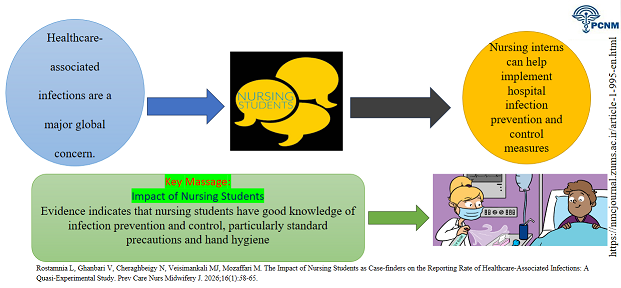
Involving nursing internship students in HAI case finding significantly increased reported infections during the intervention period, with rates declining after student participation ceased. Student reports showed no significant difference from nurse reports, suggesting students can effectively supplement surveillance without compromising accuracy. Nursing managers should integrate student case-finding into clinical rotations through brief training workshops and structured reporting forms, leveraging their bedside presence to enhance early detection while reducing surveillance burden on overworked staff.
Full-Text: (28 Views)
Introduction
Healthcare-associated infection (HAIs) is a major challenge of healthcare systems worldwide [1]. HAIs contribute to prolonged hospitalization, excess mortality, and substantial economic costs [2]. HAI prevalence is approximately 7% in developed and 15% in developing countries [3]. The reported incidence of HAIs in Iran varies substantially, from 30.4% [4] to 2.95% [1]. This difference in HAIs rate may stem from inaccurate case finding and reporting in the Iranian Nosocomial Infection Surveillance System (INISS [1,5]. This inaccurate data compromises healthcare quality, renders infection management ineffective, and results in flawed policy, ultimately endangering patient safety [2].
Despite the critical need for novel HAI detection, reporting, and monitoring methods [2, 6]. There is a significant gap in research on innovative surveillance strategies, particularly within Iranian hospitals [2]. Enhancing HAI reporting requires the engagement of front-line personnel. The successful application of an Infection Control Link Nurse (ICLN) model in some Iranian hospitals demonstrates its efficacy in improving case identification [2]. Consequently, nursing students, who spend considerable time at the patient's bedside during clinical rotations, represent a promising yet underutilized resource for augmenting HAI surveillance [7].
However, the specific impact of involving nursing students in infection reporting on HAI case-finding remains unclear. Therefore, this study assessed the effect of nursing student participation on HAI case identification.
Objectives
This study aimed to assess the impact of nursing students' involvement in HAIs case-finding and reporting.
Methods
Study Design
This quasi‑experimental study was conducted at Taleghani Hospital, an academic trauma centre affiliated with Kermanshah University of Medical Sciences (KUMS). The study took place during the first semester of the 2020–2021 academic year in four wards: General Surgery, two Orthopedic wards, and Neurosurgery.
Participants
The study population comprised 90 fourth-year nursing students (52 in the seventh semester and 38 in the eighth semester) scheduled to complete their internship at Taleghani Hospital in Kermanshah. The nursing school divided these students into groups of seven or nine. Due to the limited number of eligible students, a census sampling approach was used and all 90 students were included; therefore, no formal sample size calculation was performed.
Inclusion Criteria
Healthcare-associated infection (HAIs) is a major challenge of healthcare systems worldwide [1]. HAIs contribute to prolonged hospitalization, excess mortality, and substantial economic costs [2]. HAI prevalence is approximately 7% in developed and 15% in developing countries [3]. The reported incidence of HAIs in Iran varies substantially, from 30.4% [4] to 2.95% [1]. This difference in HAIs rate may stem from inaccurate case finding and reporting in the Iranian Nosocomial Infection Surveillance System (INISS [1,5]. This inaccurate data compromises healthcare quality, renders infection management ineffective, and results in flawed policy, ultimately endangering patient safety [2].
Despite the critical need for novel HAI detection, reporting, and monitoring methods [2, 6]. There is a significant gap in research on innovative surveillance strategies, particularly within Iranian hospitals [2]. Enhancing HAI reporting requires the engagement of front-line personnel. The successful application of an Infection Control Link Nurse (ICLN) model in some Iranian hospitals demonstrates its efficacy in improving case identification [2]. Consequently, nursing students, who spend considerable time at the patient's bedside during clinical rotations, represent a promising yet underutilized resource for augmenting HAI surveillance [7].
However, the specific impact of involving nursing students in infection reporting on HAI case-finding remains unclear. Therefore, this study assessed the effect of nursing student participation on HAI case identification.
Objectives
This study aimed to assess the impact of nursing students' involvement in HAIs case-finding and reporting.
Methods
Study Design
This quasi‑experimental study was conducted at Taleghani Hospital, an academic trauma centre affiliated with Kermanshah University of Medical Sciences (KUMS). The study took place during the first semester of the 2020–2021 academic year in four wards: General Surgery, two Orthopedic wards, and Neurosurgery.
Participants
The study population comprised 90 fourth-year nursing students (52 in the seventh semester and 38 in the eighth semester) scheduled to complete their internship at Taleghani Hospital in Kermanshah. The nursing school divided these students into groups of seven or nine. Due to the limited number of eligible students, a census sampling approach was used and all 90 students were included; therefore, no formal sample size calculation was performed.
Inclusion Criteria
- Enrollment as a nursing internship student
- Willingness to participate as a case finder while providing patient care.
Exclusion Criteria
No exclusion criteria were applied.
All members of the study population were invited to participate, and every student agreed to do so.
Interventions
At the start of each group's two-week internship rotation, students attended a two-hour, lecture-based workshop on HAIs held in a classroom at Taleghani Hospital. The training content was prepared based on the CDC's standard definitions for diagnosing four types of hospital-acquired infections and the Hospital Infection Control Surveillance System book. The workshop was delivered using PowerPoint slides and standardized educational materials prepared according to these sources. It included the following: (1) signs and symptoms of major HAI types — urinary tract infection (UTI), surgical site infection (SSI), bloodstream infection (BSI), and pneumonia — and (2) procedures for completing and submitting the HAIs Detection Form to the Infection Control Nurse (ICN). The workshop was routinely conducted by the students’ mentor, and no post-workshop evaluation was performed. The mentor was an assistant professor in the Medical-Surgical Nursing Department with two years of experience as a hospital infection-control supervisor, experience in teaching hospital infection-control courses, and a record of several research studies and publications in the field of infection control.
Following the workshop, each student group received several printed copies of the Healthcare-Associated Infections (HAIs) Detection Form. While providing patient care, if nursing students observed signs or symptoms suggestive of an HAI, they completed the HAIs Detection Form and submitted it to their instructor. The instructor then reviewed the forms to ensure that all necessary data were present and forwarded them in person to the hospital Infection Control Nurse (ICN). Subsequently, the ICN evaluated the patient for the presence of any type of HAI.In parallel, routine HAI case finding continued: if ward nurses observed signs or symptoms of HAIs in a patient, they completed the HAIs Detection Form and sent it to the ICN. The ICN subsequently assessed the patient and either verified the HAI or rejected it.
Comparison
During the intervention period, the number of SSIs, UTIs, and total HAIs reported by nursing students was compared with those reported by ward nurses. To assess the intervention’s effect on routine detection, the incidence rate ratio of UTIs, SSIs, and total HAIs during the intervention was also compared with the incidence rate ratio during pre- (three months) and post-intervention (three months) periods.
Outcomes
The primary outcomes were the numbers of reported UTIs, SSIs, and total HAIs. BSIs and PNU were not included as outcomes because no cases were reported in the study wards.
Data Collection
Data were collected using the HAIs Detection Form, developed and approved by the ICDC for HAI detection and reporting (Appendix 1). The HAIs Detection Form includes patient identifiers (name, gender, medical record number, national identification number), admission dates, admitting ward, details and dates of invasive procedures and surgeries, signs and symptoms related to pneumonia, UTI, BSI, and SSI, culture results, radiology findings, and prescribed antibiotics with any modifications. Students completed all demographic information listed on the form and marked the corresponding items if patients showed signs or symptoms of infection.
Since these forms were submitted to the Infection Control Nurse (ICN) and archived in the infection prevention and control office, access to identifiable patient information was restricted to the instructor, the ICN, and authorized personnel of the infection prevention and control office. Patient confidentiality was preserved in accordance with hospital policies.
The validity and reliability of the form were confirmed by infection control experts at the Iranian Ministry of Health[8]. Given the study setting, case finding focused on SSIs and UTIs; therefore, the HAI detection form was modified to emphasize these infections. In this study, “suspected HAI cases” referred to patients who presented clinical signs or symptoms suggestive of healthcare‑associated infection and required further evaluation. “HAIs not confirmed” referred to suspected cases that were evaluated but did not meet the national diagnostic criteria after clinical assessment.
The Infection Control Nurse then provided the research team with the data collected during the intervention period, as well as data extracted from the Iranian Nosocomial Infection Surveillance System for the three months prior to the intervention and the three months following the intervention. Finally, the number of patients admitted to the study wards was obtained from the hospital admission and discharge unit to calculate the incidence rate. This systematic approach ensured that while relevant data were used for analysis, patient confidentiality remained protected throughout the process.
Data Analysis
The collected data were entered in SPSS version 24. Descriptive statistics were presented as frequencies and rates per 1,000 patient-days for HAIs, UTIs, and SSIs across three study periods: pre-intervention, intervention, and post-intervention. Infection rates were calculated as follows:
Rate per 1,000 patient-days= (Number of infections/Patient-days) × 1000
For comparisons between nurses and students during the intervention period, Fisher’s exact test was applied. Because the numbers of infections reported by the two groups were analyzed as independent counts rather than paired observations for the same patients, Fisher’s exact test was considered appropriate. This test was also preferred because the expected frequency in one of the contingency table cells was less than five.
To compare infection rates between the study period and the comparison periods, incidence rate ratios (IRRs) along with 95% confidence intervals (CIs) were estimated based on Poisson regression. The significance of differences in infection frequencies across periods was assessed using the Chi-square test with Yates’ correction. A two-tailed p-value < 0.05 was considered statistically significant throughout the analyses.
Result
During the intervention period, nurses reported one UTI, while students reported two UTIs, representing a 50% higher reporting rate among students. Fisher’s exact test indicated no statistically significant difference in the number of UTIs reported between nurses and students (p= 1.0) (Table 1).
Table 1 presents the number of SSIs reported by students and nurses during the intervention period. In the first month, both groups reported an identical number of SSI cases. During the second month, however, student-reported SSIs increased substantially, followed by a decline in subsequent months. By contrast, nurses’ reports remained stable initially, rose significantly in the third month, and then decreased in the final month of intervention. Overall, the total number of SSIs reported by nurses and students was equal for the intervention period. Fisher’s exact test confirmed no statistically significant difference between reporting rates of the two groups (p= 1.0).
No exclusion criteria were applied.
All members of the study population were invited to participate, and every student agreed to do so.
Interventions
At the start of each group's two-week internship rotation, students attended a two-hour, lecture-based workshop on HAIs held in a classroom at Taleghani Hospital. The training content was prepared based on the CDC's standard definitions for diagnosing four types of hospital-acquired infections and the Hospital Infection Control Surveillance System book. The workshop was delivered using PowerPoint slides and standardized educational materials prepared according to these sources. It included the following: (1) signs and symptoms of major HAI types — urinary tract infection (UTI), surgical site infection (SSI), bloodstream infection (BSI), and pneumonia — and (2) procedures for completing and submitting the HAIs Detection Form to the Infection Control Nurse (ICN). The workshop was routinely conducted by the students’ mentor, and no post-workshop evaluation was performed. The mentor was an assistant professor in the Medical-Surgical Nursing Department with two years of experience as a hospital infection-control supervisor, experience in teaching hospital infection-control courses, and a record of several research studies and publications in the field of infection control.
Following the workshop, each student group received several printed copies of the Healthcare-Associated Infections (HAIs) Detection Form. While providing patient care, if nursing students observed signs or symptoms suggestive of an HAI, they completed the HAIs Detection Form and submitted it to their instructor. The instructor then reviewed the forms to ensure that all necessary data were present and forwarded them in person to the hospital Infection Control Nurse (ICN). Subsequently, the ICN evaluated the patient for the presence of any type of HAI.In parallel, routine HAI case finding continued: if ward nurses observed signs or symptoms of HAIs in a patient, they completed the HAIs Detection Form and sent it to the ICN. The ICN subsequently assessed the patient and either verified the HAI or rejected it.
Comparison
During the intervention period, the number of SSIs, UTIs, and total HAIs reported by nursing students was compared with those reported by ward nurses. To assess the intervention’s effect on routine detection, the incidence rate ratio of UTIs, SSIs, and total HAIs during the intervention was also compared with the incidence rate ratio during pre- (three months) and post-intervention (three months) periods.
Outcomes
The primary outcomes were the numbers of reported UTIs, SSIs, and total HAIs. BSIs and PNU were not included as outcomes because no cases were reported in the study wards.
Data Collection
Data were collected using the HAIs Detection Form, developed and approved by the ICDC for HAI detection and reporting (Appendix 1). The HAIs Detection Form includes patient identifiers (name, gender, medical record number, national identification number), admission dates, admitting ward, details and dates of invasive procedures and surgeries, signs and symptoms related to pneumonia, UTI, BSI, and SSI, culture results, radiology findings, and prescribed antibiotics with any modifications. Students completed all demographic information listed on the form and marked the corresponding items if patients showed signs or symptoms of infection.
Since these forms were submitted to the Infection Control Nurse (ICN) and archived in the infection prevention and control office, access to identifiable patient information was restricted to the instructor, the ICN, and authorized personnel of the infection prevention and control office. Patient confidentiality was preserved in accordance with hospital policies.
The validity and reliability of the form were confirmed by infection control experts at the Iranian Ministry of Health[8]. Given the study setting, case finding focused on SSIs and UTIs; therefore, the HAI detection form was modified to emphasize these infections. In this study, “suspected HAI cases” referred to patients who presented clinical signs or symptoms suggestive of healthcare‑associated infection and required further evaluation. “HAIs not confirmed” referred to suspected cases that were evaluated but did not meet the national diagnostic criteria after clinical assessment.
The Infection Control Nurse then provided the research team with the data collected during the intervention period, as well as data extracted from the Iranian Nosocomial Infection Surveillance System for the three months prior to the intervention and the three months following the intervention. Finally, the number of patients admitted to the study wards was obtained from the hospital admission and discharge unit to calculate the incidence rate. This systematic approach ensured that while relevant data were used for analysis, patient confidentiality remained protected throughout the process.
Data Analysis
The collected data were entered in SPSS version 24. Descriptive statistics were presented as frequencies and rates per 1,000 patient-days for HAIs, UTIs, and SSIs across three study periods: pre-intervention, intervention, and post-intervention. Infection rates were calculated as follows:
Rate per 1,000 patient-days= (Number of infections/Patient-days) × 1000
For comparisons between nurses and students during the intervention period, Fisher’s exact test was applied. Because the numbers of infections reported by the two groups were analyzed as independent counts rather than paired observations for the same patients, Fisher’s exact test was considered appropriate. This test was also preferred because the expected frequency in one of the contingency table cells was less than five.
To compare infection rates between the study period and the comparison periods, incidence rate ratios (IRRs) along with 95% confidence intervals (CIs) were estimated based on Poisson regression. The significance of differences in infection frequencies across periods was assessed using the Chi-square test with Yates’ correction. A two-tailed p-value < 0.05 was considered statistically significant throughout the analyses.
Result
During the intervention period, nurses reported one UTI, while students reported two UTIs, representing a 50% higher reporting rate among students. Fisher’s exact test indicated no statistically significant difference in the number of UTIs reported between nurses and students (p= 1.0) (Table 1).
Table 1 presents the number of SSIs reported by students and nurses during the intervention period. In the first month, both groups reported an identical number of SSI cases. During the second month, however, student-reported SSIs increased substantially, followed by a decline in subsequent months. By contrast, nurses’ reports remained stable initially, rose significantly in the third month, and then decreased in the final month of intervention. Overall, the total number of SSIs reported by nurses and students was equal for the intervention period. Fisher’s exact test confirmed no statistically significant difference between reporting rates of the two groups (p= 1.0).
According to the data presented in Table 2, the number of reported UTIs and SSIs during the intervention period was significantly higher than in both the pre- and post-intervention periods. Importantly, following the intervention, the HAI incidence declined sharply, with the post-intervention rate being approximately one-third of the rate observed during the intervention.
Comparison of clinical effect‑size measures revealed that the incidence rate of HAIs during the intervention period was 256% higher than during the pre‑intervention period (IRR = 3.56, 95% CI: 1.94–6.54), a difference that was statistically significant (p< 0.001). Following the intervention, the number of reported HAIs decreased by approximately 66% compared with the intervention period (IRR = 0.34, 95% CI: 0.19–0.61; p < 0.001). In the post‑intervention phase, the HAI incidence remained about 20% higher than the pre‑intervention baseline (IRR = 1.20, 95% CI: 0.56–2.57); however, this difference was not statistically significant (p= 0.446).
Figure 1 presents the number of UTI and SSI during pre-, during, and post-intervention. As can be seen, in the intervention period, the number of reported SSI was significantly higher than in the comparison period.
Discussion
This study investigated the impact of involving nursing students in HAI case finding. Overall, there were no statistically significant differences between the numbers of UTIs and SSIs reported by students and those reported by nurses. However, students reported 50% more UTIs than nurses. For SSIs, the number of HAI cases reported by students increased sharply during the first and second months and then declined. This decrease may be attributable to several factors, including students’ absence from the hospital on weekends and reduced ward attendance during the semester break, which likely diminished opportunities to identify and report SSIs.
Gloud et al. found that nursing students demonstrate good theoretical knowledge of infection prevention and control, but the authors also reported low compliance with infection prevention practices among students [9]. There is a paucity of research on engaging nursing students in infection prevention and control, particularly for HAI case finding. Future research should evaluate the effect of formally involving nursing students in infection prevention and control activities.
The study found a significant increase in the number of SSIs reported by nurses during the third and fourth months of the intervention. This increase may indicate an association between student involvement and reporting by nurses. One possible explanation is that nurses interacted with students when patients showed signs or symptoms suggestive of HAIs and subsequently reported these cases to the ICN. Nevertheless, nurse awareness or related mediating variables were not directly measured in this study, so causal effects cannot be concluded.
When nurses are actively involved in HAI reporting, important outcomes, such as earlier detection, more timely treatment, and reduced costs, can be expected [2]. This finding is consistent with literature emphasizing the critical role of accurate, timely HAI reporting for effective infection control and the need to strengthen detection and reporting mechanisms [2, 10]. Existing studies also underscore the importance of fostering a culture of transparent reporting in healthcare facilities to overcome reluctance to report HAIs and thereby improve data reliability [6,11].
During the intervention period, the SSI detection rate increased from 4.26 to 15.43 and then declined to 5.56 in the post-intervention period. The incidence rate ratio comparing the intervention period with the pre-intervention period and with the post-intervention period indicates a significant increase in HAI detection during the intervention. This finding is consistent with recent evidence from the COVID-19 era, suggesting that involving student nurses in infection control may improve adherence to prevention protocols and help address staffing shortages [12].
The UTI detection rate also rose during the intervention and fell sharply in the post-intervention period. Although absolute UTI rates were low across periods, the incidence rate ratio for UTIs was significantly higher during the intervention compared with the pre- and post-intervention periods. As noted in the literature, UTIs are more common in intensive care units where patients are likely to be catheterized for prolonged periods[1, 13]. Further research across diverse institutions and patient populations is needed to clarify the impact of student participation on UTI surveillance.
The overall reported HAI rate increased substantially during the intervention period compared with the pre-intervention and post-intervention periods. This finding suggests a possible association between the inclusion of nursing students in HAI surveillance and increased case detection. It also suggests that involving student nurses in surveillance may contribute to more comprehensive identification of HAIs, thereby improving the quality of infection-control data. Students may serve as valuable case finders, particularly in settings where clinical staff are overburdened and may miss cases. This finding adds to the evidence supporting innovative strategies to strengthen HAI surveillance and enhance patient safety [2, 5, 14].
Evidence indicates that nursing students have good knowledge of infection prevention and control, particularly standard precautions and hand hygiene [15]. Given their near-constant presence in clinical settings, student nurses may represent a valuable resource for improving both the quantity and quality of HAI reporting. Their participation may therefore help close gaps in infection detection. Engaging student nurses in surveillance may also bring fresh perspectives that improve infection-control processes.
Several limitations should be acknowledged. In this study, only the number of reported patients was compared across the pre-intervention, intervention, and post-intervention periods; baseline patient or ward characteristics were not systematically assessed. Therefore, potential differences in case mix, ward composition, or other contextual factors across periods could not be evaluated and may have influenced the observed reporting patterns. In addition, we cannot fully exclude the influence of unmeasured concurrent changes in infection-control practice, staffing, surveillance intensity, or hospital policies during the study period. The single-center design and relatively short follow-up period also limit the generalizability and long-term interpretation of the findings.
Future studies should not only compare the number of reported patients across study periods, but also systematically assess and report baseline patient and ward characteristics to improve comparability between groups or time periods. In addition, researchers should document any concurrent changes in infection-control practice, staffing, surveillance procedures, or hospital policies during implementation, and, where possible, control for these factors in the analysis. Multi-center studies with longer follow-up periods would further strengthen the evidence and improve generalizability.
Conclusion
Inclusion of nursing students in HAI surveillance was associated with a significant increase in reported HAIs during the intervention period, suggesting a beneficial effect on case detection. Nevertheless, further research is needed to build stronger evidence for integrating nursing students into infection prevention and control programs.
Policymakers and educational administrators may consider applying these findings to familiarize students with HAI surveillance, promote early case detection, and increase HAI reporting cost-effectively.
Ethics Consideration
The study received ethical approval from the Ethics Committee at Kermanshah University of Medical Sciences (IR.KUMS.REC.1401.489).
Students are fully informed of the study objectives. Although the workshop formed part of student training, case finding and HAI reporting were voluntary; students gave verbal consent to participate. Participants were instructed on patient‑data confidentiality and data‑security procedures.
All methods were conducted in accordance with relevant guidelines.
Acknowledgements
The authors extend their sincere thanks to all internship nursing students of KUMS who took part in this research.
Conflict of Interest
The authors declared no potential conflicts of interest with respect to the research, authorship, and/or publication of this article
Funding
The Research Deputy of the University of Medical Sciences funded and approved this project (4020035).
Authors' Contributions
Rostamnia L: Conceptualization of the research, designing the method and supervising the data gathering, funder.
Ghanbari V: Conceptualization of the research, data analysis, and approving the last version of the manuscript.
Mozafari M: Conceptualization of the research and Data gathering.
Cheraghbighi N: Writing the first draft of the manuscript and approving the last version of the manuscript.
Veisi MJ: Writing the first version of the manuscript, and reviewing and editing the last version of the manuscript.
Artificial intelligence utilization for article writing
During the preparation of this work, the author(s) used ChatGPT in order to summarize and rewrite some sentences. After using this tool/service, the authors reviewed and edited the content as needed and take full responsibility for the content of the published article.
Data Availability Statement
The data are available from the corresponding author on a reasonable request.
Comparison of clinical effect‑size measures revealed that the incidence rate of HAIs during the intervention period was 256% higher than during the pre‑intervention period (IRR = 3.56, 95% CI: 1.94–6.54), a difference that was statistically significant (p< 0.001). Following the intervention, the number of reported HAIs decreased by approximately 66% compared with the intervention period (IRR = 0.34, 95% CI: 0.19–0.61; p < 0.001). In the post‑intervention phase, the HAI incidence remained about 20% higher than the pre‑intervention baseline (IRR = 1.20, 95% CI: 0.56–2.57); however, this difference was not statistically significant (p= 0.446).
Figure 1 presents the number of UTI and SSI during pre-, during, and post-intervention. As can be seen, in the intervention period, the number of reported SSI was significantly higher than in the comparison period.
Discussion
This study investigated the impact of involving nursing students in HAI case finding. Overall, there were no statistically significant differences between the numbers of UTIs and SSIs reported by students and those reported by nurses. However, students reported 50% more UTIs than nurses. For SSIs, the number of HAI cases reported by students increased sharply during the first and second months and then declined. This decrease may be attributable to several factors, including students’ absence from the hospital on weekends and reduced ward attendance during the semester break, which likely diminished opportunities to identify and report SSIs.
Gloud et al. found that nursing students demonstrate good theoretical knowledge of infection prevention and control, but the authors also reported low compliance with infection prevention practices among students [9]. There is a paucity of research on engaging nursing students in infection prevention and control, particularly for HAI case finding. Future research should evaluate the effect of formally involving nursing students in infection prevention and control activities.
The study found a significant increase in the number of SSIs reported by nurses during the third and fourth months of the intervention. This increase may indicate an association between student involvement and reporting by nurses. One possible explanation is that nurses interacted with students when patients showed signs or symptoms suggestive of HAIs and subsequently reported these cases to the ICN. Nevertheless, nurse awareness or related mediating variables were not directly measured in this study, so causal effects cannot be concluded.
When nurses are actively involved in HAI reporting, important outcomes, such as earlier detection, more timely treatment, and reduced costs, can be expected [2]. This finding is consistent with literature emphasizing the critical role of accurate, timely HAI reporting for effective infection control and the need to strengthen detection and reporting mechanisms [2, 10]. Existing studies also underscore the importance of fostering a culture of transparent reporting in healthcare facilities to overcome reluctance to report HAIs and thereby improve data reliability [6,11].
During the intervention period, the SSI detection rate increased from 4.26 to 15.43 and then declined to 5.56 in the post-intervention period. The incidence rate ratio comparing the intervention period with the pre-intervention period and with the post-intervention period indicates a significant increase in HAI detection during the intervention. This finding is consistent with recent evidence from the COVID-19 era, suggesting that involving student nurses in infection control may improve adherence to prevention protocols and help address staffing shortages [12].
The UTI detection rate also rose during the intervention and fell sharply in the post-intervention period. Although absolute UTI rates were low across periods, the incidence rate ratio for UTIs was significantly higher during the intervention compared with the pre- and post-intervention periods. As noted in the literature, UTIs are more common in intensive care units where patients are likely to be catheterized for prolonged periods[1, 13]. Further research across diverse institutions and patient populations is needed to clarify the impact of student participation on UTI surveillance.
The overall reported HAI rate increased substantially during the intervention period compared with the pre-intervention and post-intervention periods. This finding suggests a possible association between the inclusion of nursing students in HAI surveillance and increased case detection. It also suggests that involving student nurses in surveillance may contribute to more comprehensive identification of HAIs, thereby improving the quality of infection-control data. Students may serve as valuable case finders, particularly in settings where clinical staff are overburdened and may miss cases. This finding adds to the evidence supporting innovative strategies to strengthen HAI surveillance and enhance patient safety [2, 5, 14].
Evidence indicates that nursing students have good knowledge of infection prevention and control, particularly standard precautions and hand hygiene [15]. Given their near-constant presence in clinical settings, student nurses may represent a valuable resource for improving both the quantity and quality of HAI reporting. Their participation may therefore help close gaps in infection detection. Engaging student nurses in surveillance may also bring fresh perspectives that improve infection-control processes.
Several limitations should be acknowledged. In this study, only the number of reported patients was compared across the pre-intervention, intervention, and post-intervention periods; baseline patient or ward characteristics were not systematically assessed. Therefore, potential differences in case mix, ward composition, or other contextual factors across periods could not be evaluated and may have influenced the observed reporting patterns. In addition, we cannot fully exclude the influence of unmeasured concurrent changes in infection-control practice, staffing, surveillance intensity, or hospital policies during the study period. The single-center design and relatively short follow-up period also limit the generalizability and long-term interpretation of the findings.
Future studies should not only compare the number of reported patients across study periods, but also systematically assess and report baseline patient and ward characteristics to improve comparability between groups or time periods. In addition, researchers should document any concurrent changes in infection-control practice, staffing, surveillance procedures, or hospital policies during implementation, and, where possible, control for these factors in the analysis. Multi-center studies with longer follow-up periods would further strengthen the evidence and improve generalizability.
Conclusion
Inclusion of nursing students in HAI surveillance was associated with a significant increase in reported HAIs during the intervention period, suggesting a beneficial effect on case detection. Nevertheless, further research is needed to build stronger evidence for integrating nursing students into infection prevention and control programs.
Policymakers and educational administrators may consider applying these findings to familiarize students with HAI surveillance, promote early case detection, and increase HAI reporting cost-effectively.
Ethics Consideration
The study received ethical approval from the Ethics Committee at Kermanshah University of Medical Sciences (IR.KUMS.REC.1401.489).
Students are fully informed of the study objectives. Although the workshop formed part of student training, case finding and HAI reporting were voluntary; students gave verbal consent to participate. Participants were instructed on patient‑data confidentiality and data‑security procedures.
All methods were conducted in accordance with relevant guidelines.
Acknowledgements
The authors extend their sincere thanks to all internship nursing students of KUMS who took part in this research.
Conflict of Interest
The authors declared no potential conflicts of interest with respect to the research, authorship, and/or publication of this article
Funding
The Research Deputy of the University of Medical Sciences funded and approved this project (4020035).
Authors' Contributions
Rostamnia L: Conceptualization of the research, designing the method and supervising the data gathering, funder.
Ghanbari V: Conceptualization of the research, data analysis, and approving the last version of the manuscript.
Mozafari M: Conceptualization of the research and Data gathering.
Cheraghbighi N: Writing the first draft of the manuscript and approving the last version of the manuscript.
Veisi MJ: Writing the first version of the manuscript, and reviewing and editing the last version of the manuscript.
Artificial intelligence utilization for article writing
During the preparation of this work, the author(s) used ChatGPT in order to summarize and rewrite some sentences. After using this tool/service, the authors reviewed and edited the content as needed and take full responsibility for the content of the published article.
Data Availability Statement
The data are available from the corresponding author on a reasonable request.
Type of Study: Orginal research |
Subject:
Nursing
References
1. Pezhman B, Fatemeh R, Amir R, Mahboobeh R, Mohammad F. Nosocomial infections in an Iranian educational hospital: an evaluation study of the Iranian nosocomial infection surveillance system. BMC Infectious Diseases. 2021;21(1):1256. [https://doi.org/10.1186/s12879-021-06948-1] [PMID]
2. Dehghan-Nayeri N, Seifi A, Rostamnia L, Varaei S, Ghanbari V, Sari AA, et al. Challenges of and corrective recommendations for healthcare-associated infection's case findings and reporting from local to national level in Iran: a qualitative study. BMC Nursing. 2022;21(1):193. [https://doi.org/10.1186/s12912‑022‑00976‑1] [PMID]
3. World Health Organization. Global report on infection prevention and control Geneva: World Health Organization; 2022. [https://www.who.int/news/item/06-05-2022-who-launches-first-ever-global-report-on-infection-preventi]
4. Bagheri P. The review systematic and meta analysis of prevalence and causes of nosocomial infection in Iran. Iranian Journal of Medical Microbiology. 2015;8(4):1-12. [http://ijmm.ir/article-1-239-en.html]
5. Seifi A, Dehghan-Nayeri N, Rostamnia L, Varaei S, Sari AA, Haghani H, et al. Health care-associated infection surveillance system in Iran: reporting and accuracy. American Journal of Infection Control. 2019;47(8):951-5. [https://doi.org/10.1016/j.ajic.2018.12.028] [PMID]
6. Luo Y. Hospital Infection Underreporting Rate: An Analysis of Causes and Research on Improvement Measures. Social Medicine and Health Management. 2023;4(4):55-60. [https://doi.org/10.23977/socmhm.2023.040408]
7. Parreira P, Santos-Costa P, Pardal J, Neves T, Bernardes RA, Serambeque B, et al. Nursing Students' perceptions on healthcare-associated infection control and prevention teaching and learning experience in Portugal. Journal of Personalized Medicine. 2022;12(2):180. [https://doi.org/10.3390/jpm12020180] [PMID]
8. Eshrati B, Seifi A, Afhami S, Razavi S, Masoodi Far M, Esmaeilpor N, et al. National Guideline of Nasocomial Infections surveillance. Third ed. Iran: Andishmand; 2020. 148 p.
9. Gould D, Drey N. Student nurses' experiences of infection prevention and control during clinical placements. American Journal of Infection Control. 2013;41(9):760-3. [https://doi.org/10.1016/j.ajic.2013.01.025] [PMID]
10. Susiladewi IAMV, Yanti NPED, Resiyanthi NKA, Sudiarta IK. Effectiveness of using online surveillance in reporting healthcare-associated infections. International Journal of Health Sciences. 2022(I):6635-41. [https://doi.org/10.53730/ijhs.v6nS1.6417]
11. Wardani IN, Kurniawan B, Pramesona BA, editors. Inhibiting and Supporting Factors in Reporting Patient Safety Incidents among Healthcare Workers: A Literature Review. International Conference on Medical Science and Health (ICOMESH 2024); 2024: Atlantis Press. [https://doi.org/10.2991/978-94-6463-604-8_30]
12. Ashburn A, Richards B, Mijares A, Luva A. Enhancing Infection Control and Student Learning: A Collaborative Strategy Using Nursing Students During COVID-19. Journal of Nursing Education. 2025;64(1):60-2. [https://doi.org/10.3928/01484834-20240723-05] [PMID]
13. McGloin JM, Gordon P, Feeser B, Anderson J, Joyner S, Bentick J, et al. Catheter-associated urinary tract infection (CAUTI) reduction in a neuroscience intensive care unit: A multidisciplinary approach. American Journal of Infection Control. 2024;52(3):368-70. [https://doi.org/10.1016/j.ajic.2023.11.016] [PMID]
14. Yu T, Zhang X, Wang Q, Zheng F, Wang L. Communication openness and nosocomial infection reporting: the mediating role of team cohesion. BMC Health Services Research. 2022;22(1):1416. 10.1186/s12913-022-08646-3. [https://doi.org/10.1186/s12913-022-08646-3] [PMID]
15. Giordano V, Palazzo C, Mercuri C, Verde V, Rea T, Doldo P, et al. Nursing Students' Knowledge Among Healthcare-Associated Infections: A Systematic Review. Int J Environ Res Public Health. 2025;22(11):1609. [https://doi.org/10.3390/ijerph22111609] [PMID]
Send email to the article author
| Rights and permissions | |
 |
This work is licensed under a Creative Commons Attribution-NonCommercial 4.0 International License. |