

Volume 15, Issue 4 (10-2025)


Letter to Editor
 , Behrouz Amini Kordkandi , Mahsa Koohi Garebag , Zahra Khezerlou , Roghaieh Azimzadeh *
Knowledge Translation Statement
Audience: Nursing managers and hospital administrators
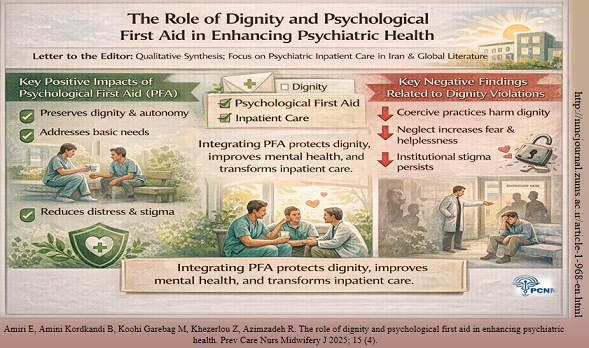
Patient dignity in psychiatric settings is routinely violated through prolonged isolation, forced labor, and physical restraints based on subjective staff judgment rather than objective criteria. Psychological First Aid (PFA), focusing on safety, practical needs, autonomy, and non-judgmental validation, offers a practical tool to uphold dignity. Nursing managers should integrate PFA principles into daily psychiatric nursing practice through continuous training and reflective practice, moving beyond basic education to fundamentally shift toward person-centered care.
Original Article
Effect of Cognitive Behavioral Counseling on Stress and Quality of Life of Pregnant Women With a History of Spontaneous Abortion: A Randomized Controlled Trial
Knowledge Translation Statement
Audience: Nursing managers and hospital administrators
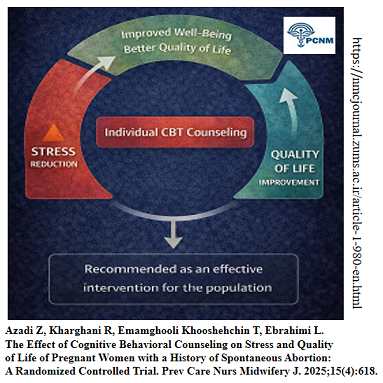
Individual cognitive-behavioral therapy (CBT) significantly reduces stress and improves psychological, social, and environmental quality of life in pregnant women with a prior miscarriage, with effects sustained for at least two months. Nursing managers should facilitate referral pathways to trained CBT counselors during early prenatal visits (6–10 weeks) and allocate time for 10 structured sessions. Psychological support should complement standard obstetric care.
Original Article
Comparison of Emotional Expressivity and Tolerance of Ambiguity in Patients with Chronic Kidney Disease and Healthy Controls: A Cross-Sectional Study
Knowledge Translation Statement
Audience: Nursing managers and hospital administrators
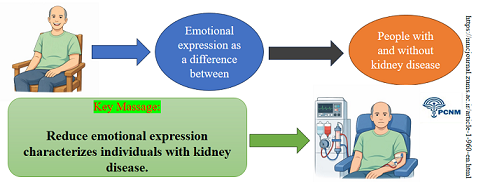
Patients with chronic kidney disease (CKD) show significantly lower emotional expressivity compared to healthy individuals, while tolerance of ambiguity does not differ between groups. Nursing managers should integrate structured emotional expression training into routine CKD care to help patients process emotions, secure social support, and improve psychosocial adjustment. Routine screening for emotional suppression is also recommended during hospital visits.
Original Article
Dissemination and Implementation Strategies for Doula Support Services in Bayelsa State, Nigeria: A Quantitative Cross-Sectional Survey
Knowledge Translation Statement
Audience: Nursing managers and hospital administrators
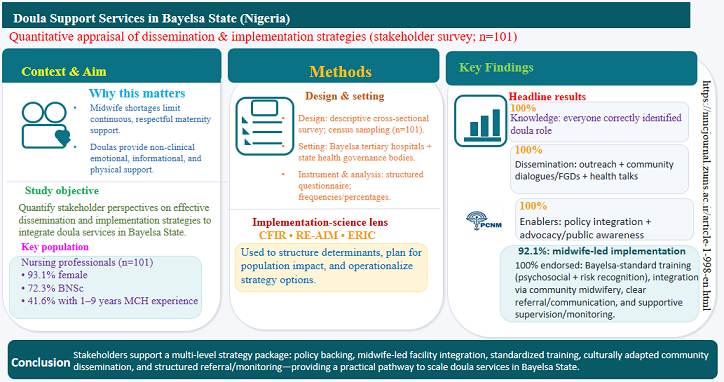
Stakeholders in Bayelsa State, Nigeria strongly endorse a multi-level framework for doula support services integration requiring formal government policy, midwife-led clinical implementation with defined referral pathways, standardized local training emphasizing psychosocial support and risk recognition, and culturally adapted community dissemination. Nursing managers should prioritize developing state-level doula guidelines, integrating doulas into existing community midwifery schemes with clear protocols, and establishing structured supervision with implementation indicators (reach, fidelity).
Original Article
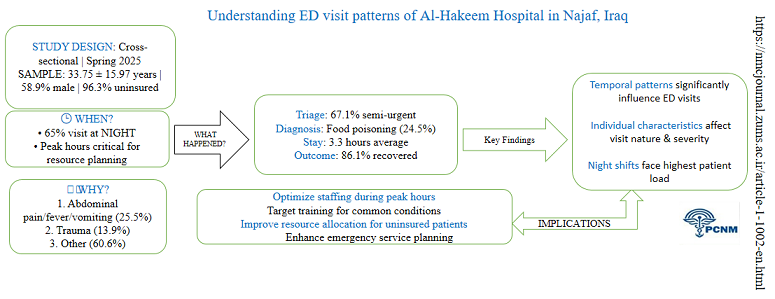
Characteristics and Temporal Trends of Patients Visiting the Emergency Department in Najaf, Iraq: A Cross-Sectional Study
Knowledge Translation Statement
Audience: Nursing managers and hospital administrators
Emergency department patients in Najaf, Iraq are predominantly young, uninsured (96.3%), self-referred (66.3%), and present at night (65%) with semi-urgent conditions, most commonly food poisoning and H. pylori infection, while 89.2% are discharged after recovery. Nursing managers should strengthen primary care referral pathways to reduce non-urgent ED visits, ensure adequate night-shift staffing, and implement targeted public health campaigns on food safety and healthy lifestyles using the ED as a strategic point for brief interventions.
Original Article with Policy Implications
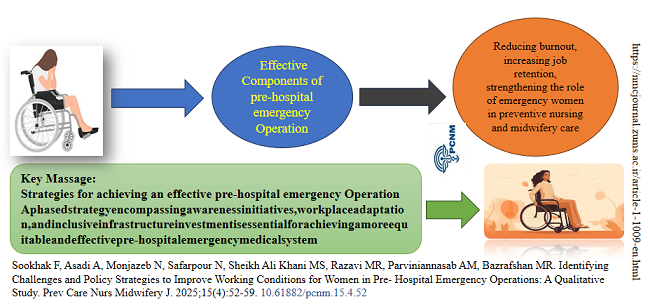
Identifying Challenges and Policy Strategies to Improve Working Conditions for Women in Pre-Hospital Emergency Operations: A Qualitative Study
, Ali Asadi , Negin Monjazeb , Nasim Safarpour , Mohammad Sina Sheikh Ali Khani , Mohammad Reza Razavi , Ali Mohammad Parviniannasab , Mohammad Rafi Bazrafshan *
Knowledge Translation Statement
Audience: Nursing managers and hospital administrators
Female emergency medical technicians in Iran face socio-cultural challenges (fear of public non-acceptance, cultural sensitivities, lack of family acceptance, inappropriate uniforms), physical-ergonomic challenges (difficulty moving patients and handling heavy equipment), and organizational challenges where job satisfaction depends on managerial support. Nursing managers should redesign gender-appropriate ergonomic uniforms, procure lighter equipment, formalize dispatch protocols prioritizing female crews for female patients, and launch targeted social media campaigns highlighting female EMT competencies.
Original Article
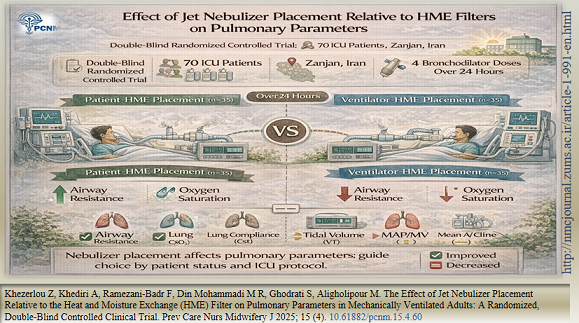
Effect of Jet Nebulizer Placement Relative to the Heat and Moisture Exchange (HME) Filter on Pulmonary Parameters in Mechanically Ventilated Adults: A Randomized, Double-Blind Controlled Trial
, Akram Khediri , Farhad Ramezani-Badr * , Mohammad Reza Din Mohammadi , Samad Ghodrati , Mahtab Aligholipour
Knowledge Translation Statement
Audience: Nursing managers and hospital administrators
Placement of jet nebulizer relative to heat and moisture exchanger (HME) filter in mechanically ventilated adults significantly affects airway resistance and oxygen saturation over time, but not lung compliance, tidal volume, or minute ventilation. Nursing managers can allow clinicians flexibility in nebulizer placement based on practical ICU protocol considerations, as both positions (between ventilator and HME or between HME and patient) deliver therapeutically adequate bronchodilator doses without decisive impact on overall patient status.
Review Articles
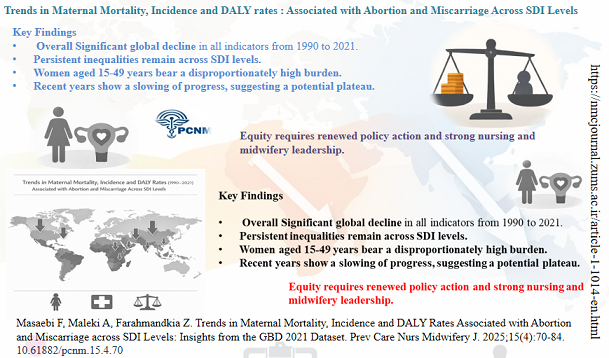
Trends in Maternal Mortality, Incidence and DALY Rates Associated With Abortion and Miscarriage Across SDI Levels: Insights From the GBD 2021 Dataset
Knowledge Translation Statement
Audience: Nursing managers and hospital administrators
Global maternal mortality and DALY rates from abortion and miscarriage declined significantly from 1990 to 2021, but low-SDI countries still bear burdens over 100-fold higher than high-SDI countries, with incidence declining more slowly than mortality. Nursing managers in low-resource settings should strengthen post-abortion care, ensure access to safe family planning, train midwives in emergency obstetric care, and address sociocultural barriers, as recent progress has slowed and sustained targeted interventions remain critical for achieving SDG targets.
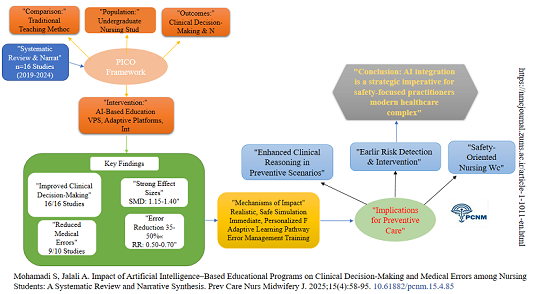
Impact of Artificial Intelligence–Based Educational Programs on Clinical Decision‑Making and Medical Errors Among Nursing Students: A Systematic Review and Narrative Synthesis
Knowledge Translation Statement
Audience: Nursing managers and hospital administrators
AI-based educational programs (virtual patient simulators, adaptive learning platforms, VR with intelligent avatars, and chatbots) improve clinical decision-making and reduce medication and diagnostic errors among nursing students compared to traditional methods, though evidence is emerging with methodological heterogeneity. Nursing managers should strategically invest in AI simulation labs and faculty development for AI integration, but currently use AI as a supplement to, not replacement for, clinical placement, as long-term skill retention and transfer to real settings remain unverified.