Volume 16, Issue 1 (1-2026)


Original Article
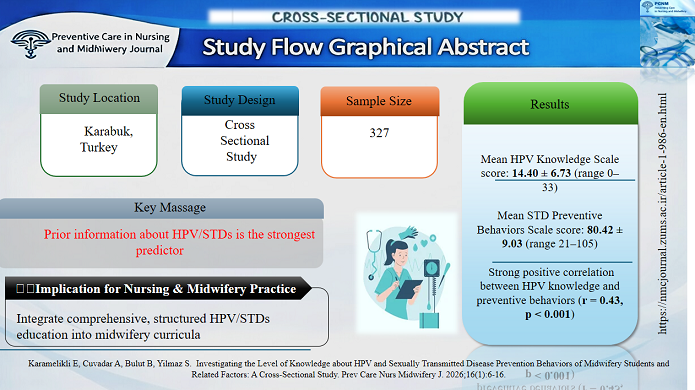
Investigating the Level of Knowledge About HPV and Sexually Transmitted Disease Prevention Behaviors of Midwifery Students and Related Factors: A Cross-Sectional Study
Knowledge Translation Statement
Audience: Nursing managers and hospital administrators
Higher HPV knowledge correlates with better preventive behaviors among midwifery students, yet knowledge increases with grade while behaviors do not improve. Prior structured information was the strongest predictor of both outcomes. Managers should integrate skills-based HPV education into curricula through practical training and targeted interventions for international students, bridging the knowledge-behavior gap to prepare competent future midwives.
Original Article
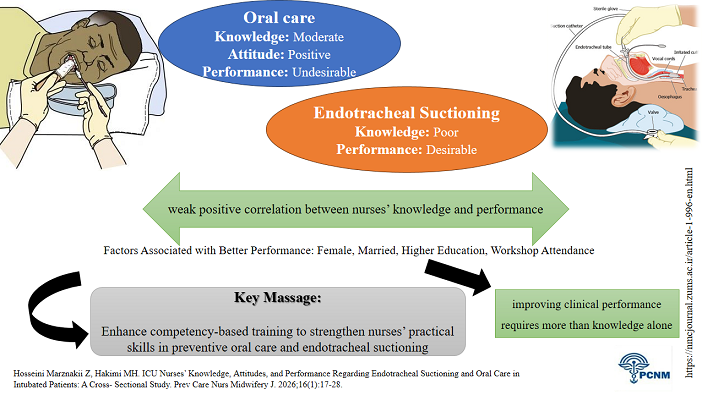
ICU Nurses' Knowledge, Attitudes, and Performance Regarding Endotracheal Suctioning and Oral Care in Intubated Patients: A Cross-Sectional Study
Knowledge Translation Statement
Audience: Nursing managers and hospital administrators
A significant gap exists between ICU nurses' knowledge and performance in endotracheal suctioning and oral care, with 45.7% showing poor oral care performance despite favorable attitudes. Performance is influenced by gender, education, and workshop attendance, not knowledge alone. Managers should implement competency-based training with supervised practice and regular evaluations using checklists, shifting from theory to hands-on skill development.
Original Article
 , Mohammad Rafi Bazrafshan * , Amir Mansouri , Haniyeh Rajabi , Helia Yarbakhsh , Amir Hossein Kamali , Habib Abbasi , Maryam Ranjbar Zahedani
Knowledge Translation Statement
Audience: Nursing managers and hospital administrators
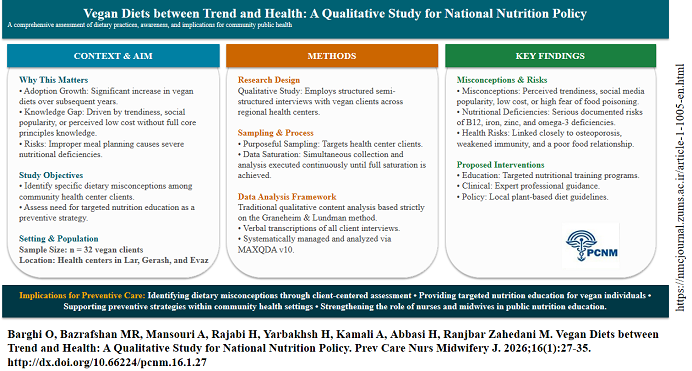
Many individuals adopt vegan diets based on misconceptions, viewing it as a trend, social status tool, or low-cost alternative, rather than informed nutritional choices, increasing risks of deficiencies in iron, B12, zinc, and protein. Nursing managers should integrate evidence-based nutrition education into community health services, train staff to identify at-risk individuals, and develop culturally sensitive dietary guidelines that address local misconceptions while respecting informed motivations.
Original Article
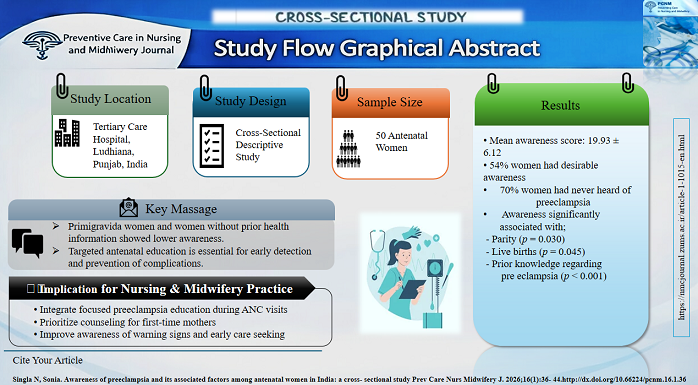
Awareness of Preeclampsia and Its Associated Factors Among Antenatal Women in India: A Cross-Sectional Study
Knowledge Translation Statement
Audience: Nursing managers and hospital administrators
Most antenatal women lack comprehensive preeclampsia awareness, with 70% never having heard of the condition; knowledge is primarily gained through prior pregnancy experience rather than formal education or routine counseling. Parity and previous live births significantly influence awareness scores, while first-time mothers remain at highest risk with lowest knowledge levels. Nursing managers should implement structured, targeted education for primigravida women during antenatal visits, train staff to provide consistent counseling regardless of patients' education levels, and develop practical symptom-recognition tools, shifting from passive information provision to active, experience-based learning.
Original Article
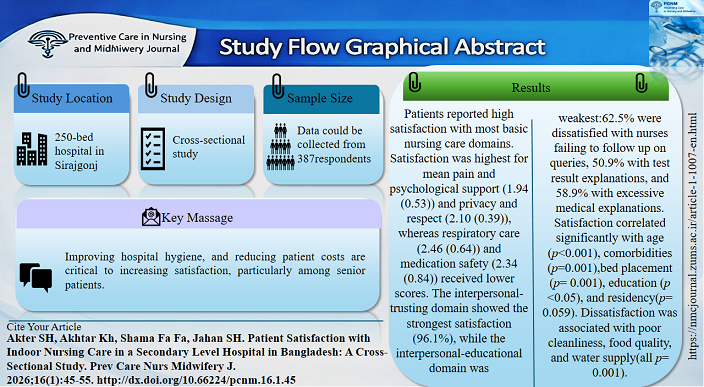
Patient Satisfaction With Inpatient Nursing Care at a Secondary-Level Hospital in Bangladesh: A Cross-Sectional Study
Knowledge Translation Statement
Audience: Nursing managers and hospital administrators
Patients reported high satisfaction with basic nursing care yet significant dissatisfaction with informational aspects, as over 50% were dissatisfied with nurses failing to follow up on queries and explain test results. Older age, longer stays, and poor hospital hygiene, food, and water supply correlated with lower satisfaction. Nursing managers should implement structured communication training, regular environmental audits, and targeted elderly care interventions to bridge the information gap and improve patient experience.
Original Article
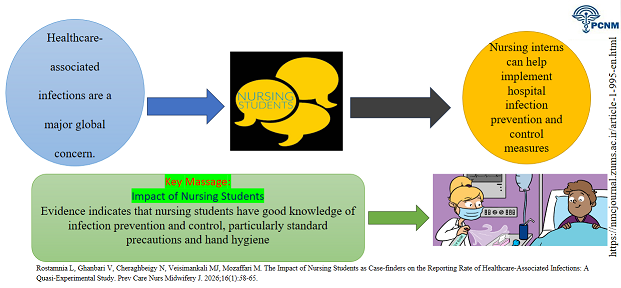
Impact of Nursing Student Involvement in Case Finding on Healthcare-Associated Infection Reporting Rates: A Quasi-Experimental Study
, Vahid Ghanbari * , Nesa Cheraghbeigy , Mohmmad javad Veisimankali , Mandana Mozaffari
Knowledge Translation Statement
Audience: Nursing managers and hospital administrators
Involving nursing internship students in HAI case finding significantly increased reported infections during the intervention period, with rates declining after student participation ceased. Student reports showed no significant difference from nurse reports, suggesting students can effectively supplement surveillance without compromising accuracy. Nursing managers should integrate student case-finding into clinical rotations through brief training workshops and structured reporting forms, leveraging their bedside presence to enhance early detection while reducing surveillance burden on overworked staff.
Original Article
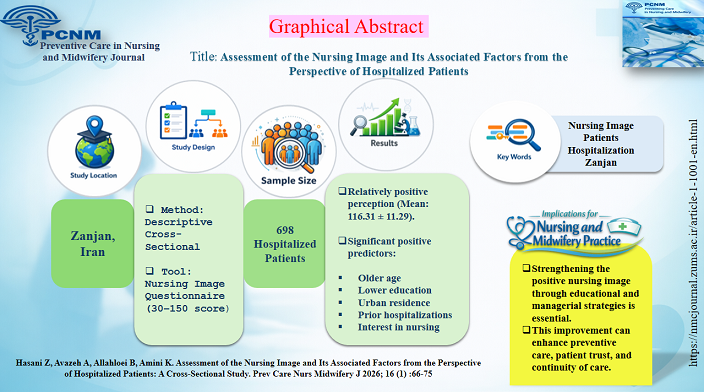
Assessment of Nursing Image and Associated Factors as Perceived by Hospitalized Patients: A Descriptive Cross-Sectional Study
Knowledge Translation Statement
Audience: Nursing managers and hospital administrators
Hospitalized patients hold a relatively positive perception of nursing, with older patients, those with lower education, and urban residents reporting significantly higher scores. Patients with more frequent prior hospitalizations and inherent interest in nursing also showed more favorable views. Nursing managers should leverage positive hospitalization experiences through improved nurse-patient communication, develop targeted public awareness campaigns addressing demographic differences, and utilize media platforms to reinforce nursing's professional image, particularly for younger and higher-educated populations who hold less favorable perceptions.
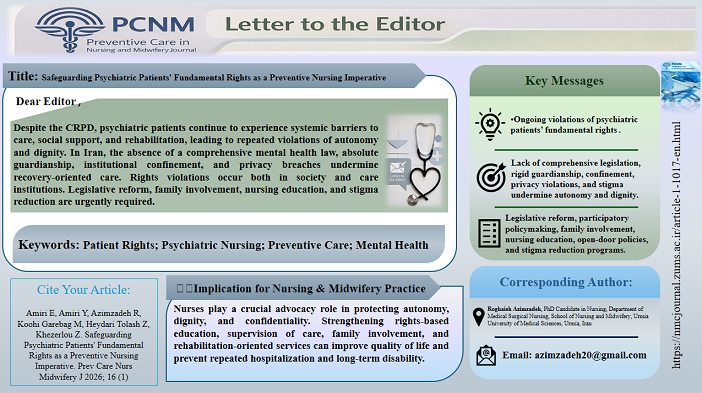
Letter to Editor
, Yalda Amiri , Roghaieh Azimzadeh * , Mahsa Koohi Garebag , Zahra Heydari Tolash , Zahra Khezerlou
Original Article
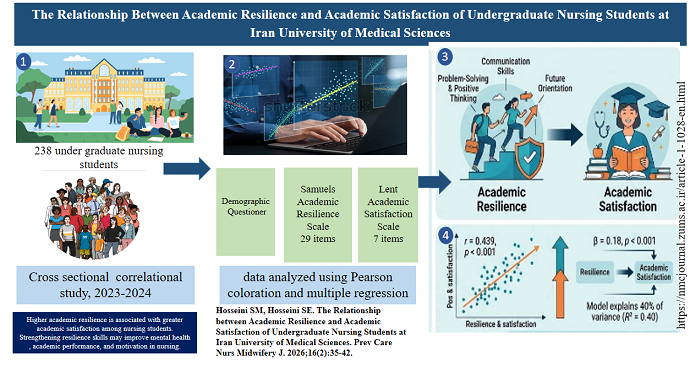
Relationship Between Academic Resilience and Academic Satisfaction Among Undergraduate Nursing Students at Iran University of Medical Sciences
Knowledge Translation Statement
Audience: Nursing managers and hospital administrators
Academic resilience significantly predicts nursing students' academic satisfaction, with a positive correlation between resilience and satisfaction, where resilience training could enhance mental health and academic performance. Married students, those in higher semesters, and alcohol consumers reported lower satisfaction, suggesting targeted support needs. Nursing managers and educators should integrate resilience-building programs, including stress management workshops, mindfulness exercises, and problem-solving training, into nursing curricula to support student well-being and prepare them for preventive, high-quality care.
Original Article
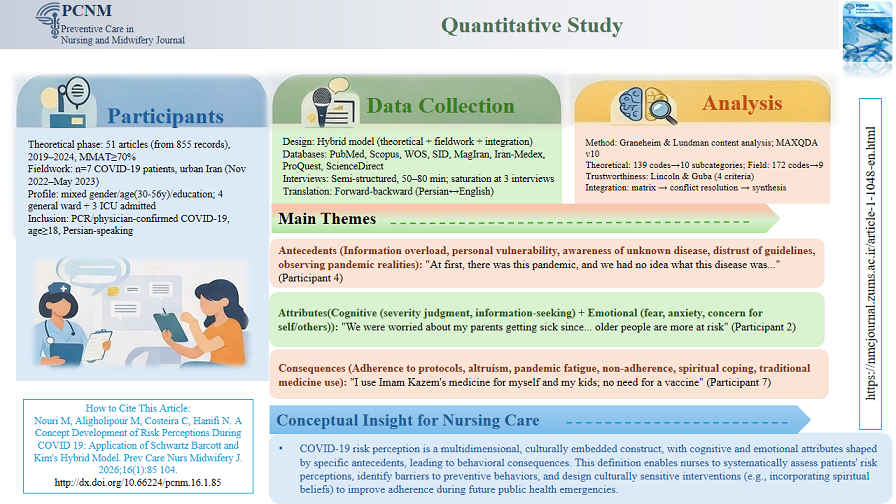
A Concept Development of Risk Perceptions During COVID-19: Application of Schwartz-Barcott and Kim's Hybrid Model
Original Article
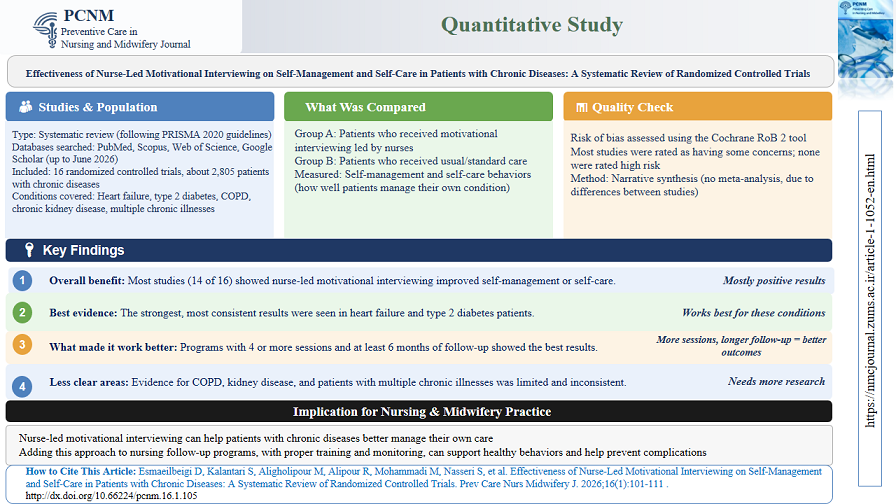
Effectiveness of Nurse-Led Motivational Interviewing on Self-Management and Self-Care in Patients with Chronic Diseases: A Systematic Review of Randomized Controlled Trials
, Saba Kalantari , Mahtab Aligholipour , Razie Alipour , Maryam Mohammadi , Sepideh Nasseri , Vesal Karimiaslchors , Zahra Khezerlou *